
In today’s digital age, businesses of all sizes are leveraging the power of social media to connect with their target audiences, build brand awareness, and ultimately boost their bottom line.
However, for some businesses that are deemed “boring” or operate in niche industries, the idea of utilizing social media marketing can seem daunting or even futile.
But fear not! In this comprehensive guide, we’ll explore how to use social media effectively to market your seemingly dull business and turn it into a captivating online presence that attracts customers and generates results.
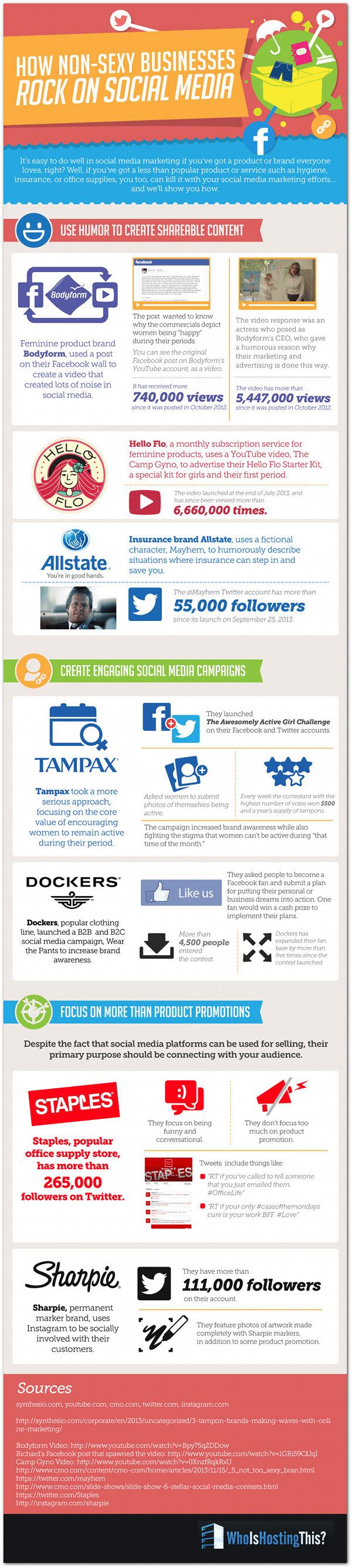
It’s not so easy when you have a less popular product or service though. One that people generally don’t pay much attention to other than to use it. If that’s you take a look at the infographic below from Who is Hosting This which shows you how to market your really boring business using social media.
Chapter 1: Embrace the Bland, Find the Spark
Before diving into the world of social media marketing, it’s essential to understand that no business is inherently boring. Every industry has a unique story to tell, and your task is to find the spark that will engage your audience. Here’s how:
1.1. Know Your Audience
- Identify your target audience’s interests, pain points, and preferences.
- Conduct surveys, interviews, and market research to gain insights into what appeals to them.
- Tailor your content to resonate with your audience’s needs and values.
1.2. Highlight Your Uniqueness
- Find what sets your business apart from competitors, even in a seemingly mundane field.
- Share your company’s origin story, values, and mission to create a personal connection.
- Showcase your employees’ expertise and passion for what they do.
Chapter 2: Choose the Right Social Media Platforms
Not all social media platforms are created equal, and it’s crucial to select the ones that align with your business and audience. Here’s how to make the right choice:
2.1. Facebook
- Ideal for businesses targeting a broad and diverse audience.
- Share informative posts, behind-the-scenes content, and customer testimonials.
2.2. Instagram
- Great for visually appealing businesses.
- Post high-quality images, stories, and use relevant hashtags.
2.3. LinkedIn
- Suitable for B2B and professional services.
- Share industry insights, thought leadership content, and connect with industry peers.
2.4. Twitter
- Effective for real-time updates and engagement.
- Tweet industry news, participate in trending conversations, and utilize humor when appropriate.
2.5. TikTok
- Ideal for creative and entertaining businesses.
- Create short, engaging videos that showcase your unique personality.
Chapter 3: Develop a Content Strategy
Now that you’ve chosen the right platforms, it’s time to create a content strategy that resonates with your audience and showcases your brand’s personality:
3.1. Create a Content Calendar
- Plan your content ahead of time to maintain consistency.
- Balance promotional content with informative, entertaining, and educational posts.
3.2. Storytelling
- Craft compelling narratives that illustrate your journey, values, and impact.
- Share success stories and customer testimonials to build trust.
3.3. Visuals and Aesthetics
- Invest in high-quality visuals that reflect your brand’s identity.
- Maintain a cohesive aesthetic across all social media platforms.
3.4. Educational Content
- Share industry insights, tips, and how-to guides to position your business as an authority.
- Host webinars or live Q&A sessions to engage with your audience directly.
Chapter 4: Engage with Your Audience
Social media marketing is a two-way street. Engaging with your audience is key to building a loyal following:
4.1. Respond to Comments and Messages
- Promptly reply to comments and messages to show that you value your audience.
- Address concerns, answer questions, and express gratitude for feedback.
4.2. User-Generated Content
- Encourage customers to create content related to your products or services.
- Share user-generated content to foster a sense of community and authenticity.
4.3. Polls and Surveys
- Use polls and surveys to involve your audience in decision-making.
- Gather feedback and tailor your offerings to their preferences.
Chapter 5: Leverage Influencer Marketing
Influencer marketing can breathe new life into your “boring” business by tapping into the credibility and reach of social media influencers:
5.1. Identify Relevant Influencers
- Find influencers who align with your industry or niche.
- Analyze their engagement rates, authenticity, and audience demographics.
5.2. Collaborate Strategically
- Reach out to influencers with a personalized pitch.
- Outline the value of your partnership and the benefits for their audience.
5.3. Measure Results
- Track the success of influencer campaigns through metrics like engagement, website traffic, and conversions.
- Adjust your strategy based on the performance of different influencers.
Chapter 6: Invest in Advertising
Paid advertising on social media platforms can give your business a significant boost, even if it seems unexciting at first glance:
6.1. Targeted Ads
- Utilize precise targeting options to reach your ideal audience.
- Experiment with different ad formats, such as carousel ads or video ads.
6.2. A/B Testing
- Test different ad creatives, headlines, and calls to action.
- Analyze the data to refine your ad strategy for optimal results.
6.3. Budget Management
- Set a realistic advertising budget and monitor your spending.
- Adjust your budget based on the performance of your ads.
Chapter 7: Monitor and Adapt
Social media marketing is an ever-evolving landscape. To succeed, you must continually monitor your efforts and adapt to changing trends:
7.1. Analytics
- Use analytics tools provided by social media platforms to track your performance.
- Monitor metrics like engagement, reach, and conversion rates.
7.2. Competitor Analysis
- Keep an eye on your competitors’ social media strategies.
- Identify opportunities to differentiate yourself and fill gaps in the market.
7.3. Stay Informed
- Stay updated on industry trends, algorithm changes, and emerging platforms.
- Attend webinars, conferences, and workshops to expand your knowledge.
Conclusion
In the world of social media marketing, no business is inherently boring. By understanding your audience, choosing the right platforms, and crafting a compelling content strategy, you can transform your seemingly mundane business into an engaging and successful online presence. Embrace the power of storytelling, engage with your audience, and leverage influencer marketing and advertising to propel your business to new heights. With dedication and creativity, even the dullest of industries can shine brightly on social media. So, start your journey today, and watch your “boring” business become anything but!

Author:
Mark Ford

How to Create Platform-Specific Social Media Content Without Doubling Your Workload
Are you struggling to keep your social media content consistent across platforms without it eating up your time? Want to learn how to adapt one idea for Facebook, Instagram, LinkedIn, TikTok, and X without creating everything from scratch? […]