
Are you looking for ways to promote your business on Instagram? Want to know how to create a strategy for success?
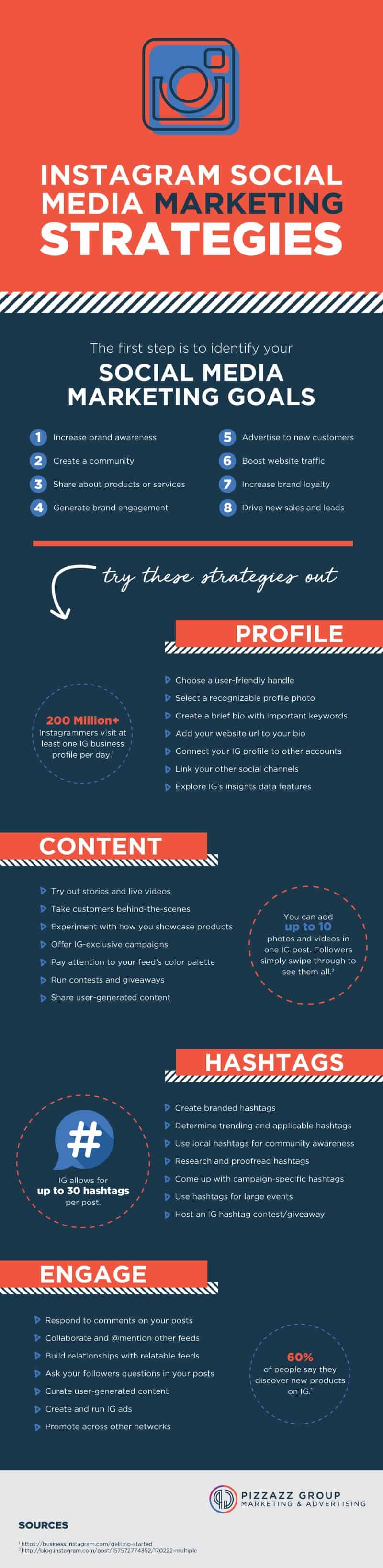
Pizzazz Group share the fundamentals you need to know in this infographic.
Here’s a quick summary:
- Set goals
- Create your profile
- Share content
- Use hashtags
- Engage with others
Check out their infographic for more detail.
Marketing on Instagram can be incredibly effective for businesses looking to increase their visibility and engagement with audiences. With over a billion monthly active users, Instagram offers a rich platform for brands to connect with potential customers through visually engaging content. To harness the full power of Instagram for marketing, follow these five crucial steps:
Setting Goals
Setting the right goals is foundational to any successful Instagram marketing strategy, especially for small businesses. With limited resources, focusing your efforts on specific, achievable objectives can yield far more effective results than a scattergun approach. Here’s a comprehensive guide to help small businesses set meaningful and achievable Instagram marketing goals.
- Understand Your Business Needs
Start by understanding what your business needs most from its Instagram presence. Is it more online visibility, increased foot traffic, direct sales, or brand loyalty? Each of these needs will direct you towards different types of goals. For instance:
- For visibility: Focus on metrics like follower count, post reach, and impressions.
- For sales: Track website clicks, product tags, and direct messages about purchasing.
- Define Specific Objectives
Goals should be as specific as possible. Instead of a vague aim like “increase brand awareness,” define what that means in practical, measurable terms. For example, “Increase the number of followers by 20% by the end of the quarter” or “Double the reach of our posts in six months.” Specific goals help in measuring success and adjusting tactics accordingly.
- Ensure Goals Are Measurable
Each goal must be measurable. This means setting up ways to track progress. Instagram’s own analytics tools, Instagram Insights, provides data on followers, likes, comments, shares, saves, story views, and more, which can be invaluable. Tools like Hootsuite, Sprout Social, or Buffer also offer detailed analytics to help track these metrics.
- Align Goals with Resources
For small businesses, resources—whether time, money, or manpower—are often limited. It’s essential to set goals that are achievable within your resource constraints. If you’re running the business solo or with a small team, consider setting fewer, focused goals. For instance, instead of aiming to post daily, a more manageable goal might be to post high-quality content three times a week.
- Make Goals Relevant
Goals should directly contribute to the broader objectives of your business. If your primary revenue comes from an online store, focus on goals that drive traffic to your website, like increasing the number of posts with product tags or using Instagram shopping features. If your business is service-oriented, like a salon or consultancy, focus on goals around engagement and building a community, such as increasing comment interaction or direct engagements through DMs.
- Set Time-bound Goals
Every goal should have a deadline. This not only provides motivation but also a clear timeline to evaluate what’s working and what isn’t. Short-term goals can feed into larger, long-term aspirations, providing a roadmap for growth. For example, set monthly goals to increase engagement and quarterly goals for follower growth.
- Regularly Review and Adjust Goals
Instagram’s algorithm and audience preferences can change, impacting the effectiveness of your strategy. Regularly review your goals against the performance data and adjust as needed. Maybe you find that video content achieves better engagement than photos, or posting at different times increases your reach. Stay flexible and be ready to shift your strategy to align with these insights.
- Celebrate Achievements and Learn from Shortfalls
When goals are met, take the time to celebrate these achievements with your team, even if it’s just you! This not only boosts morale but can also provide insights into what tactics work best for your audience. Conversely, if goals are not met, analyze what might have been the barriers. Was the goal unrealistic, the strategy flawed, or did external factors play a role?
Implementing the Goals
Once you’ve set your goals, integrate them into your daily operations. Create a content calendar that reflects the aims, prepare posts ahead of time, and schedule them for optimal times. Regularly check your progress towards each goal, making it part of your routine to analyze Instagram Insights after each campaign or on a weekly basis.
By taking these steps, small businesses can create focused, effective Instagram marketing strategies that maximize their resources and help grow their presence on the platform strategically and sustainably.
Creating an Effective Instagram Profile
Creating a compelling Instagram profile is crucial for small businesses. It acts as your brand’s home on the platform, making a strong first impression and encouraging engagement. Here’s a detailed breakdown on how to optimize your Instagram profile for maximum impact.
- Choose the Right Username
Your username, or handle, is one of the first elements potential followers will notice. It should:
- Reflect your business name as closely as possible. If your exact business name is taken, add a location or industry descriptor (e.g., @BobsBakerySeattle).
- Be consistent with other social media handles to make it easy for your customers to find you across platforms.
- Be simple and memorable. Avoid complex spellings. The easier it is to remember and type, the better.
- Optimize Your Profile Photo
Your profile photo is critical for brand recognition. It should:
- Be high quality. Ensure the image is clear and not pixelated.
- Fit well within the circular frame Instagram uses. Logos should be centered and fully visible.
- Be consistent across all social media platforms to help reinforce your brand identity.
- Craft a Compelling Bio
Your bio offers a brief opportunity to convey who you are and what your business does. It should:
- Be concise. You have 150 characters, so every word counts.
- Include a value proposition. Tell potential followers why they should care. What makes your brand special?
- Use a call-to-action. Encourage visitors to take a specific action, like visiting your website or checking out new products.
- Utilize emojis tactfully. Emojis can break up the text and make the bio easier to read, but use them strategically so they enhance understanding and appeal.
- Utilize the Website Link
Instagram only allows one clickable link in your bio, so use it wisely:
- Direct followers to a targeted landing page designed for Instagram traffic. This could be a sign-up page, a special discount offer, or a featured product collection.
- Consider using link-in-bio tools like Linktree or Campsite, which allow you to host multiple links and make the most of your single link allowance.
- Highlight Stories with Custom Covers
Instagram Stories Highlights allow you to permanently showcase what would otherwise be ephemeral content. They can be used effectively to:
- Categorize content such as behind-the-scenes, customer reviews, or product demos.
- Maintain visual consistency by using custom covers that match your brand’s style and color scheme.
- Keep important information accessible, like FAQs, upcoming events, or promotions.
- Business Account Advantages
Switch to a business account if you haven’t already. This free option provides:
- Access to Instagram Insights, offering valuable data about follower demographics and behaviors.
- Increased visibility and credibility, as it clearly marks your profile as a business.
- Ability to add contact buttons, such as Email, Call, and Directions, directly to your profile, making it easier for customers to reach out.
- Regular Updates
Regularly update your profile to keep it relevant:
- Refresh your bio to reflect any new offers, events, or changes in your business.
- Update your link to direct followers to your latest content, products, or campaigns.
- Review and update your highlights to ensure they continue to represent your most valuable and engaging content.
Conclusion
A well-crafted Instagram profile is essential for small businesses looking to grow their presence and engagement on the platform. By carefully selecting a username, optimizing profile photos, crafting a strategic bio, effectively using the available link, utilizing highlights, and maintaining the profile, small businesses can create a strong foundation for their Instagram marketing efforts. This approach not only attracts more followers but also turns casual visitors into loyal customers.
Sharing Content on Instagram
For small businesses, sharing the right content on Instagram is crucial for building a brand, engaging with customers, and driving sales. This expanded guide provides detailed tips and strategies for creating content that resonates and performs well on the platform.
- Understanding Content Types
Instagram supports a variety of content types, each with its unique benefits:
- Photos: High-quality, visually appealing images remain a staple on Instagram. Ensure your photos are well-lit and in focus.
- Videos: Videos can be up to 60 seconds long in posts, longer on IGTV, and up to 15 seconds in Stories. They are excellent for tutorials, behind-the-scenes looks, or product showcases.
- Stories: These are great for more casual, spontaneous content and disappear after 24 hours unless saved to Highlights.
- Reels: Use this feature for short, engaging videos that are easily discoverable, making them ideal for reaching a broader audience.
- Carousel Posts: These allow multiple photos or videos in a single post, perfect for storytelling or showcasing different angles of a product.
- Plan Your Content Calendar
A content calendar helps plan and organize your posts efficiently. It ensures a consistent posting schedule, which is crucial for keeping your audience engaged and growing your following. Here’s how to do it:
- Map out key dates and events related to your business, such as product launches, promotions, or seasonal events.
- Balance different types of content to keep your feed interesting. Include a mix of product photos, behind-the-scenes content, user-generated content, etc.
- Schedule posts for optimal times, considering when your audience is most active. Instagram Insights can help determine this.
- Focus on High-Quality Visuals
The visual quality of your content cannot be overstated on Instagram. Tips for creating high-quality visuals include:
- Use natural light for photographs when possible.
- Maintain a consistent aesthetic in your photos by using similar filters or editing styles, which helps strengthen your brand identity.
- Invest in good equipment or software for editing. High-quality doesn’t always mean professional equipment; even smartphones can capture excellent content with the right techniques.
- Emphasize Authentic Storytelling
People connect with stories. Share your business’s journey, customer stories, or the process behind creating a product. Authentic storytelling can:
- Build deeper connections with your audience.
- Increase engagement by encouraging comments and shares.
- Humanize your brand, making it more relatable and trustworthy.
- Leverage User-Generated Content
User-generated content (UGC) is incredibly valuable for small businesses. Encourage your customers to share their photos and stories related to your products, and repost this content on your profile. UGC:
- Enhances credibility through real-life testimonials.
- Boosts engagement as users feel valued when their content is featured.
- Expands your content library without additional content creation costs.
- Optimize Captions and Hashtags
Captions and hashtags are powerful tools that can significantly expand your reach and engage your audience. Here’s how to optimize them:
- Write engaging captions that invite interaction. Ask questions, share interesting facts, or include calls-to-action.
- Use relevant hashtags to increase the visibility of your posts. Research and use a mix of popular, niche, and branded hashtags. Keep experimenting and tracking which hashtags perform best.
- Analyze and Adjust
Constantly monitor the performance of your posts through Instagram Insights. Look at metrics such as likes, comments, shares, saves, reach, and engagement rates. This data is invaluable for understanding what types of content resonate most with your audience. Use this information to:
- Tweak your content strategy based on what works best.
- Test new ideas and track how they perform.
- Refine posting times and frequency.
Conclusion
Effectively sharing content on Instagram involves understanding the different types of content, planning a strategic content calendar, focusing on visual quality, and engaging authentically with your audience. By leveraging these strategies, small businesses can enhance their Instagram presence, foster a stronger connection with their audience, and achieve their marketing goals more effectively.
Using Hashtags on Instagram
Hashtags are a fundamental component of Instagram marketing. They help categorize content, increase discoverability, and connect with both general and niche audiences. For small businesses, understanding and strategically using hashtags can significantly enhance the reach and effectiveness of their Instagram presence. Here’s a detailed guide on how to use hashtags effectively.
- Understand Hashtag Basics
Hashtags are words or phrases preceded by the ‘#’ symbol, used to tag content on social media platforms. On Instagram, they help users discover posts related to their interests and can be used to follow trending topics or conversations. Hashtags can be placed in the post’s caption or in the comments section.
- Use Relevant Hashtags
The first rule of effective hashtag use is relevance. Hashtags should be relevant to the content of your post and your audience. For example, a bakery might use hashtags like #FreshBaked or #ArtisanBreads when posting an image of their latest sourdough loaf. Relevance ensures that your content reaches the most interested and engaged audience.
- Research and Choose Hashtags Wisely
Selecting the right hashtags requires a bit of research:
- Use Instagram’s search tool to find popular and trending hashtags related to your business.
- Consider hashtag size and competition. Very popular hashtags (e.g., #food) might see your content get lost among millions of others. Aim for medium-popularity hashtags that still have a significant audience but less competition.
- Look at competitors and industry leaders to see what hashtags they are using effectively.
- Create a Branded Hashtag
A branded hashtag is unique to your business and can be used to build brand identity. It could be as simple as your company name, a tagline, or the name of one of your products or campaigns. Encourage your followers to use this hashtag when posting content related to your brand. This not only increases engagement but also helps collect user-generated content that you can share on your own profile.
- Mix General and Niche Hashtags
To maximize your reach, use a combination of general, trending, and niche-specific hashtags. General hashtags have a broad appeal (like #InstaFood or #Fashionista), while niche hashtags (like #VeganBakery or #HandmadeJewelry) target specific audiences. The mix ensures that you attract both broad and highly targeted segments of Instagram users.
- Use Hashtags Sparingly
Instagram allows up to 30 hashtags per post, but using too many can look spammy and may actually hurt engagement. Best practices recommend using between 5 and 11 hashtags per post. Choose the most relevant and effective ones for each post.
- Organize and Rotate Hashtags
To avoid “spamming” any single hashtag and to keep content fresh, organize your hashtags into categories and rotate their use:
- Create sets of hashtags that relate to different types of posts (e.g., product posts, inspirational posts, behind-the-scenes posts).
- Rotate these sets to vary the hashtags you use on similar posts over time.
- Monitor Hashtag Performance
Use Instagram Insights or third-party tools to track how different hashtags perform in terms of bringing visibility to your posts. Note which hashtags frequently lead to new followers or higher engagement and prioritize those in future posts.
- Stay Updated on Hashtag Trends
Hashtag popularity and relevance can change rapidly. Regularly check for new trends so you can incorporate emerging hashtags that might attract a broader audience. This is especially important during special events, seasons, or trending topics in your industry.
Conclusion
Effectively using hashtags on Instagram can dramatically increase the reach and engagement of your posts. By researching and strategically selecting appropriate hashtags, creating and promoting a branded hashtag, and continuously monitoring and adjusting your hashtag strategy, your small business can achieve greater visibility and more effectively connect with both existing and potential customers on Instagram.
Engaging with Others on Instagram
Engagement on Instagram goes beyond just garnering likes and comments on your posts. It’s about building relationships and a community around your brand. For small businesses, engagement can drive brand loyalty, enhance customer relationships, and increase reach organically. Here’s a detailed guide on how to effectively engage with others on Instagram.
- Actively Participate in Conversations
Engagement is a two-way street. Participate actively in conversations on your own posts and others’:
- Respond to comments on your posts promptly. Acknowledging comments shows that you value your followers and are interested in their input.
- Comment on followers’ and non-followers’ posts, especially those within your niche. This can help increase your visibility and attract new followers.
- Use Instagram Stories and Reels to Engage
Instagram Stories and Reels offer interactive features like polls, questions, quizzes, and challenges that can significantly boost engagement:
- Ask questions or use polls in your Stories to encourage followers to interact directly with your content.
- Respond to the interactions in a timely manner to keep the conversation going.
- Create engaging Reels that encourage user participation, such as challenges or trends relevant to your niche.
- Host Live Sessions
Instagram Live is a powerful tool to connect with your audience in real-time:
- Host Q&A sessions where you answer your followers’ questions live. This can be a great way to engage directly with your audience and provide valuable information.
- Conduct live tutorials or demonstrations related to your products or services. It allows potential customers to see your products in action and enhances trust.
- Collaborate with Influencers and Other Brands
Collaborations can extend your reach and bring new followers from relevant demographics:
- Partner with influencers who align with your brand values and have an engaged audience that might be interested in your products.
- Engage in shoutout exchanges or co-host events with other businesses in your niche that complement your offerings.
- Engage with Local and Niche Communities
Being active in community discussions can enhance your local and niche presence:
- Use location tags and hashtags to make your posts discoverable to local and niche audiences.
- Participate in or sponsor local events and share this on Instagram.
- Join conversations on community pages or in groups related to your business niche.
- Encourage User-Generated Content
User-generated content (UGC) not only provides you with additional content to share but also builds community and trust:
- Create a branded hashtag for your customers to use, making it easy to find and share their content.
- Feature customers’ posts in your Stories or on your feed, and make sure to give them credit.
- Regularly Engage with Your Most Active Followers
Identifying and engaging with your most active followers can turn them into brand advocates:
- Send personal thank you messages, offer special discounts, or give them early access to new products.
- Feature their testimonials or reviews on your feed or website.
- Monitor and Adapt Based on Engagement Analytics
Use Instagram Insights to monitor which types of engagement strategies are working best:
- Track what type of content generates the most engagement and replicate those successful elements.
- Adjust your engagement tactics based on what resonates with your audience, such as focusing more on Stories if they drive more interactions than regular posts.
Conclusion
Effective engagement on Instagram involves more than just pushing out content; it requires active and thoughtful interaction with your audience and partners. By employing a diverse range of engagement strategies—from leveraging interactive content formats like Stories and Reels, to collaborating with influencers, and actively participating in community discussions—small businesses can create a loyal and engaged follower base that supports sustained business growth on and off the platform.
Conclusion
Developing a successful Instagram marketing strategy requires thoughtful planning and ongoing adjustment. By setting clear goals, creating a compelling profile, sharing high-quality content, using hashtags smartly, and actively engaging with the Instagram community, brands can build a strong presence and achieve substantial results on this dynamic platform. Whether you’re just starting out or looking to enhance an existing strategy, these steps provide a roadmap for Instagram success.

Author:
Mark Ford