
In the age of digital connectivity, social media has become an integral part of our daily lives. For businesses, it represents a goldmine of opportunities to reach and engage with their target audience.
However, not all social media strategies are created equal, and many businesses find themselves struggling to achieve meaningful results. If your social media strategy is failing to deliver the desired outcomes, don’t despair.
In this blog post, we’ll explore the common reasons behind social media strategy failures and provide you with 12 actionable steps to turn the tide and achieve social media success.
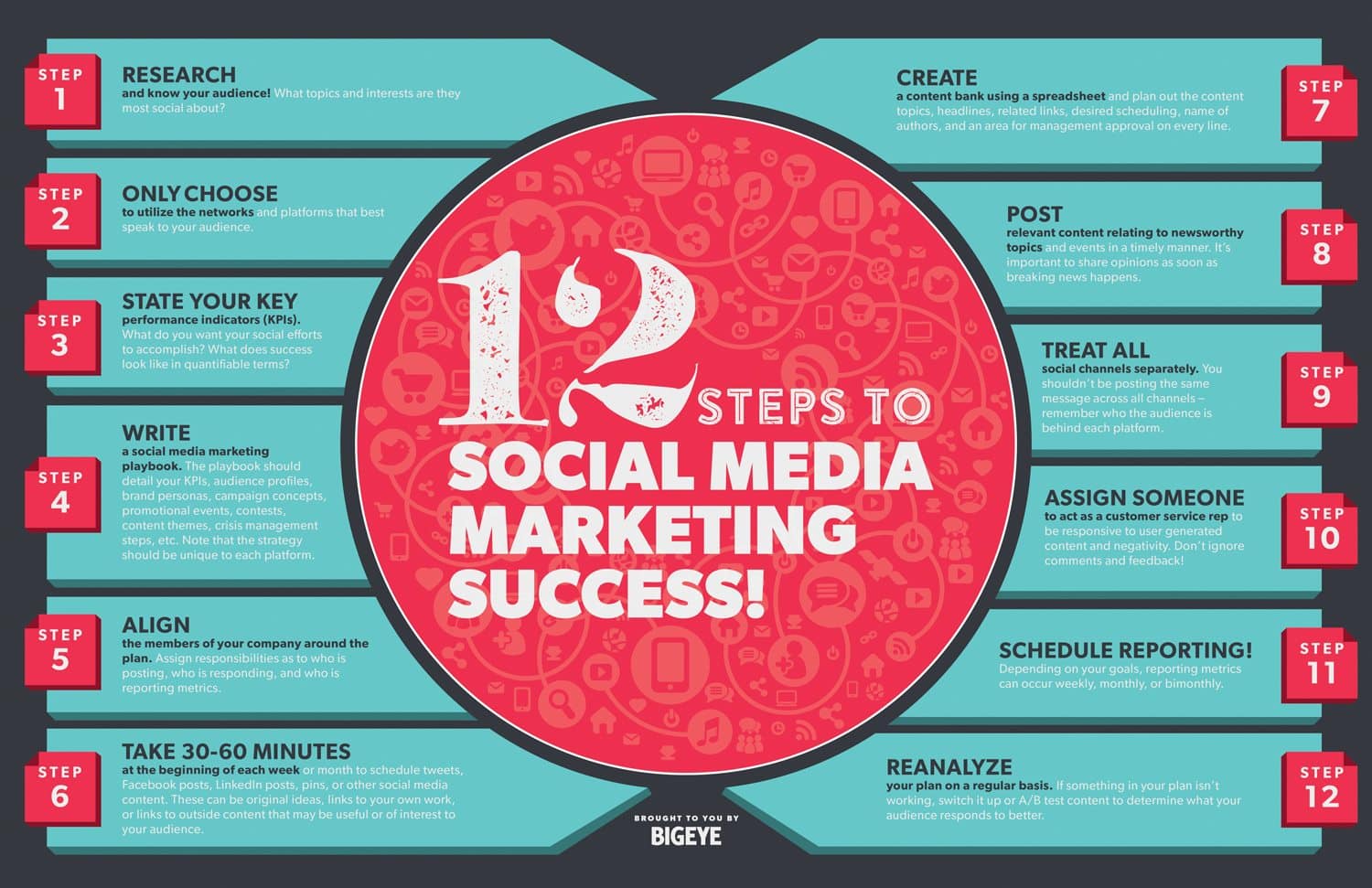
Infographic from Big Eye Agency.
Understanding Social Media Strategy Failure
Before we dive into the steps to achieve social media success, it’s crucial to understand why social media strategies can fail in the first place. Here are some common reasons:
- Lack of Clear Objectives: Without well-defined goals, your social media efforts can become directionless. Are you aiming to increase brand awareness, drive website traffic, generate leads, or boost sales? Clarity in objectives is key.
- Inconsistent Branding: Inconsistency in your brand’s messaging, tone, and visual identity can confuse your audience and dilute your brand’s impact.
- Ignoring the Audience: Failing to understand your target audience’s needs, preferences, and behaviors can result in content that falls flat and fails to resonate.
- Overlooking Analytics: Social media success is not just about posting content; it’s about analyzing what works and what doesn’t. Ignoring data and analytics can lead to missed opportunities for improvement.
- Lack of Engagement: Social media is a two-way street. If you’re only using it as a broadcast platform and not engaging with your audience, you’re missing out on valuable opportunities.
- Inadequate Content Strategy: Posting content without a well-thought-out strategy can result in a disjointed and ineffective social media presence.
Now that we’ve identified some common pitfalls let’s explore 12 steps to help you achieve social media success:
Step 1: Set Clear and Measurable Goals
The foundation of any successful social media strategy is setting clear and measurable goals. These goals should be specific, attainable, relevant, and time-bound (SMART). Whether you want to increase your follower count, boost website traffic, or improve customer engagement, having well-defined objectives will guide your strategy.
Step 2: Know Your Audience
Understanding your target audience is paramount. Conduct thorough research to determine their demographics, interests, pain points, and online behavior. This knowledge will help you create content that resonates with your audience.
Step 3: Choose the Right Platforms
Not all social media platforms are created equal, and not all of them will be suitable for your business. Choose platforms that align with your target audience and business goals. For example, if you’re targeting professionals, LinkedIn might be more effective than TikTok.
Step 4: Develop a Content Strategy
A well-crafted content strategy is the backbone of your social media success. Plan your content calendar, decide on content types (videos, articles, infographics), and ensure consistency in messaging and branding.
Step 5: Create High-Quality Content
Quality over quantity should be your mantra. Invest time and resources in creating valuable, engaging, and shareable content. This could include informative blog posts, eye-catching visuals, or entertaining videos.
Step 6: Optimize for Each Platform
Each social media platform has its own algorithms and best practices. Tailor your content for each platform to maximize its effectiveness. For example, use hashtags on Instagram, engage in trending conversations on Twitter, and create visually appealing pins on Pinterest.
Step 7: Be Consistent
Consistency is key to building a strong social media presence. Stick to a regular posting schedule and maintain consistency in your brand’s voice and visual identity. Your audience should instantly recognize your content.
Step 8: Monitor and Respond
Social media is not a one-way street. Monitor your social media channels for mentions, comments, and messages. Respond promptly and engage with your audience to build relationships and foster trust.
Step 9: Leverage Paid Advertising
While organic reach is essential, don’t underestimate the power of paid advertising on social media. It allows you to target specific demographics and interests, ensuring your content reaches the right people.
Step 10: Analyze and Adjust
Regularly analyze your social media performance using analytics tools provided by each platform or third-party analytics software. Pay attention to metrics like engagement, reach, click-through rates, and conversion rates. Use this data to make informed adjustments to your strategy.
Step 11: Stay Updated
The social media landscape is constantly evolving. Stay updated with the latest trends, algorithm changes, and new features on social media platforms. Adapt your strategy accordingly to stay ahead of the curve.
Step 12: Seek Professional Help
If managing your social media strategy becomes overwhelming, consider seeking professional help. Social media experts and digital marketing agencies can provide valuable insights and manage your social media efforts effectively.
Conclusion
Achieving success on social media is not a one-size-fits-all endeavor. It requires a well-thought-out strategy, clear objectives, and a deep understanding of your audience. By following these 12 steps, you can identify and address the common pitfalls that lead to social media strategy failures and pave the way for a successful social media presence. Remember, consistency, adaptability, and a commitment to providing value to your audience are the keys to long-term success in the ever-evolving world of social media.

Author:
Mark Ford