Are you looking for ways to grow your small business? Want to create a sales and marketing funnel that generates and converts leads into customers?
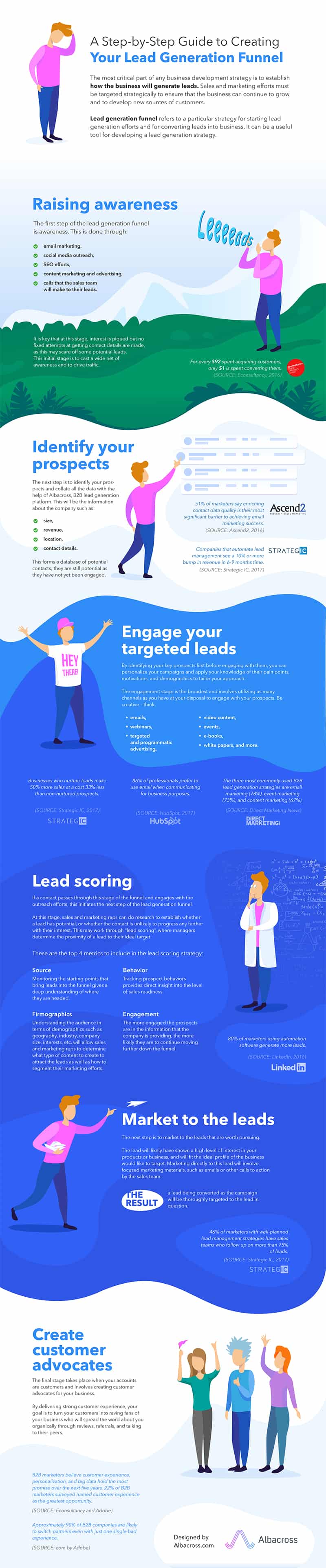
Albacross share their steps to a successful marketing funnel in this infographic.
Here’s a quick summary:
- Raising awareness
- Identify your prospects
- Engage your targeted leads
- Lead scoring
- Market to the leads
- Create customer advocates
Check out the infographic for more detail.
Marketing is the backbone of business growth, and nothing drives that growth more effectively than a well-structured marketing funnel. A marketing funnel maps out the entire journey that your prospects go through, from becoming aware of your business to becoming loyal advocates for your brand. Each stage requires a thoughtful strategy that not only attracts but nurtures and converts your audience. A killer marketing funnel will maximize your business’s potential by efficiently moving people through these stages.
In this post, we’ll break down the six essential steps to building a killer marketing funnel that can massively grow your business.
Raising Awareness
Raising awareness is the first and arguably the most critical stage of your marketing funnel. Without creating awareness, your business remains invisible to potential customers, and everything else in the funnel—nurturing leads, generating conversions—simply cannot happen. For small businesses, where resources and budgets might be limited, getting this stage right is essential for setting up long-term success.
In this expanded section, we’ll dive deeper into the strategies, tactics, and considerations for raising awareness, specifically tailored to small businesses.
- Build a Strong Brand Identity
Before jumping into tactics, your business must have a clear and compelling brand identity. A consistent and memorable brand helps differentiate you from competitors and makes your marketing efforts more effective.
- Logo and Visuals: Invest in a professional logo, cohesive color scheme, and visual identity. Your brand’s look and feel should communicate your values and resonate with your target audience.
- Brand Voice: Define how your brand communicates. Are you formal, friendly, or humorous? A clear brand voice helps you stand out and keeps your messaging consistent across all platforms.
- Brand Story: Craft a story that explains why your business exists, what it stands for, and how it solves problems for customers. People connect more deeply with stories, and a strong brand narrative can make your marketing more relatable and impactful.
- Content Marketing: Share Valuable, SEO-Optimized Content
Content marketing is one of the most powerful ways to raise awareness organically. By consistently producing high-quality, valuable content, you can attract and engage potential customers while building your authority in your industry.
- Blogging: Regularly publish blog posts that address the pain points, questions, and interests of your target audience. Make sure your content is optimized for search engines by targeting relevant keywords that your audience is likely searching for.
- How to Find Blog Topics: Use tools like Google Trends, Answer the Public, or BuzzSumo to find trending topics in your industry. Also, analyze your competitors’ content to identify gaps or opportunities.
- On-Page SEO: Implement SEO best practices, such as including targeted keywords in your headlines, meta descriptions, and alt text for images. Use internal and external links to boost credibility, and ensure your blog is easy to read with a clear structure.
- Video Content: Video is one of the most engaging forms of content and can greatly improve your reach. YouTube, Instagram Reels, TikTok, and even live streams on platforms like Facebook or LinkedIn are excellent for sharing educational, entertaining, or behind-the-scenes content.
- YouTube SEO: Like written content, video content should be optimized for search engines. Use relevant keywords in your video titles, descriptions, and tags to increase visibility.
- Short-Form Video: With the rise of platforms like TikTok and Instagram Reels, short-form videos (30 seconds to 1 minute) are gaining immense popularity. Use this format to deliver bite-sized, engaging content that can go viral and quickly raise awareness.
- Infographics: Visually appealing infographics can distill complex information into an easily digestible format, increasing the likelihood of shares and engagement. Infographics are particularly effective for social media and can help you spread brand awareness while educating your audience.
- Leverage Social Media for Targeted Awareness
Social media platforms are essential for raising awareness, especially for small businesses that need to build relationships and engage directly with potential customers. However, each platform requires a tailored approach.
- Facebook: With its massive user base, Facebook allows you to engage a diverse audience. Facebook Groups and Pages are effective for building communities and fostering two-way communication.
- Facebook Ads: Facebook’s advertising platform is powerful for small businesses due to its detailed targeting options. You can run awareness campaigns targeted to specific demographics, interests, and behaviors. Even with a small budget, Facebook Ads can increase visibility and drive traffic to your website or offers.
- Facebook Events: Create and promote events to attract attention, whether it’s an in-person event, a webinar, or a live Q&A session.
- Instagram: Instagram’s visual nature makes it ideal for building awareness, especially if your business has strong visuals like food, fashion, art, or design.
- Instagram Stories and Reels: Use Stories and Reels for behind-the-scenes content, product showcases, tutorials, and more. These formats encourage engagement and help keep your brand top of mind for your followers.
- Hashtags: Use relevant, popular hashtags to increase the discoverability of your posts. Research trending hashtags in your industry, and experiment with a mix of popular and niche hashtags to boost reach.
- Collaborate with Micro-Influencers: Partner with micro-influencers who have small but engaged audiences in your niche. These collaborations often cost less than big-name influencers but can have a powerful impact on awareness.
- LinkedIn: For B2B businesses, LinkedIn is essential for building professional relationships and raising awareness within your industry.
- LinkedIn Articles: Publish long-form content to showcase your expertise. LinkedIn Articles often get more traction than traditional posts, as LinkedIn’s algorithm favors in-depth, thoughtful content.
- Networking: Regularly engage with other users’ posts by liking, commenting, and sharing. This not only gets your name in front of your audience but also builds valuable connections.
- Harness the Power of Paid Advertising
While organic tactics are critical, paid advertising allows you to scale your awareness efforts quickly, ensuring that your business is seen by a larger and more targeted audience. Small businesses can benefit from various paid strategies:
- Google Ads: With Google Ads, you can target potential customers who are actively searching for products or services related to your business. Google Ads allows you to bid on keywords, so your business appears at the top of search engine results, which is ideal for attracting high-intent traffic.
- Display Ads: Use Google Display Ads to raise awareness by placing visually appealing banner ads on relevant websites across the web. This helps increase your brand’s visibility among people who may not know you yet.
- Remarketing: Google also offers remarketing ads, which show ads to users who have already visited your site. This helps keep your brand top of mind and encourages potential customers to return to your site.
- Social Media Advertising: All major platforms (Facebook, Instagram, Twitter, LinkedIn) offer sophisticated ad targeting options that can help you reach your ideal customers.
- Lookalike Audiences: Platforms like Facebook allow you to create “lookalike audiences” based on your existing customers. These are users who share similar traits and interests with your audience, making them highly likely to engage with your brand.
- Video Ads: Video ads typically outperform static ads in terms of engagement. A short, engaging video that tells your brand’s story can grab attention quickly and raise awareness effectively.
- Native Advertising: Platforms like Taboola and Outbrain allow you to place content-based ads on popular news and blog sites. Native ads are designed to blend seamlessly with the surrounding content, making them less intrusive and more engaging.
- Optimize Your Website for Discovery
Your website is your online home, and for many customers, it’s their first impression of your brand. Ensuring that your website is optimized for discovery is key to raising awareness. When potential customers search for solutions online, your website should be easy to find and navigate.
- Search Engine Optimization (SEO): SEO ensures your website ranks well on search engine results pages (SERPs). For small businesses, local SEO is particularly important, as it helps your business appear in searches relevant to your geographic area.
- Local SEO: Claim and optimize your Google My Business profile, including accurate NAP (name, address, phone number) details. Encourage satisfied customers to leave reviews, as they play a crucial role in improving your local search rankings.
- On-Page SEO: Use clear, descriptive title tags and meta descriptions for all your pages. Include relevant keywords naturally in your page content, headers, and URLs. Make sure your website is mobile-friendly, as mobile-friendliness is a key factor in search rankings.
- Blog Integration: Adding a blog section to your website can significantly boost your SEO and drive traffic. Create keyword-rich, informative content that answers your audience’s questions and positions you as a thought leader in your field.
- Landing Pages: Use landing pages for specific campaigns or offers, optimized for both SEO and conversions. Ensure that your landing pages load quickly, provide value, and have clear calls to action (CTAs) that encourage visitors to take the next step.
- Leverage Public Relations and Media Exposure
Media coverage can be a powerful way to build credibility and raise awareness for your small business. You don’t need a big budget for PR; many small businesses can effectively manage media relations on their own.
- Press Releases: Send out press releases to relevant publications when your business launches new products, hosts events, or reaches significant milestones. Local media is often eager to cover small businesses, especially those with unique or community-driven stories.
- Media Outreach: Reach out to bloggers, journalists, and influencers in your industry and pitch story ideas or guest posts. Building relationships with media professionals can help you get coverage that boosts awareness and establishes credibility.
- Guest Posting: Writing guest posts for industry blogs and websites gives you access to their audience, allowing you to showcase your expertise and raise awareness of your brand.
Conclusion
For small businesses, raising awareness requires a balance of organic and paid strategies, all tied together with a strong brand identity. The key to long-term success is consistency—regularly producing valuable content, engaging on social media, optimizing your website, and leveraging advertising or media exposure.
By focusing on these efforts, small businesses can effectively increase visibility, attract new prospects, and guide them into the next stages of the marketing funnel.
Identify Your Prospects
Once you’ve raised awareness about your business, the next critical step in your marketing funnel is identifying who your potential customers are. This stage is all about zeroing in on the right audience — those who are most likely to convert into paying customers. For small businesses, resources can be limited, so it’s important to be laser-focused on targeting the right people to maximize your return on investment.
Identifying your prospects isn’t just about collecting random data; it’s about building a comprehensive understanding of who your ideal customers are, where they are, and how they engage with your brand. Here’s a deeper look into effective strategies for identifying your prospects.
- Define Your Buyer Personas
The first and most important step to identifying your prospects is to create detailed buyer personas. These are fictional representations of your ideal customers based on market research, data, and insights about your existing customers.
- Demographics: Start by outlining basic demographic details such as age, gender, income level, education, and job title. These factors help you understand who your primary target groups are and how they differ from one another.
- Psychographics: Dive deeper into your prospects’ lifestyles, interests, values, pain points, and buying motivations. Psychographics help you understand why people buy your product and what factors influence their decision-making process.
- Behavioral Data: Look at how your prospects behave online and offline. This includes their purchasing patterns, brand loyalty, frequency of engagement, and how they navigate your website or social media pages.
- Challenges and Pain Points: Understand the specific challenges your target audience faces, and determine how your products or services can solve these problems.
Here’s an example of a simple buyer persona for a small business selling eco-friendly kitchen products:
- Name: Eco-conscious Emily
- Age: 30-45
- Occupation: Marketing professional
- Values: Sustainability, environmental responsibility
- Pain Point: Struggling to find eco-friendly kitchen tools that are durable and affordable.
- Buying Motivation: Looking for environmentally friendly alternatives to everyday kitchen items without sacrificing quality.
By creating two or three key buyer personas, you can tailor your marketing messages to resonate with the specific needs and desires of each group.
- Use Customer Data and Analytics
Leveraging data from your existing customers can provide valuable insights into your target prospects. By analyzing customer data, you can identify trends, preferences, and patterns that point to potential future customers.
- Website Analytics: Tools like Google Analytics can help you understand who is visiting your website, where they’re coming from, and how they’re engaging with your content. Look for patterns in demographics, geography, behavior, and acquisition channels to identify where your most engaged visitors are coming from.
- Traffic Sources: Review whether your traffic is coming from organic search, social media, referral links, or paid advertising. This helps you identify which platforms are most effective at attracting your target audience.
- Behavior Flow: Examine how visitors navigate your site, what pages they spend the most time on, and where they tend to drop off. This can provide clues about which content resonates most with your prospects and where you might need to improve user experience.
- CRM Data: If you’re using a Customer Relationship Management (CRM) tool, it’s a goldmine for identifying patterns in your customer base. Look at past purchase behavior, customer inquiries, and feedback to understand what drives your best customers.
- Customer Segmentation: Use your CRM data to segment customers based on purchase frequency, average order value, and product preferences. This will help you identify the key characteristics of your best customers and focus on attracting more prospects who fit that profile.
- Social Listening
Social listening involves tracking and analyzing conversations happening around your brand, products, industry, or competitors on social media. It’s a powerful tool for small businesses to identify potential prospects and understand their needs in real-time.
- Monitor Brand Mentions: Use social media listening tools like Hootsuite, Sprout Social, or Mention to track when people mention your brand or products. This allows you to engage with prospects directly, answer questions, and address concerns.
- Track Industry Keywords: Look for keywords and hashtags relevant to your industry or products to discover what people are talking about. For example, if you sell organic skincare, tracking hashtags like #naturalbeauty or #organicskincare can help you find individuals actively looking for recommendations or products.
- Analyze Competitor Conversations: Keep an eye on what people are saying about your competitors. This can reveal gaps in the market where your brand might be able to offer a better solution, and it also helps you understand what potential customers like or dislike about similar products.
Social listening not only helps you find prospects, but it also allows you to join conversations early in the customer journey, positioning your brand as a helpful resource.
- Survey and Interview Your Existing Customers
Your existing customers can provide direct insights into what prospects you should be targeting. Conduct surveys, interviews, or feedback sessions to understand why your current customers chose your product and what they value most about your brand.
- Customer Surveys: Use email surveys or online tools like SurveyMonkey or Google Forms to ask your customers key questions about their demographics, motivations, pain points, and buying behaviors.
- Example Questions:
- “What was the biggest challenge that led you to seek out our product/service?”
- “Which factors influenced your decision to choose our brand over others?”
- “Where do you typically go to research products in our category?”
- Incentivize Participation: Offering a small incentive like a discount or freebie for completing the survey can boost response rates and provide you with a richer pool of data.
- Example Questions:
- Customer Interviews: If possible, conduct one-on-one interviews with a few key customers to dive deeper into their experiences. You can gain valuable qualitative insights that don’t always show up in data but are crucial for understanding your prospects.
- Leverage Social Media Insights
Each social media platform provides its own set of analytics tools that can help you identify your prospects more effectively.
- Facebook Insights: Facebook provides a wealth of information about your audience, including their age, gender, geographic location, and even the times they are most active. Use this data to refine your targeting in future campaigns.
- Instagram Insights: Instagram offers detailed analytics for business accounts, allowing you to track follower demographics, engagement rates, and which posts or stories are getting the most traction. This helps you identify which types of content resonate most with your target audience.
- LinkedIn Analytics: For B2B businesses, LinkedIn’s analytics tools are invaluable for understanding who is engaging with your content. You can see details like job titles, company industries, and geographic regions, which can help you tailor your content and outreach strategies.
- Utilize Paid Advertising Targeting Features
Paid advertising on platforms like Google, Facebook, and LinkedIn offers advanced targeting features that help small businesses pinpoint their prospects with incredible precision. Even with a small budget, you can maximize your reach by using data-driven targeting strategies.
- Facebook Audience Targeting: Facebook Ads Manager allows you to create custom audiences based on specific criteria such as age, location, interests, behaviors, and more. You can also use lookalike audiences, which help you find new prospects who are similar to your existing customers.
- Custom Audiences: Upload your customer email list to Facebook to target these individuals directly, or use pixel data to retarget website visitors who didn’t convert the first time.
- Lookalike Audiences: By creating a lookalike audience based on your current customers or website visitors, Facebook can identify users with similar characteristics, helping you reach more prospects who are likely to be interested in your offerings.
- Google Ads Targeting: With Google Ads, you can use search intent targeting to show ads to people actively searching for keywords related to your business. This ensures that your marketing efforts are directed toward individuals who are already interested in your products or services.
- Demographic and Geographic Targeting: Google Ads also allows you to target prospects based on their location, income level, age, and more, which is especially useful for small businesses with a local focus.
- Implement Lead Magnets to Identify Prospects
Lead magnets are valuable content offers that help you capture prospect information in exchange for something useful, such as an eBook, checklist, free trial, or webinar. By offering something of value, you can entice potential customers to share their contact details, helping you identify and nurture them as prospects.
- Content Upgrades: Create downloadable resources like guides, templates, or whitepapers that your audience can access by providing their email addresses.
- Webinars or Free Trials: Offering free, value-driven webinars or trials of your service can help you capture highly engaged leads and identify prospects who are actively looking for solutions.
Ensure your lead magnets are highly relevant to your buyer personas and aligned with the needs and interests of your ideal customers. Use landing pages with clear calls to action and forms to capture leads’ information.
Conclusion
For small businesses, identifying the right prospects is foundational to building an effective marketing funnel. The more accurately you can define and understand your audience, the more effectively you can craft messaging, content, and offers that resonate with them.
By combining data analysis, social listening, buyer personas, and advanced targeting strategies, small businesses can pinpoint their ideal prospects, making the rest of the marketing funnel far more effective. With the right approach, identifying prospects becomes less about guesswork and more about data-driven decisions that lead to meaningful connections and conversions.
Engage Your Targeted Leads
Once you’ve identified your prospects, the next vital step in the marketing funnel is to engage them. Engagement is about creating meaningful interactions with your targeted leads, encouraging them to take action, and guiding them further down the funnel. The goal is to transform these leads into interested buyers by building relationships, offering value, and nurturing their journey with your brand. For small businesses, engaging targeted leads effectively is a key factor that can differentiate them from competitors and help grow a loyal customer base.
Let’s explore how small businesses can successfully engage their targeted leads with a blend of personalization, content marketing, and digital strategies.
- Personalize Your Communication
Personalization is one of the most effective ways to engage your targeted leads. Today’s consumers expect brands to understand their preferences and deliver tailored experiences. Personalizing your communication can significantly increase the chances of turning leads into paying customers.
- Segment Your Audience: Use data from your CRM, website analytics, or email marketing platform to segment your leads based on factors like demographics, behaviors, or stage in the buyer’s journey. For example, segment leads into categories such as “first-time website visitors,” “downloaded a lead magnet,” or “abandoned cart customers.”
- Personalized Emails: Sending generic emails will rarely drive engagement. Instead, use email marketing platforms to send personalized messages that address your leads by name, reference their past behavior, and offer relevant content or products. You can do this by setting up automated email sequences (also known as drip campaigns) to deliver targeted content based on the lead’s interactions with your business.
- Example: If someone downloads a guide from your website, follow up with an email offering related resources or showcasing a product that aligns with their interests.
- Tools: Platforms like Mailchimp, ActiveCampaign, and HubSpot offer powerful automation features to help personalize emails based on lead behaviors.
- Dynamic Content: For websites, you can use dynamic content to display personalized content to your leads based on their previous actions or preferences. For example, if a lead visited your website looking at a particular product, display related recommendations or content next time they visit.
- Offer Valuable, Educational Content
Leads at the engagement stage are typically looking for more information before they make a purchase decision. Providing valuable and educational content is an excellent way to keep them engaged while positioning your brand as an expert in your field. The more value you offer, the more trust you build, making it easier for leads to progress through the funnel.
- Blog Posts: Regularly publish blog posts that address your leads’ pain points, answer their questions, or educate them about your products or industry. Content like “how-to” guides, case studies, or thought leadership pieces can provide the insights your leads are looking for.
- Example: If you run a fitness brand, publish blog content on topics such as “5 Tips to Maximize Your Home Workouts” or “How to Choose the Best Fitness Equipment for Your Needs.”
- Video Content: Video is one of the most engaging content formats, making it an ideal tool for lead engagement. Use videos to explain complex topics, demonstrate your product in action, or share customer testimonials.
- Example: Create product demo videos to show how your product works, or record tutorials that walk your audience through a problem your product can solve. Share these videos on social media, your website, or in email campaigns to engage leads.
- Webinars and Live Events: Hosting live webinars or events can help you engage leads in a more interactive way. Webinars allow you to address questions in real-time, provide in-depth information, and showcase your expertise.
- Example: A small accounting firm could host a webinar on “Tax Tips for Small Business Owners” to engage leads who are business owners seeking accounting solutions.
- Interactive Tools: Offering tools like calculators, quizzes, or assessments can be a great way to engage leads while providing them with personalized results.
- Example: If you’re selling eco-friendly products, offer a quiz like “What’s Your Sustainability Score?” to help prospects assess their habits and recommend products based on their results.
- Utilize Social Media Engagement
Social media platforms offer a direct line of communication between businesses and their leads. It’s an essential tool for engagement because it allows for real-time interaction, content sharing, and relationship-building. By actively engaging with your audience on social media, you can foster trust, demonstrate value, and guide leads toward making purchasing decisions.
- Respond to Comments and Messages: One of the simplest ways to engage leads is by responding to their comments, questions, and direct messages on social media. Timely responses show that your brand is attentive and values its customers. If a lead asks a question about your product on social media, providing a thoughtful answer could be the nudge they need to make a purchase.
- Tip: Keep an eye on brand mentions and hashtags related to your business. Engage with users who tag your business or use these hashtags, even if they aren’t directly messaging you.
- Host Social Media Contests and Giveaways: Contests and giveaways can significantly boost engagement by encouraging users to interact with your brand. Ask users to follow, comment, or share your content for a chance to win. This not only engages your current leads but can also attract new prospects.
- Example: A small coffee shop could host a giveaway where users share their favorite coffee moments and tag the shop for a chance to win a free coffee for a month.
- Polls and Q&A Sessions: Use Instagram Stories, LinkedIn polls, or Twitter Q&As to engage your audience and gather insights on their preferences. These features make it easy for users to interact with your brand while providing you with valuable feedback.
- Example: A beauty brand could use Instagram Stories to ask, “What’s your biggest skincare challenge?” and then follow up with product recommendations based on the most common answers.
- Engage Leads Through Retargeting Campaigns
Retargeting is an essential strategy for engaging leads who have shown interest in your products but haven’t yet converted. These leads may have visited your website, added items to their cart, or clicked on your ads but left before making a purchase. Retargeting allows you to re-engage these warm leads with tailored ads that remind them of your product and encourage them to take action.
- Facebook and Instagram Retargeting: Set up retargeting ads on Facebook or Instagram to reach users who have visited your website or interacted with your brand. Use enticing visuals, strong calls to action, and exclusive offers to draw them back.
- Example: If a user browsed specific products on your site, create retargeting ads that showcase those exact products and include a discount code or reminder of their benefits.
- Google Display Retargeting: Google Ads allows you to create display retargeting campaigns that show ads to users who have previously interacted with your website. Use this to keep your brand top-of-mind as prospects browse other sites.
- Example: If someone added a product to their cart but didn’t check out, display an ad reminding them of the item and offering free shipping as an incentive.
- Email Retargeting: If you’ve captured a lead’s email address, send follow-up emails to re-engage them. If they abandoned their cart, send a reminder email with a compelling offer to complete the purchase. If they downloaded a lead magnet but didn’t take the next step, send a follow-up email offering additional content or a special promotion.
- Lead Nurturing with Email Marketing
Email marketing remains one of the most effective channels for engaging and nurturing leads. Once you’ve captured a lead’s email address, you can deliver a series of targeted, automated emails designed to guide them through the buyer’s journey. Lead nurturing is all about delivering relevant content at the right time to encourage engagement and trust-building.
- Create a Drip Campaign: A drip campaign is an automated sequence of emails designed to nurture leads over time. Each email in the sequence should provide value, answer common questions, or introduce your product benefits.
- Example: After a lead subscribes to your newsletter, they could receive a series of emails over the course of a week that introduce your brand, highlight key products, share customer testimonials, and offer a discount to encourage a purchase.
- Send Exclusive Offers: Reward leads for their interest by sending exclusive offers or early access to products or services. Scarcity and exclusivity can drive action, especially when combined with time-limited deals.
- Example: Send an email to your list offering a “limited-time discount for subscribers only” to encourage them to act quickly.
- Use Storytelling: Engage your leads by telling your brand’s story or sharing the success stories of your customers. Storytelling helps build an emotional connection with your audience, which can be especially impactful for small businesses.
- Example: A small artisanal brand could share the story of how their product is made or highlight the real-life stories of customers who have benefited from using their product.
- Leverage User-Generated Content (UGC)
User-generated content (UGC) is content created by your customers or followers and shared publicly, typically on social media. It’s a powerful engagement tool because it adds authenticity to your brand and encourages others to share their experiences with your products.
- Encourage Customers to Share: Invite your customers to share photos or videos of themselves using your products. Offer incentives like discounts or the chance to be featured on your brand’s social media accounts.
- Example: A small fashion brand could encourage customers to post their outfits on Instagram with a branded hashtag for a chance to be featured on the company’s account.
- Feature UGC on Your Channels: Highlight the content your customers create on your website or social media platforms. Sharing UGC not only strengthens your relationship with the original content creator but also encourages others to participate.
- Example: Share customer testimonials, photos, or videos that show real people using your product to inspire confidence in new leads.
By employing these strategies, small businesses can create deeper engagement with their targeted leads, leading to increased trust, stronger relationships, and ultimately higher conversions. Remember, the key to engaging leads is consistency, authenticity, and providing value at every step of their journey with your brand.
Lead Scoring
Lead scoring is a powerful technique that allows small businesses to prioritize their sales and marketing efforts by identifying which leads are most likely to convert into paying customers. It helps businesses allocate resources more efficiently by focusing on leads that show the highest intent and potential for conversion. By implementing an effective lead scoring strategy, you can streamline your sales process, increase conversions, and ultimately grow your business faster.
Lead scoring involves assigning a numerical value (or score) to each lead based on various criteria, such as their behavior, engagement level, demographics, and fit with your target audience. The higher the score, the more qualified the lead is, and the more attention they should receive from your sales team. Let’s dive into actionable steps and strategies that small businesses can use to develop a robust lead scoring system.
- Define Your Ideal Customer Profile (ICP)
The first step in building a successful lead scoring model is to have a clear understanding of what your ideal customer looks like. This is often referred to as the Ideal Customer Profile (ICP). An ICP outlines the key characteristics of customers who are most likely to benefit from your product or service, making them more likely to convert.
- Demographic Factors: Consider factors like age, gender, income level, and job title. For a B2B business, it might include company size, industry, and location. These factors help you identify leads that fit your typical buyer persona.
- Example: If your small business sells HR software, your ideal customer might be an HR manager at a mid-sized company in the retail industry.
- Behavioral Factors: Consider customer behaviors that indicate higher intent. These might include how many times they’ve visited your website, how much time they’ve spent on key pages, or whether they’ve downloaded specific content, such as a whitepaper or case study.
- Example: A lead that visits your pricing page multiple times or requests a product demo is likely to be more qualified than one who only subscribes to your newsletter.
By defining your ICP, you can assign higher lead scores to those that closely match these characteristics and behaviors.
- Determine Key Lead Scoring Criteria
After identifying your ICP, the next step is to determine the criteria you’ll use to assign scores to your leads. This involves setting up two types of scoring: demographic scoring and behavioral scoring.
- Demographic Scoring: This type of scoring focuses on how well the lead fits your ideal customer based on factors like age, job title, company size, and location. Leads that closely match your ICP should receive higher scores. Those that don’t fit as well can receive lower scores or even be disqualified.
- Example: A B2B software company may give higher scores to leads that work for companies with over 50 employees and hold decision-making roles, such as C-level executives or department heads.
- Behavioral Scoring: Behavioral scoring tracks the actions a lead takes to measure their level of engagement and intent. Activities such as downloading content, attending webinars, or interacting with email campaigns should increase a lead’s score because these actions indicate interest.
- Example: A lead who has clicked on multiple links in your email campaigns or watched a product demo video might be more ready to purchase than one who only visited your homepage.
Common criteria for behavioral lead scoring include:
- Website visits: More frequent visits, especially to product or pricing pages, indicate higher intent.
- Content downloads: Leads who download eBooks, guides, or case studies show interest in learning more about your solution.
- Email engagement: Opens, clicks, and responses to your email campaigns are strong indicators of engagement.
- Webinar or event attendance: Leads who take the time to join your webinars or live events show a deeper level of commitment.
- Social media interaction: Engagement with your social media posts, such as likes, comments, or shares, can indicate brand interest.
- Assign Point Values to Lead Actions
Once you’ve identified the criteria for scoring, you need to assign specific point values to each action or characteristic. The point system should reflect the relative importance of each behavior or demographic factor in predicting the likelihood of conversion. Actions that suggest higher buying intent should receive more points.
- High-Value Actions: These actions typically indicate a stronger likelihood of conversion and should be assigned higher points. Examples include visiting the pricing page, requesting a demo, or attending a webinar.
- Example: Visiting your pricing page might be worth 20 points, while attending a webinar might be worth 30 points.
- Low-Value Actions: Actions like subscribing to a newsletter or visiting a blog post may indicate some interest but don’t necessarily signal immediate buying intent. These should be assigned fewer points.
- Example: Downloading an eBook might be worth 10 points, and subscribing to your newsletter might be worth 5 points.
The key is to balance the points assigned to actions based on how likely they are to lead to a purchase. For instance, someone visiting your pricing page repeatedly should be scored higher than someone who only views your blog content occasionally.
- Set Up a Threshold for Qualified Leads
Once you have a scoring system in place, the next step is to set a threshold score that qualifies a lead as “sales-ready.” This threshold will differ for every business based on its sales cycle, industry, and product. Leads that reach or exceed this threshold should be handed over to your sales team for direct follow-up, while those with lower scores might need further nurturing.
- Lead Qualification Threshold: Determine the minimum score a lead needs to be considered qualified. For instance, if the highest possible score is 100, you might set 60 as the threshold for sales-qualified leads (SQLs). Once a lead reaches 60 points, it can be passed to your sales team for outreach.
- Lead Stages: You can also segment your leads into different stages based on their score, such as Marketing Qualified Lead (MQL) or Sales Qualified Lead (SQL). An MQL is someone who has shown interest but might need more nurturing, while an SQL is ready for direct sales engagement.
- Example: A lead scoring 30-59 points might be considered an MQL, while a lead scoring 60 or more points becomes an SQL and is forwarded to the sales team.
Setting the right threshold helps you avoid wasting resources on unqualified leads while ensuring that promising leads get immediate attention.
- Use Automation to Implement Lead Scoring
Manually tracking and scoring leads can be time-consuming, especially as your business grows. To streamline the process, use marketing automation tools that automatically assign scores to leads based on their behaviors and demographic information. This saves time and ensures that no leads fall through the cracks.
- CRM and Marketing Automation Tools: Platforms like HubSpot, Salesforce, Marketo, and ActiveCampaign offer robust lead scoring features. These tools allow you to set custom rules for scoring, segment your audience, and trigger automated actions (like moving a lead to a new stage in your CRM or sending a follow-up email) based on a lead’s score.
- Example: When a lead reaches a score of 60, your CRM can automatically send a notification to the sales team to follow up with a phone call.
- Real-Time Tracking: Automation tools can also provide real-time tracking of lead scores, ensuring that your sales team is always working with up-to-date information. This helps you prioritize leads effectively and react quickly when a lead becomes ready for conversion.
- Adjust and Refine Your Lead Scoring Model
Lead scoring is not a set-it-and-forget-it process. It requires regular monitoring and adjustment to ensure it remains effective as your business evolves and customer behaviors change. Here’s how you can optimize your lead scoring model over time:
- Analyze Conversion Rates: Regularly review your lead scoring data to see how well your scoring model is predicting conversions. If leads with higher scores aren’t converting at the expected rate, it may indicate that certain actions are being weighted too heavily, and adjustments are needed.
- Example: If you notice that leads who downloaded a particular eBook aren’t converting as often as expected, you might lower the point value for that action.
- Get Sales Team Feedback: Collaborate with your sales team to fine-tune your lead scoring model. Sales reps can provide valuable insights into the quality of leads they receive and suggest changes based on their interactions.
- Tip: Ask the sales team if they’ve noticed any particular lead behaviors or actions that tend to result in higher conversion rates and incorporate these into your scoring criteria.
- Test Different Scoring Models: Don’t be afraid to experiment with different scoring models to see what works best for your business. You can A/B test different point allocations or thresholds to find the most effective system for qualifying leads.
- Account for Negative Scoring
While most lead scoring focuses on positive behaviors, it’s also important to account for actions or characteristics that indicate a lower likelihood of conversion. This is known as negative scoring. For example, if a lead unsubscribes from your email list or visits your careers page (indicating they’re more interested in a job than your product), you might reduce their score.
- Assign Negative Scores for Disqualifying Actions: If a lead repeatedly ignores your emails, unsubscribes from your list, or demonstrates other disengagement behaviors, assign negative scores to reflect their reduced interest.
- Example: If a lead hasn’t opened any of your emails in the past six months, deduct 10 points from their score to deprioritize them.
- Disqualify Leads When Necessary: Some leads may not be a good fit for your product, even if they engage with your content. For instance, if someone visits your pricing page but doesn’t meet your target demographic (e.g., they work for a company that’s too small to afford your services), you can disqualify them by assigning negative scores based on demographic factors.
By implementing a thoughtful lead scoring system, small businesses can focus their efforts on high-quality leads that are more likely to convert, improving their overall marketing efficiency and increasing revenue. Lead scoring enables you to optimize your sales and marketing processes, allowing you to identify the hottest prospects and deliver personalized attention where it’s most needed. With continual optimization and regular analysis, lead scoring can become a cornerstone of your small business’s growth strategy.
Market to the Leads
Once you’ve identified and engaged your qualified leads through your marketing funnel, the next step is to move them closer to conversion by nurturing them with targeted marketing efforts. “Marketing to the leads” refers to creating a strategic approach to guide your potential customers toward making a purchase decision. The key to success in this stage is understanding your leads’ needs and interests, then delivering relevant, personalized content and offers that address those factors. Let’s break down the steps and strategies small businesses can use to effectively market to their leads and boost conversion rates.
- Segment Your Leads for Personalization
Not all leads are the same, and treating them as such can hurt your chances of converting them. Lead segmentation allows you to group your leads based on specific criteria such as their interests, behaviors, demographic characteristics, and where they are in the buyer’s journey. This process ensures that your marketing messages resonate with each lead and address their unique needs.
- Demographic Segmentation: Group your leads based on characteristics such as age, location, gender, and job title. This helps you tailor your messaging to the specific needs and preferences of each group.
- Example: A small business offering local services might segment leads by geographic location to ensure they’re only targeting people within their service area.
- Behavioral Segmentation: Segment leads based on their actions and engagement with your brand. This might include how many times they’ve visited your website, whether they’ve downloaded content, or whether they’ve requested more information.
- Example: A lead who has downloaded a whitepaper about your product might receive more detailed product information, while a lead who just subscribed to your newsletter might get more introductory content.
- Lifecycle Stage Segmentation: Leads in different stages of the buyer’s journey need different types of content. For example, someone in the awareness stage may need educational content, while someone in the decision stage is more interested in pricing and product demos.
- Example: A lead in the decision stage might benefit from a free trial offer, while a lead in the consideration stage may want to see a product comparison guide.
By segmenting your leads, you can create more targeted and personalized campaigns that cater to each group’s specific needs and pain points, increasing the likelihood of conversion.
- Create Lead Nurturing Campaigns
Lead nurturing is a process that involves building relationships with your leads through consistent, value-driven communication. The goal is to educate your leads, build trust, and gradually move them closer to a buying decision. Email marketing is one of the most effective tools for lead nurturing, but it can also be done through social media, content marketing, and other channels.
- Drip Campaigns: Drip campaigns are automated email sequences that deliver targeted messages to leads over time. These emails should be designed to provide value at each step of the buyer’s journey. For instance, start with educational content, then move on to case studies, testimonials, and eventually product offers.
- Example: A small business selling accounting software might start by sending an email explaining the benefits of automating finances, followed by a demo invitation, and then a special discount for new users.
- Content Marketing: Provide your leads with valuable content that educates them about your product or service. This might include blog posts, infographics, webinars, case studies, and more. Tailor the content to the lead’s stage in the buyer’s journey and their specific interests.
- Example: If a lead has expressed interest in cost-saving strategies, you could send them a case study showing how your product helped a similar business save money.
- SMS and Social Media Nurturing: While email is powerful, don’t overlook other channels like SMS and social media. SMS allows you to reach leads quickly with timely offers, reminders, or updates, while social media can foster engagement through regular content sharing, direct messaging, and comments.
- Example: A fitness studio might send leads a text about a limited-time discount on new memberships or engage with them on Instagram by sharing workout tips.
The key to successful lead nurturing is consistency and relevance. Don’t overwhelm your leads with too much information at once. Instead, drip content to them over time, allowing them to absorb the information and make informed decisions.
- Use Multi-Channel Marketing to Stay Top-of-Mind
In today’s digital landscape, consumers are active across various platforms, from social media to search engines to email. To effectively market to your leads, you need to implement a multi-channel marketing strategy that keeps your business visible and top-of-mind across all these channels. The goal is to create a seamless experience for your leads, no matter where they interact with your brand.
- Social Media Marketing: Engage with leads on social platforms like Facebook, Instagram, LinkedIn, or Twitter, depending on where your target audience spends their time. Share valuable content, respond to comments, and offer special promotions through these channels.
- Example: A small fashion boutique could use Instagram to showcase new arrivals, encourage UGC (user-generated content) by asking customers to tag the store in their posts, and offer Instagram-only discount codes to leads.
- Retargeting Ads: Retargeting allows you to display ads to people who have already interacted with your website or content. It’s a great way to re-engage leads who may have visited your site but didn’t complete a desired action, such as signing up for a demo or making a purchase.
- Example: If a lead visited your pricing page but didn’t take further action, you could display a retargeting ad that highlights a limited-time offer or a customer testimonial, encouraging them to revisit your site.
- Email Campaigns: Regularly send email updates to your leads with personalized offers, relevant content, or product information based on their behavior. Email is a great way to remind your leads about your business and nudge them toward taking the next step.
- Example: A real estate agent might send property listings based on the leads’ previous searches or interests.
By using multiple channels to engage your leads, you increase the chances that they’ll see your message and take action. Plus, a multi-channel approach ensures that your marketing efforts are comprehensive and not overly reliant on any one platform.
- Leverage Marketing Automation to Streamline Your Efforts
Marketing automation is a game-changer for small businesses looking to scale their marketing efforts without sacrificing personalization. Automation tools help you streamline repetitive tasks, such as sending follow-up emails, segmenting leads, and tracking their interactions with your content. By automating parts of your marketing process, you can ensure that your leads receive timely and relevant information, even as your business grows.
- Automated Email Sequences: Set up automated workflows to send targeted emails based on lead actions. For example, if a lead downloads a specific guide, they might be placed into a workflow that sends related content over the next few days or weeks.
- Example: A SaaS company could create an onboarding sequence that automatically sends tips and tutorials after a lead signs up for a free trial.
- Behavioral Triggers: Use automation to trigger marketing actions based on lead behavior. For instance, if a lead visits your pricing page multiple times, you could automatically send them an email offering a personalized demo.
- Example: An online course provider could set up triggers so that when a lead enrolls in a free course, they automatically receive follow-up emails encouraging them to enroll in a paid course.
- CRM Integration: Many marketing automation tools integrate with customer relationship management (CRM) systems to help you track your leads’ journeys from the first interaction to the final sale. This data helps you refine your marketing strategy and deliver even more targeted content in the future.
By automating routine tasks, small businesses can save time, improve efficiency, and ensure that their leads receive consistent communication at the right time.
- Use Data to Tailor Your Messaging
Personalization is one of the most effective ways to market to leads and move them through the funnel. According to research, personalized marketing efforts can significantly increase conversion rates and customer satisfaction. Data plays a crucial role in personalization, helping you understand your leads’ preferences, behaviors, and needs so that you can deliver the right message at the right time.
- Leverage Behavioral Data: Track how your leads interact with your website, emails, and social media content. Use this data to inform your messaging and offers.
- Example: If a lead frequently visits your blog posts about a specific topic, send them additional content or offers related to that topic to keep them engaged.
- Use Demographic Data: Personalize your communication based on your leads’ demographics, such as age, location, or industry. This can help you craft messages that speak directly to their specific situation or challenges.
- Example: A B2B software company could segment leads by industry and send case studies that show how their product helped businesses in that sector.
- Track Engagement: Keep an eye on how your leads are responding to your marketing efforts. Which emails do they open? What links do they click on? Use this information to adjust your messaging and improve your chances of conversion.
- Example: If you notice that a particular type of offer (e.g., free trials or discounts) leads to higher engagement, use that offer more frequently in your campaigns.
By using data to guide your marketing efforts, you can ensure that your messaging is relevant and impactful, leading to higher engagement and increased conversions.
- Offer Exclusive Deals and Limited-Time Promotions
As your leads move closer to making a purchase decision, providing exclusive deals or limited-time promotions can help incentivize them to take action. Creating a sense of urgency encourages leads to act quickly and can prevent them from delaying their purchase decision.
- Discounts and Special Offers: Send personalized discounts or special offers to leads who have shown interest but haven’t
- Monitor and Analyze Your Marketing Efforts
To ensure that your marketing strategies are effective, it’s crucial to continually monitor and analyze your campaigns. Data-driven decisions will help you refine your approach and improve your conversion rates over time.
- Track Key Metrics: Keep an eye on key performance indicators (KPIs) such as open rates, click-through rates (CTR), conversion rates, and overall engagement metrics. This data will give you insights into how your leads are responding to your marketing efforts.
- Example: If your email open rates are low, you might consider testing different subject lines or send times to see what resonates better with your audience.
- A/B Testing: Conduct A/B tests on various elements of your marketing campaigns, such as email content, subject lines, landing pages, and calls to action. This experimentation will help you understand what resonates best with your leads and refine your messaging accordingly.
- Example: If you have two different offers, you can send one offer to half of your leads and the other offer to the other half to see which one leads to more conversions.
- Solicit Feedback: After a lead converts (or even if they don’t), consider sending out surveys or feedback forms to understand their experience with your marketing efforts. This feedback can provide valuable insights into what worked, what didn’t, and how you can improve.
- Example: A simple post-purchase survey asking about the lead’s experience can help you identify areas for improvement in your marketing strategy.
By monitoring and analyzing your marketing efforts, you can make informed decisions that enhance your campaigns, leading to improved engagement and higher conversion rates.
Conclusion
Creating a killer marketing funnel involves several key steps that work together to drive business growth. Here’s a brief recap of each stage:
- Raising Awareness: Generate interest in your products or services through various channels like social media, content marketing, and advertising. Ensure your messaging reaches the right audience to create initial interest.
- Identify Your Prospects: Segment your audience based on demographics, behaviors, and interests. This step allows you to focus on leads who are more likely to convert, ensuring your marketing efforts are targeted and effective.
- Engage Your Targeted Leads: Use personalized communication to nurture relationships with your leads. Drip campaigns, valuable content, and multi-channel marketing keep your brand top-of-mind and guide leads through their buying journey.
- Lead Scoring: Implement a lead scoring system to prioritize leads based on their engagement and fit with your ideal customer profile. This helps your sales team focus their efforts on the most promising prospects.
- Market to the Leads: Craft tailored messages and offers to nurture your leads, utilizing automation and data analysis to optimize your marketing efforts. A/B testing and tracking key metrics ensure your strategies remain effective and aligned with lead preferences.
- Create Customer Advocates: Once leads convert into customers, your work isn’t over. Focus on delivering exceptional service and encouraging satisfied customers to share their experiences. Happy customers can become powerful advocates for your brand, helping you attract new leads through referrals and positive reviews.
By mastering each step of the marketing funnel and continuously optimizing your strategies, small businesses can create a robust system for driving growth and fostering customer loyalty. As you implement these strategies, remember that flexibility and adaptation to changing market conditions are key to long-term success. Your marketing funnel isn’t static; it’s an evolving process that can be refined as you learn more about your audience and their needs.
With dedication and strategic planning, your small business can harness the power of an effective marketing funnel to achieve remarkable growth and lasting customer relationships.
Create Customer Advocates
Building a base of customer advocates is crucial for the long-term success of any small business. These advocates are not only loyal customers but also enthusiastic supporters who willingly promote your brand, products, or services to their networks. This word-of-mouth marketing can be incredibly powerful, as potential customers often trust recommendations from friends or family more than traditional advertising. Here are several strategies small businesses can implement to create and nurture customer advocates.
- Deliver Exceptional Customer Service
The foundation of advocacy lies in outstanding customer service. When customers have positive experiences with your brand, they are more likely to become advocates.
- Personalized Interactions: Treat each customer as an individual. Use their names, remember previous interactions, and tailor your communications to their preferences. Personalization fosters a sense of connection and shows that you value them.
- Example: Use customer data to send personalized emails with product recommendations based on past purchases.
- Responsive Support: Be accessible and responsive to customer inquiries or complaints. Quick and effective resolutions demonstrate your commitment to customer satisfaction.
- Example: Implement a live chat feature on your website for real-time support.
- Follow-Up: After a purchase or interaction, follow up with customers to ensure they’re satisfied. This shows that you care about their experience and are willing to go the extra mile.
- Example: Send a thank-you email after a purchase and include a survey to gather feedback.
- Incentivize Referrals
Encourage your existing customers to refer new business by implementing a referral program.
- Referral Rewards: Offer incentives for customers who refer new clients to your business, such as discounts, free products, or loyalty points. The key is to make the rewards enticing enough to motivate referrals.
- Example: A coffee shop might offer a free drink for both the referrer and the new customer when they make their first purchase.
- Easy Referral Process: Make it simple for customers to refer others. Provide them with referral links, pre-written messages, or social media sharing options.
- Example: Create a referral page on your website where customers can easily send invitations to their friends.
- Create Engaging Content and Experiences
Engaging your customers through meaningful content and experiences can foster loyalty and advocacy.
- User-Generated Content (UGC): Encourage customers to share their experiences with your products on social media. You can run campaigns asking them to post pictures or reviews and use a branded hashtag.
- Example: Host a photo contest on social media where customers submit images of themselves using your product, with a prize for the best entry.
- Exclusive Events: Organize exclusive events for loyal customers, such as product launches, workshops, or VIP sales. This creates a sense of community and gives customers a reason to feel special.
- Example: A boutique might invite loyal customers to a special shopping night with refreshments and early access to new collections.
- Leverage Social Proof
Social proof can significantly influence potential customers. When advocates share their positive experiences, it can inspire trust and credibility in your brand.
- Testimonials and Reviews: Actively seek and showcase customer testimonials and reviews on your website and social media. Highlight positive feedback to demonstrate the value of your products.
- Example: Create a dedicated “Customer Stories” section on your website featuring quotes and photos from satisfied clients.
- Case Studies: Develop in-depth case studies that highlight how your product or service solved specific problems for customers. This not only builds trust but also showcases your expertise.
- Example: A software company could present a case study detailing how their solution helped a customer improve efficiency and save costs.
- Engage with Customers on Social Media
Social media is a powerful platform for engaging with customers and turning them into advocates.
- Active Participation: Respond to comments, messages, and mentions promptly. Engaging with customers in real-time fosters a sense of community and shows that you value their input.
- Example: Create polls or ask questions in your social media posts to encourage interaction.
- Feature Customer Content: Regularly share content created by your customers, such as photos, videos, or reviews. This not only shows appreciation but also encourages others to share their experiences.
- Example: Create a weekly post series that features a “Customer of the Week” and shares their story or photos using your products.
- Show Appreciation
Recognizing and rewarding your loyal customers can deepen their emotional connection to your brand.
- Thank You Notes: Send personalized thank you notes or small tokens of appreciation after significant purchases. This can leave a lasting impression and encourages loyalty.
- Example: Handwritten thank you notes for high-value purchases can make customers feel valued and appreciated.
- Loyalty Programs: Implement a loyalty program that rewards repeat purchases. These programs not only incentivize continued business but also encourage customers to refer others.
- Example: A restaurant might offer points for every dollar spent, which can be redeemed for discounts or free meals.
Conclusion
Creating customer advocates is a multifaceted approach that focuses on exceptional service, meaningful engagement, and genuine appreciation. By building strong relationships with your customers, small businesses can turn satisfied clients into passionate advocates who actively promote your brand. These advocates will not only contribute to your business’s growth through referrals but will also foster a positive reputation that attracts new customers.
Investing in advocacy is a long-term strategy that pays off in increased brand loyalty, customer retention, and overall business success. Embrace these strategies, and you’ll be well on your way to transforming your customers into enthusiastic advocates for your brand.
Conclusion
Building a killer marketing funnel is essential for businesses that want to grow and scale. By focusing on raising awareness, identifying your prospects, engaging targeted leads, scoring leads, marketing to them effectively, and creating customer advocates, you can create a system that consistently attracts, nurtures, and converts new customers.
Remember that a successful marketing funnel requires ongoing optimization. Continuously analyze the data, refine your strategies, and test new approaches to ensure that each stage of the funnel is functioning at its best. The result will be a marketing engine that drives massive growth for your business.

Author:
Mark Ford

Referral Marketing Made Simple: Four Strategies Any Business Can Use
Are you looking for a cost-effective way to attract new customers without constantly increasing your advertising budget? Want to turn your existing customers, professional relationships, and business contacts into a reliable source of new enquiries? […]