Are you looking for ways to improve your local SEO? Do you want to know what Google looks at when deciding where you should be?
With Google’s new Pigeon update it’s clear they want to serve local results to web searchers wherever possible so understanding what they look for is imperative for any website owner who provides a local product or service.
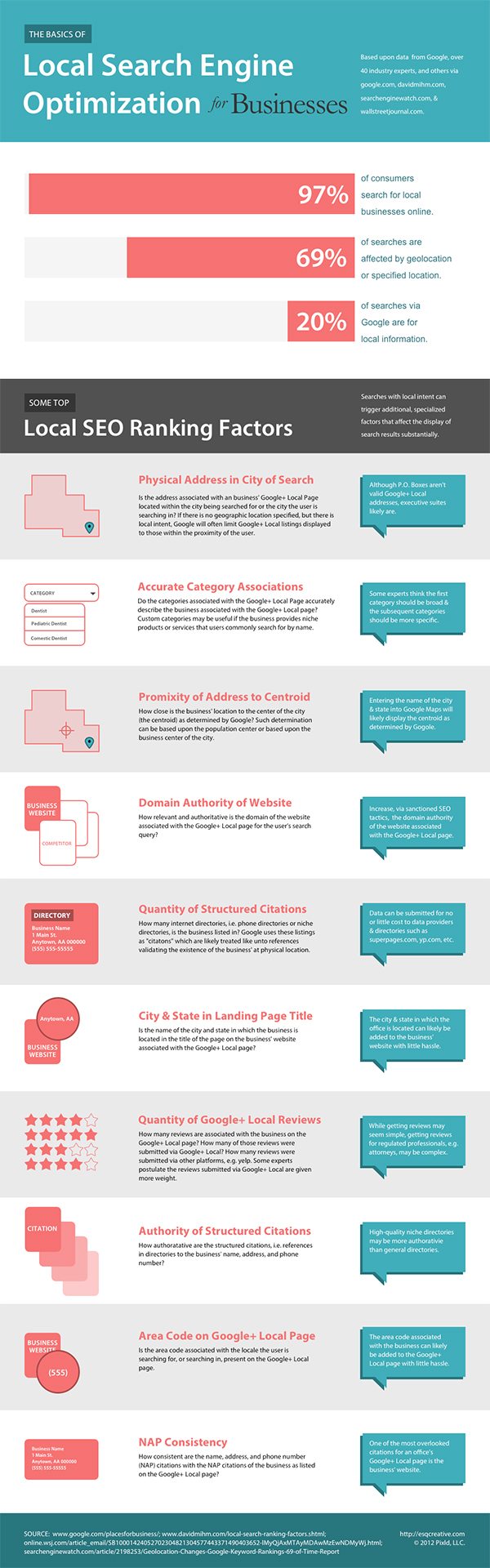
Take a look at this infographic from ESQ Creative which shows you some of the ranking factors Google is looking at.
In today’s digital age, having a strong online presence is crucial for businesses of all sizes. For local businesses, in particular, the competition to be seen on the first page of Google’s search results is fierce. This is where Local SEO (Search Engine Optimization) comes into play. Local SEO is the process of optimizing your website and online presence to rank higher in local search results. But have you ever wondered how Google decides where your site ranks locally? In this comprehensive guide, we will delve into the intricacies of Local SEO and explore the factors that influence your local search ranking on Google.
- Understanding Local SEO
Local SEO is a specialized branch of SEO that focuses on improving a website’s visibility in local search results. When someone searches for a product or service “near me” or in a specific location, Google aims to provide the most relevant and useful results based on the user’s location. Local SEO helps businesses optimize their online presence to appear in these local search results.
- Google’s Local Algorithm
To understand how Google decides where your site ranks locally, you need to be familiar with Google’s local algorithm. Google uses a sophisticated algorithm that takes into account numerous factors to determine the local ranking of a website. While the exact algorithm is a closely guarded secret, several key factors are known to influence local search rankings.
- Google My Business (GMB) Optimization
One of the most critical factors in local search ranking is your Google My Business (GMB) listing. GMB is a free tool provided by Google that allows businesses to create and manage their online presence on Google. To optimize your GMB listing:
a. Claim and verify your listing. b. Ensure your business information is accurate and up to date. c. Choose the correct categories that describe your business. d. Add high-quality photos. e. Encourage reviews from satisfied customers.
- On-Page SEO
On-page SEO refers to the optimization of the content and structure of your website. This includes:
a. Keyword optimization: Use relevant keywords that are specific to your location in your website’s content. b. Meta tags: Optimize meta titles and descriptions with local keywords. c. Content quality: Create high-quality, informative content that addresses the needs and interests of your local audience. d. Mobile-friendliness: Ensure your website is responsive and performs well on mobile devices.
- NAP Consistency
NAP stands for Name, Address, and Phone number. Consistency in your NAP information across the web is crucial for local SEO. Any discrepancies can confuse search engines and negatively impact your local ranking. Make sure your NAP information is consistent on your website, GMB listing, social media profiles, and other online directories.
- Backlinks and Citations
Backlinks, or inbound links from other websites to yours, play a significant role in SEO. Local SEO is no exception. Earning high-quality backlinks from reputable local websites can boost your local search ranking. Additionally, citations, which are mentions of your business name, address, and phone number on other websites, are important for local SEO. Ensure that your citations are accurate and consistent across different platforms.
- Online Reviews
Online reviews are another crucial factor in local SEO. Positive reviews not only build trust with potential customers but also signal to Google that your business is reputable and relevant. Encourage satisfied customers to leave reviews on your GMB listing and other review platforms.
- Website Speed and Performance
Website speed and performance are important for both user experience and SEO. A slow-loading website can lead to a high bounce rate and lower rankings. Ensure that your website loads quickly and functions smoothly on all devices.
- Mobile-Friendly Design
With the increasing use of mobile devices for local searches, having a mobile-friendly website is essential. Google prioritizes mobile-friendly websites in its search results, so make sure your site is responsive and provides a seamless experience on smartphones and tablets.
- Location-Based Content
Creating location-based content is an effective way to improve your local SEO. This can include blog posts, articles, or landing pages that are specific to your target location. By addressing local topics and using location-specific keywords, you can increase your relevance to local searchers.
- Social Signals
While the direct impact of social signals on local SEO is debated, there’s no denying that a strong social media presence can indirectly benefit your local ranking. Engage with your local audience on social media platforms and share valuable content that resonates with them.
- User Experience
Google pays attention to user experience signals when determining local rankings. Factors such as low bounce rates, high click-through rates, and longer time spent on your website can indicate to Google that your site offers value to users.
- Website Security (HTTPS)
Having a secure website with HTTPS encryption is not only important for user trust but also for SEO. Google gives preference to secure websites in its search results, so ensure that your site is HTTPS compliant.
- Schema Markup
Schema markup is a type of structured data that provides search engines with additional information about your business, such as operating hours, location, and reviews. Implementing schema markup can make your search results more informative and visually appealing.
- Local Link Building
Building local links involves getting links from websites that are relevant to your location. This can include local news sites, community organizations, and local business directories. Local link building can enhance your local SEO efforts.
- Geographic Relevance
Google’s local algorithm takes into account the physical proximity of the searcher to your business location. This means that someone searching for a specific service “near me” will see results that are geographically closer to them. To improve your geographic relevance, make sure your NAP information is accurate and that your business is correctly located on Google Maps.
- Competitor Analysis
Staying ahead in local SEO requires keeping an eye on your competitors. Analyze the strategies of top-ranking competitors in your industry and location. Identify what they are doing right and where you can outperform them.
- Monitoring and Adjustments
Local SEO is an ongoing process. It’s essential to continuously monitor your local search performance and make adjustments as needed. Track your rankings, traffic, and customer reviews, and be prepared to adapt your strategy to changing circumstances.
Conclusion
Local SEO is a complex and dynamic field that plays a crucial role in helping businesses connect with their local audience. Google’s local algorithm takes into account numerous factors, from GMB optimization to on-page SEO, backlinks, reviews, and more, to determine where your site ranks locally.
By understanding and optimizing for these factors, businesses can improve their local search ranking and increase their visibility to potential customers in their area. Keep in mind that local SEO is an ongoing effort, and staying up to date with the latest trends and best practices is essential to maintain and improve your local search position.

Author:
Mark Ford