
Are you looking for ways to outrank your competition on Google? Want to know how to find long-tail keywords they probably didn’t even know about?
Salesforce share their guide to winning the long-tail keyword battle in this infographic.
Our post below goes on to cover the following key info:
- What Are Long-Tail Keywords?
- Why Are Long-Tail Keywords Crucial for SEO Success?
- How to Find the Right Long-Tail Keywords
- How to Effectively Use Long-Tail Keywords in Your SEO Strategy
- Measuring the Success of Your Long-Tail Keyword Strategy
Check out the infographic for more.
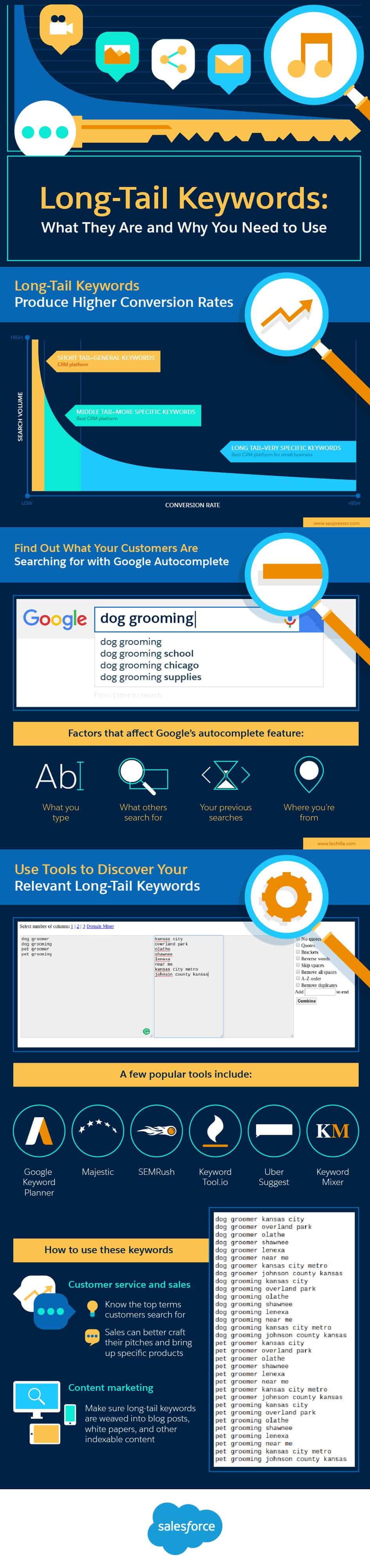
In the ever-evolving world of search engine optimisation (SEO), businesses are constantly searching for ways to drive traffic, improve rankings, and ultimately convert visitors into loyal customers. While short-tail keywords often dominate SEO strategies, there’s a hidden gem that many overlook—long-tail keywords.
These specific, low-competition phrases can be a game-changer for your website’s success. In this post, we’ll explore the power of long-tail keywords, how to find them, and how to use them effectively to boost your website’s SEO.
What Are Long-Tail Keywords?
Long-tail keywords are longer, more specific keyword phrases that users enter into search engines. Unlike short-tail keywords, which are broad and highly competitive (e.g., “shoes” or “digital marketing”), long-tail keywords are targeted and typically have lower search volumes (e.g., “best running shoes for flat feet” or “affordable digital marketing services for startups”).
The term “long-tail” originates from a statistical distribution concept where a small number of items (short-tail keywords) receive the highest search volume, while a much larger number of items (long-tail keywords) collectively generate significant traffic. The key advantage? Less competition and higher conversion potential.
Why Are Long-Tail Keywords Crucial for SEO Success?
- Lower Competition Short-tail keywords are highly competitive, making it difficult for smaller businesses or new websites to rank high in search engine results pages (SERPs). Long-tail keywords, on the other hand, are less competitive, giving your website a better chance of ranking.
- Higher Conversion Rates Users searching for long-tail keywords are typically closer to making a decision. A person searching for “best budget-friendly DSLR camera for beginners” has a clearer intent than someone searching for “cameras.” This means that traffic coming from long-tail searches is more likely to convert into leads or sales.
- Improved User Experience By optimising your content for long-tail keywords, you’re providing users with more relevant results that directly address their needs. This leads to lower bounce rates and longer time spent on your site—two crucial factors in SEO ranking.
- Voice Search Optimisation With the rise of voice search through assistants like Siri, Alexa, and Google Assistant, users are searching in a more conversational manner. Long-tail keywords naturally align with these queries, making them essential for capturing voice search traffic.
- Enhanced Content Strategy Focusing on long-tail keywords allows you to create highly targeted content that addresses niche topics. This can help establish your authority in a specific industry or market, making your website a go-to resource.
How to Find the Right Long-Tail Keywords
- Use Google’s Autocomplete Feature Start by typing a broad keyword into Google’s search bar and observe the autocomplete suggestions. These suggestions are based on real user queries, giving you insight into what people are searching for.
- Check the “People Also Ask” Section Google’s “People Also Ask” section provides commonly asked questions related to your search. These questions often contain long-tail keyword opportunities.
- Use Keyword Research Tools Several keyword research tools can help you find valuable long-tail keywords, including:
- Google Keyword Planner
- Ubersuggest
- SEMRush
- Ahrefs
- AnswerThePublic
- Analyse Competitor Keywords Look at what your competitors are ranking for using SEO tools like Ahrefs or SEMRush. If they are targeting long-tail keywords successfully, you can adapt a similar strategy.
- Leverage Forums and Social Media Platforms like Reddit, Quora, and industry-specific forums can give you insight into the questions and problems people are discussing. These discussions can provide inspiration for long-tail keywords.
How to Effectively Use Long-Tail Keywords in Your SEO Strategy
- Optimise Your Website’s Content Incorporate long-tail keywords naturally into your website content, including:
- Blog posts
- Product descriptions
- Landing pages
- FAQ sections
- Create High-Quality Blog posts Long-tail keywords are perfect for blog content. Write detailed, informative posts that answer specific user queries. For example, instead of writing a generic post on “weight loss tips,” write one titled “10 Effective Weight Loss Tips for Busy Professionals.”
- Improve Your Meta Titles and Descriptions Search engines use meta titles and descriptions to understand page content. Including long-tail keywords in these elements can improve your click-through rate (CTR).
- Optimise for Voice Search Since voice searches are conversational, structure your content in a way that answers common questions directly. Using a Q&A format or adding an FAQ section can help capture voice search traffic.
- Use Long-Tail Keywords in Internal Linking Linking related content within your website using long-tail keywords as anchor text can enhance user experience and help search engines understand your site’s structure.
- Focus on Local SEO If you have a local business, long-tail keywords can improve your local search visibility. For example, instead of targeting “coffee shop,” use “best coffee shop in Manchester.”
- Leverage Video and Image SEO Optimise videos and images by using long-tail keywords in file names, alt text, and descriptions. This helps with ranking in image and video search results.
Measuring the Success of Your Long-Tail Keyword Strategy
To ensure your long-tail keyword strategy is effective, monitor your performance regularly. Key metrics to track include:
- Organic Traffic Use Google Analytics to measure changes in organic search traffic. Increased traffic from long-tail keyword searches indicates success.
- Keyword Rankings Track the ranking of your targeted long-tail keywords using tools like Ahrefs, SEMRush, or Google Search Console.
- Click-Through Rate (CTR) A higher CTR means your content is resonating with searchers. Optimising meta titles and descriptions can help improve this.
- Conversion Rates Since long-tail keywords attract highly targeted traffic, measure whether visitors from these searches are converting into leads or sales.
- Bounce Rate A lower bounce rate suggests users are finding relevant content on your site and staying longer.
Conclusion
Long-tail keywords are an untapped SEO secret that can drive targeted traffic, improve rankings, and increase conversions. Unlike short-tail keywords, they provide a competitive edge by catering to specific user intent and reducing competition. By strategically incorporating them into your content, optimising for voice search, and focusing on user experience, you can unlock the full potential of long-tail keywords for your website’s SEO success.
If you haven’t yet embraced long-tail keywords, now is the time to start. Conduct thorough research, create valuable content, and track your results. With consistent effort, you’ll see a significant impact on your website’s performance and business growth.

Author:
Mark Ford