

Are you investing in a marketing automation strategy for your business? Want to avoid the common mistakes that ruin marketing automation campaigns?
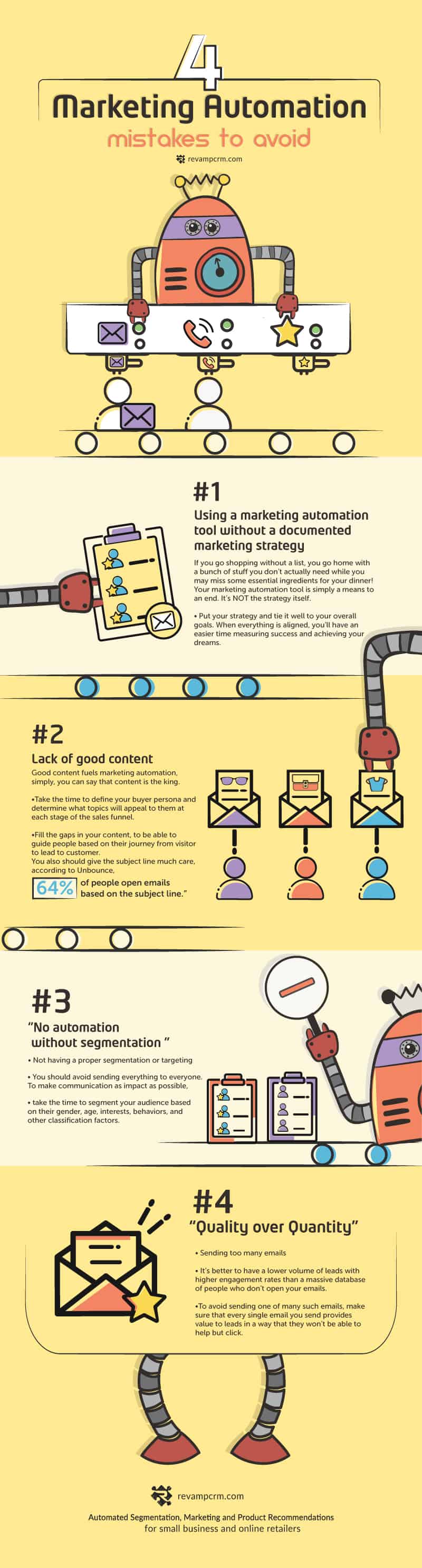
Revamp CRM share four mistakes to avoid in this infographic.
Here’s a quick summary:
- Not having a documented strategy
- Lack of good content
- Not utilising segmentation
- Putting quantity before quality
Check out the infographic for more detail.
In the fast-paced world of digital marketing, automation can be a game changer. It streamlines processes, improves efficiency, and allows marketers to focus on strategic initiatives. However, diving into marketing automation without proper planning can lead to costly mistakes. In this blog post, we’ll explore four rookie marketing automation mistakes that can hinder your success and how to avoid them.
Not Having a Documented Strategy
Why a Strategy is Essential
For small businesses venturing into marketing automation, a documented strategy is not just a luxury—it’s a necessity. A clear strategy outlines your marketing goals and provides a roadmap for achieving them. Without this framework, efforts can become scattered, leading to inefficiencies and missed opportunities.
Key Benefits of a Documented Strategy
- Clarity of Purpose: A documented strategy helps ensure that everyone on your team understands the overarching goals and direction of your marketing efforts. This clarity minimizes confusion and aligns efforts across the organization.
- Consistent Messaging: With a strategy in place, you can maintain consistency in your messaging across various platforms and campaigns, which is essential for building brand trust.
- Performance Measurement: A documented strategy includes metrics and KPIs, allowing you to track progress and evaluate the success of your campaigns. This feedback loop is critical for continuous improvement.
- Resource Allocation: Having a strategy helps you allocate your resources—time, budget, and personnel—more effectively, ensuring you focus on high-impact activities.
Steps to Create Your Marketing Automation Strategy
- Define Your Goals and Objectives
- SMART Goals: Ensure your goals are Specific, Measurable, Achievable, Relevant, and Time-bound. For instance, rather than saying “increase sales,” aim for “increase sales by 20% in the next six months.”
- Identify Success Metrics: Determine what success looks like. This could include metrics like website traffic, lead generation, conversion rates, or customer retention.
- Conduct a SWOT Analysis
- Strengths: Identify what your business does well and what sets you apart from competitors.
- Weaknesses: Acknowledge areas where you need improvement.
- Opportunities: Look for market trends or gaps that your business can exploit.
- Threats: Recognize external challenges that could hinder your success.
- Understand Your Target Audience
- Develop Buyer Personas: Create detailed profiles of your ideal customers, including demographics, interests, pain points, and purchasing behaviors. This will guide your content creation and targeting efforts.
- Conduct Surveys and Research: Utilize surveys, interviews, and market research to gain insights into your audience’s needs and preferences.
- Choose Your Channels and Tactics
- Select Appropriate Platforms: Based on your audience research, decide which channels (email, social media, your website, etc.) will be most effective for reaching your target customers.
- Outline Tactics: Detail the specific tactics you’ll use for each channel. For example, if you choose email marketing, will you focus on newsletters, promotional emails, or automated drip campaigns?
- Develop a Content Plan
- Create a Content Calendar: Plan your content creation and distribution schedule. This should include topics, formats, and deadlines.
- Quality Over Quantity: Prioritize high-quality content that addresses the needs and interests of your audience rather than focusing on churning out large volumes.
- Establish Metrics and KPIs
- Determine Key Metrics: Identify the KPIs that will help you measure progress toward your goals. For instance, if your goal is to increase leads, track the number of leads generated from each campaign.
- Set a Review Schedule: Regularly evaluate your performance metrics to see what’s working and what isn’t. This will enable you to pivot your strategy as needed.
Documenting Your Strategy
- Create a Living Document: Use a format that’s easy to update. This could be a shared document, a project management tool, or dedicated software for strategic planning.
- Outline Key Sections: Your document should include:
- Executive summary
- Goals and objectives
- Target audience and buyer personas
- Marketing channels and tactics
- Content plan
- Metrics and KPIs
- Ensure Accessibility: Make sure all relevant team members can access the document and understand their roles within the strategy.
Review and Adapt
- Regular Check-Ins: Schedule regular meetings to review your strategy and progress. This will encourage accountability and ensure that your strategy remains aligned with your business goals.
- Stay Agile: The digital marketing landscape is constantly evolving. Be open to adapting your strategy based on market changes, customer feedback, and new technologies.
- Solicit Team Input: Encourage your team to share insights and suggestions. A collaborative approach can lead to innovative ideas and improvements.
Conclusion
For small businesses, having a documented marketing automation strategy is crucial to success. It provides clarity, direction, and a framework for measuring results. By following these steps to create and maintain your strategy, you’ll position your business for effective marketing automation, ultimately leading to enhanced customer engagement and increased sales.
Lack of Good Content
The Importance of Quality Content
In the realm of marketing automation, content is the cornerstone of your strategy. High-quality content not only engages your audience but also drives conversions and builds brand loyalty. When businesses lack compelling content, they miss opportunities to connect with their audience and effectively communicate their value proposition.
Why Quality Content Matters
- Establishes Authority: Well-researched, informative content positions your business as a credible authority in your industry, earning the trust of your audience.
- Enhances Engagement: Engaging content captures attention and encourages interaction, whether through comments, shares, or other forms of engagement.
- Improves SEO: Quality content is crucial for search engine optimization (SEO). It helps improve your rankings on search engines, making it easier for potential customers to find you.
- Drives Conversions: Persuasive and relevant content guides potential customers through the buyer’s journey, ultimately leading them to make a purchase.
Types of Quality Content to Consider
- Educational Content
- Blog Posts and Articles: Create informative and insightful blog posts that address the pain points and interests of your audience. Aim for depth and clarity to position your brand as a valuable resource.
- Ebooks and Whitepapers: Offer in-depth resources that provide valuable information. These can serve as lead magnets, encouraging visitors to share their contact information in exchange for access.
- Visual Content
- Infographics: Use infographics to distill complex information into easily digestible visual formats. These are highly shareable and can enhance your brand’s visibility.
- Videos: Create engaging video content, such as tutorials, testimonials, or product demos. Videos are often more engaging than text alone and can improve retention of information.
- User-Generated Content
- Testimonials and Reviews: Showcase customer feedback and success stories. User-generated content builds trust and social proof, encouraging potential customers to choose your brand.
- Social Media Engagement: Encourage customers to share their experiences on social media. This not only provides you with content but also fosters a community around your brand.
- Personalized Content
- Tailored Emails: Use automation to send personalized email campaigns that resonate with your audience. Tailored messages based on user behavior or preferences can significantly increase engagement.
- Dynamic Website Content: Implement dynamic content on your website that changes based on the visitor’s characteristics or past interactions. This personalization enhances the user experience.
Tips for Creating Quality Content
- Know Your Audience
- Conduct Research: Invest time in understanding your target audience’s interests, preferences, and pain points. Utilize surveys, social media insights, and analytics to gather data.
- Develop Buyer Personas: Create detailed buyer personas to guide your content creation process. These personas should include demographic information, goals, challenges, and preferred content formats.
- Create a Content Calendar
- Plan Ahead: Develop a content calendar to schedule your content production and distribution. This helps ensure a consistent flow of quality content and reduces last-minute scrambles.
- Balance Content Types: Ensure a mix of content types (educational, promotional, entertaining) to keep your audience engaged and cater to different preferences.
- Prioritize Originality and Value
- Unique Perspectives: Aim to provide a unique viewpoint or solution that sets your content apart from competitors. Original content is more likely to attract attention and foster engagement.
- Focus on Value: Always ask yourself, “Does this content provide value to my audience?” Content that educates, informs, or entertains is more likely to resonate.
- Utilize SEO Best Practices
- Keyword Research: Identify relevant keywords and phrases your audience is searching for, and incorporate them naturally into your content to improve discoverability.
- Optimize Content Structure: Use headings, bullet points, and short paragraphs to make your content easily scannable. Include internal and external links to provide additional value.
- Incorporate Visuals
- Engaging Graphics: Use images, charts, and other visuals to enhance your content. Visuals break up text and make complex information more accessible.
- Consistent Branding: Ensure that all visuals align with your brand’s identity, using consistent colors, fonts, and styles to reinforce brand recognition.
- Review and Revise
- Edit Thoroughly: Always proofread your content before publication. Spelling and grammar mistakes can undermine your credibility.
- Seek Feedback: Share drafts with team members or trusted colleagues to gather feedback. Fresh perspectives can help identify areas for improvement.
Strategies for Maintaining a Content Quality Focus
- Invest in Training and Resources
- Professional Development: Consider providing training for your team on content creation, SEO, and marketing best practices. Staying updated on industry trends is vital for maintaining quality.
- Use Quality Tools: Invest in tools for content creation, graphic design, and analytics. Tools like Canva for graphics or Grammarly for writing can enhance quality and efficiency.
- Measure Content Performance
- Analyze Metrics: Use analytics tools to track the performance of your content. Metrics such as page views, time on page, and social shares can provide insights into what resonates with your audience.
- A/B Testing: Experiment with different content formats, headlines, and calls to action to identify what drives the best results.
- Encourage Collaboration
- Cross-Department Collaboration: Involve different departments (sales, customer service, etc.) in the content creation process. They can provide insights into customer needs and preferences.
- Content Review Teams: Establish a team responsible for reviewing and approving content before publication. This ensures that everything aligns with your brand standards.
Conclusion
Creating quality content is fundamental to the success of your marketing automation efforts. By understanding your audience, prioritizing originality, and maintaining a consistent content strategy, small businesses can build strong connections with their audience and drive meaningful engagement. Investing time and resources into producing valuable content will not only enhance your brand’s credibility but also lead to increased conversions and long-term customer loyalty.
Not Utilizing Segmentation
The Power of Segmentation
Segmentation is a crucial aspect of marketing automation that involves dividing your audience into distinct groups based on shared characteristics. For small businesses, effective segmentation allows for more personalized communication and tailored marketing strategies, ultimately leading to better engagement and higher conversion rates. Failing to utilize segmentation can result in generic messaging that misses the mark, leading to wasted resources and missed opportunities.
Why Segmentation Matters
- Increased Relevance: Tailoring your messages to specific segments ensures that your audience receives content that resonates with their needs and interests, making it more likely they’ll engage.
- Higher Engagement Rates: Personalized marketing tends to outperform generic approaches. Segmentation allows you to craft targeted campaigns that capture attention and foster interaction.
- Improved Customer Insights: Segmenting your audience helps you gather valuable data about different groups, enabling you to understand their behaviors and preferences better.
- Enhanced ROI: By sending more relevant messages, you’re likely to see higher conversion rates, leading to a better return on your marketing investment.
Types of Segmentation
- Demographic Segmentation
- This includes variables such as age, gender, income, education level, and occupation. Understanding the demographics of your audience can help tailor your marketing strategies.
- Behavioral Segmentation
- Segment based on user behaviors, such as purchasing habits, website interactions, and email engagement. This allows for targeting based on specific actions, making your messages more relevant.
- Geographic Segmentation
- Group customers based on their location. This is especially useful for businesses with local branches or region-specific offerings.
- Psychographic Segmentation
- This focuses on the psychological attributes of your audience, including lifestyle, values, interests, and attitudes. This type of segmentation helps create a deeper emotional connection with your audience.
- Firmographic Segmentation (for B2B)
- For B2B businesses, segmenting based on company size, industry, and revenue can help tailor marketing efforts to suit different organizational needs.
Steps to Effectively Utilize Segmentation
- Gather Data on Your Audience
- Utilize Analytics Tools: Leverage website and social media analytics to gather data on user behavior and engagement patterns.
- Conduct Surveys and Interviews: Regularly solicit feedback from customers to understand their preferences, pain points, and demographics.
- Define Your Segmentation Criteria
- Choose Relevant Variables: Decide which segmentation criteria are most relevant to your business objectives. Start simple; you can always expand your segments later.
- Prioritize Key Segments: Identify the most valuable segments based on factors such as purchase frequency, average order value, and engagement levels.
- Create Dynamic Segments
- Utilize Marketing Automation Tools: Many automation platforms offer dynamic segmentation features that automatically update lists based on user behavior or attributes. This ensures your segments are always current.
- Define Rules for Segmentation: Create rules that define how users enter or exit specific segments. For example, if a user makes a purchase, they might be moved to a “Customers” segment instead of a “Leads” segment.
- Tailor Content for Each Segment
- Personalized Messaging: Create targeted campaigns for each segment. This includes tailored emails, landing pages, and social media ads that resonate with the specific needs and interests of each group.
- Use Dynamic Content: In your emails and on your website, utilize dynamic content that changes based on the segment. For example, you might show different product recommendations based on past purchases.
- Test and Optimize Your Segments
- A/B Testing: Experiment with different messages and offers for various segments to see what resonates best. A/B testing can help refine your approach over time.
- Analyze Performance: Regularly review the performance of your segmented campaigns. Look at metrics such as open rates, click-through rates, and conversions to gauge effectiveness.
- Refine Your Segmentation Strategy
- Stay Updated: Regularly revisit and update your segmentation criteria based on new data or changes in customer behavior.
- Segment Growth: As your business grows, consider adding new segments or refining existing ones to capture changing customer dynamics.
Common Segmentation Mistakes to Avoid
- Over-Segmentation
- While segmentation is beneficial, over-segmenting can lead to too many small groups, making it difficult to create targeted campaigns. Focus on meaningful segments that are large enough to justify tailored messaging.
- Neglecting Behavioral Data
- Relying solely on demographic data can lead to missed opportunities. Behavioral data often provides deeper insights into customer preferences and can be more indicative of purchasing intent.
- Failure to Update Segments
- Audiences evolve, and so should your segments. Regularly review and adjust your segmentation criteria to ensure they remain relevant and effective.
- Inconsistent Messaging
- Ensure that the messaging for each segment aligns with their specific needs. Sending generic messages to segmented groups defeats the purpose of segmentation.
Conclusion
For small businesses, effective segmentation is key to harnessing the full potential of marketing automation. By dividing your audience into meaningful groups based on demographics, behaviors, and interests, you can craft tailored messages that resonate and drive engagement. Investing the time and resources into understanding and implementing segmentation strategies will ultimately lead to improved customer relationships, higher conversion rates, and a stronger return on your marketing efforts.
Putting Quantity Before Quality
The Quantity vs. Quality Debate
In the fast-paced world of marketing automation, there can be immense pressure to produce a high volume of content and campaigns. While consistency is important, prioritizing quantity over quality can lead to several detrimental outcomes for small businesses. Poor-quality content can dilute your brand message, disengage your audience, and ultimately hinder your marketing success.
Why Quality Should Come First
- Audience Engagement: High-quality content is more likely to capture and retain the attention of your audience. Engaging content fosters interactions, encourages sharing, and builds a loyal following.
- Brand Credibility: Consistently delivering quality content establishes your business as an authority in your field. In contrast, low-quality content can damage your reputation and erode trust.
- Improved Conversions: Quality content drives conversions. When potential customers find valuable and relevant information, they are more likely to take action, whether that’s signing up for a newsletter, making a purchase, or requesting more information.
- Enhanced SEO Performance: Search engines prioritize high-quality content in their ranking algorithms. Quality content that provides value is more likely to attract backlinks and improve your website’s search visibility.
Tips for Prioritizing Quality Over Quantity
- Set Clear Content Goals
- Define Objectives: Before creating content, establish clear objectives. What do you want to achieve? Whether it’s increasing brand awareness, driving traffic, or generating leads, clear goals will guide your content creation.
- Focus on Your Audience: Tailor your content goals to meet the needs of your target audience. Understanding their interests and pain points will help you create relevant and valuable content.
- Invest in Research and Planning
- Conduct Thorough Research: Before producing any content, invest time in research. Understand industry trends, gather insights from competitors, and explore what your audience is actively seeking.
- Create an Editorial Calendar: Plan your content in advance using an editorial calendar. This allows you to maintain a steady flow of quality content while avoiding last-minute rushes that can compromise quality.
- Quality Content Creation Process
- Develop a Content Brief: Create a detailed content brief that outlines the purpose, target audience, key messages, and format of each piece. This ensures everyone involved in the creation process understands the goals and expectations.
- Encourage Collaboration: Involve team members from different departments (marketing, sales, customer service) in the content creation process. Their insights can lead to richer, more valuable content.
- Focus on Content Formats That Drive Value
- Diversify Your Content: Explore various formats (blogs, videos, infographics, podcasts) to find what resonates best with your audience. Prioritize formats that allow you to deliver deep, meaningful insights.
- Depth Over Breadth: Instead of producing multiple superficial pieces, focus on creating fewer, more comprehensive pieces that provide in-depth analysis or valuable solutions.
- Prioritize Editing and Quality Control
- Implement a Review Process: Establish a systematic review process for all content before publication. This includes proofreading for grammar, style, and factual accuracy.
- Seek External Feedback: Consider involving third parties or industry experts to review your content. Fresh eyes can spot issues and provide valuable insights.
- Measure Content Performance and Gather Feedback
- Analyze Key Metrics: Regularly assess the performance of your content based on engagement metrics (views, shares, comments) and conversion rates. This will help you identify what works and what doesn’t.
- Solicit Audience Feedback: Encourage feedback from your audience through surveys, comments, or social media interactions. Understanding their preferences can help you refine your content strategy.
- Practice Continuous Improvement
- Iterate Based on Data: Use the insights gained from performance metrics and audience feedback to continuously improve your content strategy. Adapt your approach based on what resonates with your audience.
- Stay Updated on Industry Trends: Regularly update your knowledge of industry best practices and trends to ensure your content remains relevant and valuable.
Balancing Quantity and Quality
While quality should always take precedence, it’s important to find a balance that works for your business. Here are a few strategies:
- Create a Content Pillar Strategy:
- Develop cornerstone content pieces (in-depth guides, comprehensive reports) that can serve as the foundation for smaller, related content. This approach allows you to produce both quality and quantity without sacrificing value.
- Utilize Repurposing:
- Repurpose existing high-quality content into different formats (e.g., turning a blog post into a video or infographic). This enables you to maximize the value of your content while maintaining quality.
- Automate Where Possible:
- Use marketing automation tools to streamline the distribution and promotion of your content. Automation can save time and effort, allowing you to focus more on creating quality content.
Conclusion
For small businesses, prioritizing quality over quantity in marketing automation is essential for building a credible brand and engaging your audience effectively. By investing in research, planning, and a thorough content creation process, you can produce valuable content that drives meaningful results. Remember that it’s not about how much content you produce, but how well it resonates with your audience and meets their needs. Embracing a quality-first approach will ultimately lead to increased engagement, better conversion rates, and a stronger return on your marketing investment.
Conclusion
Marketing automation has the potential to revolutionize your marketing efforts, but it’s crucial to approach it with a well-thought-out strategy. Avoiding these rookie mistakes—lack of a documented strategy, insufficient quality content, neglecting segmentation, and prioritizing quantity over quality—will put you on the right path toward successful automation.
By investing the time and resources to create a solid foundation for your marketing automation efforts, you’ll see increased engagement, higher conversion rates, and ultimately, a stronger return on investment. Embrace automation as a powerful tool, but remember that strategy and quality should always come first.

Author:
Mark Ford

From Confusion to Clarity: How to Steer Your Marketing Away from These Frequent Errors
Are you struggling to make sense of your marketing strategy and wondering why your results aren’t matching your effort? Want to learn how to avoid the most common marketing mistakes and create a clear, focused plan that actually delivers results? […]

85 Game-Changing Tools for Creators, Marketers, and Entrepreneurs
Are you searching for powerful yet free tools to help you grow your brand, streamline your workflow, and boost your online presence? Want to discover game-changing platforms that every creator, marketer, and entrepreneur should be using right now? […]