Are you in the early stages of starting a business? Do you have ambitions to become a leader in your field?
When you first start a business becoming a market leader can seem a distant thought. But coupling hard work and dedication with a solid marketing plan you could become a leader in your field in no time at all.
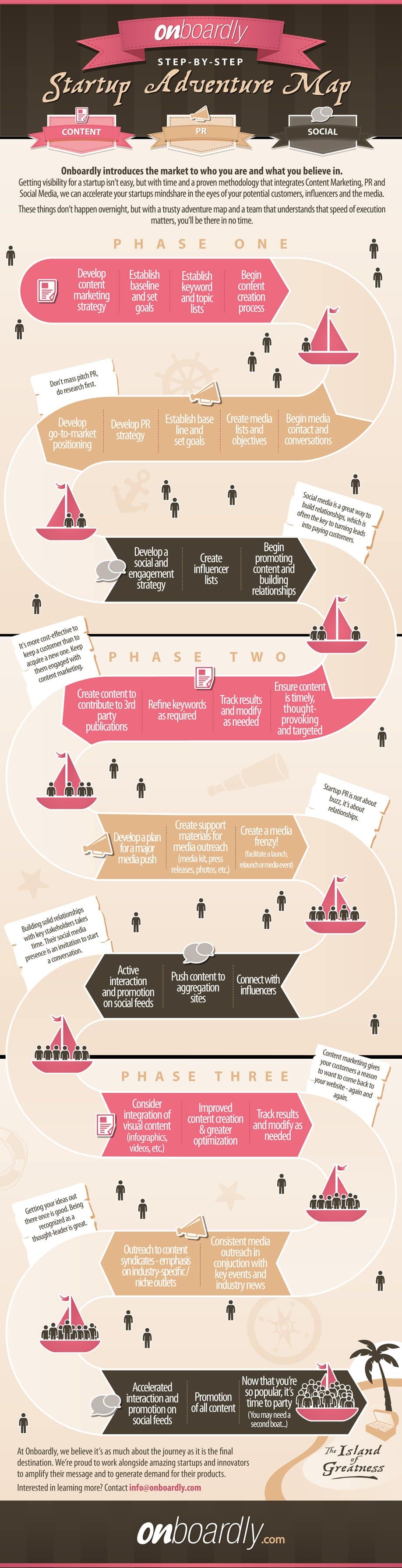
For some guidance in piecing together your marketing roadmap take a look at this infographic from Onboardly.
The journey from being a startup to becoming a market leader is a challenging and exciting one. While it’s true that there’s no one-size-fits-all approach to achieving this goal, there are certain strategies and principles that successful companies have followed to pave their way to the top. In this comprehensive guide, we will delve into a marketing roadmap that can help your startup transform into a market leader.
Chapter 1: Setting the Foundation
1.1 Understanding Your Market
The first step in your journey towards market leadership is gaining a deep understanding of your target market. Conduct thorough market research to identify your target audience, their pain points, preferences, and behaviors. This will help you tailor your marketing efforts to resonate with your ideal customers.
1.2 Defining Your Unique Selling Proposition (USP)
To stand out in a crowded market, you must have a unique selling proposition that differentiates your product or service from the competition. Identify what makes your offering special and how it addresses the needs of your target audience better than anyone else.
1.3 Crafting Your Brand Identity
Your brand identity is more than just a logo and color scheme; it’s the personality and values that your brand represents. Develop a compelling brand identity that reflects your mission, vision, and the emotions you want to evoke in your customers.
Chapter 2: Building a Solid Online Presence
2.1 Website Development
Your website is often the first point of contact between your brand and potential customers. Invest in a user-friendly, mobile-responsive, and aesthetically pleasing website that showcases your USP and provides valuable information to visitors.
2.2 Search Engine Optimization (SEO)
To increase your online visibility, optimize your website for search engines. Implement on-page and off-page SEO strategies to rank higher in search engine results pages (SERPs) and attract organic traffic.
2.3 Content Marketing
Content is king in the digital marketing world. Create high-quality, informative, and engaging content that addresses your audience’s pain points. Utilize blogs, videos, infographics, and other content formats to establish your authority in your industry.
2.4 Social Media Marketing
Leverage social media platforms to connect with your audience and build a loyal following. Develop a social media strategy that includes regular posting, engagement with followers, and paid advertising to expand your reach.
Chapter 3: Nurturing Leads and Building Customer Relationships
3.1 Email Marketing
Email marketing remains one of the most effective ways to nurture leads and convert them into customers. Create targeted email campaigns that provide value, educate, and guide subscribers through the customer journey.
3.2 Marketing Automation
Streamline your marketing efforts by implementing marketing automation tools. These tools can help you segment your audience, personalize content, and send timely messages to prospects and customers.
3.3 Customer Relationship Management (CRM)
A robust CRM system allows you to manage customer data, track interactions, and improve customer service. Use CRM software to better understand your customers’ needs and preferences, leading to more personalized marketing campaigns.
Chapter 4: Scaling Your Marketing Efforts
4.1 Paid Advertising
Once you have a solid foundation, consider investing in paid advertising channels such as Google Ads, Facebook Ads, and display advertising. Develop targeted ad campaigns to reach a wider audience and drive traffic to your website.
4.2 Influencer Marketing
Partnering with influencers in your industry can help you reach a larger and more engaged audience. Identify influencers whose values align with your brand and collaborate on campaigns to increase your brand’s credibility.
4.3 Partnerships and Collaborations
Explore opportunities for strategic partnerships and collaborations with other businesses. Joint ventures and co-marketing efforts can extend your reach and introduce your brand to new audiences.
Chapter 5: Analyzing and Optimizing Your Strategy
5.1 Data Analytics
Regularly analyze data to assess the effectiveness of your marketing efforts. Use tools like Google Analytics to track website traffic, conversion rates, and user behavior. Adjust your strategy based on data-driven insights.
5.2 A/B Testing
Optimize your marketing campaigns through A/B testing. Experiment with different elements of your campaigns, such as headlines, images, and calls to action, to determine what resonates best with your audience.
5.3 Continuous Improvement
Market leadership is not a static destination but an ongoing journey. Stay agile and adaptable, continuously learning from your successes and failures. Use feedback from customers and employees to refine your strategy.
Chapter 6: Staying Competitive in the Market
6.1 Innovation and Product Development
To maintain your position as a market leader, focus on innovation and product development. Stay ahead of the competition by regularly updating your offerings to meet evolving customer needs.
6.2 Customer Service Excellence
Exceptional customer service is a key differentiator in the market. Train your team to provide outstanding service, and actively seek customer feedback to make improvements.
6.3 Corporate Social Responsibility (CSR)
Demonstrate your commitment to social and environmental responsibility through CSR initiatives. Consumers increasingly support brands that align with their values, so integrating CSR into your business can boost your reputation.
Conclusion: Your Journey to Market Leadership
Becoming a market leader is a complex and dynamic process, but with the right roadmap, dedication, and continuous improvement, your startup can achieve this coveted status. Remember that market leadership is not just about being the biggest; it’s about being the best and continuously striving for excellence in all aspects of your business. Embrace change, stay customer-centric, and keep innovating, and you’ll be well on your way to transforming your startup into a market leader in your industry.

Author:
Mark Ford