
In today’s digital age, social media has become an integral part of our lives. Whether you’re an individual looking to connect with friends and family or a business trying to reach your target audience, having a strong social media presence is crucial.
However, managing your social media accounts effectively can be a daunting task, especially when you have multiple platforms to handle. This is where a well-structured time management guide can make all the difference.
In this comprehensive blog post, we will explore the importance of a robust social media presence, the challenges that come with managing multiple platforms, and provide you with a step-by-step time management guide to massively improve your social media presence.
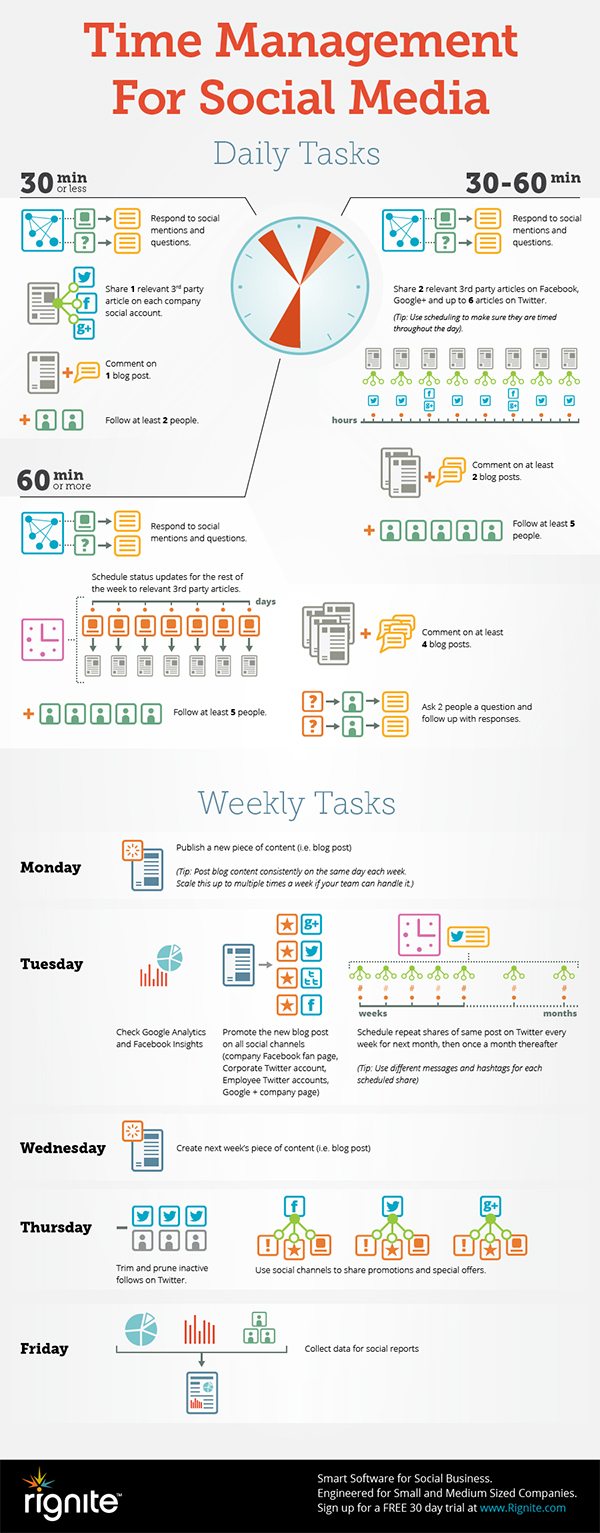
Infographic from Rignite.
The Importance of a Strong Social Media Presence
Before we dive into the time management guide, let’s first understand why having a strong social media presence matters. Whether you’re an individual or a business, here are some compelling reasons why you should invest your time and effort in building and maintaining a solid social media presence:
1. Brand Visibility
Social media platforms have billions of active users. By establishing a presence on these platforms, you increase your brand’s visibility to a vast audience. This can lead to increased brand recognition and recall among potential customers.
2. Audience Engagement
Social media provides a direct channel for you to engage with your audience. It allows you to connect with your followers, answer their questions, and build relationships. Engaged followers are more likely to become loyal customers and brand advocates.
3. Marketing Opportunities
Social media platforms offer powerful marketing tools and advertising options. You can create targeted ad campaigns to reach your ideal audience, driving traffic and conversions to your website or online store.
4. Industry Authority
Consistently sharing valuable content on social media can position you or your business as an authority in your industry. When people trust your expertise, they are more likely to turn to you for products, services, or advice.
5. Competitive Advantage
Many of your competitors are already active on social media. By having a strong presence, you can stay competitive and even outperform rivals who neglect this vital aspect of digital marketing.
Now that we’ve established the importance of social media presence, let’s move on to the challenges that often come with managing multiple social media platforms.
Challenges of Managing Multiple Social Media Platforms
While the benefits of a strong social media presence are undeniable, managing multiple platforms effectively can be overwhelming. Here are some common challenges you may face:
1. Time Constraints
Creating and curating content, responding to comments and messages, and analyzing performance data can be time-consuming. Without a structured approach, you may find yourself spending excessive time on social media.
2. Content Quality
To stand out on social media, you need to produce high-quality content consistently. Maintaining this level of content quality across multiple platforms can be challenging without proper planning.
3. Platform Variability
Each social media platform has its unique features, algorithms, and best practices. Adapting your content to each platform’s requirements can be confusing and demanding.
4. Burnout
Overextending yourself on social media can lead to burnout. It’s essential to strike a balance between your online presence and other aspects of your life or business.
To overcome these challenges and maximize the benefits of social media, a well-structured time management guide is essential. Let’s explore how you can massively improve your social media presence with effective time management.
The Ultimate Time Management Guide for Social Media Success
Step 1: Set Clear Goals and Objectives
Before diving into the world of social media, it’s crucial to define your goals and objectives. What do you want to achieve with your social media presence? Your goals could include:
- Increasing brand awareness
- Driving website traffic
- Generating leads or sales
- Building a loyal community
- Establishing thought leadership
Once you’ve set your goals, break them down into specific, measurable, achievable, relevant, and time-bound (SMART) objectives. Having clear objectives will guide your social media strategy and help you stay focused.
Step 2: Choose the Right Platforms
Not all social media platforms are created equal, and not all of them will be suitable for your goals and target audience. Research and identify the platforms that align with your objectives. Consider factors such as:
- Demographics of platform users
- Type of content that performs well
- Competitive landscape on each platform
- Your available resources
It’s better to excel on a few platforms that align with your goals than to spread yourself thin across too many.
Step 3: Create a Content Calendar
A content calendar is your roadmap for social media success. It helps you plan and organize your content in advance, ensuring consistency and quality. Here’s how to create one:
- Identify Key Dates: Start by noting important dates, holidays, and events relevant to your industry or niche.
- Content Themes: Assign specific themes or topics to each month or week. This will give your content a cohesive and purposeful structure.
- Content Types: Decide on the types of content you’ll create, such as blog posts, videos, infographics, or polls.
- Frequency: Determine how often you’ll post on each platform. Consistency is key, so choose a schedule that you can realistically maintain.
- Assign Responsibilities: If you’re working with a team, assign tasks and responsibilities for content creation, scheduling, and engagement.
- Use Tools: Consider using social media management tools like Hootsuite or Buffer to schedule posts in advance.
Step 4: Create High-Quality Content
Content is the heart of social media. To capture your audience’s attention and keep them engaged, focus on creating valuable and visually appealing content. Here are some tips:
- Use high-resolution images and videos.
- Write compelling captions and headlines.
- Incorporate storytelling to make your content relatable.
- Share user-generated content to build community.
- Experiment with different content formats, such as stories, reels, and live videos.
Remember that quality always trumps quantity. It’s better to post less frequently but with excellent content than to spam your followers with subpar material.
Step 5: Automate Where Possible
Time management isn’t just about doing tasks faster; it’s also about working smarter. Automation can help you streamline your social media efforts. Consider automating:
- Social media posting using scheduling tools.
- Responses to common questions or inquiries using chatbots.
- Social media monitoring and listening to track mentions and trends.
- Analytics and reporting to measure your performance.
Automating repetitive tasks frees up your time for more strategic activities.
Step 6: Engage with Your Audience
Social media is a two-way street. Engaging with your audience is crucial for building relationships and loyalty. Here’s how to do it effectively:
- Respond promptly to comments and messages.
- Ask questions and encourage discussions.
- Acknowledge and thank your followers for their support.
- Participate in relevant conversations and use hashtags to increase your visibility.
- Showcase user-generated content and give credit to your community.
Engagement not only keeps your current audience satisfied but also attracts new followers through word-of-mouth and organic growth.
Step 7: Analyze and Adjust
Regularly assess your social media performance against your objectives. Use analytics tools provided by each platform to track key metrics like:
- Follower growth
- Engagement rates
- Click-through rates
- Conversion rates
- Reach and impressions
Based on your findings, make necessary adjustments to your strategy. If a particular platform or content type isn’t performing as expected, pivot your approach.
Step 8: Stay Informed and Adapt
The world of social media is ever-evolving. New features, algorithms, and trends emerge regularly. Stay informed by following industry blogs, attending webinars, and monitoring changes on the platforms you use.
Adapt your strategy to leverage these changes to your advantage. For example, if a new feature like Instagram Reels gains popularity, incorporate it into your content plan.
Conclusion
Building and maintaining a strong social media presence requires time, effort, and effective time management. By setting clear goals, choosing the right platforms, creating a content calendar, producing high-quality content, automating tasks, engaging with your audience, analyzing performance, and staying informed, you can massively improve your social media presence.
Remember that social media success is not about the quantity of your posts but the quality of your interactions and content. Consistency and authenticity are key. With the right time management strategies in place, you can harness the full potential of social media to achieve your goals, whether they’re personal or business-related.
So, start implementing these steps today, and watch your social media presence soar to new heights. Your audience is waiting, and your brand’s success is within reach.

Author:
Mark Ford