
Are you struggling to tell which of your leads are actually worth your time and effort? Want to learn how to qualify prospects more effectively so you can focus on the customers most likely to buy?
You’ll find some marketing basics in this infographic.
Here’s a summary of what’s covered:
- How to Build an eCommerce Brand Identity
- Establish a Clear Vision and Your Values
- Study Your Buyer Persona
- Determine a Unique Value Proposition
- Create Your Brand Name and Visuals
- Establish Your Brand Persona and Voice
Check out the post below for more.
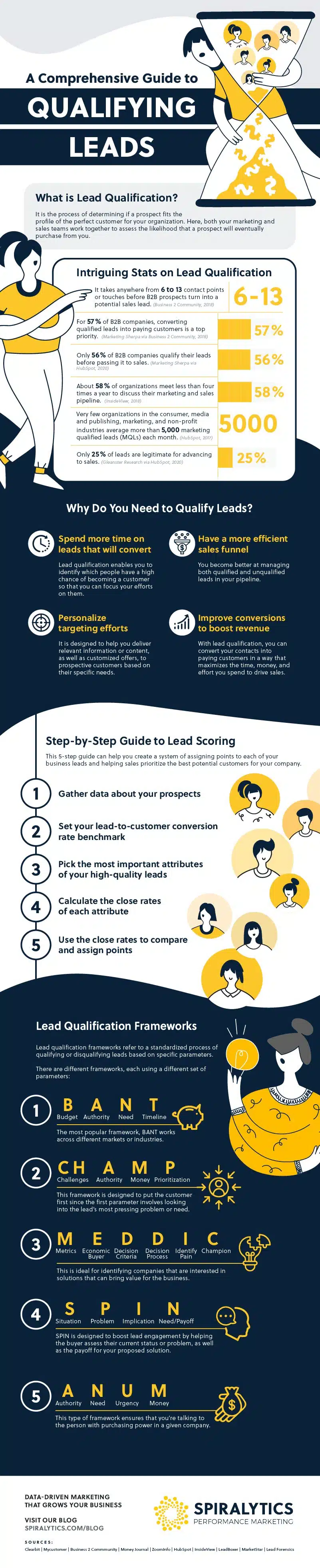
Every business wants more leads—but not all leads are created equal. The true art of sales and marketing lies in identifying which prospects are genuinely ready to buy and which ones are simply browsing. That’s where lead qualification comes in.
By mastering this process, you can focus your energy on the right customers, streamline your sales funnel, and maximise your conversion potential.
What Is Lead Qualification?
Lead qualification is the process of determining whether a potential customer fits your ideal buyer profile and has a genuine interest in your product or service. It bridges the gap between marketing and sales, ensuring both teams work towards nurturing leads that are most likely to convert. Done well, it saves time, improves targeting, and increases sales efficiency.
- Evaluate a lead’s fit based on demographics, behaviour, and expressed interest.
- Use marketing automation tools to track engagement and assign lead scores.
- Align marketing and sales teams on what constitutes a qualified lead.
- Continuously refine your criteria as customer needs and market conditions evolve.
Key Statistics on Lead Qualification
The numbers tell a clear story—companies that prioritise lead qualification outperform those that don’t. With longer customer journeys and higher competition, understanding how leads move through the sales funnel has never been more important. Businesses that take a data-driven approach are seeing measurable gains in conversions and revenue.
- It typically takes 6–13 touchpoints to turn a lead into a paying customer.
- 57% of B2B companies say converting qualified leads is their top priority.
- Only 25% of leads are ready to speak with sales when first contacted.
- 38% of businesses admit to having no formal qualification process in place.
Why You Need to Qualify Leads
Without proper qualification, sales teams waste valuable time on low-potential leads. By filtering out poor fits early, you can focus efforts on prospects that have the greatest likelihood of converting. This leads to improved productivity, stronger relationships, and better customer experiences throughout the buying journey.
- Spend more time on prospects that show genuine interest and buying intent.
- Make your sales funnel more efficient by reducing time spent on unqualified leads.
- Personalise marketing campaigns to resonate with high-value prospects.
- Increase overall conversion rates by focusing on leads that match your ideal profile.
Step-by-Step Guide to Lead Scoring
Lead scoring is the method of assigning numerical values to prospects based on how well they align with your target customer profile. By quantifying lead quality, you can easily prioritise which leads deserve attention first. The process helps sales teams stay organised, data-driven, and focused on revenue-generating opportunities.
- Gather detailed information about each prospect, including engagement data.
- Establish a benchmark conversion rate to measure against.
- Identify the most important attributes of your high-quality leads.
- Assign scores to each attribute and rank leads by their overall potential.
Lead Qualification Frameworks
Lead qualification frameworks provide a structured approach for determining a lead’s readiness to buy. They help marketing and sales teams ask the right questions, evaluate decision-making factors, and ensure consistency in lead assessment. Choosing the right framework depends on your industry, sales cycle, and target audience.
- Use frameworks to standardise how your team identifies qualified leads.
- Tailor your chosen framework to reflect your unique sales process.
- Combine quantitative scoring with qualitative insights for better accuracy.
- Train your sales team to apply the framework consistently across all prospects.
The BANT Framework: Budget, Authority, Need, Timeline
BANT is one of the most popular and time-tested lead qualification models. It helps sales teams quickly assess whether a lead has the budget, decision-making power, genuine need, and an appropriate buying timeline. This simple yet effective framework remains a cornerstone of many B2B sales strategies.
- Determine if the lead has sufficient budget to purchase your product or service.
- Identify whether you are speaking with the true decision-maker or influencer.
- Clarify the prospect’s specific needs and how your solution addresses them.
- Assess the buying timeline to gauge when they plan to make a decision.
The CHAMP Framework: Challenges, Authority, Money, Prioritisation
CHAMP reframes the conversation by focusing on the prospect’s challenges before anything else. Instead of starting with budget or authority, this framework helps you understand pain points and goals. By positioning your offer as a solution, you create stronger alignment and demonstrate genuine value from the first interaction.
- Begin by identifying the main challenges the lead is trying to solve.
- Confirm the individual’s level of authority and influence within their organisation.
- Evaluate their financial ability to invest in your solution.
- Determine how urgently they are prioritising the problem you can help solve.
The MEDDIC Framework: Metrics, Economic Buyer, Decision Criteria, Process, Identify Pain, Champion
MEDDIC is ideal for complex B2B sales cycles where multiple decision-makers are involved. It emphasises measurable results, the buying process, and building internal advocates. This framework helps sales teams focus on leads that are not only qualified but also motivated by tangible business outcomes.
- Identify measurable metrics that show how your product delivers value.
- Engage with the economic buyer who controls the budget.
- Understand the decision criteria and process used by the organisation.
- Find a “champion” within the company who will advocate for your solution.
The SPIN Framework: Situation, Problem, Implication, Need/Payoff
SPIN selling takes a consultative approach, encouraging meaningful dialogue between salespeople and prospects. Rather than pitching too early, it focuses on uncovering the prospect’s situation and challenges before introducing solutions. This framework works especially well for nurturing trust and long-term customer relationships.
- Start by understanding the prospect’s current situation and workflow.
- Identify the core problems affecting their business performance.
- Discuss the implications of leaving those issues unresolved.
- Present your solution as the payoff that resolves their specific challenges.
The ANUM Framework: Authority, Need, Urgency, Money
ANUM prioritises identifying the key decision-maker first, ensuring you engage with someone who has purchasing power. It then examines the lead’s need, urgency, and available budget. This approach is efficient for fast-moving sales environments where quick qualification is essential.
- Confirm that you’re speaking directly with the person who can authorise purchases.
- Establish the prospect’s actual need for your product or service.
- Assess how urgently they require a solution and their timeline for action.
- Verify that sufficient budget is available to move forward promptly.
Benefits of a Strong Lead Qualification Process
A structured qualification system transforms how your business approaches sales. It minimises wasted effort, improves lead nurturing, and increases confidence in forecasting. Over time, this consistency drives better alignment between marketing and sales, leading to stronger growth and profitability.
- Create a more predictable and scalable sales pipeline.
- Improve collaboration between marketing and sales teams.
- Gain deeper insight into what motivates your best customers.
- Optimise your resources by focusing on the most promising opportunities.
Common Mistakes to Avoid When Qualifying Leads
Even the most seasoned teams can fall into the trap of misjudging a lead’s potential. Poor data, inconsistent follow-up, or over-reliance on assumptions can cause good opportunities to slip away. Avoiding these mistakes ensures your lead qualification process remains accurate and effective.
- Don’t rely solely on automated scoring—add human judgement where needed.
- Keep your qualification criteria up to date as your business evolves.
- Avoid generic messaging that doesn’t address a lead’s specific challenges.
- Ensure consistent communication between marketing and sales teams.
How to Align Marketing and Sales Around Lead Qualification
Alignment between marketing and sales is crucial to making lead qualification work. When both teams share the same definitions, data, and goals, prospects move more smoothly through the funnel. Collaboration at every stage ensures that qualified leads are nurtured effectively from first contact to close.
- Define a shared understanding of what a “qualified lead” means.
- Use a central CRM or data platform for visibility across both teams.
- Hold regular meetings to review lead quality and conversion performance.
- Celebrate shared wins to reinforce collaboration and accountability.
Measuring the Success of Your Lead Qualification Process
You can’t improve what you don’t measure. Tracking the performance of your lead qualification strategy helps you identify strengths, weaknesses, and areas for refinement. Over time, small improvements in accuracy can lead to major gains in conversion rates and revenue.
- Monitor key metrics like lead-to-customer conversion rate and sales cycle length.
- Evaluate the revenue contribution of marketing-qualified and sales-qualified leads.
- Use feedback from your sales team to fine-tune scoring and criteria.
- Regularly test and optimise your qualification frameworks for better results.
Conclusion
Mastering lead qualification isn’t just about filtering prospects—it’s about building smarter, more profitable relationships. By combining data-driven scoring, proven frameworks, and strong team alignment, you can ensure every sales conversation starts with the right person at the right time.
The result is a streamlined process that saves resources, increases conversions, and keeps your business focused on growth where it matters most.

Author:
Mark Ford

From Confusion to Clarity: How to Steer Your Marketing Away from These Frequent Errors
Are you struggling to make sense of your marketing strategy and wondering why your results aren’t matching your effort? Want to learn how to avoid the most common marketing mistakes and create a clear, focused plan that actually delivers results? […]

85 Game-Changing Tools for Creators, Marketers, and Entrepreneurs
Are you searching for powerful yet free tools to help you grow your brand, streamline your workflow, and boost your online presence? Want to discover game-changing platforms that every creator, marketer, and entrepreneur should be using right now? […]