So, you have a content marketing strategy in place, but you’re struggling to measure its effectiveness and decide whether its worth your time and money?
Brandpoint share their guide to measuring content marketing success in this infographic.
They break things down into the following sections:
- Awareness
- Consideration
- Conversion
Check out the infographic for more detail.
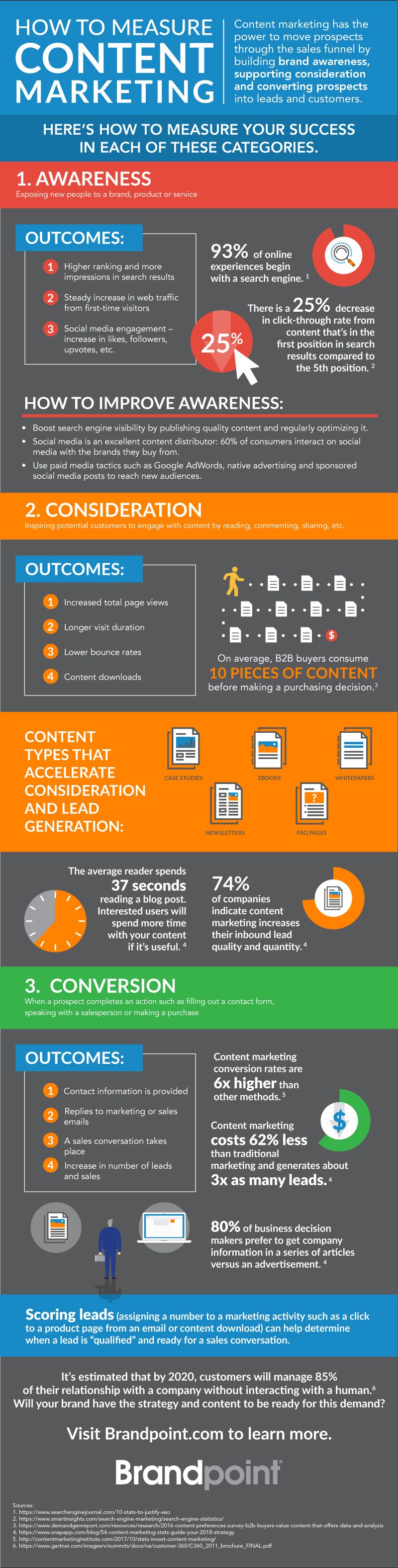
Are You Wasting Money? How to Measure Content Marketing Success
In the ever-evolving landscape of digital marketing, content marketing has emerged as a cornerstone for engaging with audiences, building brand loyalty, and driving sales. However, a critical question remains: Are your content marketing efforts yielding the desired results, or are you wasting money? To answer this, it is essential to measure content marketing success effectively. This blog post will delve into the key metrics and strategies across three pivotal stages of the buyer’s journey: Awareness, Consideration, and Conversion.
Awareness
For small businesses, the Awareness stage is crucial as it lays the foundation for attracting and engaging potential customers. Effective strategies in this stage can lead to increased visibility and set the stage for further engagement and conversions. Here are in-depth tips and guidance specifically tailored for small businesses looking to enhance their awareness through content marketing.
High-Quality Content Creation
- Understand Your Audience:
- Market Research: Conduct thorough market research to understand your target audience’s demographics, preferences, and pain points. Use surveys, social media insights, and customer feedback to gather information.
- Buyer Personas: Create detailed buyer personas to represent different segments of your audience. This helps in crafting content that resonates with their specific needs and interests.
- Content Variety:
- Blog Posts: Regularly publish informative and engaging blog posts that address common questions and challenges faced by your audience. Aim for a mix of evergreen content (timeless topics) and trending topics.
- Visual Content: Incorporate visual elements like infographics, videos, and images. Visual content is more likely to be shared and can help explain complex concepts more easily.
- Interactive Content: Create interactive content such as quizzes, polls, and calculators that engage users and encourage them to spend more time on your site.
- Consistency and Quality:
- Content Calendar: Develop a content calendar to plan and schedule your content. Consistency is key to maintaining audience interest and building trust.
- Quality over Quantity: Focus on producing high-quality content rather than churning out large volumes of low-value content. High-quality content is more likely to be shared and appreciated by your audience.
SEO Optimization
- Keyword Research:
- Tools and Techniques: Use tools like Google Keyword Planner, SEMrush, or Ahrefs to identify relevant keywords for your business. Focus on long-tail keywords that are specific to your niche and have lower competition.
- Competitive Analysis: Analyze the keywords your competitors are ranking for and identify opportunities where you can perform better.
- On-Page SEO:
- Keyword Placement: Incorporate your target keywords naturally into your content, including titles, headings, meta descriptions, and body text. Avoid keyword stuffing, as it can negatively impact readability and SEO.
- Internal Linking: Use internal links to guide visitors to other relevant content on your site. This helps improve the user experience and keeps visitors on your site longer.
- Mobile Optimization: Ensure your website is mobile-friendly, as a significant portion of traffic comes from mobile devices. Google’s algorithm also favors mobile-optimized sites.
- Off-Page SEO:
- Backlink Building: Reach out to industry influencers, bloggers, and websites to build high-quality backlinks. Guest blogging, partnerships, and providing valuable content can help earn backlinks.
- Social Signals: Although social media signals are not a direct ranking factor, a strong social media presence can drive traffic and indirectly boost your SEO efforts.
Social Media Marketing
- Platform Selection:
- Identify Key Platforms: Focus on the social media platforms where your target audience is most active. For example, Instagram and Pinterest are great for visually-oriented businesses, while LinkedIn is ideal for B2B companies.
- Platform-Specific Strategies: Tailor your content and engagement strategies to each platform. What works on Instagram might not be effective on LinkedIn.
- Content Distribution:
- Regular Posting: Maintain a consistent posting schedule to keep your audience engaged. Use social media management tools like Hootsuite or Buffer to schedule posts in advance.
- Engagement: Actively engage with your audience by responding to comments, participating in discussions, and addressing queries. Engagement helps build a loyal community around your brand.
- Paid Advertising:
- Targeted Ads: Use paid social media advertising to reach a broader audience. Platforms like Facebook and Instagram offer highly targeted ad options that allow you to reach specific demographics, interests, and behaviors.
- A/B Testing: Experiment with different ad creatives, copy, and targeting options to see what resonates best with your audience. Use the insights from these tests to refine your strategy.
Influencer Partnerships
- Identifying Influencers:
- Micro-Influencers: Consider collaborating with micro-influencers who have smaller but highly engaged followings. They often have higher engagement rates and are more affordable for small businesses.
- Relevance Over Reach: Choose influencers whose audience aligns closely with your target market. Relevance is more important than the size of the following.
- Building Relationships:
- Authentic Engagement: Build genuine relationships with influencers by engaging with their content and providing value before pitching a collaboration.
- Clear Agreements: When collaborating, ensure there are clear agreements regarding deliverables, timelines, and compensation to avoid misunderstandings.
- Measuring Impact:
- Track Metrics: Use tracking links and UTM parameters to measure the traffic and conversions generated from influencer partnerships. Monitor engagement metrics like likes, comments, and shares to assess the effectiveness of the collaboration.
Practical Steps for Small Businesses
- Leverage Local SEO: For small businesses, local SEO is particularly important. Ensure your business is listed on Google My Business, and optimize your listing with accurate information, images, and customer reviews. Encourage satisfied customers to leave positive reviews, which can enhance your local search rankings.
- Content Repurposing: Maximize the value of your content by repurposing it across different formats and platforms. For example, turn a detailed blog post into a video, infographic, or a series of social media posts. This not only saves time but also helps reach a wider audience.
- Collaborate with Other Local Businesses: Partnering with complementary local businesses can help expand your reach. Co-hosting events, cross-promotions, and joint content efforts can introduce your brand to new audiences.
- Utilize Email Marketing: Collect email addresses through your website and social media channels to build a mailing list. Regular newsletters with valuable content, promotions, and updates can keep your audience engaged and drive traffic to your site.
- Monitor and Adjust: Regularly review the performance of your content marketing efforts. Use tools like Google Analytics, social media insights, and other analytics platforms to track key metrics. Based on the data, adjust your strategies to improve performance continuously.
Conclusion
For small businesses, creating and executing an effective content marketing strategy at the Awareness stage is essential for building brand visibility and attracting potential customers. By focusing on high-quality content creation, optimizing for SEO, leveraging social media, and forming strategic partnerships, small businesses can enhance their presence and set the stage for future engagement and conversions. Implement these strategies, monitor your progress, and be ready to adapt as needed to ensure your content marketing efforts are successful and cost-effective.
Consideration
Once potential customers are aware of your brand, they move into the Consideration stage. Here, they are evaluating your products or services against competitors. The goal is to provide content that helps them make an informed decision in your favor.
Key Metrics to Measure Consideration
- Time on Page: The amount of time visitors spend on your pages can indicate the quality and relevance of your content. Longer time on page suggests that visitors are engaged and finding your content valuable.
- Pages per Session: This metric measures the number of pages a user visits during a single session. More pages per session indicate that visitors are exploring your site in depth, suggesting a higher level of interest and engagement.
- Content Shares: How often your content is shared can reflect its value and relevance. Shares extend your reach and can attract new potential customers who are in the consideration stage.
- Lead Generation: Tracking the number of leads generated from your content is critical. This can include sign-ups for newsletters, webinars, or downloading gated content like eBooks and whitepapers.
- Email Open and Click-Through Rates: For email marketing campaigns, monitor open rates and click-through rates. High rates indicate that your emails are effectively engaging recipients and driving them to take action.
Strategies to Enhance Consideration
- In-Depth Content: Create detailed, informative content such as case studies, whitepapers, and eBooks that address specific problems and offer solutions. This helps establish your authority and expertise.
- Webinars and Live Events: Hosting webinars or live Q&A sessions can provide valuable information and allow potential customers to engage directly with your brand.
- Customer Testimonials and Case Studies: Showcase success stories and testimonials from satisfied customers. Real-world examples can significantly influence potential buyers.
- Email Marketing Campaigns: Nurture leads with targeted email campaigns that provide useful information and keep your brand top-of-mind.
- Retargeting Campaigns: Use retargeting ads to reach users who have previously visited your site. These ads can remind potential customers of your brand and encourage them to return.
Consideration
As potential customers move from the Awareness stage to the Consideration stage, they begin evaluating your products or services more seriously. At this point, your content should help them make informed decisions, showcasing your business as a credible and trustworthy solution provider. Here are detailed tips and guidance for small businesses to effectively navigate the Consideration stage.
Time on Page and Engagement
- Craft Compelling, In-Depth Content:
- Detailed Guides and Tutorials: Create comprehensive guides and tutorials that provide valuable information and practical steps. For instance, if you run a bakery, you might offer a detailed guide on how to make a perfect sourdough bread at home.
- Long-Form Articles: Invest in long-form content that delves deeply into topics of interest to your audience. These articles not only keep visitors engaged longer but also position your business as an authority in your field.
- Interactive Content:
- Quizzes and Assessments: Develop quizzes and assessments that help users understand their needs better. For example, a fitness center might offer a quiz to help potential members determine the best workout plan for their goals.
- Calculators and Tools: Provide online tools and calculators that offer immediate value. A mortgage broker, for instance, could offer a mortgage calculator to help users estimate their payments.
- Multimedia Content:
- Videos and Webinars: Produce high-quality videos and host webinars that provide in-depth knowledge about your products or services. Video content can explain complex topics more effectively and keep users engaged longer.
- Podcasts: Start a podcast series where you discuss relevant industry topics, interview experts, or share customer success stories. Podcasts can be a great way to reach busy professionals who prefer listening to content.
Pages per Session
- Internal Linking Strategy:
- Related Articles: At the end of each blog post, include links to related articles or content. This encourages visitors to explore more of your site.
- Topic Clusters: Organize your content into topic clusters where a pillar page covers a broad topic and links to cluster pages that delve into subtopics. This helps create a logical flow and keeps users navigating through your site.
- Content Upgrades:
- Downloadable Resources: Offer downloadable resources such as eBooks, checklists, or templates that complement your existing content. For instance, a marketing agency could provide a downloadable social media strategy template in a blog post about social media marketing.
- Gated Content: Use gated content to collect leads while providing valuable information. For example, an interior design firm could offer a free design consultation guide in exchange for contact details.
Content Shares and Social Proof
- Encourage Social Sharing:
- Share Buttons: Add easy-to-use social sharing buttons to your content to encourage readers to share it on their social networks.
- Click-to-Tweet: Use click-to-tweet quotes within your articles to make it easy for readers to share impactful statements or statistics with their followers.
- Utilize Social Proof:
- Testimonials and Reviews: Feature customer testimonials and reviews prominently on your website. Positive feedback from satisfied customers can significantly influence potential buyers.
- Case Studies: Develop detailed case studies that highlight how your products or services have solved specific problems for your clients. Case studies provide tangible proof of your capabilities and success.
Lead Generation
- Effective Call-to-Actions (CTAs):
- Strategic Placement: Place CTAs strategically within your content where they are most likely to capture interest. For example, a software company might include a CTA for a free trial at the end of a product feature blog post.
- Clear and Compelling: Ensure your CTAs are clear, compelling, and offer something of value, such as a free eBook, consultation, or webinar registration.
- Landing Pages:
- Dedicated Landing Pages: Create dedicated landing pages for specific campaigns or offers. These pages should be focused, with minimal distractions, and optimized for conversions.
- A/B Testing: Conduct A/B testing on your landing pages to determine which elements perform best. Test different headlines, images, copy, and CTA placements to optimize for higher conversions.
- Email Marketing:
- Nurture Campaigns: Develop email nurture campaigns to keep leads engaged. Provide valuable content, updates, and personalized offers based on their interests and behavior.
- Segmentation: Segment your email list based on criteria such as behavior, interests, and demographics. Tailored emails are more likely to resonate and drive action.
Email Open and Click-Through Rates
- Personalization:
- Personalized Subject Lines: Use the recipient’s name and tailor subject lines to their interests to increase open rates.
- Relevant Content: Ensure the content of your emails is relevant to the recipient’s previous interactions with your business. For example, if a lead downloaded a guide on digital marketing, follow up with related content and offers.
- Engaging Content:
- Compelling Copy: Write engaging and concise copy that grabs attention and drives action. Highlight the benefits and include a clear CTA.
- Visual Appeal: Use images, graphics, and a clean layout to make your emails visually appealing and easy to read.
- Testing and Optimization:
- A/B Testing: Regularly test different elements of your emails, such as subject lines, images, and CTAs, to see what performs best.
- Performance Analysis: Analyze the performance of your email campaigns using metrics like open rates, click-through rates, and conversions. Use these insights to continually improve your strategy.
Practical Steps for Small Businesses
- Leverage User-Generated Content (UGC): Encourage your customers to create content related to your brand. This could be in the form of reviews, social media posts, or testimonials. UGC not only provides social proof but also helps in engaging potential customers during the Consideration stage.
- Offer Free Trials or Samples: Providing free trials or samples allows potential customers to experience your product or service firsthand, reducing perceived risk and increasing the likelihood of conversion.
- Create a Resource Hub: Develop a resource hub or knowledge base on your website where visitors can access a variety of content such as how-to guides, FAQs, videos, and webinars. This centralizes valuable information and positions your business as a go-to resource.
- Host Live Events: Host live events such as webinars, Q&A sessions, or virtual tours. Live events allow potential customers to interact with your brand in real-time, ask questions, and gain a deeper understanding of your offerings.
- Utilize Remarketing: Implement remarketing strategies to re-engage visitors who have interacted with your content but haven’t yet converted. Remarketing ads can remind them of your value proposition and encourage them to take the next step.
Conclusion
Navigating the Consideration stage effectively is crucial for small businesses looking to convert interest into genuine leads and eventually sales. By focusing on creating engaging, valuable content, optimizing for user engagement, leveraging social proof, and implementing effective lead generation strategies, small businesses can enhance their ability to influence potential customers positively. Continuously monitor and refine your approach based on performance data to ensure that your content marketing efforts are driving meaningful results.
Conversion
The Conversion stage is the critical point in the buyer’s journey where potential customers make the decision to purchase. For small businesses, this stage is crucial as it directly impacts revenue. Effectively converting leads into paying customers requires strategic planning and execution. Here are detailed tips and guidance to help small businesses enhance their conversion rates.
Conversion Rate Optimization
- Clear and Compelling CTAs:
- Visibility and Placement: Ensure that your Call-to-Actions (CTAs) are prominently displayed on your website and within your content. They should be easy to find and visually stand out from the rest of the content.
- Action-Oriented Language: Use clear and concise language that encourages immediate action. Phrases like “Buy Now,” “Get Started,” or “Sign Up Today” can be more effective than generic CTAs.
- A/B Testing: Regularly test different CTA designs, placements, and copy to determine what works best for your audience. A/B testing helps identify the most effective CTAs for driving conversions.
- Landing Page Optimization:
- Simplicity and Focus: Design landing pages with a single focus and minimal distractions. Each landing page should have one primary goal, whether it’s capturing leads, driving sales, or encouraging sign-ups.
- Compelling Headlines: Use headlines that immediately convey the value proposition and grab the visitor’s attention. The headline should be clear, relevant, and compelling.
- Trust Signals: Include trust signals such as customer testimonials, reviews, security badges, and endorsements. These elements can help build trust and credibility, encouraging visitors to convert.
- Forms and User Experience: Optimize forms for ease of use. Keep them short and only ask for essential information. A good user experience can significantly reduce form abandonment rates.
Sales Metrics and Analytics
- Track and Analyze Key Metrics:
- Sales Funnel Metrics: Monitor key metrics at each stage of your sales funnel, including the number of leads, conversion rates, and sales qualified leads (SQLs). Understanding these metrics helps identify bottlenecks and areas for improvement.
- Customer Journey Analysis: Use tools like Google Analytics to track the customer journey on your website. Analyze which pages and content lead to conversions and which ones cause drop-offs.
- Behavioral Insights: Utilize heatmaps and session recordings to understand how users interact with your website. Tools like Hotjar or Crazy Egg can provide valuable insights into user behavior.
- Customer Feedback and Surveys:
- Post-Purchase Surveys: Collect feedback from customers after they make a purchase. Understand what influenced their decision and identify any pain points they experienced during the buying process.
- Exit Intent Surveys: Use exit intent surveys to capture feedback from visitors who are about to leave your site without converting. This can help identify reasons for abandonment and areas for improvement.
Customer Acquisition Cost (CAC) and Customer Lifetime Value (CLV)
- Efficient Marketing Spend:
- Optimize Ad Campaigns: Continuously optimize your paid advertising campaigns to ensure you’re getting the best return on investment (ROI). Use performance data to adjust targeting, ad copy, and bidding strategies.
- Content Marketing: Invest in content marketing to attract organic traffic and reduce dependency on paid ads. High-quality content can drive traffic, build brand authority, and generate leads at a lower cost.
- Enhance Customer Retention:
- Onboarding Process: Implement a smooth and engaging onboarding process for new customers. Provide clear instructions, resources, and support to help them get the most out of your product or service.
- Loyalty Programs: Develop loyalty programs to reward repeat customers. Offer discounts, exclusive deals, and early access to new products to encourage repeat purchases.
- Personalized Communication: Use personalized email campaigns to engage customers based on their behavior and preferences. Personalization can improve customer satisfaction and increase CLV.
Return on Investment (ROI) and Revenue Generation
- ROI Calculation:
- Track Expenses: Keep detailed records of all marketing and sales expenses, including ad spend, content creation costs, and salaries. This helps in accurately calculating your ROI.
- Revenue Attribution: Use attribution models to understand which marketing channels and campaigns contribute the most to your revenue. Multi-touch attribution can provide a more comprehensive view of the customer journey.
- Revenue-Boosting Strategies:
- Upselling and Cross-Selling: Implement upselling and cross-selling strategies to increase the average order value (AOV). Suggest complementary products or higher-tier services to customers during the purchase process.
- Bundling Products: Create product bundles that offer more value to customers while increasing your revenue. Bundling can encourage customers to buy more than they initially intended.
- Seasonal Promotions: Leverage seasonal promotions and discounts to drive sales during peak periods. Plan your marketing campaigns around holidays, special events, and industry-specific dates.
Sales Funnel Integration
- Seamless Transition from Marketing to Sales:
- Align Teams: Ensure your marketing and sales teams are aligned and work together seamlessly. Clear communication and shared goals are essential for a smooth transition of leads from marketing to sales.
- Lead Scoring: Implement lead scoring to prioritize leads based on their likelihood to convert. Use criteria such as engagement level, demographic information, and behavior to assign scores and focus on high-potential leads.
- CRM Systems:
- Implement a CRM: Use a Customer Relationship Management (CRM) system to manage and track leads, customer interactions, and sales processes. A CRM helps ensure that no leads fall through the cracks and that sales efforts are well-coordinated.
- Automate Workflows: Automate repetitive tasks and workflows to save time and reduce manual errors. Automation can streamline processes such as follow-up emails, lead nurturing, and reporting.
Customer Support and Experience
- Responsive Support:
- Multichannel Support: Offer support through multiple channels, including email, phone, live chat, and social media. Ensure that customers can easily reach you through their preferred method.
- Timely Responses: Respond to customer inquiries and issues promptly. Quick and helpful support can prevent potential customers from abandoning their purchase due to unresolved questions.
- Enhance User Experience:
- Website Navigation: Ensure your website is easy to navigate and that visitors can find the information they need quickly. Clear navigation and a well-organized layout can improve the overall user experience.
- Page Load Speed: Optimize your website’s load speed to prevent potential customers from leaving due to slow performance. Use tools like Google PageSpeed Insights to identify and fix speed issues.
Practical Steps for Small Businesses
- Leverage Customer Testimonials and Reviews: Display testimonials and reviews prominently on your website and product pages. Positive feedback from satisfied customers can significantly influence potential buyers and boost conversions.
- Offer Money-Back Guarantees: Providing a money-back guarantee can reduce the perceived risk for customers and encourage them to make a purchase. It shows confidence in your product or service and can help overcome objections.
- Simplify the Checkout Process: Make the checkout process as straightforward and frictionless as possible. Minimize the number of steps required to complete a purchase, and offer multiple payment options to cater to different preferences.
- Utilize Retargeting Ads: Implement retargeting campaigns to re-engage visitors who have shown interest in your products but haven’t yet converted. Retargeting ads can remind them of your offerings and encourage them to complete their purchase.
- Offer Limited-Time Promotions: Create a sense of urgency with limited-time promotions and discounts. Time-sensitive offers can motivate potential customers to act quickly and complete their purchase.
Conclusion
For small businesses, optimizing the Conversion stage is vital for turning interested prospects into paying customers. By focusing on clear and compelling CTAs, optimizing landing pages, tracking key metrics, managing customer acquisition costs, and ensuring a seamless transition from marketing to sales, small businesses can enhance their conversion rates and drive revenue growth. Additionally, providing exceptional customer support and continually refining your strategies based on data and feedback will ensure long-term success in converting leads into loyal customers.
Conclusion
Measuring the success of your content marketing efforts is not a one-size-fits-all approach. It requires a comprehensive understanding of the metrics and strategies relevant to each stage of the buyer’s journey: Awareness, Consideration, and Conversion. By focusing on the right metrics and continually optimizing your strategies, you can ensure that your content marketing is not only effective but also a wise investment. Whether it’s increasing brand visibility, engaging potential customers, or driving sales, the ability to measure and improve your content marketing efforts is crucial to achieving long-term success in the digital marketplace.

Author:
Mark Ford

The Complete Content Mix: What Every Business Should Be Publishing
Are you struggling to decide what types of content your business should be publishing to attract more traffic and engagement? Want to learn how to build the perfect content mix that keeps your audience interested and your brand growing? […]