
Social media has become an indispensable tool for businesses of all sizes.
Whether you’re a small local shop or a multinational corporation, having a strong presence on platforms like Facebook, Instagram, Twitter, and LinkedIn is crucial for reaching and engaging with your target audience.
However, many businesses struggle to create and maintain an effective social media marketing strategy.
In this blog post, we’ll outline a 3-day social media marketing schedule that any business can follow to maximize their online presence and drive results.
Big thanks to Crackerjack Scribe for creating the infographic.
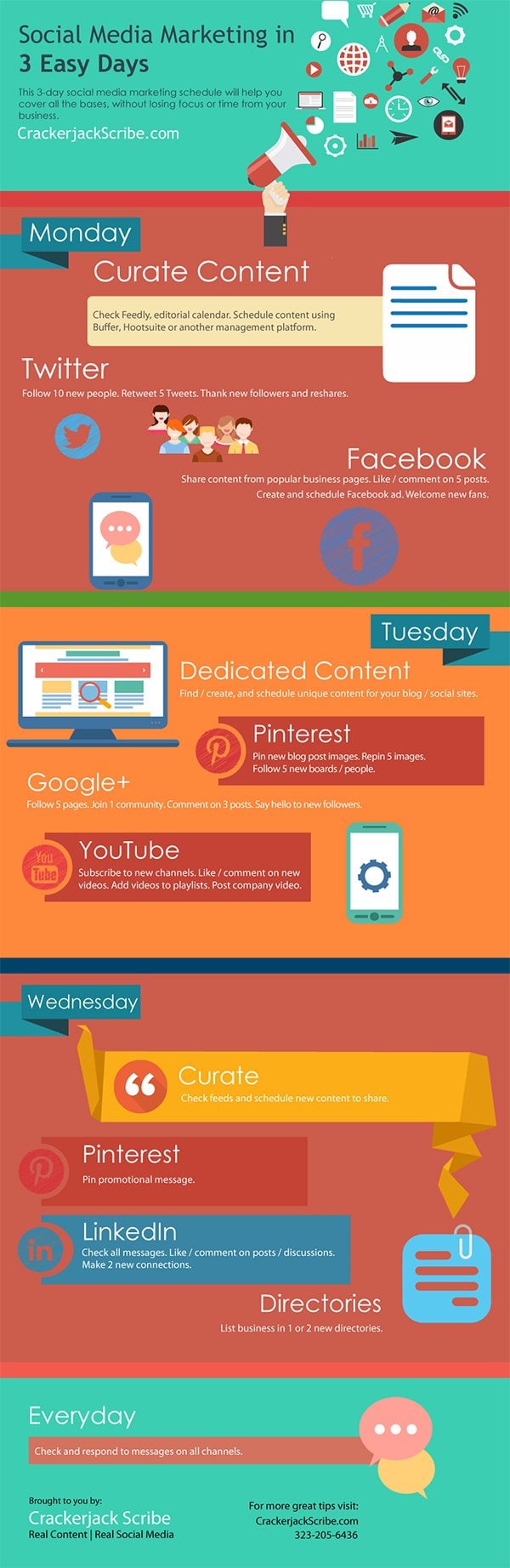
Day 1: Setting the Foundation
Morning: Define Your Goals and Audience
Before diving into social media marketing, it’s essential to have clear goals and a deep understanding of your target audience. Ask yourself:
- What do you want to achieve through social media marketing? Is it brand awareness, lead generation, website traffic, or sales?
- Who is your ideal customer? Create detailed buyer personas to understand their demographics, interests, and pain points.
Once you have a clear picture of your goals and audience, you can tailor your content and strategy accordingly.
Mid-morning: Choose the Right Platforms
Not all social media platforms are created equal, and it’s crucial to select the ones that align with your goals and audience. Here’s a brief overview of the major platforms:
- Facebook: Ideal for B2C businesses, local businesses, and those targeting a wide audience.
- Instagram: Great for visual content and reaching a younger demographic.
- Twitter: Useful for real-time updates, engagement, and customer support.
- LinkedIn: Best for B2B businesses and professional networking.
- Pinterest: Effective for e-commerce, DIY, and lifestyle brands.
Select 2-3 platforms that make the most sense for your business and focus your efforts there.
Lunchtime: Set Up or Optimize Your Profiles
Ensure that your profiles on the selected platforms are complete, professional, and consistent across all channels. This includes:
- Using high-quality profile pictures and cover photos.
- Writing compelling and informative bios.
- Adding contact information and website links.
- Verifying your business (if applicable).
A well-optimized profile gives your audience a positive first impression and makes it easier for them to connect with you.
Afternoon: Research Competitors and Industry Trends
Understanding what your competitors are doing on social media can provide valuable insights. Take some time to:
- Identify your top competitors on social media.
- Analyze their content, engagement strategies, and follower demographics.
- Look for gaps or opportunities that you can leverage.
Additionally, stay updated on industry trends and current events that could impact your business. Use tools like Google Alerts or social media listening tools to monitor relevant keywords and topics.
Day 2: Content Creation and Scheduling
Morning: Content Ideation
Effective social media marketing relies on compelling content. Spend your morning brainstorming ideas for posts, keeping in mind the interests and pain points of your target audience. Consider various types of content, including:
- Educational Posts: Share industry insights, tips, and how-to guides.
- Visual Content: Use images, infographics, and videos to convey your message.
- User-Generated Content: Encourage customers to share their experiences with your products or services.
- Behind-the-Scenes: Give your audience a glimpse of your team and company culture.
Ensure that your content aligns with your chosen platforms and resonates with your audience.
Mid-morning: Content Creation
With your ideas in hand, start creating your content. Use tools like Canva for graphic design, Adobe Premiere Rush for video editing, and a social media management platform like Buffer or Hootsuite for scheduling. Don’t forget to:
- Write compelling captions that accompany your visuals.
- Use relevant hashtags to increase discoverability.
- Consider the best times to post on each platform (research peak engagement hours).
- Maintain a consistent brand voice and style.
Lunchtime: Scheduling
Scheduling your posts in advance can save you time and ensure a consistent online presence. Use a social media management tool to schedule your content for the upcoming week or month. Be mindful of each platform’s posting frequency recommendations and best practices:
- Facebook: 1-2 posts per day.
- Instagram: 1-2 posts per day (more for Stories).
- Twitter: 3-5 tweets per day.
- LinkedIn: 2-5 posts per week.
- Pinterest: 5-30 pins per day.
Scheduling allows you to maintain an active presence without being tied to your devices 24/7.
Afternoon: Engage with Your Audience
Social media is not just a one-way street. Spend time engaging with your audience by responding to comments, messages, and mentions. Show appreciation for positive feedback and address any concerns or questions promptly. Building relationships with your followers can lead to brand loyalty and word-of-mouth referrals.
Day 3: Analytics and Optimization
Morning: Review Analytics
Analytics are the key to understanding the effectiveness of your social media efforts. Each platform offers its own set of analytics tools, or you can use third-party analytics platforms like Google Analytics and social media management tools. Review the following metrics:
- Follower Growth: Are you gaining or losing followers?
- Engagement: How many likes, comments, shares, and clicks are your posts receiving?
- Reach and Impressions: How many people are seeing your content?
- Conversion Metrics: Are your social media efforts driving website traffic, leads, or sales?
Analyze this data to identify what’s working and what needs improvement.
Mid-morning: Adjust Your Strategy
Based on your analytics, make adjustments to your social media strategy:
- If a particular type of content is performing well, create more of it.
- Experiment with posting times and frequencies to maximize engagement.
- A/B test different ad campaigns to optimize your ROI.
- Consider running promotions or contests to boost engagement and conversions.
Your social media strategy should be dynamic and adaptable to changes in your audience’s behavior and platform algorithms.
Lunchtime: Plan for the Future
Use the afternoon to plan for the future. Outline your content calendar for the next week or month, incorporating what you’ve learned from your analytics and adjustments. Identify any upcoming events, holidays, or product launches that you can leverage for your social media marketing.
Consider collaborating with influencers or partners to expand your reach and gain access to new audiences. Additionally, explore paid advertising options to reach a broader audience or retarget previous website visitors.
Afternoon: Continuous Learning
Social media is an ever-evolving landscape, and staying updated is crucial. Spend time in the afternoon reading industry blogs, attending webinars, or taking online courses related to social media marketing. Keeping up with the latest trends and best practices will help you stay ahead of the competition and adapt to changes in the digital marketing landscape.
Conclusion
A well-structured 3-day social media marketing schedule can provide a solid foundation for any business looking to establish or improve its online presence. Remember that consistency, engagement, and data-driven optimization are key to success in the world of social media marketing. By following this schedule and staying committed to your goals, you can effectively connect with your target audience and achieve your desired outcomes.

Author:
Mark Ford