Worried your business isn’t being taken seriously because you don’t have a website? Want to know how a professional site can boost your credibility and win customer trust?
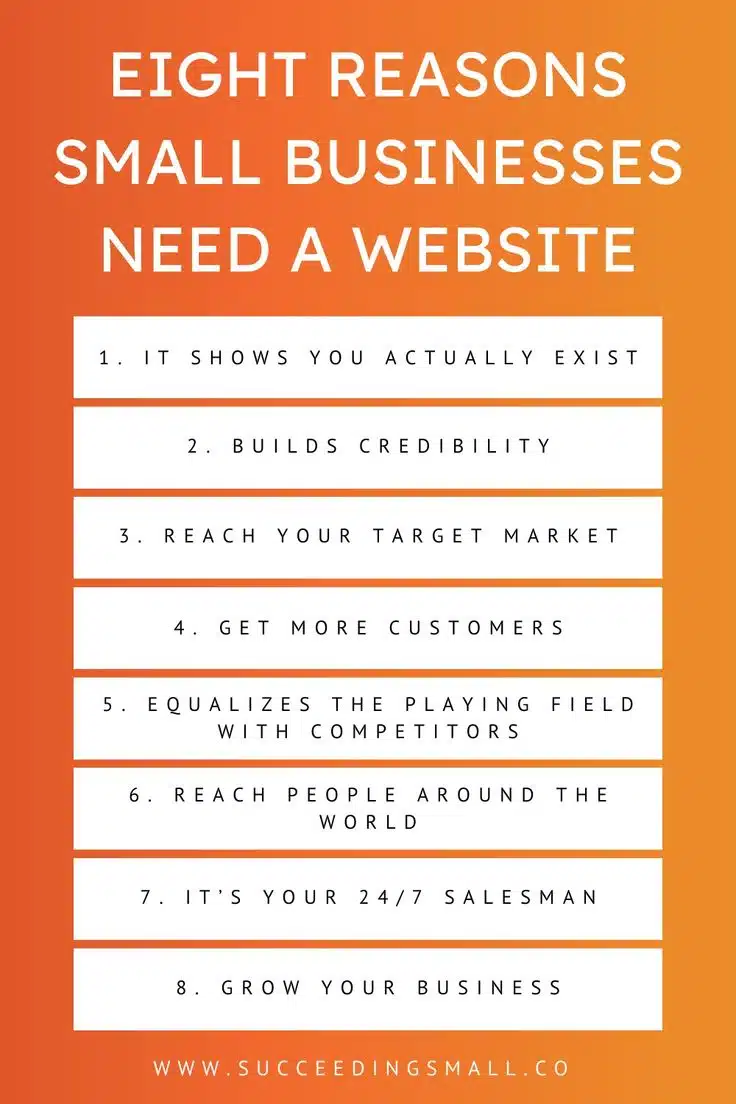
You’ll find some website basics in this infographic.
Here are a few that make the list:
- It Shows You Actually Exist
- Builds Credibility
- Reach Your Target Market
- Get More Customers
- Equalises the Playing Field with Competitors
- Reach People Around the World
- It’s Your 24/7 Salesman
- Grow Your Business
Check out the post below for more.
In today’s digital-first world, a website is far more than just a digital brochure—it’s the face of your brand, the first impression you make, and a key factor in earning customer trust. If your business lacks a website, it’s not just missing out on opportunities; it’s losing credibility before the conversation even starts.
In this post, we’ll explore how having a website builds trust, enhances your reputation, and helps you grow. We’ll break it down using eight powerful benefits every small business should understand.
It Shows You Actually Exist
When people look you up online, they expect to find a website. It’s the modern-day sign that a business is legitimate and operational. Without it, potential customers may assume your business isn’t real or professional. A website proves you’re active, invested, and easy to reach.
- Display your business name, contact details, and location clearly to confirm legitimacy.
- Include an “About” page with your story, values, and credentials to humanise your brand.
- Add photos of your team, workspace, or products to show you’re real and trustworthy.
- Use a branded domain name (not a free subdomain) to boost your professional image.
Builds Credibility
A clean, well-designed website tells visitors you take your business seriously. It demonstrates effort, attention to detail, and a commitment to quality—all traits people look for when deciding who to trust. It’s your chance to showcase professionalism and prove you’re not a fly-by-night operation.
- Use consistent branding, tone of voice, and quality visuals across your site.
- Include testimonials and case studies to show real-world results and happy customers.
- Make sure your site is free of typos, broken links, and outdated information.
- Invest in a secure HTTPS connection to show visitors your site is safe to use.
Reach Your Target Market
A website helps you attract and connect with the people most likely to buy from you. With SEO, content marketing, and the right messaging, you can draw in your ideal audience—even when you’re not actively promoting yourself. It’s a long-term visibility strategy that keeps working in the background.
- Use targeted keywords to help the right people find you via Google.
- Tailor your messaging and offers to your most valuable customer segments.
- Create blog posts or resources that answer your audience’s common questions.
- Build landing pages for specific services or locations to capture relevant traffic.
Get More Customers
Ultimately, a website helps you convert interest into action. Whether you want people to call, book, order, or sign up, your site is the engine that makes it happen. It gives visitors all the information they need to say yes—and the tools to take that next step immediately.
- Add strong calls-to-action (CTAs) throughout your pages to guide users.
- Use lead capture forms to collect email addresses or quote requests.
- Offer online booking, eCommerce, or enquiry features to streamline conversions.
- Highlight key benefits, guarantees, and social proof to ease decision-making.
Equalises the Playing Field with Competitors
You don’t need a huge marketing budget to compete—just a smart, strategic website. A strong online presence lets small businesses hold their own against bigger competitors. With the right tools and messaging, you can attract attention, demonstrate expertise, and win customers.
- Showcase your niche knowledge or personal service advantage over larger firms.
- Use testimonials and reviews to prove your track record and reliability.
- Optimise your site for mobile so customers can find you anytime, anywhere.
- Stay active with blog posts, updates, or case studies to show you’re thriving.
Reach People Around the World
A website doesn’t close at 5 p.m. or stick to one postcode. It allows you to connect with anyone, anywhere—opening up new markets and opportunities. Whether you sell products online or just want to attract customers from a wider area, your website makes it possible.
- Add delivery or service area info to show how far your reach extends.
- Use analytics to track where your visitors come from and tailor content accordingly.
- Consider a multilingual option if you’re targeting international customers.
- Create downloadable resources or online tools to provide value globally.
It’s Your 24/7 Salesman
Your website works when you can’t—answering questions, showcasing products, and guiding people toward action even while you sleep. It’s always ready to explain your offer, prove your value, and help visitors take the next step. No sick days, no holidays, no downtime.
- Use a clear site structure so users can easily navigate your content.
- Provide FAQs and help pages to answer common questions automatically.
- Add videos or demos to explain your service even better than you can in person.
- Use live chat or AI chatbots to support customers any time of day.
Grow Your Business
Credibility leads to trust. Trust leads to sales. And sales lead to growth. A website is a critical piece of your long-term business strategy—helping you scale, build authority, and generate consistent leads. Without one, you’re limiting your potential from day one.
- Track visitor behaviour to learn what’s working and what’s not.
- Collect email addresses for newsletters, promotions, or drip campaigns.
- Use testimonials and case studies to reinforce your brand as you grow.
- Regularly update your site with news, new offers, or blog content to stay relevant.
Final Thoughts
If you want people to take your business seriously, you need to take your online presence seriously. A well-designed website sends a clear message: you’re legitimate, professional, and ready to help.
It builds confidence in your customers and helps you win business you might otherwise lose. The sooner you get online, the sooner you can start earning the trust that turns visitors into loyal customers.

Author:
Mark Ford