Are you considering implementing an SEO strategy for your website? Looking for some guidance on what you should and shouldn’t do?
Improving your ranking in search engines like Google is one of the best ways to generate more visitors to your website, so having the right SEO strategy in place is crucial for success. Don’t fall into the trap of using quick fix black hat techniques and use ethical and sustainable methods that keep you in Google’s good books instead.
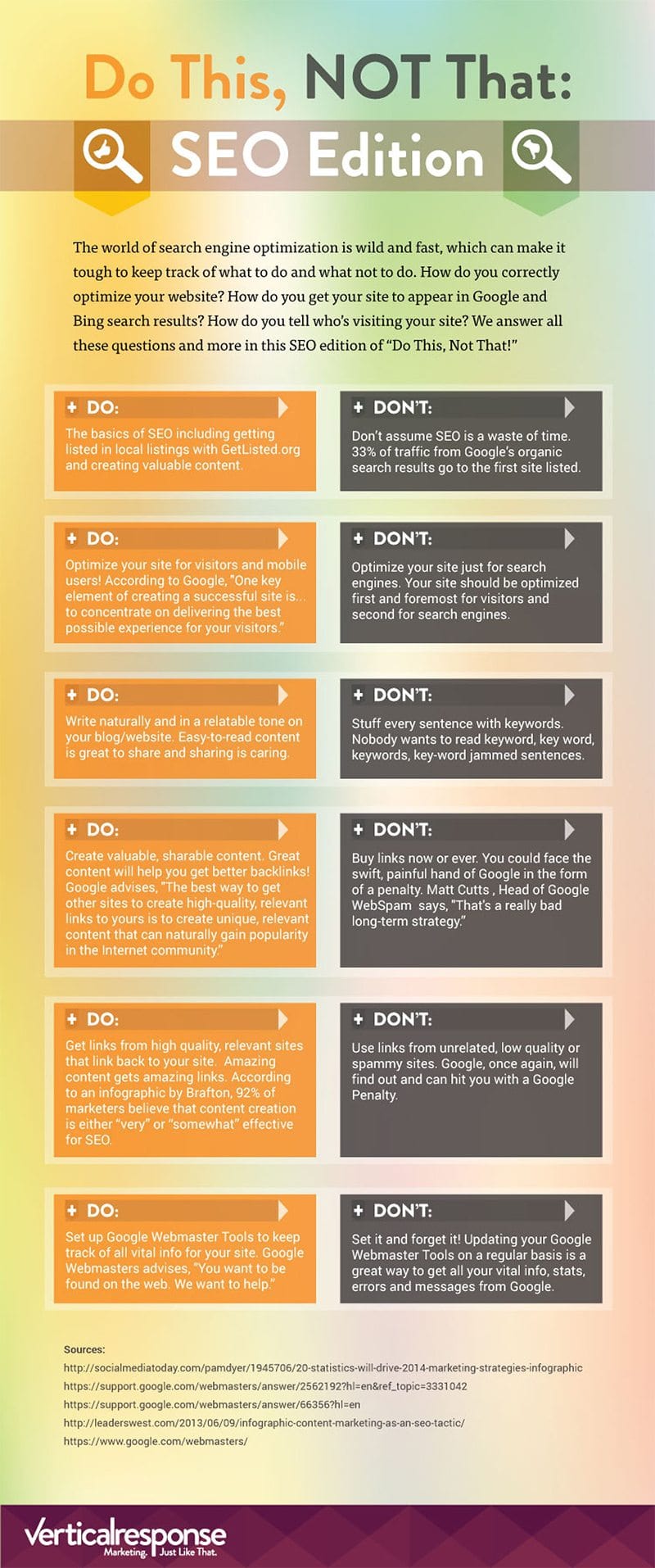
The guys at Vertical Response have created this infographic that gives you the dos and don’ts when it comes to your SEO strategy.
In today’s digital age, having a strong online presence is crucial for the success of any business or website. Search Engine Optimization (SEO) is a fundamental component of this online presence. It’s the practice of optimizing your website to improve its visibility on search engines like Google. A well-executed SEO strategy can drive organic traffic to your site and boost your online credibility. However, SEO is a complex and ever-evolving field, and to be successful, you need to understand the dos and don’ts of SEO. In this blog post, we’ll explore 12 essential dos and don’ts to help you build a sustainable SEO strategy.
The Dos:
1. Keyword Research and Optimization
- Do: Start your SEO journey with thorough keyword research. Identify keywords and phrases relevant to your niche or industry. Use tools like Google Keyword Planner, SEMrush, or Ahrefs to discover relevant keywords with high search volume and low competition.
- Do: Optimize your content for these keywords. Ensure they appear naturally in your titles, headers, and throughout your content. However, avoid keyword stuffing, which can harm your rankings.
2. High-Quality Content Creation
- Do: Create valuable, informative, and engaging content. Google’s algorithms favor high-quality content that provides value to users. Write in-depth articles, create informative videos, and produce visually appealing infographics to capture your audience’s attention.
- Do: Consistently update your content to keep it relevant. Google rewards fresh content, so periodic updates can help maintain or improve your rankings.
3. Mobile Optimization
- Do: Ensure that your website is mobile-friendly. With the increasing use of smartphones, Google prioritizes mobile compatibility in its rankings. Use responsive web design and test your site’s mobile performance regularly.
- Do: Optimize images and reduce page load times for mobile users. A fast and mobile-responsive website enhances user experience and SEO.
4. Quality Backlinks
- Do: Build high-quality backlinks from reputable websites in your industry. Quality matters more than quantity. Links from authoritative sites signal to search engines that your content is valuable and trustworthy.
- Do: Use natural link-building strategies. Avoid spammy practices like buying backlinks or participating in link farms, as they can lead to penalties.
5. Optimize Meta Tags
- Do: Craft compelling and relevant meta titles and descriptions for each page on your website. These tags serve as your site’s first impression in search results and can significantly impact click-through rates.
- Do: Use schema markup to enhance your search engine listings with rich snippets, such as reviews, ratings, and event details.
6. User Experience (UX) Improvement
- Do: Prioritize user experience on your website. Ensure that it’s easy to navigate, loads quickly, and provides a seamless experience across different devices.
- Do: Conduct user testing and gather feedback to identify and address usability issues. A positive UX can lead to higher engagement and better SEO rankings.
7. Local SEO
- Do: If you have a physical location or serve a local audience, optimize for local SEO. Create and verify a Google My Business listing, encourage customer reviews, and ensure your NAP (Name, Address, Phone number) information is consistent across the web.
- Do: Use local keywords and create location-specific content to target local search queries.
8. Regular Monitoring and Analytics
- Do: Monitor your website’s performance using tools like Google Analytics and Google Search Console. Keep track of your rankings, organic traffic, and user behavior.
- Do: Use this data to make informed decisions and adjustments to your SEO strategy. Regular analysis helps you identify what’s working and what needs improvement.
9. Social Media Integration
- Do: Leverage social media to complement your SEO efforts. Share your content on social platforms to increase its reach and engagement.
- Do: Encourage social sharing by adding social sharing buttons to your content. Social signals can indirectly influence your SEO.
10. Secure Your Website with HTTPS
- Do: Secure your website with HTTPS encryption. Google considers HTTPS a ranking factor and prioritizes secure sites in search results.
- Do: Ensure that all your internal and external links use the HTTPS protocol to maintain a secure and trustworthy online presence.
11. Structured Data Markup
- Do: Implement structured data markup (Schema.org) to provide search engines with additional information about your content. This can result in enhanced search engine listings and better click-through rates.
- Do: Test your structured data using Google’s Structured Data Testing Tool to ensure it’s correctly implemented.
12. Continuous Learning and Adaptation
- Do: Stay updated with the latest SEO trends, algorithm changes, and best practices. SEO is a dynamic field, and what works today may not work tomorrow.
- Do: Adapt your strategy based on industry developments and your website’s performance. Flexibility and a willingness to learn are key to long-term SEO success.
The Don’ts:
1. Keyword Stuffing
- Don’t: Overuse keywords in your content. Keyword stuffing can make your content appear spammy and harm your rankings. Focus on creating natural, reader-friendly content instead.
2. Duplicate Content
- Don’t: Publish duplicate content on your website. Search engines penalize duplicate content, and it can confuse users. Ensure that each page offers unique value and information.
3. Ignoring Mobile Users
- Don’t: Neglect mobile optimization. With a significant portion of internet traffic coming from mobile devices, not catering to mobile users can result in lower rankings and poor user experience.
4. Purchasing Backlinks
- Don’t: Buy backlinks from link farms or low-quality sources. Google’s algorithms can detect unnatural link patterns, and you may face penalties for such practices.
5. Ignoring On-Page SEO
- Don’t: Neglect on-page SEO elements like meta tags, headers, and alt tags for images. These elements play a vital role in search engine rankings.
6. Ignoring UX Issues
- Don’t: Allow UX issues to persist on your website. Poor user experience can lead to high bounce rates and negatively impact your SEO efforts.
7. Ignoring Local SEO Opportunities
- Don’t: Neglect local SEO if it’s relevant to your business. Optimizing for local searches can help you connect with a targeted audience.
8. Neglecting Analytics
- Don’t: Fail to analyze your SEO performance. Without data-driven insights, you won’t know what’s working and what needs improvement.
9. Ignoring Social Media
- Don’t: Disregard social media as a supplementary SEO tool. While social signals are not direct ranking factors, they can indirectly influence your SEO success.
10. Neglecting Website Security
- Don’t: Operate your website without HTTPS encryption. In today’s security-conscious environment, failing to secure your site can deter users and harm your rankings.
11. Neglecting Structured Data
- Don’t: Ignore the benefits of structured data markup. It can enhance your search engine listings and make your content more appealing to users.
12. Stagnation
- Don’t: Assume that your SEO strategy can remain static. SEO is an ongoing process, and what worked yesterday may not work tomorrow. Stay adaptable and open to change.
In conclusion, SEO is an integral part of any successful online strategy. By following these dos and avoiding these don’ts, you can build a sustainable SEO strategy that not only improves your search engine rankings but also enhances the overall user experience on your website. Keep in mind that SEO is a long-term commitment, and staying informed about industry trends and algorithm changes is key to staying competitive in the digital landscape.

Author:
Mark Ford