In the ever-evolving landscape of digital marketing, the death of SEO (Search Engine Optimization) has been declared numerous times. However, like a phoenix rising from its ashes, SEO continues to thrive and adapt. While traditional SEO practices may not be as effective as they once were, it would be premature to pronounce its demise.
Instead, SEO has transformed into a more complex and nuanced discipline that requires a fresh approach. In this blog post, we will explore the evolution of SEO and discuss what you should be doing now to succeed in the digital age.
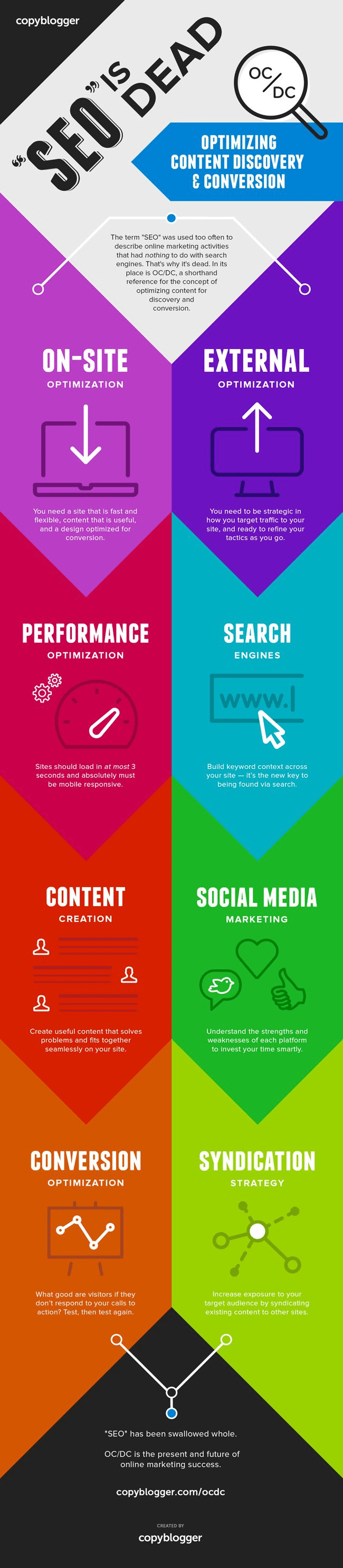
We’ve been harping on for a while now that content marketing is the new SEO. CopyBlogger have taken this theory that one step further and claim that SEO is officially dead and has been replaced by the term OC / DC which stands for Optimising Content for Discovery and Conversion.
Their infographic below takes you through the steps they believe have replaced the traditional SEO methods of keywords and link building. Whilst we agree with the principal, we won’t stop using the term SEO just yet.
The Evolution of SEO
Before we delve into the current state of SEO, it’s essential to understand how it has evolved over the years. SEO started as a relatively simple practice, primarily focused on keyword optimization and backlinks. However, as search engines became more sophisticated, so did SEO.
- From Keywords to User Intent
In the early days of SEO, keyword stuffing was the norm. Websites would cram as many keywords as possible into their content to rank higher in search results. However, search engines like Google caught on and started penalizing this practice.
Today, SEO has shifted from a focus on keywords to understanding user intent. It’s not enough to include keywords in your content; you must create content that genuinely addresses the needs and questions of your audience. Google’s algorithms now prioritize content that provides value to users, making user intent a crucial factor in SEO success.
- Quality Over Quantity in Backlinks
Backlinks, or inbound links from other websites, have long been a significant ranking factor in SEO. In the past, the emphasis was on acquiring as many backlinks as possible, regardless of their quality. This led to the proliferation of spammy link-building practices.
Google’s algorithm updates, particularly the Penguin update, changed the game. Today, it’s not about the quantity of backlinks but the quality. High-quality, relevant backlinks from authoritative websites carry much more weight in SEO rankings. Building a strong backlink profile now requires a strategic and organic approach.
- Mobile-First Indexing
With the increasing use of smartphones, Google introduced mobile-first indexing. This means that Google primarily uses the mobile version of a website’s content to determine its ranking in search results. Websites that are not mobile-friendly are at a significant disadvantage in terms of SEO.
- Voice Search and Featured Snippets
The rise of voice-activated devices like Amazon Echo and Google Home has given birth to voice search. People are now using their voices to search for information online. As a result, SEO strategies must adapt to accommodate voice search queries and featured snippets that provide concise answers.
The Current State of SEO
Now that we’ve covered the evolution of SEO let’s discuss its current state and what you should be doing to succeed in the digital age.
- Focus on E-A-T
E-A-T stands for Expertise, Authoritativeness, and Trustworthiness. Google’s algorithms prioritize content from websites that demonstrate expertise, authoritativeness, and trustworthiness in their respective fields. This means that you should aim to establish your website as a reliable source of information.
To boost your E-A-T:
- Create high-quality, well-researched content that showcases your expertise.
- Attract backlinks from authoritative websites.
- Ensure your website has a clear and transparent About Us page that highlights your qualifications and credentials.
- Display trust signals, such as customer reviews and trust badges if applicable.
- Optimize for User Experience
User experience (UX) has become a critical factor in SEO. Google considers factors like page load speed, mobile-friendliness, and ease of navigation when ranking websites. A poor UX can lead to higher bounce rates and lower rankings.
To optimize for UX:
- Ensure your website is mobile-responsive and loads quickly.
- Organize your content logically, making it easy for users to find what they’re looking for.
- Use clear and concise headings and subheadings.
- Eliminate any technical issues that may affect the user experience.
- Create High-Quality, Comprehensive Content
Content is still king in the world of SEO. However, it’s not about churning out mediocre content in high quantities. Instead, focus on creating in-depth, comprehensive content that thoroughly addresses the topic at hand. Long-form content tends to perform better in search results.
To create high-quality content:
- Conduct thorough research on your topic.
- Provide valuable insights and information that can’t be found elsewhere.
- Use multimedia elements like images and videos to enhance your content.
- Keep your content up to date by revisiting and revising it regularly.
- Leverage Schema Markup
Schema markup is a form of structured data that provides search engines with additional context about your content. It helps search engines understand your content better, which can lead to enhanced search results, including rich snippets and knowledge graphs.
Implementing schema markup can improve your website’s visibility and click-through rates by making your content more appealing in search results.
- Invest in Local SEO
For businesses with physical locations, local SEO is paramount. Optimizing for local search can help you appear in the “Local Pack” and Google Maps, increasing foot traffic to your brick-and-mortar store.
To optimize for local SEO:
- Claim and optimize your Google My Business listing.
- Encourage customer reviews and respond to them.
- Ensure your business information is consistent across online directories.
- Stay Informed and Adapt
The world of SEO is constantly evolving. Google frequently updates its algorithms, and new trends and technologies emerge regularly. To succeed in SEO, it’s essential to stay informed about industry changes and adapt your strategy accordingly.
Follow reputable SEO blogs and forums, attend webinars, and consider participating in SEO training and courses. Surrounding yourself with a network of SEO professionals can also help you stay updated and exchange valuable insights.
Conclusion
SEO is not dead, but it has certainly evolved. To succeed in the digital age, you must adapt to these changes and embrace new SEO strategies. Focus on providing value to your audience, optimizing for user experience, and staying informed about the latest trends and updates in the SEO landscape.
Remember that SEO is a long-term game, and results may not be immediate. However, by following the guidelines outlined in this blog post and continually refining your approach, you can improve your website’s search visibility and drive organic traffic in the ever-competitive online world. SEO may have changed, but its importance in digital marketing remains as strong as ever.

Author:
Mark Ford