
Are you struggling to make sense of what SEO actually involves? Want to know the real strategies that lead to better rankings and lasting results?
You’ll find some SEO basics in this infographic.
Here’s a summary of what’s covered:
- SEO Takes Time and Needs a Long-Term Plan
- It’s About Value, Not Just Keywords
- It Requires Consistent Effort
- SEO Can Help Any Business, Big or Small
- It’s About Creating Trust With Good Content
- It’s a Mix of Content, Links, and Fixing Technical Issues
- SEO Needs Regular Updates and Care
- SEO Is for Many Search Engines, Not Just Google
- SEO Is About Helping Your Users, Not Tricking the Algorithm
Check out the post below for more.
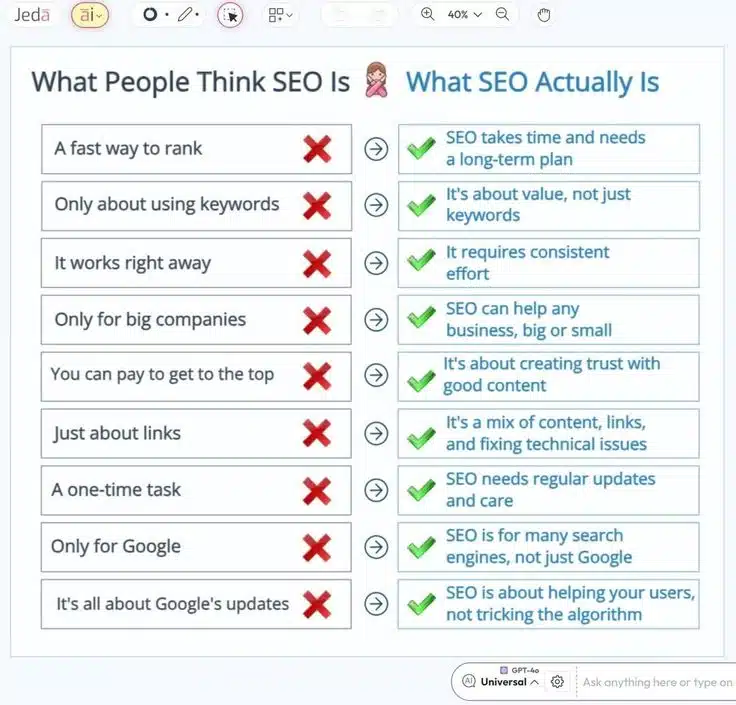
SEO is often misunderstood. Some people see it as a quick fix, others think it’s just about keywords, and many still believe it’s only for big brands. These misconceptions can lead to wasted time, poor results, and frustration.
In this post, we’re breaking down the most common myths—and revealing what SEO is really about.
SEO Takes Time and Needs a Long-Term Plan
Many people assume SEO is a quick fix—a way to magically jump to the top of Google overnight. In reality, SEO is a slow, steady process that rewards long-term thinking and consistent effort. Rankings aren’t earned instantly; they’re built over time through trust, authority, and relevance. If you want lasting results, you need a strategy that evolves with your business.
- Set realistic goals and track your progress over months, not days
- Build content and backlinks steadily rather than spiking efforts
- Monitor changes in rankings but don’t panic over short-term dips
- Treat SEO as an ongoing investment, not a one-off job
It’s About Value, Not Just Keywords
Keyword stuffing is long gone. Modern SEO is centred around delivering value to users, not just inserting exact-match phrases into your content. Search engines now reward helpful, well-structured, and insightful content. If you focus on solving problems and answering questions, your rankings will reflect it.
- Write for your audience first, then optimise for search engines
- Use related terms and semantic keywords naturally throughout your content
- Focus on user intent—why they’re searching—not just what they type
- Create in-depth, helpful content that genuinely answers the user’s query
It Requires Consistent Effort
SEO isn’t a “set it and forget it” tactic. It needs regular attention, monitoring, and refinement. Algorithms change, competitors improve, and user behaviour evolves. If you’re not consistently updating your content and strategy, you’ll fall behind.
- Schedule monthly SEO audits to catch issues early
- Update existing content to keep it fresh and accurate
- Regularly review your keyword strategy based on performance data
- Stay on top of algorithm changes and industry best practices
SEO Can Help Any Business, Big or Small
A common misconception is that SEO only works for large companies with big budgets. But the truth is, small businesses can benefit just as much—sometimes even more—with the right approach. Local SEO, niche content, and targeted strategies can level the playing field.
- Optimise your Google Business Profile to attract local customers
- Focus on long-tail keywords to compete in less saturated areas
- Create content specific to your community or niche
- Build backlinks through partnerships, testimonials, and local outreach
It’s About Creating Trust With Good Content
You can’t buy your way to the top of the organic search results. True SEO success comes from building authority and trust through valuable content. Search engines want to show users the best answers, not the highest bidder.
- Publish expert-level content that’s original, accurate, and trustworthy
- Include author bios to build credibility and transparency
- Use internal links to guide visitors to more useful information
- Encourage reviews, testimonials, and case studies that support your expertise
It’s a Mix of Content, Links, and Fixing Technical Issues
There’s no single magic ingredient in SEO. It’s a balanced mix of quality content, authoritative backlinks, and solid technical foundations. Neglecting any of these areas can hurt your chances of ranking well.
- Perform regular technical audits to fix broken links, slow pages, or crawl errors
- Build a healthy backlink profile with diverse, natural links
- Create a content calendar that includes blogs, guides, and service pages
- Make sure your website is mobile-friendly and loads quickly
SEO Needs Regular Updates and Care
Algorithms don’t stand still—and neither should your SEO. Content ages, links break, and user expectations change. A successful SEO strategy involves regularly revisiting and refreshing your site to keep it competitive and relevant.
- Re-optimise old blog posts with updated data and insights
- Replace or fix broken links to maintain link health
- Add new content to address emerging topics or search trends
- Review metadata, titles, and headers to ensure continued relevance
SEO Is for Many Search Engines, Not Just Google
Google dominates search, but it’s not the only platform worth optimising for. Bing, Yahoo, DuckDuckGo, YouTube, Pinterest, and even Amazon have their own algorithms and audiences. A broader approach can help you reach more people in more places.
- Optimise videos with keywords, titles, and descriptions on YouTube
- Claim and manage business listings on Bing and other platforms
- Use schema markup for better visibility across search engines
- Repurpose blog content for platforms like Pinterest and Reddit
SEO Is About Helping Your Users, Not Tricking the Algorithm
Trying to “game the system” with tricks and shortcuts may offer a temporary bump, but it won’t lead to lasting success. SEO works best when it aligns with user experience. If your website is helpful, engaging, and easy to use, rankings will follow.
- Improve navigation and user flow to keep visitors engaged
- Write clear, concise content that matches user expectations
- Use analytics to identify and fix pages with high bounce rates
- Focus on user satisfaction—answer questions, solve problems, and provide value
Conclusion: Real SEO Is Built on Strategy, Not Shortcuts
SEO might not be what you originally thought—but that’s a good thing. It’s not a gimmick or a quick hack. It’s a sustainable way to grow your business by earning trust, improving content, and meeting your customers’ needs.
Whether you’re a startup or an established brand, the truth about SEO is simple: if you’re committed to creating value, you’ll see results.

Author:
Mark Ford