In the ever-evolving landscape of digital marketing, two giants have consistently dominated the scene: Search Engine Optimization (SEO) and Pay-Per-Click Advertising (PPC).
Both strategies aim to increase online visibility and drive traffic to websites, but they have distinct approaches, advantages, and disadvantages. In this blog post, we’ll delve into the SEO vs. PPC debate to help you determine which strategy is the right fit for your business.
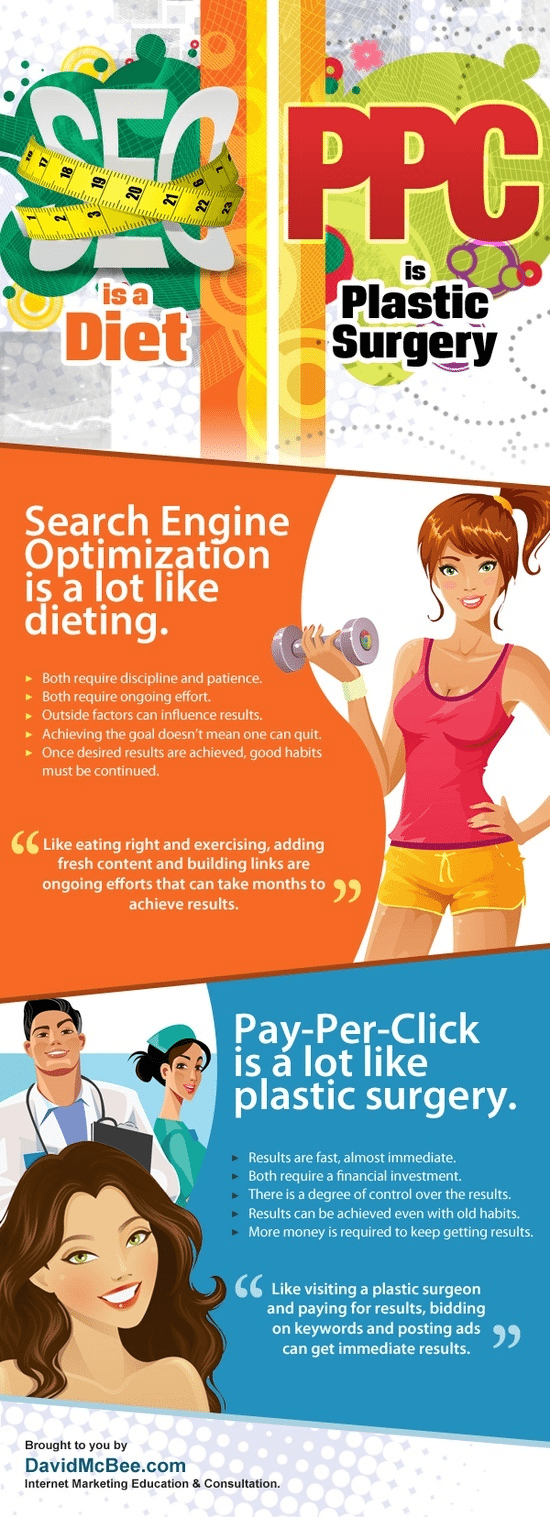
The infographic below from David McBee compares SEO and PPC to dieting and plastic surgery.
Which method do you prefer?
The Fundamentals of SEO and PPC
Before we dive into the comparison, let’s establish a solid understanding of what SEO and PPC entail:
SEO (Search Engine Optimization)
Definition: SEO is a set of practices aimed at optimizing a website to rank higher in organic search engine results.
Key Components:
- Keyword Research: Identifying relevant keywords that your target audience uses when searching online.
- On-Page Optimization: Optimizing website content, meta tags, and structure to align with selected keywords.
- Off-Page Optimization: Building backlinks and online authority through strategies like guest posting and outreach.
- Technical SEO: Improving website speed, mobile-friendliness, and other technical aspects.
- Content Creation: Producing high-quality, valuable content that appeals to both users and search engines.
PPC (Pay-Per-Click) Advertising
Definition: PPC is a form of online advertising where advertisers pay a fee each time their ad is clicked. It involves bidding on keywords to display ads at the top of search engine results or on relevant websites.
Key Components:
- Keyword Research: Identifying relevant keywords and phrases to target in your ad campaigns.
- Ad Creation: Crafting compelling ads with attention-grabbing headlines and descriptions.
- Bid Management: Setting bids for keywords to determine when and where your ads appear.
- Ad Campaign Management: Monitoring and optimizing ad campaigns for performance and ROI.
- Landing Page Optimization: Ensuring that the page users land on after clicking the ad is relevant and encourages conversions.
Now that we’ve outlined the basics of SEO and PPC, let’s explore the strengths and weaknesses of each strategy.
SEO: The Slow and Steady Climber
Advantages of SEO
- Sustainable Traffic: Once your website ranks well for target keywords, you can enjoy a steady stream of organic traffic without continually paying for clicks.
- Credibility and Trust: High organic rankings convey trust and credibility to users, as many believe that top-ranked websites are more reliable.
- Long-Term Investment: SEO efforts, such as content creation and link building, contribute to a lasting online presence that can continue to benefit your business over time.
- Cost-Effective Over Time: While the initial investment can be substantial, the cost per visitor decreases as your organic traffic increases.
Disadvantages of SEO
- Time-Consuming: SEO is a long-term strategy that requires patience. It can take several months to see significant results.
- Algorithm Changes: Search engines frequently update their algorithms, which can affect your rankings. Staying up-to-date with these changes is essential for maintaining visibility.
- Intense Competition: SEO is highly competitive, and ranking for competitive keywords can be challenging.
- Uncertain ROI: It can be challenging to predict the exact return on investment (ROI) from SEO efforts, making it challenging for budget planning.
PPC: The Instant Gratification Booster
Advantages of PPC
- Instant Visibility: PPC ads appear at the top of search results pages, providing immediate exposure to your target audience.
- Full Control: Advertisers have complete control over their ad campaigns, including budget, targeting, and ad copy.
- Measurable Results: PPC offers precise tracking, allowing you to measure the ROI of your campaigns accurately.
- Quick Testing: You can quickly test different keywords, ad variations, and landing pages to find what works best.
- Budget Flexibility: PPC campaigns can be tailored to fit any budget, making it accessible to businesses of all sizes.
Disadvantages of PPC
- Ongoing Costs: PPC requires a continuous budget to maintain visibility. As soon as you stop paying for ads, your visibility decreases.
- Click Fraud: Click fraud can occur, where competitors or bots click on your ads without genuine interest, leading to wasted ad spend.
- Ad Blindness: Some users actively avoid clicking on ads, focusing solely on organic search results.
- Keyword Costs: Competitive keywords can be expensive to bid on, particularly in highly competitive industries.
- Learning Curve: Effectively managing PPC campaigns requires expertise, and mistakes can lead to wasted ad spend.
When to Choose SEO
1. Long-Term Goals
If your business is focused on long-term growth and establishing a strong online presence that will continue to benefit you over the years, SEO is the way to go. It’s an investment in the future that can pay off with sustainable, organic traffic.
2. Limited Budget
SEO can be cost-effective in the long run, especially if you have a limited marketing budget. While it may take time to see results, the steady flow of organic traffic can be a valuable asset.
3. High-Quality Content
If your business can consistently produce high-quality, valuable content that addresses your audience’s needs and interests, SEO can help you rank well and attract a loyal following.
4. Local Presence
For brick-and-mortar businesses or those targeting a local audience, local SEO can be highly effective in driving foot traffic to physical locations.
When to Choose PPC
1. Immediate Results
If you need immediate visibility and traffic to your website, PPC can deliver results within a short time frame. It’s an excellent option for product launches or time-sensitive promotions.
2. Seasonal Campaigns
For businesses with seasonal offerings or promotions, PPC allows you to turn on and off campaigns as needed, maximizing ROI during peak seasons.
3. Testing and Optimization
If you want to experiment with different ad copy, keywords, and landing pages to find the most effective combinations quickly, PPC’s flexibility makes it ideal for testing and optimization.
4. Competitive Niches
In highly competitive industries where organic rankings are challenging to achieve, PPC can level the playing field and provide immediate visibility.
The Synergy of SEO and PPC
While SEO and PPC are often pitted against each other in the marketing arena, they can also complement each other effectively. Here’s how:
- Keyword Data: PPC can provide valuable insights into which keywords convert best. This data can inform your SEO strategy, helping you prioritize keywords for organic optimization.
- Visibility: Having both organic and paid listings on the same search results page can reinforce your brand’s authority and credibility, increasing the likelihood of user engagement.
- Remarketing: PPC allows you to retarget users who have visited your site but didn’t convert. You can use SEO to attract users initially, and then PPC to bring them back when they’re ready to make a purchase.
- Seasonal Campaigns: As mentioned earlier, PPC is excellent for seasonal campaigns. By combining SEO for long-term visibility with PPC for seasonal promotions, you can maintain a consistent online presence.
Measuring Success: KPIs for SEO and PPC
To determine which strategy is winning in your specific case, you need to establish key performance indicators (KPIs) and measure the success of your campaigns. Here are some essential KPIs for both SEO and PPC:
SEO KPIs
- Organic Traffic: Monitor the number of visitors coming to your website through organic search.
- Keyword Rankings: Keep track of your rankings for target keywords.
- Conversion Rate: Measure how effectively your organic traffic converts into leads or sales.
- Bounce Rate: Monitor the percentage of visitors who leave your site after viewing only one page.
- Backlink Growth: Track the number and quality of backlinks pointing to your site.
- Domain Authority: Measure your website’s overall authority in your industry.
PPC KPIs
- Click-Through Rate (CTR): Measure the percentage of users who click on your ads after seeing them.
- Conversion Rate: Track the percentage of ad clicks that result in a desired action, such as a purchase or sign-up.
- Quality Score: Assess the relevance and quality of your ads and landing pages, which can impact ad placement and costs.
- Ad Spend: Monitor your daily, weekly, and monthly ad spend to stay within budget.
- Return on Ad Spend (ROAS): Calculate the revenue generated from your PPC campaigns compared to the ad spend.
Conclusion: SEO and PPC Can Coexist
In the SEO vs. PPC battle, there is no clear winner. Both strategies have their strengths and weaknesses, and the choice between them depends on your business goals, budget, and timeline. In reality, the most successful digital marketing campaigns often incorporate elements of both SEO and PPC.
Remember that digital marketing is not a one-size-fits-all endeavor. It’s essential to continually analyze your results, adjust your strategies, and adapt to changing market conditions. Whether you choose SEO, PPC, or a combination of both, the key to success lies in staying informed, testing new approaches, and staying committed to meeting your target audience’s needs.
So, instead of asking which strategy wins, consider how you can leverage the power of SEO and PPC to create a winning marketing strategy that drives sustained growth for your business in the digital age.

Author:
Mark Ford