Are you looking for ways to improve your blogging strategy? Need help generating more ROI from your blog content?
Foundr share their blogging tips for success in this infographic.
Here’s a quick summary:
- Split test multiple titles
- Use opt-in forms
- Start conversations before writing
- Schedule posts for peak times
- Get the word out immediately
- Maximise shareability
- Interlink
Check out the infographic for more detail.
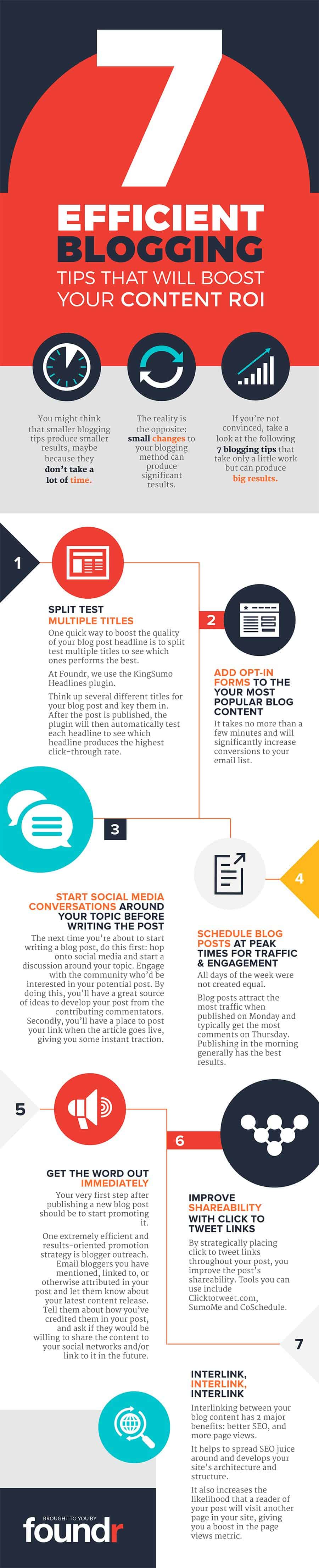
Blogging is not just about sharing your thoughts; it’s a strategic tool for enhancing visibility, engaging with your audience, and building authority in your niche. To leverage the power of blogging fully, here are seven simple but effective strategies that can produce big results.
Split Test Multiple Titles
For small businesses, the blog title is often the first impression potential customers have of your brand. A well-crafted title can attract more visitors, improve SEO rankings, and increase engagement. Here’s how small businesses can effectively split test multiple titles to maximize their blogging efforts.
Understanding the Basics of Split Testing Titles
Split testing, also known as A/B testing, involves comparing two versions of a title to see which one performs better in terms of user engagement. The goal is to determine which title leads to higher click-through rates from your emails, social media posts, or search engine results.
- Define Clear Objectives: Before you begin testing, know what success looks like. Are you aiming to increase clicks, enhance engagement, or improve conversions? Your objective will guide the design of your test.
- Create Variations: Develop several variations of your title. Each should emphasize a different element that might appeal to your audience. For instance, one title might focus on the emotional appeal, while another highlights a practical benefit.
- Use the Right Tools: Utilize tools like Google Optimize, Optimizely, or even simpler solutions integrated with your content management system or email marketing software to run your tests.
Steps to Implement Title Split Testing
Step 1: Generate Title Variations
- Use Numbers and Lists: Titles with numbers often perform well because they set clear expectations (e.g., “5 Tips to Save on Your Next Purchase”).
- Incorporate Questions: Titles phrased as questions can intrigue readers and make them want to find out the answer (e.g., “What Are the Secrets to Effective SEO?”).
- Apply Emotional Adjectives: Descriptive and emotionally charged adjectives can increase curiosity and engagement (e.g., “Essential Tips for Staggering Business Growth”).
Step 2: Test Your Titles
- Select Your Testing Platform: Depending on where most of your traffic comes from, choose a platform to test your titles. If it’s from email, test through your email marketing tool. For website visitors, use A/B testing tools that integrate with your website.
- Run the Test: Implement your title variations simultaneously to ensure that external factors like time of day or day of the week don’t skew the results. Typically, you should run the test until you have statistically significant data, which could range from a few days to a few weeks depending on your traffic.
Step 3: Analyze the Results
- Measure Against Your Objectives: Look at metrics like click-through rates, time spent on the page, and conversion rates to evaluate which title performs best.
- Understand Why: Analyze why certain titles worked better. Is it the language, the structure, or the topic that drove more engagement? This insight can help refine future headlines.
Step 4: Implement the Findings
- Use Winning Titles: Adopt the title that performed the best in your tests for your main post.
- Apply Learnings: Use the insights gained from testing for future content creation, not just for titles but potentially for content style and structure.
Tips for Effective Split Testing
- Test Consistently: Regularly testing titles helps keep your content strategies fresh and aligned with audience preferences.
- Keep Variables Limited: When testing titles, change only the title itself while keeping the content the same to accurately measure the impact of the title variation.
- Use Segmentation: If possible, segment your audience and test different titles with different groups to see how various demographics respond to different appeals.
Split testing blog titles is a powerful way for small businesses to directly increase their online engagement and understand their audience better. By systematically testing and refining their approach, small businesses can effectively enhance their content strategy and ensure that their blog serves as a vital tool in their marketing arsenal.
Use Opt-in Forms
Opt-in forms are essential tools for small businesses aiming to build a robust email list. These forms allow businesses to collect email addresses from website visitors, enabling direct communication and fostering relationships. Here’s a comprehensive guide to effectively using opt-in forms to maximize your blog’s potential.
Understanding the Importance of Opt-in Forms
Opt-in forms help convert passive visitors into active subscribers and potential customers. By providing a means to capture contact details, you can keep your audience engaged with regular updates, promotional offers, and more personalized content, turning one-time visitors into loyal followers and customers.
Steps to Implement Effective Opt-in Forms
Step 1: Design Engaging Opt-In Forms
- Placement Matters: Position your forms in high-visibility areas such as the top of your sidebar, the footer of your site, as a floating banner, or as an exit-intent popup.
- Keep It Simple: The form should be simple, asking for minimal information, typically just a name and an email address. The more fields you add, the lower the likelihood of someone completing the form.
Step 2: Offer Incentives
- Provide Value: Offer a compelling incentive for signing up. This could be a free ebook, a discount code, exclusive access to webinars, or a free trial of your product.
- Clarify Benefits: Clearly state what subscribers receive in exchange for their email addresses, such as “Sign up for weekly SEO tips straight to your inbox!”
Step 3: Optimize Form Timing and Frequency
- Timing is Key: If using pop-ups, set them to appear after the visitor has had time to engage with your content, such as after 30 seconds or at 70% page scroll.
- Frequency Settings: Ensure pop-ups or slide-ins don’t reappear too frequently after being closed. This can frustrate users and lead to a negative experience.
Step 4: Ensure Compliance
- Follow Legal Guidelines: Comply with privacy laws like GDPR, CCPA, or others applicable in your region. Always use double opt-in procedures where the subscriber must confirm their email address after signing up.
- Transparent Policies: Include links to your privacy policy and terms of service near the sign-up button to build trust.
Advanced Strategies for Maximizing Opt-in Form Effectiveness
Customize According to User Behavior
- Leverage Behavioral Triggers: Customize the timing and content of your opt-in forms based on user behavior. For example, show different offers to first-time visitors versus returning visitors.
- Use A/B Testing: Regularly test different versions of your opt-in forms to find the most effective designs, placements, and messages.
Segment and Personalize
- Segment Your List: Use different forms or add fields that let users choose their interests. This allows you to segment your email list, so you can tailor content to specific groups.
- Personalize the Experience: Address subscribers by name in emails and tailor content to their preferences, which can increase engagement and conversion rates.
Integrate with Content
- Content-Specific Offers: Create offers specifically tied to the content of the blog posts. For example, if your post is about healthy eating tips, offer a downloadable recipe book as an incentive.
- Seasonal and Event-Based Forms: Adjust your opt-in forms and incentives based on seasonal events or promotions, which can increase relevancy and interest.
By following these detailed steps and strategies, small businesses can effectively utilize opt-in forms to build and nurture their audience. This leads not only to increased engagement and loyalty but also to higher conversion rates and business growth. Through careful design, strategic placement, and continuous optimization of these forms, businesses can significantly enhance their digital marketing efforts and see substantial returns from their blogs.
Start Conversations Before Writing
For small businesses, starting conversations before writing blog posts can be a strategic approach to create more engaging and relevant content. This tactic involves interacting with your audience to gather insights and feedback that can shape your content creation process. Here’s how to effectively engage with your audience before you even begin to write.
Understanding the Value of Pre-writing Conversations
Engaging with your audience before writing helps ensure the content you produce is aligned with their interests and needs. It can also spark interest and create a buzz around upcoming posts, making your audience more likely to read and share the content once it’s published.
Steps to Engage Your Audience Before Writing
Step 1: Identify Key Platforms for Engagement
- Choose the Right Channels: Depending on where your audience is most active, choose platforms like social media (Facebook, Twitter, Instagram), forums (Reddit, Quora), or even your own blog comments section for initiating conversations.
- Utilize Email: Send out a newsletter asking for feedback on potential topics or questions your subscribers would like answered in your upcoming blog posts.
Step 2: Frame Your Conversations Effectively
- Ask Open-Ended Questions: Pose questions that encourage detailed responses rather than yes/no answers. For example, “What challenges are you currently facing with [relevant topic]?”
- Create Polls and Surveys: These are great for gathering quantifiable data about your audience’s preferences and interests. Tools like Google Forms or SurveyMonkey can facilitate this process.
Step 3: Analyze and Use the Feedback
- Gather Insights: Collect and analyze the feedback to determine common themes or frequently mentioned challenges.
- Direct Content Development: Use these insights to shape your blog posts, ensuring the content addresses the real concerns and interests of your audience.
Advanced Strategies for Maximizing Engagement
Leverage Influencers and Thought Leaders
- Collaborate for Broader Reach: Engage with influencers or thought leaders in your industry by asking them to share their views or contribute to the discussion. This not only enriches the conversation but also extends your reach to their followers.
Create Interactive Content
- Develop Interactive Posts: Consider creating content that directly involves your audience, such as featuring customer stories, answering user-submitted questions, or showcasing community contributions.
Monitor and Adapt to Trends
- Stay Current: Keep an eye on trending topics in your industry and initiate discussions around these trends. This keeps your content relevant and shows your audience that you are up-to-date.
Utilize Feedback for Future Strategies
- Implement Suggestions: Show your audience that their input is valued by implementing their suggestions and publicly acknowledging their contributions.
- Continuous Engagement: Don’t limit engagement to the pre-writing phase. Keep the conversation going even after posts are published to maintain engagement and loyalty.
Tips for Effective Engagement
- Be Responsive: Always respond to comments and questions promptly to keep the conversation alive and show your audience that their input is appreciated.
- Offer Incentives: Sometimes, encouraging participation can be as simple as offering incentives for those who engage, such as exclusive content, a shoutout, or a small giveaway.
- Be Authentic: Genuine interaction is key to building trust and loyalty. Ensure that your engagement is sincere and aimed at truly understanding and addressing your audience’s needs.
By starting conversations before writing, small businesses can create content that is not only engaging and relevant but also backed by genuine audience insights. This approach not only enhances the quality of the blog posts but also strengthens the relationship between the business and its customers, fostering a loyal and engaged community.
Schedule Posts for Peak Times
Timing is a critical component of a successful blog strategy, especially for small businesses looking to maximize exposure and engagement with limited resources. Scheduling blog posts for peak times ensures that content is seen by the largest possible audience right when they are most active and engaged. Here’s how small businesses can optimize their posting schedule for the best results.
Understanding Peak Times
Peak times vary widely depending on your audience’s demographics, behaviors, and the platforms they use. Identifying these times means understanding when your readers are most likely to browse the internet, check their emails, or engage on social media.
Steps to Identify and Utilize Peak Times
Step 1: Analyze Your Audience
- Use Analytics Tools: Tools like Google Analytics, Facebook Insights, and Twitter Analytics can provide detailed information about when your audience is online. Look for patterns in user activity on your blog and social media platforms.
- Consider Time Zones: If your audience is spread across different geographical areas, consider the time zones that most of your readers are in when planning your posting schedule.
Step 2: Test Different Times
- Conduct Experiments: Experiment with posting at different times and days to see how your audience responds. Use the insights gathered from these tests to refine your understanding of peak times.
- Use Scheduling Tools: Tools like Buffer, Hootsuite, or CoSchedule can help automate the process of posting at these optimal times.
Step 3: Optimize and Regularize Your Posting Schedule
- Establish a Routine: Once you identify the best times to post, create a consistent schedule. Regular posting not only helps in building an audience but also in keeping your blog active and engaging.
- Be Flexible: Be ready to adjust your posting times based on changing audience behaviors or special events (like product launches or seasonal promotions).
Advanced Strategies for Scheduling
Leverage User Behavior Data
- Segment Your Audience: If possible, segment your audience based on their activity patterns and customize your posting schedule to match each segment’s behaviors.
- Integrate Email and Social Media: Coordinate your blog post releases with email newsletters and social media for a comprehensive reach. Ensure that your content hits all platforms simultaneously to maximize exposure.
Use Automation to Your Advantage
- Automate Reminders: Set up automated reminders to go out shortly after a post is published. These can be in the form of push notifications, SMS, or emails that alert your audience to new content.
- Automate Reposts: Schedule automatic reposts of your content during other peak times or on different days to catch more readers who might have missed the original post.
Tips for Effective Scheduling
- Monitor Industry Trends: Stay updated with any changes in how your audience consumes content. For example, if mobile usage increases among your audience, consider timing your posts to early mornings or evenings when mobile browsing spikes.
- Adjust for Special Events: If there are upcoming events, holidays, or industry happenings, adjust your schedule to fit these. For example, publishing a relevant article a few days before a major industry conference.
- Analyze Competitor Strategies: Look at when your competitors are posting and how their audience responds. While you shouldn’t copy their schedule, understanding their strategy can provide valuable insights.
By carefully analyzing and understanding the best times to publish blog posts, small businesses can significantly increase their content’s visibility and engagement. This strategic approach to scheduling helps ensure that each post reaches its potential, providing maximum benefit with minimal wasted effort.
Get the Word Out Immediately
For small businesses, the initial hours after publishing a blog post are critical for gaining traction and maximizing visibility. Rapid dissemination of content across various channels can significantly enhance reach and engage both current and potential new followers. Here’s a detailed guide on how small businesses can effectively get the word out immediately after posting.
Understanding the Importance of Immediate Outreach
Immediate outreach ensures that your content makes a strong initial impact, capitalizing on the freshness of the content to grab attention. This practice helps in driving the initial wave of traffic, which can enhance the post’s performance in search engine results and increase its likelihood of being shared further.
Steps to Maximize Immediate Post Visibility
Step 1: Prepare Your Distribution Channels in Advance
- List Your Channels: Identify all the platforms where you intend to share your blog post, including social media, email newsletters, and other content syndication platforms like Medium or LinkedIn.
- Prepare Your Assets: Have all necessary promotional assets ready before the blog post goes live. This includes images, short teasers, and hashtags tailored for each platform.
Step 2: Automate Social Media Sharing
- Use Automation Tools: Tools like Buffer, Hootsuite, or Sprout Social can automate posting across multiple platforms. Set these up to publish your post links as soon as your blog goes live.
- Schedule Multiple Shares: Plan for multiple shares of the same post at different times and days to cover various time zones and peak usage times.
Step 3: Send Out Email Alerts
- Email Your Subscriber List: Immediately inform your email subscribers of the new post. Include a catchy headline, a compelling image, and a direct link to the post.
- Segment Your Email Lists: Tailor your message to different segments of your audience based on their interests and previous interactions with your content.
Step 4: Engage with Influencers and Partners
- Reach Out to Influencers: Prior to publishing, reach out to influencers who might find your content valuable. Give them a heads-up about the upcoming post and ask if they would be willing to share it.
- Leverage Partnerships: Coordinate with any business partners who might help in promoting your post through their networks.
Advanced Strategies for Immediate Outreach
Leverage Paid Advertising
- Consider Boosting Posts: Utilize paid options like Facebook’s boost post feature or promoted tweets to increase the visibility of your post to a targeted audience.
- Run Short Campaigns: Set up brief, focused advertising campaigns on platforms like Google Ads or Facebook to drive additional traffic to your new content.
Use Content Sharing Platforms
- Post on Aggregator Sites: Submit your blog post to content aggregator sites relevant to your industry, such as Reddit, Digg, or industry-specific forums.
- Utilize Content Syndication Networks: Platforms like Outbrain or Taboola can help in promoting your blog post across various media outlets.
Tips for Effective Immediate Outreach
- Monitor Real-Time Analytics: Use tools to monitor how your post is performing in real-time. This can help you quickly adjust your strategy if something isn’t working as expected.
- Engage Actively: Once the post is live and shared, actively engage with any comments or shares. Responding promptly can increase the post’s visibility and encourage further engagement.
- Follow Up: If certain channels or tactics yield good results, follow up with additional related posts or updates to keep the momentum going.
By swiftly and strategically promoting a new blog post across multiple channels, small businesses can significantly enhance their content’s reach and impact. Immediate outreach not only drives early engagement but also sets the stage for sustained interest and visibility. This proactive approach to marketing content can be a game-changer for small businesses looking to make a big impact with their blogs.
Maximise Shareability
For small businesses, creating shareable content is crucial for expanding reach and engagement without relying heavily on paid advertising. Shareability can turn readers into promoters, organically boosting your visibility. Here’s a deeper look at how small businesses can craft content that audiences are eager to share.
Understanding Shareability
Content is shareable when it resonates with the audience on a level that compels them to spread it within their networks. Shareable content often contains universal appeal, practical value, emotional resonance, or novelty. The goal is to tap into the motivations that make people want to share, such as the desire to be helpful, to entertain, or to express identity.
Steps to Maximize Content Shareability
Step 1: Craft Engaging and Valuable Content
- Focus on Quality: Ensure your content is well-researched, well-written, and visually appealing. High-quality content is more likely to be viewed as valuable and worth sharing.
- Add Value: Whether it’s practical tips, in-depth guides, or actionable advice, make sure your content provides clear value to your audience. Content that solves problems or answers questions is highly shareable.
Step 2: Enhance Visual Appeal
- Include Eye-Catching Images: Posts with relevant and attractive images or infographics are more likely to be shared. Visuals help break up text and make the content more digestible and appealing.
- Use Videos and GIFs: Videos and GIFs can increase engagement and are often shared across social media platforms. They can be used to explain complex ideas quickly and engagingly.
Step 3: Make It Easy to Share
- Incorporate Share Buttons: Use social sharing buttons prominently on your blog and ensure they are optimized for mobile users. Tools like AddThis or ShareThis can facilitate easy integration.
- Use Click-to-Tweet Links: Embed tweetable quotes or stats within your content to make sharing key points as easy as clicking a button.
Step 4: Optimize for Social Media
- Craft Compelling Headlines: A strong headline will capture attention on social media feeds. Test different headlines to see which ones perform best.
- Optimize Post Descriptions: When your content is shared on social media, it should have a compelling description that encourages clicks and further shares. Make sure your meta descriptions are enticing and informative.
Advanced Strategies for Increasing Shareability
Leverage Emotional Appeal
- Trigger Emotions: Content that evokes emotions such as awe, surprise, joy, or even anger is more likely to be shared. Tailor your content’s emotional appeal to match your brand voice and audience’s preferences.
- Tell Stories: Stories can humanize your brand and create emotional connections. Sharing customer stories, case studies, or even your business’s journey can increase relatability and shareability.
Encourage User Participation
- Host Contests and Giveaways: These can encourage sharing as part of the participation. For instance, “Share this post and tag two friends to enter.”
- Ask for Opinions: Posts that ask for reader input or opinions can generate interaction and sharing, especially if you respond to comments and engage directly with commenters.
Use Social Proof
- Showcase Testimonials and Endorsements: Sharing customer testimonials or endorsements within your content can enhance credibility and encourage others to share.
- Highlight Social Shares: If your content has been shared significantly, make this visible. Social proof can encourage others to share as well, perpetuating the cycle.
Tips for Effective Shareability
- Monitor Trends: Stay updated with current trends and topics. Content that ties into trending topics often enjoys increased shareability due to its relevance.
- Analyze and Adapt: Regularly analyze which types of content are most shared and adapt your content strategy to focus on these areas.
- Be Consistent: Consistency in posting quality content builds a loyal audience who are more likely to share your content regularly.
By focusing on creating content that is inherently valuable, visually appealing, and easy to share, small businesses can significantly enhance the shareability of their posts. This approach not only helps in building brand awareness but also in developing an engaged community around your content
Interlink
Interlinking within your blog posts is a strategic approach that can significantly enhance the user experience and SEO performance of your website. For small businesses, effective interlinking means not just linking for the sake of it but doing so in a way that adds value to your readers and boosts your site’s visibility. Here’s how to master the art of interlinking in your blog content.
Understanding the Importance of Interlinking
Interlinking refers to the practice of creating links between different pages on your website. This technique helps in distributing page authority and ranking power throughout the site, which can improve your overall SEO performance. Moreover, it enhances user engagement by providing readers with easy access to additional relevant content, keeping them on your site longer.
Steps to Implement Effective Interlinking
Step 1: Audit Your Existing Content
- Map Out Content: Start with an audit of your existing content to understand what topics you have covered and how they relate to each other.
- Identify Interlinking Opportunities: Look for opportunities to link between posts naturally. For example, a blog post about “SEO Tips for Small Businesses” might link to a related post like “How to Optimize Your Website Structure.”
Step 2: Plan Your Interlink Strategy
- Create Content Clusters: Organize your content into clusters that revolve around similar topics. This way, you can easily link related articles within the same cluster.
- Use Relevant Anchor Text: The clickable text in a hyperlink (anchor text) should be relevant to the page it’s linking to. This not only helps with SEO but also improves user experience by setting clear expectations about the linked content.
Step 3: Implement Links Thoughtfully
- Balance is Key: While it’s beneficial to include internal links, overdoing it can be detrimental. Aim for a balance where each post includes 3-5 relevant links that genuinely enhance the reader’s understanding or provide additional value.
- Update Regularly: As you add new content, go back to previous posts to include links to the newer articles. This keeps your content interconnected and current.
Advanced Strategies for Maximizing the Benefits of Interlinking
Leverage SEO Benefits
- Improve Site Architecture: Use interlinking to create a more organized website architecture that makes it easier for search engines to crawl and index your site.
- Boost Underperforming Pages: Use interlinks from high-performing pages to boost pages that are important but receive less traffic or have lower search rankings.
Enhance User Experience
- Guide Your Readers: Use interlinks to guide readers through a logical journey on your website, building up their knowledge as they click through related topics.
- Offer Comprehensive Learning Paths: If you have a series of posts on a specific topic, link them together in a way that offers a step-by-step learning path for the reader.
Tips for Effective Interlinking
- Use Tools for Efficiency: Tools like Yoast SEO (for WordPress users) can help identify opportunities for interlinking by suggesting relevant posts that could be linked from a current article.
- Monitor Link Health: Regularly check your website to ensure all internal links are working. Broken links can harm your site’s SEO and degrade the user experience.
- Measure the Impact: Keep an eye on your analytics to see how changes in your interlinking strategy affect user behavior and page performance. Look for improvements in bounce rates, session duration, and conversions.
By effectively implementing and continuously optimizing interlinking strategies, small businesses can enhance both the SEO and user engagement aspects of their websites. This not only helps in keeping your audience engaged but also in strengthening the overall authority of your site, which is crucial for long-term digital success.
Conclusion
By implementing these seven straightforward blogging tips, you can significantly enhance your blog’s reach, engagement, and overall impact. Remember, successful blogging is not just about producing content but about making strategic decisions that optimize your content’s exposure and resonance with your audience.

Author:
Mark Ford

The Complete Content Mix: What Every Business Should Be Publishing
Are you struggling to decide what types of content your business should be publishing to attract more traffic and engagement? Want to learn how to build the perfect content mix that keeps your audience interested and your brand growing? […]