Did you know you can now get your tweets to show up in Google search? Would you like some tips to improve your chances?
It’s recently been announced that Twitter have struck a deal with Google once again to allow them direct access to tweets. This means that content published via Twitter can now be accessed more easily which helps Google serve search results that are more relevant to its users. So all in all, this is good news for SEO.
Now you’re probably wondering how to improve your chances of your tweets showing up on Google? Well Dustn.TV have provided us with this handy infographic to help you do just that.
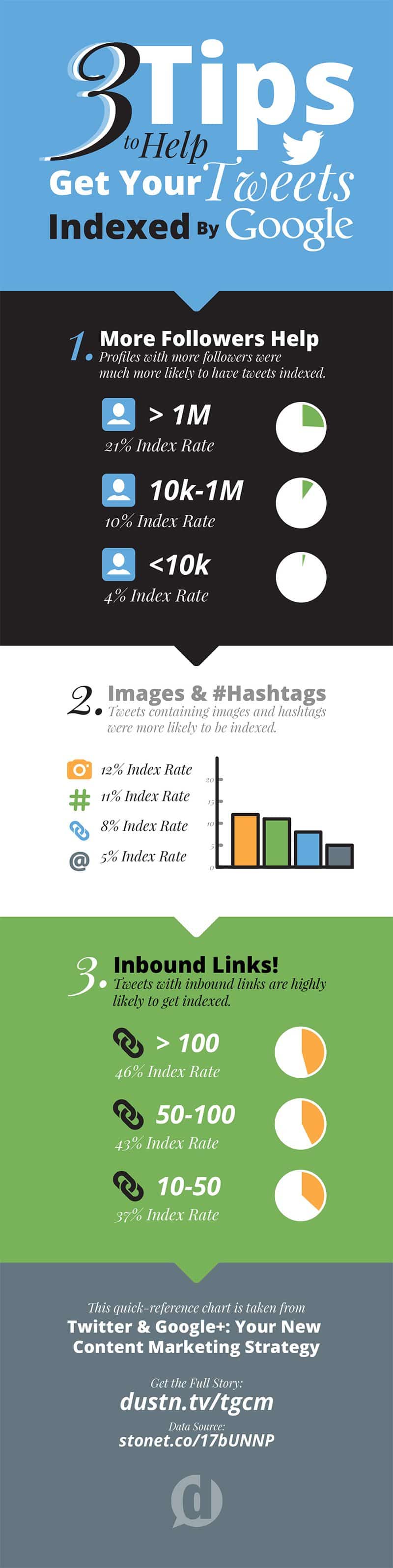
In the ever-evolving world of digital marketing, search engine optimization (SEO) has long been a critical component of any successful online strategy. Businesses and content creators have invested significant time and resources in optimizing their websites to rank higher on search engine results pages (SERPs). However, as the digital landscape continues to change, it’s become increasingly clear that social media and SEO are now more intertwined than ever before. Social is the new SEO, and one of the platforms where this synergy is most evident is Twitter. In this blog post, we’ll explore three essential tips to get your tweets showing up on Google.
The Intersection of Social Media and SEO
To understand why social media, particularly Twitter, has become integral to SEO, it’s essential to recognize how search engines like Google have evolved over the years. Google’s algorithms have grown more sophisticated, prioritizing high-quality and relevant content to deliver the best user experience. This shift has made it crucial for businesses and content creators to diversify their online presence beyond just their websites.
Social media platforms, including Twitter, are highly authoritative domains in the eyes of search engines. They are updated frequently with fresh content, have massive user engagement, and often feature trending topics and breaking news. Consequently, Google and other search engines have started indexing and displaying social media content, including tweets, on their SERPs.
This integration of social media into search results has opened up new opportunities for brands and individuals to enhance their online visibility. By optimizing your Twitter profile and tweets for search engines, you can increase your chances of appearing in Google’s search results, driving more organic traffic to your Twitter account and website. Here are three tips to help you achieve this.
1. Craft SEO-Friendly Twitter Profiles
Your Twitter profile is your digital business card. It’s the first thing people see when they visit your Twitter page, and it plays a crucial role in whether they decide to follow you or engage with your content. To make your Twitter profile SEO-friendly, consider the following:
a. Choose a Searchable Username
Your Twitter username, also known as your handle, should be easy to remember and related to your brand or niche. Using relevant keywords in your username can improve your chances of appearing in Twitter and Google search results. For instance, if you run a bakery business, having a handle like @DeliciousBitesBakery is more SEO-friendly than a generic username.
b. Optimize Your Bio
Your Twitter bio is limited to 160 characters, so make every word count. Use keywords that describe your niche, expertise, or products/services. Include relevant hashtags that are popular in your industry. For example, a digital marketing agency could mention keywords like “SEO,” “content marketing,” and “social media management” in their bio.
c. Use a High-Quality Profile Image and Header Photo
Visual elements matter in online branding. Use a clear and professional profile picture that represents your brand or personality. Your header photo should complement your profile image and convey your brand’s message effectively.
d. Add Your Location
If your business has a physical location, be sure to include it in your Twitter profile. Local SEO is a vital aspect of online visibility for brick-and-mortar businesses. Google often displays location-based results, so having your address on Twitter can help you appear in relevant local searches.
2. Create SEO-Optimized Tweets
Once you’ve optimized your Twitter profile, it’s time to focus on creating tweets that are more likely to show up on Google. Here are some strategies to achieve this:
a. Use Relevant Keywords
Just as you would with website content, incorporate relevant keywords into your tweets. Research popular keywords in your niche and include them naturally in your tweet text. Avoid keyword stuffing, as it can negatively impact the readability and engagement of your tweets.
b. Craft Engaging Headlines
The first few words of your tweet act as a headline. Make them attention-grabbing and concise. A compelling headline not only encourages more click-throughs but also increases the chances of your tweet being featured in search results.
c. Add Hashtags
Hashtags are essential on Twitter. They categorize your tweets and make them discoverable to a broader audience. Research trending and relevant hashtags in your industry and include them in your tweets. However, don’t overdo it; two or three well-chosen hashtags per tweet are usually sufficient.
d. Include Visual Content
Tweets with images or videos tend to perform better in terms of engagement. Visual content is eye-catching and can convey your message more effectively. When using images, ensure they are relevant to your tweet and of high quality.
e. Share Valuable Content
The most shareable content on Twitter is informative, entertaining, or inspirational. Share valuable insights, tips, and industry news to encourage retweets and shares. Engaging content is more likely to gain visibility in search results.
3. Promote Your Tweets
While optimizing your Twitter profile and tweets for search engines is essential, proactive promotion can significantly enhance your chances of getting your tweets to show up on Google. Here are some effective ways to promote your tweets:
a. Cross-Promote on Other Social Media Platforms
Leverage your presence on other social media platforms like Facebook, Instagram, LinkedIn, and Pinterest to promote your tweets. Share links to your Twitter content, especially when you have tweets that provide valuable insights or updates related to your niche.
b. Encourage Retweets and Shares
Engage with your audience and encourage them to retweet and share your tweets. The more retweets and shares your tweets receive, the more likely they are to gain visibility in Google’s search results. You can also ask your followers to tag others who might find your content interesting.
c. Collaborate with Influencers
Partnering with influencers in your niche can help you reach a broader audience. When influencers retweet or engage with your content, it can boost your tweet’s visibility and increase its chances of appearing in Google search results.
d. Run Twitter Ads
Twitter offers advertising options that can help you promote your tweets to a wider audience. You can target specific demographics, interests, and locations to ensure your tweets reach the right people. While this may require a budget, it can be an effective way to boost your tweet’s visibility.
Conclusion
In the ever-evolving landscape of digital marketing, the convergence of social media and SEO has become increasingly evident. Twitter, with its real-time updates and vast user engagement, has emerged as a powerful platform for enhancing online visibility. By optimizing your Twitter profile and tweets for search engines, crafting engaging content, and actively promoting your tweets, you can increase your chances of getting your tweets to show up on Google.
Remember that SEO is an ongoing process, and it may take time for your Twitter content to gain visibility in search results. Stay consistent in your efforts, monitor your analytics, and adapt your strategy based on what works best for your audience. As social continues to evolve, those who embrace the synergy between social media and SEO will be well-positioned to thrive in the digital landscape of the future. So, go ahead and start optimizing your Twitter presence—it’s time to make social the new SEO!

Author:
Mark Ford