
Are you losing followers and connections on social media? Are your current efforts failing to deliver results?
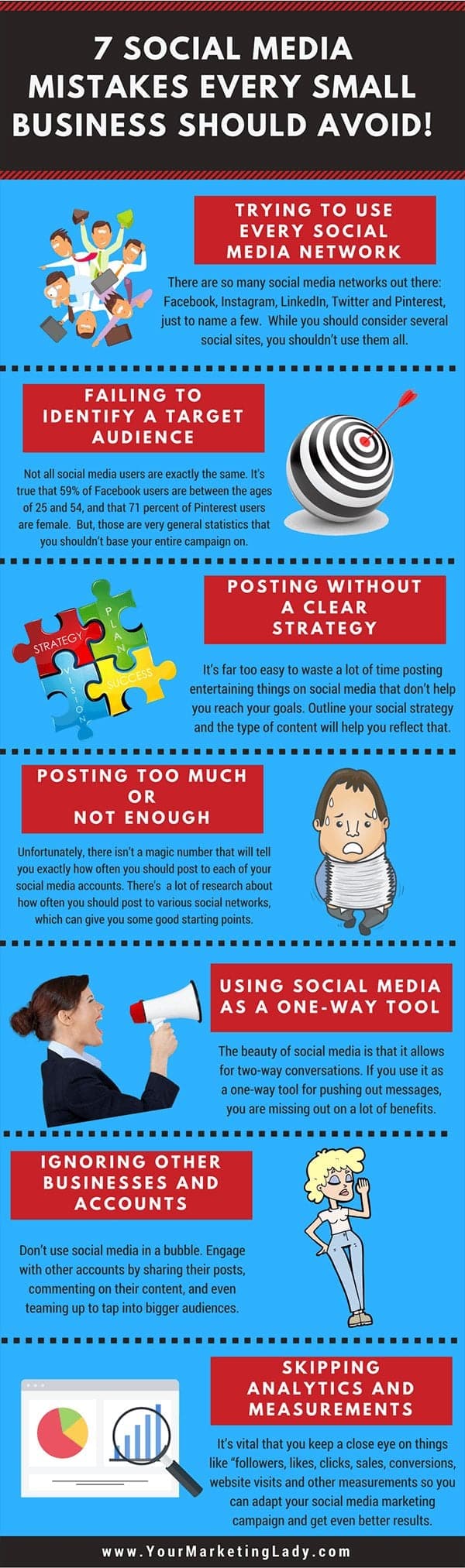
Your Marketing Lady share 7 mistakes that could be harming your social strategy in this infographic.
Here are the key points to avoid:
- Trying to use every social media network
- Failing to identify a target audience
- Posting without a clear strategy
- Posting too much or not enough
- Using social media as a one-way tool
- Ignoring other businesses and accounts
- Skipping analytics and measurements
Check out the infographic for more!
Social media has revolutionized how businesses interact with customers. However, for small businesses, leveraging social media effectively can be a challenging task. Here are seven common mistakes every small business should avoid to maximize their social media presence and engagement.
Trying to Use Every Social Media Network
For many small businesses, the allure of being present on every social media platform can be tempting. The logic is straightforward: more platforms mean more visibility, more followers, and ultimately, more customers. However, this approach can often backfire, leading to diluted efforts, inconsistent branding, and a scattered audience. Here’s an in-depth look at why focusing on the right platforms is crucial and how small businesses can strategically choose and manage their social media presence.
Understanding the Limitations
Small businesses typically operate with limited resources, both in terms of time and manpower. Maintaining a robust presence on multiple social media networks requires substantial effort: creating and curating content, engaging with followers, monitoring analytics, and staying updated on platform-specific trends and algorithm changes. When spread too thin, the quality of content and engagement on each platform can suffer, undermining the overall effectiveness of your social media strategy.
The Importance of Target Audience Alignment
Different social media platforms attract different demographics and user behaviors. Understanding where your target audience spends their time online is essential. Here’s a breakdown of some major platforms and their typical user bases:
- Facebook: With a broad demographic reach, Facebook is ideal for businesses targeting a wide audience, including older age groups.
- Instagram: Highly visual, Instagram appeals to younger audiences and is perfect for brands with strong visual content, such as fashion, food, and lifestyle.
- Twitter: Known for real-time updates and conversations, Twitter suits businesses that can leverage timely news, customer service, and engagement in trending topics.
- LinkedIn: This platform is geared toward professionals and B2B interactions, making it suitable for businesses offering professional services or targeting corporate clients.
- Pinterest: Predominantly used by women, Pinterest is excellent for businesses in niches like home decor, fashion, DIY, and recipes.
- TikTok: With its rapidly growing, young user base, TikTok is ideal for brands that can produce engaging, short-form video content.
Conducting a Platform Audit
Before diving into multiple social media networks, conduct a thorough audit to determine which platforms align best with your business goals and audience. Here’s how:
- Analyze Your Audience: Use existing customer data to identify demographic and psychographic traits. Surveys and social media insights can provide valuable information about where your audience is most active.
- Assess Your Content: Different platforms favor different types of content. Evaluate your content capabilities. Can you consistently produce high-quality videos, images, or text updates? Choose platforms that align with your content strengths.
- Competitor Analysis: Look at where your competitors are active and successful. This can provide insights into where there is market potential and where your target audience is likely to be.
- Resource Evaluation: Consider the resources you have available. Can your team handle the demands of multiple platforms, or would focusing on one or two lead to better quality and engagement?
Strategic Focus and Platform Selection
After your audit, choose one to three platforms that offer the highest potential return on investment. Here’s a step-by-step approach to refining your focus:
- Primary Platform: Select one primary platform that will be the main focus of your efforts. This should be the platform where your target audience is most active and where your content is most likely to thrive.
- Secondary Platforms: Choose one or two secondary platforms to maintain a presence on but with less intensive efforts. These platforms can be used to support and amplify your primary platform’s content.
- Content Adaptation: Adapt your content to fit the unique demands of each platform. For example, the same video might be edited differently for Instagram Stories, Facebook posts, and TikTok.
- Cross-Promotion: Use cross-promotion to drive traffic between your platforms. For instance, you can share Instagram photos on Facebook or promote a LinkedIn article on Twitter.
Consistent Branding and Messaging
Consistency in branding and messaging across all chosen platforms is crucial. This includes:
- Visual Identity: Use the same logo, color schemes, and visual style to ensure your brand is easily recognizable across platforms.
- Voice and Tone: Maintain a consistent voice and tone that reflects your brand’s personality. This helps in building a cohesive brand experience for your audience.
- Content Themes: Develop a set of core content themes that align with your brand values and goals. This ensures that your messaging remains consistent and relevant.
Measuring Success and Adjusting Strategies
Regularly review the performance of your social media efforts to determine if your platform choices are yielding the desired results. Key metrics to track include:
- Engagement Rates: Likes, comments, shares, and retweets can indicate how well your content resonates with your audience.
- Follower Growth: Track the growth rate of your followers to see if your audience is expanding.
- Website Traffic: Use tools like Google Analytics to measure how much traffic social media is driving to your website.
- Conversions: Monitor conversions from social media, whether they are sales, sign-ups, or other desired actions.
If a platform isn’t performing as expected, don’t hesitate to re-evaluate your strategy. It might be necessary to pivot to different platforms or adjust your content strategy to better align with your audience’s preferences.
Leveraging Platform-Specific Features
Each social media platform has unique features and tools that can enhance your engagement and reach. Understanding and leveraging these features can give your business a competitive edge:
- Facebook: Utilize Facebook Groups to build communities and Facebook Ads to target specific demographics.
- Instagram: Make use of Stories, IGTV, and Shopping features to engage followers and drive sales.
- Twitter: Engage with trending hashtags, use Twitter Chats, and take advantage of Twitter Lists to organize your feed.
- LinkedIn: Post long-form content via LinkedIn Articles, use LinkedIn Groups for networking, and optimize your company page.
- Pinterest: Create visually appealing pins, use Pinterest Boards to organize content, and leverage Rich Pins for additional information.
- TikTok: Participate in trending challenges, use popular music tracks, and engage with TikTok Ads for broader reach.
For small businesses, attempting to establish a presence on every social media network can lead to scattered efforts and ineffective results. By strategically selecting and focusing on the platforms that best align with your target audience and content capabilities, you can create a more impactful and sustainable social media presence. Remember, quality and engagement on a few key platforms will always outweigh a diluted presence on many. Prioritize your resources, stay consistent, and continuously adapt based on performance metrics to ensure your social media efforts drive meaningful business outcomes.
Failing to Identify a Target Audience
Identifying a target audience is a fundamental step in creating an effective social media strategy. Without a clear understanding of who you’re trying to reach, your efforts can become unfocused, leading to lower engagement and wasted resources. Here’s a detailed guide on how small businesses can identify and understand their target audience to optimize their social media presence.
The Importance of Knowing Your Audience
Understanding your target audience allows you to create content that resonates with them, leading to higher engagement and better results. It helps in:
- Creating Relevant Content: Tailoring your messages to address the specific needs, interests, and pain points of your audience.
- Efficient Use of Resources: Focusing your time, budget, and efforts on the people most likely to convert into customers.
- Building Stronger Connections: Developing deeper relationships with your audience by understanding their preferences and behaviors.
Steps to Identify Your Target Audience
- Analyze Your Current Customer Base
-
- Customer Data: Look at your existing customers and identify common characteristics. Use data from your CRM, sales records, and customer surveys.
- Demographics: Consider age, gender, location, income, education, and occupation.
- Psychographics: Understand their interests, hobbies, values, attitudes, and lifestyles.
- Conduct Market Research
-
- Surveys and Questionnaires: Directly ask your customers about their preferences, challenges, and where they spend their time online.
- Focus Groups: Gather small groups of customers to discuss their needs and feedback in detail.
- Interviews: Conduct one-on-one interviews with key customers to gain deeper insights.
- Create Buyer Personas
-
- Develop Profiles: Create detailed profiles representing different segments of your target audience. Each persona should include demographics, psychographics, behaviors, goals, and pain points.
- Example Persona:
-
-
- Name: Sarah
- Age: 28
- Occupation: Marketing Manager
- Location: Urban area
- Interests: Digital marketing, fitness, travel
- Pain Points: Finding time to balance work and personal life
- Preferred Platforms: LinkedIn for professional content, Instagram for personal interests
-
- Utilize Social Media Analytics
-
- Platform Insights: Use built-in analytics tools like Facebook Insights, Instagram Analytics, and Twitter Analytics to understand who is engaging with your content.
- Engagement Metrics: Analyze metrics such as age, gender, location, and interests of your followers.
- Behavioral Data: Look at when your audience is most active, what type of content they engage with the most, and which posts drive the most conversions.
- Monitor Competitors
-
- Competitor Analysis: Study your competitors’ social media profiles to see who they are targeting and how they engage with their audience.
- Identify Gaps: Look for gaps in their strategy that you can capitalize on, such as underserved segments or unmet needs.
Segmenting Your Audience
Once you have identified your broader target audience, segment them into smaller, more specific groups. This allows for more personalized marketing strategies. Consider the following segmentation criteria:
- Demographic Segmentation: Age, gender, income, education, and occupation.
- Geographic Segmentation: Country, region, city, or neighborhood.
- Behavioral Segmentation: Purchase behavior, user status, brand loyalty, and user engagement.
- Psychographic Segmentation: Lifestyle, social status, personality traits, and values.
Crafting Tailored Content
With a clear understanding of your target audience, you can create content that speaks directly to their needs and interests. Here are some tips:
- Address Pain Points: Create content that offers solutions to your audience’s challenges.
- Use Audience Language: Mirror the language and terminology your audience uses to create a sense of familiarity and trust.
- Personalize Messaging: Tailor your messages to different segments. For example, a B2B business might use a more formal tone on LinkedIn, while a B2C business might adopt a casual tone on Instagram.
- Create Value: Offer content that provides value, such as educational posts, how-to guides, exclusive offers, and insider tips.
Engaging with Your Audience
Engagement is key to building a loyal community. Here’s how to foster engagement with your target audience:
- Interactive Content: Use polls, quizzes, and Q&A sessions to encourage interaction.
- Respond to Comments: Acknowledge and respond to comments and messages promptly to show that you value their input.
- User-Generated Content: Encourage your audience to create and share content related to your brand. This not only boosts engagement but also provides authentic content.
- Community Building: Create groups or forums where your audience can connect and discuss topics related to your brand.
Leveraging Advanced Tools and Techniques
To deepen your understanding of your target audience, consider using advanced tools and techniques:
- Social Listening Tools: Use tools like Hootsuite, Brandwatch, or Sprout Social to monitor conversations about your brand and industry across social media.
- Customer Journey Mapping: Understand the various touchpoints your customers interact with on their journey from awareness to purchase.
- AI and Machine Learning: Utilize AI-driven analytics tools to gain insights into customer behavior and predict future trends.
Adapting and Evolving
Your target audience’s preferences and behaviors can change over time. It’s essential to continuously monitor and adapt your strategy:
- Regular Surveys: Periodically conduct surveys to keep up with changing needs and preferences.
- Feedback Loops: Establish channels for ongoing feedback from your audience, such as feedback forms or regular check-ins.
- Trend Analysis: Stay updated on industry trends and emerging social media platforms to remain relevant.
Failing to identify a target audience is a critical misstep for any small business looking to succeed on social media. By thoroughly understanding who your audience is, segmenting them effectively, creating tailored content, and engaging meaningfully, you can build a strong, loyal community around your brand. Regularly revisiting and refining your audience insights ensures that your social media strategy remains relevant and effective, driving better engagement and business outcomes.
Posting Without a Clear Strategy
Posting on social media without a clear strategy is akin to sailing without a compass. While occasional successes might occur, the lack of direction can lead to inconsistent messaging, wasted resources, and missed opportunities. Developing a well-defined social media strategy is essential for small businesses to ensure their efforts are purposeful and aligned with their broader business goals. Here’s an in-depth guide on crafting an effective social media strategy.
The Importance of a Social Media Strategy
A clear social media strategy provides several benefits:
- Consistency: Ensures that your messaging and branding are consistent across all posts and platforms.
- Goal Alignment: Aligns social media activities with your overall business objectives, such as brand awareness, lead generation, or customer loyalty.
- Resource Optimization: Maximizes the use of time and budget, focusing efforts where they are most likely to yield results.
- Performance Measurement: Facilitates the tracking and analysis of social media performance, allowing for data-driven decisions.
Steps to Develop a Clear Social Media Strategy
- Define Your Goals
-
- Specific: Clearly define what you want to achieve. For example, “increase website traffic by 20% in six months.”
- Measurable: Ensure that your goals can be tracked and measured. For instance, setting a target number of new followers or engagement rate.
- Achievable: Set realistic goals based on your resources and past performance.
- Relevant: Align your goals with your overall business objectives.
- Time-Bound: Set a timeline for achieving your goals, such as quarterly or annually.
- Understand Your Audience
-
- Demographics: Identify the age, gender, location, and other demographic details of your target audience.
- Interests and Behaviors: Understand what interests your audience and how they behave online.
- Pain Points: Identify the challenges and problems your audience faces that your product or service can solve.
- Choose the Right Platforms
-
- Platform Suitability: Select platforms that align with your business type and where your audience is most active. For example, a fashion brand might focus on Instagram and Pinterest, while a B2B company might prioritize LinkedIn.
- Resource Allocation: Ensure you have the resources to maintain a presence on your chosen platforms effectively.
- Develop a Content Plan
-
- Content Types: Decide on the types of content you will create, such as blog posts, infographics, videos, and user-generated content.
- Content Themes: Establish themes that align with your brand values and audience interests, such as educational content, industry news, behind-the-scenes looks, and customer testimonials.
- Content Calendar: Create a content calendar to plan your posts in advance. This helps maintain a consistent posting schedule and ensures that your content is timely and relevant.
- Engagement Strategy
-
- Community Management: Plan how you will interact with your audience, including responding to comments, messages, and mentions.
- User Engagement: Encourage engagement through questions, polls, contests, and interactive content.
- Influencer Collaboration: Identify and collaborate with influencers who can help amplify your message and reach a broader audience.
- Allocate Resources
-
- Budget: Determine your social media budget, including advertising spend, content creation costs, and tools or software subscriptions.
- Team: Assign roles and responsibilities within your team for content creation, posting, community management, and analytics.
- Implement Social Media Tools
-
- Scheduling Tools: Use tools like Hootsuite, Buffer, or Later to schedule posts and manage multiple accounts.
- Analytics Tools: Employ tools like Google Analytics, social media insights, and third-party analytics platforms to track performance and gather data.
- Monitor and Measure Performance
-
- Key Metrics: Track key performance indicators (KPIs) such as engagement rates, follower growth, website traffic, and conversion rates.
- Regular Reporting: Set up regular reports to review your social media performance, such as weekly or monthly dashboards.
- Adjustments: Use the insights gained from your analytics to refine your strategy. Identify what’s working, what’s not, and make necessary adjustments.
Creating Engaging Content
Content is the heart of any social media strategy. Here are some tips to create compelling content:
- Visual Appeal: Invest in high-quality visuals, including photos, videos, and graphics. Visual content tends to attract more engagement.
- Storytelling: Use storytelling to create an emotional connection with your audience. Share customer stories, company milestones, and behind-the-scenes glimpses.
- Educational Content: Provide value by sharing informative and educational content that addresses your audience’s needs and pain points.
- Consistency: Maintain a consistent posting schedule. Regularly updated content keeps your audience engaged and helps build a loyal following.
- Authenticity: Be genuine and authentic in your posts. Authenticity fosters trust and loyalty among your audience.
Utilizing Paid Advertising
Organic reach on social media has been declining, making paid advertising an essential component of a successful strategy:
- Targeting Options: Use the advanced targeting options available on platforms like Facebook, Instagram, and LinkedIn to reach your specific audience segments.
- Ad Formats: Experiment with different ad formats, such as carousel ads, video ads, and sponsored posts, to see what resonates best with your audience.
- Budget Management: Allocate your ad spend wisely. Start with small budgets to test different campaigns and scale up based on performance.
Leveraging User-Generated Content
User-generated content (UGC) can significantly enhance your social media strategy:
- Encouraging UGC: Encourage your customers to create content related to your brand by hosting contests, asking for reviews, and using branded hashtags.
- Showcasing UGC: Share user-generated content on your social media profiles. This not only provides authentic content but also builds a sense of community and trust.
Staying Updated with Trends
Social media is dynamic, with trends and algorithms constantly evolving. Stay updated to keep your strategy relevant:
- Trend Monitoring: Follow industry news, social media blogs, and platform updates to stay informed about new features and trends.
- Adaptability: Be willing to adapt your strategy to incorporate new trends and features that can benefit your business.
Posting without a clear strategy can lead to inconsistent messaging and missed opportunities. By defining clear goals, understanding your audience, choosing the right platforms, developing a content plan, engaging with your audience, allocating resources effectively, monitoring performance, and staying updated with trends, small businesses can create a robust and effective social media strategy. This strategic approach ensures that every post serves a purpose and contributes to your broader business objectives, maximizing the impact of your social media efforts.
Posting Too Much or Not Enough
Finding the right balance in your social media posting frequency is crucial for maintaining audience engagement without overwhelming or neglecting your followers. Posting too frequently can lead to audience fatigue, causing them to ignore your posts or unfollow your account. Conversely, posting too infrequently can result in your audience forgetting about you and missing important updates. Here’s an in-depth guide on how small businesses can strike the right balance and optimize their posting frequency.
Understanding the Impact of Posting Frequency
The frequency of your social media posts can significantly impact your brand’s visibility, engagement, and overall success on social media. Here’s how:
- Visibility: Regular posting helps keep your brand top-of-mind for your audience. It ensures that your content appears in their feed consistently, increasing the chances of engagement.
- Engagement: Posting at the right frequency encourages interaction with your audience, fostering a sense of community and loyalty.
- Relevance: Consistent posting allows you to stay relevant and timely, sharing updates, news, and content that resonates with your audience.
Factors Influencing Optimal Posting Frequency
The optimal posting frequency varies depending on several factors, including the platform, your audience, and the type of content you share. Here’s a breakdown of these factors:
- Platform Specifics
-
- Facebook: Posting once or twice a day is generally effective. Over-posting can lead to reduced engagement due to Facebook’s algorithm prioritizing quality over quantity.
- Instagram: Aim for one to two posts per day. Instagram’s algorithm favors recent and high-engagement posts, so maintaining quality is crucial.
- Twitter: Due to its fast-paced nature, posting multiple times a day (up to 15 tweets) can be effective. Tweets have a shorter lifespan, so frequent updates keep you visible.
- LinkedIn: For professional content, posting two to five times per week is recommended. Quality and relevance are more important than quantity on LinkedIn.
- Pinterest: Consistent pinning (around 11 pins per day) can drive traffic and engagement. Pinterest favors fresh, high-quality content.
- TikTok: Posting once a day is a good starting point. Focus on creating engaging, trend-driven content.
- Audience Behavior
-
- Engagement Patterns: Monitor when your audience is most active and engaged. Use platform insights to identify peak times for posting.
- Feedback: Pay attention to audience feedback. If you notice a drop in engagement or complaints about too many posts, adjust your frequency.
- Content Type
-
- Quality over Quantity: Focus on creating high-quality content that provides value to your audience. It’s better to post less frequently but with meaningful content than to flood your feed with mediocre posts.
- Content Variety: Mix up your content types to keep your audience engaged. Use a combination of promotional posts, educational content, behind-the-scenes glimpses, and user-generated content.
Developing a Posting Schedule
A well-planned posting schedule helps maintain consistency and ensures that your content is timely and relevant. Here’s how to develop an effective posting schedule:
- Content Calendar
-
- Planning: Create a content calendar to plan your posts in advance. Include important dates, holidays, product launches, and marketing campaigns.
- Variety: Plan a mix of content types and formats to keep your feed interesting and engaging.
- Consistency
-
- Regular Intervals: Maintain a consistent posting schedule to keep your audience engaged. Regular posting helps build anticipation and habit among your followers.
- Flexibility: While consistency is important, be flexible to accommodate timely updates or trending topics.
- Testing and Optimization
-
- A/B Testing: Experiment with different posting times and frequencies to see what works best for your audience. A/B testing can provide insights into optimal posting times.
- Analytics: Regularly review your social media analytics to assess the performance of your posts. Adjust your schedule based on the data.
Balancing Frequency with Engagement
Engagement is not just about posting frequently; it’s also about how you interact with your audience. Here are some tips to balance posting frequency with engagement:
- Interactive Content
-
- Polls and Surveys: Use polls and surveys to engage your audience and gather feedback.
- Q&A Sessions: Host Q&A sessions to directly interact with your audience and address their questions.
- Responding to Comments
-
- Timely Responses: Respond to comments and messages promptly. Engaging with your audience fosters a sense of community and shows that you value their input.
- Personalization: Personalize your responses to make your audience feel heard and appreciated.
- User-Generated Content
-
- Encouragement: Encourage your audience to create and share content related to your brand. This not only provides authentic content but also increases engagement.
- Showcasing: Share user-generated content on your social media profiles to acknowledge and appreciate your audience’s contributions.
Adjusting Your Strategy
Your social media strategy should be dynamic and adaptable. Here’s how to adjust your posting frequency based on performance and feedback:
- Performance Metrics
-
- Engagement Rates: Monitor likes, comments, shares, and other engagement metrics to gauge how your audience is responding to your posts.
- Follower Growth: Track your follower growth rate to see if your posting frequency is attracting new followers or causing attrition.
- Audience Feedback
-
- Surveys and Polls: Conduct surveys and polls to directly ask your audience about their preferences regarding posting frequency.
- Comments and Messages: Pay attention to comments and messages that provide feedback on your posting habits.
- Competitive Analysis
-
- Industry Benchmarks: Compare your posting frequency and engagement with industry benchmarks and competitors. This can provide insights into what works best in your niche.
Avoiding Common Pitfalls
To strike the right balance in posting frequency, avoid these common pitfalls:
- Overposting
-
- Content Quality: Prioritize quality over quantity. Overposting low-quality content can lead to audience fatigue and reduced engagement.
- Spamming: Avoid spamming your audience with repetitive or irrelevant posts. Each post should provide value.
- Underposting
-
- Inconsistency: Irregular posting can lead to decreased visibility and engagement. Maintain a consistent presence to stay top-of-mind.
- Missed Opportunities: Infrequent posting can result in missed opportunities to engage with your audience and promote your brand.
Finding the right balance between posting too much and not enough is crucial for small businesses aiming to maintain an engaged and loyal social media following. By understanding platform specifics, audience behavior, and content types, you can develop a consistent and effective posting schedule. Regularly review your performance metrics and audience feedback to adjust your strategy as needed. Prioritize quality over quantity, engage with your audience meaningfully, and stay flexible to adapt to changing trends and preferences. With a balanced approach, your social media efforts will be more likely to achieve their desired outcomes, driving growth and success for your small business.
Using Social Media as a One-Way Tool
Social media is inherently designed for interaction, engagement, and conversation. However, many small businesses fall into the trap of using it as a one-way communication tool, primarily broadcasting their messages without actively engaging with their audience. This approach can limit the potential benefits of social media, such as building relationships, fostering loyalty, and driving customer satisfaction. Here’s an in-depth guide on how small businesses can use social media as a two-way communication tool effectively.
The Importance of Two-Way Communication
Two-way communication on social media involves not just speaking to your audience but also listening to them and engaging in meaningful dialogue. Here’s why it matters:
- Building Relationships: Engaging with your audience helps build stronger relationships and a sense of community around your brand.
- Increasing Loyalty: Customers who feel heard and valued are more likely to remain loyal to your brand.
- Improving Customer Service: Social media provides a platform for real-time customer service, allowing you to address issues promptly.
- Gathering Feedback: Listening to your audience provides valuable insights into their needs, preferences, and pain points, helping you improve your products or services.
Steps to Foster Two-Way Communication
- Responding to Comments and Messages
-
- Timeliness: Respond to comments and messages promptly. A quick response shows that you value your audience’s input and are attentive to their needs.
- Personalization: Personalize your responses to make your audience feel special. Use their names and address their specific concerns or compliments.
- Engaging with User-Generated Content
-
- Encouragement: Encourage your audience to create and share content related to your brand. This can be done through contests, challenges, or simply by asking them to share their experiences.
- Showcasing: Share user-generated content on your social media profiles. This not only provides authentic content but also shows appreciation for your audience’s contributions.
- Asking Questions and Starting Conversations
-
- Interactive Posts: Use questions, polls, and surveys to engage your audience and invite them to share their opinions and experiences.
- Discussion Threads: Start discussions on topics relevant to your industry or audience’s interests. Participate actively in these discussions to keep the conversation going.
- Hosting Live Sessions
-
- Live Q&A: Host live Q&A sessions where you answer questions from your audience in real time. This fosters a sense of immediacy and personal connection.
- Webinars and Workshops: Conduct webinars and workshops to provide value and engage directly with your audience. Encourage participation and interaction during these sessions.
- Monitoring and Responding to Mentions
-
- Social Listening: Use social listening tools to monitor mentions of your brand across social media. This helps you stay aware of what people are saying about you.
- Engagement: Respond to both positive and negative mentions. Thank users for their positive comments and address any negative feedback constructively.
- Creating Interactive Content
-
- Polls and Surveys: Regularly use polls and surveys to engage your audience and gather feedback on various topics.
- Contests and Giveaways: Organize contests and giveaways that require participation, such as sharing a post, tagging friends, or creating content.
- Interactive Stories: Use features like Instagram Stories to create interactive content, such as polls, quizzes, and “Ask Me Anything” sessions.
Leveraging Customer Feedback
Customer feedback is a goldmine of information that can help you improve your products, services, and overall customer experience. Here’s how to leverage it effectively:
- Soliciting Feedback
-
- Surveys and Polls: Regularly ask your audience for feedback through surveys and polls. This can provide insights into their satisfaction and areas for improvement.
- Feedback Forms: Create feedback forms that are easy for customers to fill out and submit.
- Analyzing Feedback
-
- Categorization: Categorize feedback into themes to identify common issues and areas of improvement.
- Actionable Insights: Look for actionable insights in the feedback that can inform your business decisions and strategies.
- Acting on Feedback
-
- Addressing Issues: Promptly address any issues or complaints raised by your audience. Communicate the steps you’re taking to resolve them.
- Implementing Suggestions: When possible, implement suggestions from your audience. Let them know that their feedback has been heard and acted upon.
- Communicating Changes
-
- Transparency: Be transparent about the changes you’re making based on customer feedback. Share updates and improvements with your audience.
- Acknowledgment: Acknowledge and thank your audience for their valuable input. This fosters a sense of community and collaboration.
Creating a Community
Building a community around your brand involves more than just engaging with your audience; it’s about creating a space where they can connect with each other. Here’s how:
- Facebook Groups and Forums
-
- Private Groups: Create private Facebook groups or forums where your audience can connect, share experiences, and discuss topics related to your brand.
- Moderation: Actively moderate these groups to ensure a positive and engaging environment.
- User-Generated Content Campaigns
-
- Campaigns: Launch campaigns that encourage users to create and share content. Use a unique hashtag to track and showcase their contributions.
- Features: Regularly feature user-generated content on your social media profiles, giving credit to the creators.
- Events and Meetups
-
- Virtual Events: Host virtual events, such as webinars, live Q&A sessions, and online workshops, to engage with your audience in real-time.
- In-Person Meetups: When possible, organize in-person meetups, workshops, or events to foster stronger connections.
- Consistent Engagement
-
- Regular Interaction: Consistently interact with your audience, responding to comments, sharing their content, and participating in discussions.
- Content Sharing: Share content that your audience will find valuable and relevant. This can include industry news, tips, and user-generated content.
Utilizing Social Media Tools for Engagement
Several tools and features on social media platforms can help enhance your engagement efforts:
- Social Media Management Tools
-
- Hootsuite, Buffer, Sprout Social: Use these tools to schedule posts, monitor engagement, and track performance across multiple platforms.
- Analytics: Utilize the analytics features to measure the effectiveness of your engagement efforts and adjust your strategy accordingly.
- Interactive Features
-
- Instagram Stories: Use features like polls, quizzes, and question stickers to create interactive content.
- Facebook Live: Host live videos to engage with your audience in real-time, answering questions and providing valuable information.
- Customer Relationship Management (CRM)
-
- Integration: Integrate your social media efforts with your CRM system to track interactions and manage relationships more effectively.
- Personalization: Use CRM data to personalize your interactions and provide a more tailored experience for your audience.
Using social media as a one-way tool limits its potential and diminishes the opportunity to build meaningful relationships with your audience. By fostering two-way communication, engaging with user-generated content, leveraging customer feedback, creating a community, and utilizing social media tools, small businesses can create a dynamic and interactive social media presence. This approach not only enhances customer satisfaction and loyalty but also drives growth and success for the business. Prioritize engagement, listen actively, and respond thoughtfully to make the most of your social media efforts.
Ignoring Other Businesses and Accounts
Engaging with other businesses and accounts on social media is crucial for small businesses aiming to expand their reach, build relationships, and foster a sense of community within their industry. Ignoring other businesses can lead to missed opportunities for collaboration, learning, and growth. Here’s an in-depth guide on why and how small businesses should actively engage with other businesses and accounts on social media.
The Importance of Engaging with Other Businesses
Engaging with other businesses and accounts on social media offers several benefits:
- Networking: Building relationships with other businesses can lead to valuable networking opportunities, collaborations, and partnerships.
- Learning: Observing and interacting with other businesses can provide insights into successful strategies, industry trends, and best practices.
- Visibility: Engaging with other businesses increases your visibility within the industry and can attract new followers who are interested in related content.
- Credibility: Associating with reputable businesses enhances your brand’s credibility and authority in the industry.
- Support: A community of businesses can offer mutual support, sharing resources, and advice.
Steps to Effectively Engage with Other Businesses
- Identify Relevant Businesses and Accounts
-
- Industry Peers: Follow and engage with businesses within your industry. This includes competitors, complementary businesses, suppliers, and industry influencers.
- Local Businesses: Engage with local businesses in your area, especially if you operate a brick-and-mortar store. This fosters a sense of community and local support.
- Non-Competing Brands: Connect with non-competing brands that share a similar target audience. This opens opportunities for cross-promotion and collaboration.
- Follow and Monitor Their Activity
-
- Regular Engagement: Follow the social media accounts of relevant businesses and regularly engage with their content. Like, comment, and share their posts to show support.
- Stay Updated: Keep track of their updates, promotions, and announcements. This helps you stay informed about industry trends and opportunities for collaboration.
- Collaborate on Content and Campaigns
-
- Guest Posts and Takeovers: Collaborate on content by writing guest posts for each other’s blogs or doing social media takeovers. This introduces your brand to a new audience.
- Joint Campaigns: Partner with other businesses for joint marketing campaigns, such as co-hosting webinars, contests, or giveaways.
- Shared Content: Share each other’s content that is relevant to your audience. This cross-promotion benefits both parties by expanding reach and engagement.
- Engage in Industry Conversations
-
- Hashtags and Trends: Participate in industry-related hashtags and trending topics. This positions your brand as an active member of the industry conversation.
- Industry Groups and Forums: Join and engage in industry-specific groups and forums on platforms like LinkedIn and Facebook. Share insights, ask questions, and offer advice.
- Showcase Partnerships and Collaborations
-
- Highlight Partnerships: Publicly acknowledge and celebrate your partnerships and collaborations. Share posts and stories about joint efforts and tag the businesses involved.
- Customer Stories: Feature stories of customers who have benefited from a partnership or collaboration. This provides social proof and showcases the value of the relationship.
- Attend and Participate in Events
-
- Industry Events: Attend industry events, conferences, and webinars. Engage with other businesses attending these events and share your experiences on social media.
- Host Events: Organize and host your own events, inviting other businesses to participate. This fosters deeper connections and provides networking opportunities.
Best Practices for Engaging with Other Businesses
- Authenticity and Genuine Interest
-
- Be Genuine: Engage authentically and show genuine interest in the content and achievements of other businesses. This builds trust and fosters meaningful relationships.
- Offer Value: Provide value in your interactions by sharing useful insights, offering constructive feedback, or celebrating their successes.
- Professionalism and Respect
-
- Professional Conduct: Maintain professionalism in all your interactions. Avoid negative comments or criticisms that could damage relationships.
- Respect Boundaries: Respect the boundaries and policies of other businesses, especially regarding collaborations and shared content.
- Consistency
-
- Regular Engagement: Consistently engage with other businesses rather than sporadically. Regular interactions help build and maintain strong relationships.
- Follow-Up: Follow up on collaborations and partnerships. Express gratitude and share the results of joint efforts.
- Leverage Analytics
-
- Monitor Engagement: Use social media analytics to track the effectiveness of your interactions with other businesses. Monitor metrics such as engagement rates, follower growth, and website traffic.
- Adjust Strategies: Adjust your engagement strategies based on the insights gained from analytics. Focus on what works best for building relationships and achieving your business goals.
Examples of Successful Engagement
- Collaborative Campaigns
-
- Co-Branded Content: Two local cafes collaborate on a campaign promoting a community event. They create co-branded content, share each other’s posts, and run a joint contest, attracting more attention and engagement from their combined audience.
- Industry Roundtables
-
- Expert Panels: A digital marketing agency hosts a live webinar featuring experts from various businesses in the industry. Each expert shares insights on a specific topic, providing valuable information to attendees and showcasing the agency’s connections and expertise.
- Cross-Promotion
-
- Shoutouts and Tags: A boutique fashion store regularly shares posts from a local jewelry maker, tagging them in their posts. The jewelry maker does the same for the boutique. This mutual promotion introduces each business to the other’s audience, driving traffic and potential sales.
- Community Initiatives
-
- Local Support: Several local businesses band together to support a community initiative, such as a charity event or neighborhood clean-up. They promote the event collectively on social media, highlighting their commitment to the community and strengthening their local network.
Overcoming Challenges
Engaging with other businesses can come with challenges, such as competition and differing objectives. Here’s how to overcome them:
- Identify Common Goals
-
- Shared Objectives: Find common goals that benefit both parties. This could be increasing brand awareness, reaching a new audience, or supporting a community cause.
- Clear Communication
-
- Set Expectations: Clearly communicate expectations and objectives for any collaboration. Ensure both parties understand the scope, responsibilities, and desired outcomes.
- Open Dialogue: Maintain open lines of communication throughout the partnership. Address any concerns or issues promptly to avoid misunderstandings.
- Mutual Respect
-
- Value Each Other’s Contribution: Recognize and value the contributions of your partners. Show appreciation and give credit where it’s due.
- Fair Collaboration: Ensure that collaborations are mutually beneficial. Avoid situations where one party benefits disproportionately.
Ignoring other businesses and accounts on social media is a missed opportunity for small businesses looking to grow and thrive. By actively engaging with industry peers, local businesses, and non-competing brands, small businesses can expand their reach, build valuable relationships, and enhance their credibility. Through consistent, genuine engagement, collaborations, and community participation, small businesses can create a supportive network that drives mutual success. Prioritize professional conduct, leverage analytics to refine your strategies, and stay open to new opportunities for engagement to maximize the benefits of social media interactions.
Skipping Analytics and Measurements
For small businesses, the importance of analytics and measurements in a social media strategy cannot be overstated. Skipping these crucial steps can result in missed opportunities for growth, wasted resources, and an inability to understand what drives success. By leveraging analytics and measurement tools, businesses can gain insights into their audience, measure the effectiveness of their efforts, and make data-driven decisions to enhance their social media performance. Here’s an in-depth guide on the importance of analytics and how small businesses can effectively use them.
The Importance of Analytics and Measurements
Analytics provide valuable data that can inform and refine your social media strategy. Here’s why they are essential:
- Performance Tracking: Understand how your social media efforts are performing. Track key metrics to see what’s working and what’s not.
- Audience Insights: Gain insights into who your audience is, what they like, and how they interact with your content.
- ROI Measurement: Measure the return on investment (ROI) of your social media activities, ensuring that your efforts are cost-effective.
- Strategy Refinement: Use data to make informed decisions and refine your social media strategy for better results.
- Goal Alignment: Ensure that your social media efforts align with your business goals and contribute to overall success.
Key Metrics to Track
Different metrics provide different insights. Here are some key metrics every small business should track:
- Engagement Metrics
-
- Likes, Comments, Shares: Measure how often your content is liked, commented on, and shared. High engagement indicates that your content resonates with your audience.
- Engagement Rate: Calculate the percentage of your audience that interacts with your content. A higher engagement rate often indicates stronger content relevance and quality.
- Reach and Impressions
-
- Reach: The number of unique users who have seen your post. This metric helps you understand how wide your content is spreading.
- Impressions: The total number of times your content is displayed, regardless of whether it was clicked. This metric helps gauge the visibility of your content.
- Follower Growth
-
- New Followers: Track the number of new followers you gain over a specific period. Steady growth indicates that your content and engagement strategies are effective.
- Follower Demographics: Understand the demographics of your followers, such as age, gender, location, and interests. This helps tailor your content to your audience.
- Traffic Metrics
-
- Website Traffic: Measure the amount of traffic your social media efforts drive to your website. Use tools like Google Analytics to track this.
- Click-Through Rate (CTR): The percentage of users who click on a link in your social media post. A higher CTR indicates effective calls-to-action and content relevance.
- Conversion Metrics
-
- Leads and Sales: Track the number of leads and sales generated from your social media efforts. This helps measure the direct impact of social media on your business goals.
- Conversion Rate: The percentage of users who take a desired action (e.g., filling out a form, making a purchase) after clicking on a social media link. A higher conversion rate indicates effective content and targeting.
- Content Performance
-
- Top-Performing Posts: Identify which posts perform the best in terms of engagement, reach, and conversions. Use this data to replicate success.
- Content Types: Analyze the performance of different content types (e.g., images, videos, infographics) to understand what resonates most with your audience.
Tools for Analytics and Measurement
Several tools can help you track and analyze your social media performance:
- Platform-Specific Analytics
-
- Facebook Insights: Provides data on page performance, audience demographics, and engagement metrics.
- Instagram Insights: Offers insights into follower demographics, post reach, and engagement.
- Twitter Analytics: Tracks tweet performance, follower growth, and engagement metrics.
- LinkedIn Analytics: Provides data on post performance, follower demographics, and engagement.
- Google Analytics
-
- Traffic Sources: Track the sources of your website traffic, including social media platforms.
- Behavior Flow: Understand how users navigate your website after arriving from social media.
- Third-Party Tools
-
- Hootsuite: Offers comprehensive analytics and reporting for multiple social media platforms.
- Buffer: Provides insights into post performance and engagement metrics.
- Sprout Social: Combines analytics with social listening and engagement features.
Steps to Implement Effective Analytics and Measurements
- Set Clear Goals
-
- Define Objectives: Clearly define your social media objectives, such as increasing brand awareness, driving website traffic, or generating leads.
- KPIs: Identify key performance indicators (KPIs) that will help measure progress toward your goals. For example, if your goal is to increase website traffic, track metrics like referral traffic and CTR.
- Create a Measurement Plan
-
- Metrics Selection: Choose the metrics that align with your goals and objectives. Focus on a mix of engagement, reach, traffic, and conversion metrics.
- Benchmarking: Establish benchmarks based on past performance or industry standards. This provides a reference point for measuring progress.
- Regular Reporting and Analysis
-
- Weekly and Monthly Reports: Create regular reports to track your social media performance. This helps identify trends and patterns over time.
- Data Interpretation: Analyze the data to understand what it means for your strategy. Look for insights that can inform your content, targeting, and engagement strategies.
- Adjust and Optimize
-
- Continuous Improvement: Use the insights gained from your analytics to continuously improve your social media strategy. Make data-driven adjustments to your content, posting schedule, and engagement tactics.
- A/B Testing: Experiment with different approaches and compare the results. For example, test different types of content, posting times, and calls-to-action to see what works best.
- Integrate Feedback
-
- Audience Feedback: Pay attention to feedback from your audience, such as comments, messages, and reviews. This qualitative data can provide additional insights into your performance.
- Team Input: Involve your team in the analysis process. Different perspectives can help uncover insights and generate new ideas for improvement.
Overcoming Common Challenges
- Data Overload
-
- Focus on Relevant Metrics: Avoid getting overwhelmed by focusing on the metrics that matter most to your goals.
- Simplify Reporting: Use dashboards and visualizations to simplify complex data and highlight key insights.
- Inconsistent Data
-
- Standardize Measurement: Use consistent methods and tools for data collection and analysis. This ensures that your data is reliable and comparable over time.
- Data Quality: Regularly review and clean your data to ensure accuracy. Remove outliers and errors that could skew your analysis.
- Lack of Actionable Insights
-
- Interpretation Skills: Develop skills in data interpretation to translate raw data into actionable insights. This may involve training or working with a data specialist.
- Contextual Understanding: Consider the broader context of your data. Look at external factors, such as market trends and competitor activities, that could influence your performance.
Skipping analytics and measurements can leave small businesses in the dark about the effectiveness of their social media efforts. By systematically tracking key metrics, using the right tools, and continuously refining their strategy based on data, small businesses can optimize their social media performance. Setting clear goals, creating a measurement plan, regularly reporting and analyzing data, and making informed adjustments are essential steps to harnessing the full potential of social media analytics. This data-driven approach not only enhances your social media strategy but also drives better business outcomes, ensuring that your efforts contribute to overall success.
Conclusion
Social media offers immense potential for small businesses to connect with their audience, build brand awareness, and drive growth. However, avoiding these common mistakes is crucial for maximizing your social media success. By focusing on the right platforms, identifying your target audience, developing a clear strategy, maintaining a balanced posting schedule, engaging with your audience, networking with other businesses, and leveraging analytics, you can create a robust and effective social media presence that drives your business forward.

Author:
Mark Ford

How to Create Engaging Instagram Reels Without Ever Showing Your Face
Are you looking for creative ways to make engaging Instagram Reels without stepping in front of the camera? Want to discover proven content ideas that help your brand stand out on social media while keeping your privacy intact? […]