
Do you use social media as a platform to market your business? Are you concerned you’re making mistakes that are affecting your results?
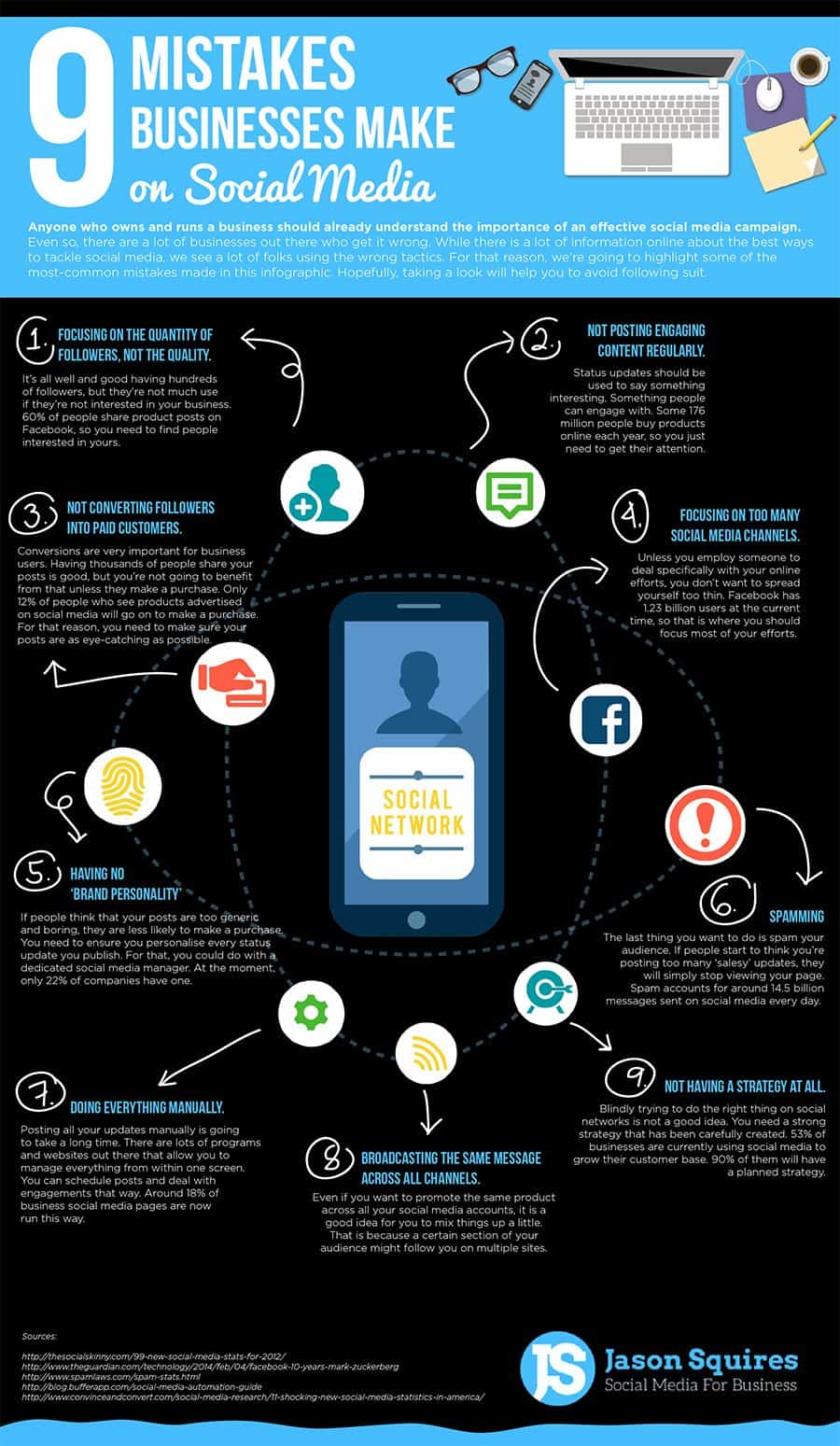
Jason Squires share 9 common mistakes businesses make in this infographic.
Here’s a quick summary:
- Focusing on quantity of followers over quality
- Not posting engaging content regularly
- Not converting followers into customers
- Focusing on too many channels
- Having no brand personality
- Spamming
- Doing everything manually
- Broadcasting the same message across all channels
- Not having a strategy at all
Check out the infographic for more detail.
In today’s digital age, social media has become a cornerstone of marketing strategies for businesses of all sizes. From startups to multinational corporations, platforms like Facebook, Instagram, Twitter, and LinkedIn offer unparalleled opportunities to connect with potential customers, build brand awareness, and drive sales. However, navigating the landscape of social media marketing requires more than just setting up profiles and posting occasionally. Many businesses fall into common pitfalls that hinder their success in leveraging social media effectively. In this blog post, we’ll explore nine common mistakes businesses make on social media and discuss strategies to avoid them.
Focusing on Quantity of Followers Over Quality
In the realm of social media marketing, the allure of high follower counts can be strong. Many businesses, especially small ones looking to establish a presence quickly, fall into the trap of prioritizing quantity of followers over their quality. While it may seem beneficial to boast a large number of followers on paper, the reality is that a more strategic approach emphasizing quality can yield far greater benefits in terms of engagement, conversions, and ultimately, revenue.
Why Quality Matters More than Quantity
- Engagement and Interaction: High-quality followers are more likely to engage with your content, share it with their networks, and participate in discussions. This engagement not only boosts your visibility on social media platforms but also enhances your brand’s credibility and authority.
- Conversion Potential: Quality followers are more aligned with your target audience and therefore more likely to convert into paying customers. They have a genuine interest in your products or services, making them valuable prospects for your business.
- Brand Advocacy: Quality followers are more inclined to become brand advocates. They may recommend your products to others, leave positive reviews, and defend your brand in online conversations, thereby amplifying your brand’s reach and influence.
Tips for Small Businesses: How to Attract Quality Followers
- Define Your Target Audience: Before diving into social media marketing, take the time to clearly define your target audience. Understand their demographics, interests, behaviors, and pain points. This foundational understanding will guide your content strategy and help attract the right followers.
- Create Valuable Content: Focus on creating content that provides value to your target audience. This could include educational posts, how-to guides, industry insights, or entertaining content relevant to your niche. Quality content not only attracts engagement but also encourages followers to stay connected with your brand.
- Engage Authentically: Social media is about building relationships. Engage authentically with your followers by responding to comments, thanking them for shares or mentions, and actively participating in conversations. Show genuine interest in their opinions and feedback.
- Utilize Targeted Advertising: Leverage social media advertising platforms to target specific demographics and interests that align with your ideal customer profile. This allows you to reach potential followers who are more likely to be interested in your offerings.
- Collaborate with Influencers: Partnering with influencers who resonate with your target audience can help you attract quality followers. Influencers already have established credibility and a loyal following within your niche, making their endorsements valuable for increasing your brand’s visibility among relevant audiences.
- Optimize Your Profile: Ensure your social media profiles are optimized to attract quality followers. Use a clear and professional profile picture, write a compelling bio that communicates your value proposition, and include relevant keywords to improve discoverability.
- Monitor and Analyze Metrics: Regularly monitor engagement metrics such as likes, shares, comments, and click-through rates. Analyzing these metrics will provide insights into the types of content resonating with your audience and help you refine your strategy to attract more quality followers.
- Build Relationships Over Time: Building a loyal following takes time and effort. Focus on nurturing relationships with your followers by consistently delivering valuable content, engaging authentically, and addressing their needs and concerns.
Case Study: How Quality Followers Transformed a Small Business
Consider a hypothetical small business specializing in eco-friendly home products. Initially, the business focused on gaining as many followers as possible across various social media platforms without considering their quality. They engaged in follow-for-follow tactics and occasionally purchased followers to boost their numbers. However, they soon realized that their engagement rates were low, and their posts were not generating meaningful conversations or driving sales.
Upon reevaluating their strategy, the business shifted its focus to attracting quality followers instead. They defined their target audience more precisely: environmentally conscious consumers interested in sustainable living. They revamped their content strategy to include educational posts on eco-friendly practices, DIY tutorials for upcycling projects, and customer testimonials showcasing the benefits of their products.
They actively engaged with their audience by responding to comments, sharing user-generated content, and collaborating with environmental influencers who shared their values. They also ran targeted advertising campaigns focused on reaching individuals interested in sustainability and home improvement.
As a result of these efforts, the business saw a significant increase in engagement metrics such as likes, shares, and comments. More importantly, they noticed an uptick in website traffic and sales conversions from their social media channels. Their quality followers became advocates for their brand, spreading the word about their products and contributing to a growing community of like-minded individuals passionate about sustainability.
Conclusion
While it may be tempting for small businesses to prioritize quantity of followers on social media, focusing on quality is ultimately more beneficial in the long run. Quality followers are more likely to engage with your content, convert into customers, and advocate for your brand. By defining your target audience, creating valuable content, engaging authentically, and leveraging targeted strategies, small businesses can attract quality followers who contribute to sustainable growth and success on social media. Remember, building a loyal following takes time and effort, but the relationships you cultivate with quality followers can lead to significant rewards for your business
Not Posting Engaging Content Regularly
In the dynamic world of social media marketing, consistency and quality go hand in hand. Small businesses often underestimate the importance of regularly posting engaging content that resonates with their audience. Irregular posting or sharing content that fails to captivate followers can result in diminished reach, reduced engagement, and missed opportunities to build brand loyalty and drive conversions. Here’s a comprehensive guide on how small businesses can avoid this common mistake and leverage engaging content to foster meaningful connections with their audience.
The Importance of Regularly Posting Engaging Content
- Maintaining Visibility: Regular posting ensures that your brand remains visible to your audience on social media platforms. Consistency in posting frequency signals to algorithms and followers alike that your brand is active and committed to providing value.
- Building Relationships: Engaging content encourages interactions such as likes, comments, and shares, fostering a sense of community around your brand. This interaction not only strengthens relationships with existing followers but also attracts new ones who resonate with your content.
- Driving Conversions: Quality content that educates, entertains, or inspires can influence followers’ purchasing decisions. By consistently delivering valuable content, businesses can nurture leads and guide them through the customer journey towards conversion.
Tips for Small Businesses: How to Create and Share Engaging Content
- Know Your Audience: Understanding your target audience is crucial for creating content that resonates. Conduct market research to identify their demographics, interests, pain points, and preferences. Tailor your content to address their needs and align with their values.
- Develop a Content Calendar: Plan your content in advance using a content calendar. This ensures a consistent posting schedule and allows you to organize themes, topics, and campaigns strategically. Consider seasonal trends, industry events, and holidays that align with your brand.
- Diversify Content Types: Mix up your content to keep your audience engaged. Consider incorporating a variety of content types such as:
- Educational Content: Share industry insights, how-to guides, tips, and tutorials that provide value and establish your expertise.
- Entertaining Content: Use humor, storytelling, or behind-the-scenes glimpses to entertain and captivate your audience.
- Visual Content: Leverage high-quality images, infographics, videos, and GIFs to grab attention and convey messages effectively.
- User-Generated Content: Showcase content created by your customers to foster authenticity and encourage community participation.
- Optimize Posting Times: Pay attention to when your audience is most active on social media. Use insights from analytics tools to determine optimal posting times for maximum visibility and engagement.
- Encourage Interaction: Prompt followers to engage with your content by asking questions, soliciting opinions, or inviting them to share their experiences. Respond promptly to comments and messages to maintain active conversations.
- Utilize Hashtags: Incorporate relevant hashtags into your posts to increase discoverability and reach a broader audience interested in related topics. Research trending hashtags and industry-specific keywords to enhance visibility.
- Monitor Performance Metrics: Regularly analyze engagement metrics such as likes, shares, comments, click-through rates, and follower growth. Use these insights to evaluate the effectiveness of your content strategy and make data-driven adjustments.
Case Study: How Regularly Posting Engaging Content Boosted Engagement
Imagine a small bakery specializing in artisanal bread and pastries. Initially, the bakery posted sporadically on social media, sharing occasional product photos and promotional offers. However, they noticed low engagement rates and struggled to attract a consistent following.
To remedy this, the bakery developed a content strategy focused on showcasing their craftsmanship, educating followers about baking techniques, and celebrating local ingredients. They created a content calendar that included weekly posts such as:
- Recipe of the Week: Sharing step-by-step recipes for their popular bread and pastry items, accompanied by mouth-watering photos and baking tips.
- Behind-the-Scenes: Offering glimpses into their kitchen, introducing their bakers, and sharing stories about their passion for baking.
- Customer Spotlights: Featuring testimonials and photos from satisfied customers enjoying their products, highlighting community support.
They diversified their content with engaging visuals, including professional photography of their products and instructional videos demonstrating baking techniques. They actively engaged with their audience by responding to comments, asking followers to share their baking experiences, and running contests where customers could submit photos of their homemade creations using their products.
As a result of their focused efforts, the bakery saw a significant increase in engagement metrics. Their posts garnered more likes, shares, and comments, and they attracted a loyal following of local food enthusiasts and amateur bakers. This increased visibility and engagement translated into higher foot traffic at their bakery, increased online orders, and a growing community of customers who actively promoted their products on social media.
Conclusion
Consistently posting engaging content is not just a recommendation but a necessity for small businesses aiming to succeed in social media marketing. By understanding their audience, planning strategically, diversifying content types, and actively engaging with followers, businesses can build a strong online presence, foster meaningful connections, and drive business growth. Remember, social media is a dynamic platform where creativity, authenticity, and consistency are key to capturing and maintaining audience attention. By implementing these strategies and continuously refining their approach based on performance insights, small businesses can leverage the power of engaging content to achieve their marketing objectives and thrive in competitive markets.
Not Converting Followers into Customers
Social media platforms offer unparalleled opportunities for small businesses to connect with potential customers, build brand awareness, and drive sales. However, many businesses struggle to convert their social media followers into paying customers effectively. This challenge often stems from a lack of clear strategy, ineffective engagement tactics, or failure to capitalize on opportunities presented by social media platforms. Here’s a comprehensive guide on how small businesses can avoid the common mistake of failing to convert followers into customers and maximize their social media ROI.
Understanding the Conversion Journey
- Awareness Stage: Followers become aware of your brand through social media posts, ads, or recommendations from their network.
- Interest and Consideration Stage: Followers express interest in your products or services by engaging with your content, visiting your website, or exploring your offerings.
- Decision and Purchase Stage: Followers make a purchase or complete a desired action, such as signing up for a newsletter or requesting more information.
Common Challenges Faced by Small Businesses
- Lack of Clear Call-to-Actions (CTAs): Followers may not know what action to take next if CTAs are unclear or absent in social media posts.
- Inconsistent Messaging: A disconnect between social media content and the brand’s overall messaging can confuse followers and deter them from taking action.
- Limited Conversion Tracking: Without robust analytics or tracking mechanisms, businesses may struggle to attribute conversions to specific social media efforts, making it difficult to assess ROI.
Tips for Small Businesses: Strategies to Convert Followers into Customers
- Define Clear Objectives and Goals: Before implementing any social media strategy, clarify your objectives. Determine specific goals such as increasing website traffic, generating leads, or boosting sales through social media channels.
- Optimize Your Social Media Profiles: Ensure your social media profiles are complete, professional, and aligned with your brand identity. Include a clear CTA in your bio and profile sections to direct followers to take action, such as visiting your website or contacting you.
- Create Compelling Content with a Purpose: Develop content that guides followers through the conversion journey. Tailor content to each stage of the funnel:
- Awareness Stage: Share informative content, industry insights, and engaging visuals to introduce followers to your brand.
- Consideration Stage: Highlight product features, customer testimonials, and case studies that demonstrate value and build credibility.
- Decision Stage: Use persuasive language, limited-time offers, and customer reviews to encourage followers to make a purchase.
- Implement Strong Call-to-Actions (CTAs): Clearly communicate what action you want followers to take, whether it’s visiting your website, signing up for a free trial, or making a purchase. Use compelling CTAs that create urgency or offer incentives to encourage conversions.
- Engage Authentically and Responsively: Actively engage with followers who express interest or ask questions about your products. Provide timely responses, address concerns, and offer personalized recommendations to nurture leads and build trust.
- Offer Exclusive Promotions or Discounts: Reward your social media followers with exclusive promotions, discounts, or special offers. Limited-time deals and flash sales can create a sense of urgency and motivate followers to take action.
- Utilize Retargeting Ads: Implement retargeting campaigns to reach followers who have shown interest in your products but have not yet converted. Retargeting allows you to stay top-of-mind and remind potential customers to complete their purchase.
- Track and Analyze Conversion Metrics: Use analytics tools to track key performance indicators (KPIs) such as click-through rates, conversion rates, and revenue generated from social media campaigns. Analyzing these metrics provides insights into what strategies are effective and where adjustments are needed.
Case Study: Successful Conversion Strategies for a Small Business
Consider a boutique fitness studio that struggled to convert social media followers into paying clients. Initially, the studio posted generic fitness tips and motivational quotes without a clear strategy for driving conversions. They realized they needed to refine their approach to attract and convert followers effectively.
The studio revamped its social media strategy by:
- Targeting Local Audiences: Using geotargeting and demographics to reach potential clients in their vicinity who were likely to be interested in fitness classes.
- Showcasing Testimonials and Success Stories: Sharing client success stories, before-and-after transformations, and testimonials to demonstrate the effectiveness of their programs.
- Offering Free Trials and Introductory Offers: Promoting limited-time offers such as free trial classes or discounted membership packages exclusively through social media channels.
- Engaging with Followers: Actively responding to inquiries, providing personalized fitness recommendations, and encouraging followers to schedule consultations or visit their studio.
As a result of these focused efforts, the fitness studio saw an increase in website traffic, appointment bookings, and new client registrations directly attributed to their social media campaigns. By consistently delivering valuable content, leveraging persuasive CTAs, and engaging authentically with their audience, they successfully converted social media followers into paying customers.
Conclusion
Converting social media followers into customers requires a strategic approach that aligns content creation, engagement tactics, and conversion-focused goals. By defining clear objectives, optimizing social media profiles, creating compelling content, and implementing strong CTAs, small businesses can effectively guide followers through the conversion journey and maximize their social media ROI. Regularly monitor performance metrics, adapt strategies based on insights, and continuously refine your approach to ensure sustained success in converting social media followers into loyal customers. Remember, building relationships and delivering value are key to fostering trust and driving conversions on social media platforms.
Focusing on Too Many Channels
In the quest to maximize their online presence, many small businesses fall into the trap of spreading themselves too thin across numerous social media channels. While it may seem advantageous to maintain a presence on multiple platforms, managing too many channels can lead to inefficiencies, diluted efforts, and ultimately, diminished results. Here’s a comprehensive guide on why focusing on too many social media channels can be detrimental and practical strategies for small businesses to streamline their social media presence effectively.
Why Focusing on Too Many Channels is Problematic
- Resource Constraints: Small businesses often have limited resources, including time, manpower, and budget. Managing multiple social media channels requires significant investment in content creation, community management, and analytics, which can strain resources and lead to burnout.
- Audience Fragmentation: Each social media platform attracts a unique demographic and user behavior. Focusing on too many channels can result in fragmented audience engagement strategies, where efforts are spread thin rather than concentrated on platforms where your target audience is most active.
- Quality vs. Quantity: Maintaining a high standard of content and engagement becomes challenging when stretched across multiple channels. Quality may suffer as businesses struggle to keep up with posting schedules and deliver consistent messaging that resonates with each platform’s audience.
Tips for Small Businesses: How to Streamline Your Social Media Presence
- Identify Your Target Audience and Platforms: Conduct research to identify which social media platforms your target audience frequents most. Consider factors such as demographics, interests, behaviors, and engagement patterns. Focus your efforts on platforms where your audience is most likely to engage with your content and convert into customers.
- Evaluate Current Performance: Assess the performance of your existing social media channels using analytics tools. Measure key metrics such as engagement rates, follower growth, click-through rates, and conversions attributed to each platform. Identify which channels are driving the most meaningful results for your business.
- Prioritize Quality Over Quantity: Rather than trying to maintain a presence on every social media platform, prioritize quality engagement on select channels. Focus on creating high-quality content tailored to each platform’s strengths and audience preferences. Consistency and relevance are key to building a loyal following and driving engagement.
- Consolidate Your Efforts: Once you’ve identified the most effective social media channels for your business, consolidate your efforts on those platforms. Allocate resources strategically to maximize impact, focusing on content creation, community engagement, and performance analysis.
- Develop a Content Strategy: Create a cohesive content strategy that aligns with your business goals and target audience preferences. Tailor your content to each platform’s unique features and audience demographics. Plan content themes, posting schedules, and promotional campaigns to maintain consistency and relevance across channels.
- Automate Where Possible: Use social media management tools and automation software to streamline processes such as scheduling posts, monitoring mentions, and analyzing performance metrics. Automation can help save time and ensure consistent messaging across platforms while allowing you to focus on strategic initiatives.
- Integrate Cross-Channel Promotion: Leverage your strongest social media channels to promote content and activities across other platforms. Cross-promotion can help maximize reach and engagement by directing followers to relevant content on different channels.
- Monitor and Adapt: Continuously monitor the performance of your social media channels and adapt your strategy based on analytics insights. Regularly review engagement metrics, audience feedback, and industry trends to optimize content strategies and improve ROI.
Case Study: Effective Channel Streamlining for a Small Business
Imagine a local boutique fashion store struggling to manage its social media presence across Facebook, Instagram, Twitter, Pinterest, and LinkedIn. Initially, the store attempted to maintain active profiles on all platforms without a clear strategy, resulting in inconsistent posting and limited engagement.
To streamline their efforts, the boutique:
- Conducted Audience Research: Analyzed customer demographics and social media usage patterns to identify their primary audience segments and preferred platforms.
- Focused on High-Performing Channels: Identified Instagram and Pinterest as the most effective platforms for visual content and engaged with fashion enthusiasts. They redirected resources from less effective channels like Twitter and LinkedIn.
- Developed Platform-Specific Content: Tailored content to each platform’s strengths; Instagram featured visual storytelling with behind-the-scenes peeks and customer spotlights, while Pinterest showcased curated fashion boards and seasonal trends.
- Implemented Cross-Promotion Strategies: Used Instagram Stories and posts to promote exclusive Pinterest boards and encourage followers to explore additional content on their preferred platform.
- Utilized Analytics Tools: Monitored engagement metrics and conversion rates on Instagram and Pinterest, adjusting content strategies based on performance data to optimize reach and drive sales.
As a result of these streamlined efforts, the boutique saw a significant increase in follower engagement, website traffic, and sales conversions from their targeted social media channels. By focusing resources on platforms that aligned with their audience’s preferences and optimizing content strategies accordingly, they achieved greater efficiency and effectiveness in their social media marketing efforts.
Conclusion
Focusing on too many social media channels can stretch resources thin and dilute the impact of your marketing efforts. For small businesses, it’s essential to prioritize quality engagement over quantity of channels. By identifying your target audience, evaluating channel performance, developing a cohesive content strategy, and leveraging automation tools, you can streamline your social media presence effectively. Remember, consistency, relevance, and strategic focus are key to maximizing engagement, building brand awareness, and driving meaningful results on social media platforms. By implementing these strategies and continually refining your approach based on performance metrics, small businesses can achieve sustainable growth and success in their digital marketing endeavors.
Having No Brand Personality
In the crowded landscape of social media, establishing a distinctive brand personality is crucial for small businesses to stand out, connect with their target audience, and foster lasting relationships. Brand personality goes beyond logos and colors; it embodies the values, voice, and character that define your brand’s identity and resonate with consumers. However, many small businesses overlook this aspect, resulting in a lack of differentiation and missed opportunities for engagement. Here’s a detailed guide on why brand personality matters and practical strategies for small businesses to develop and express their unique identity effectively.
Why Brand Personality Matters
- Differentiation: In a competitive market, a strong brand personality sets you apart from competitors. It creates a memorable impression that helps consumers recognize and prefer your brand over others.
- Authenticity and Trust: A well-defined brand personality builds authenticity and trust with your audience. When consumers resonate with your brand’s values and voice, they are more likely to form emotional connections and become loyal advocates.
- Consistency Across Platforms: Brand personality ensures consistency in how your brand is perceived across different social media channels and marketing touchpoints. It reinforces your brand’s identity and strengthens brand recall.
Tips for Small Businesses: Developing and Expressing Brand Personality
- Define Your Brand Values: Start by identifying the core values that define your business. What principles guide your decisions and interactions with customers? Whether it’s innovation, sustainability, customer-centricity, or community involvement, these values should form the foundation of your brand personality.
- Understand Your Audience: Conduct audience research to understand the demographics, preferences, and behaviors of your target audience. What tone of voice, style, and content resonates most with them? Tailor your brand personality to align with their expectations and aspirations.
- Craft a Unique Voice: Develop a distinct tone of voice that reflects your brand’s personality. Are you friendly and approachable, authoritative and professional, or witty and playful? Consistency in your communication style helps build familiarity and trust with your audience.
- Create a Brand Story: Storytelling is a powerful tool for conveying your brand personality. Share the journey, values, and people behind your brand through compelling narratives. Highlight milestones, challenges overcome, and the passion that drives your business.
- Use Visual Branding Elements: Visual elements such as logos, colors, typography, and imagery contribute to your brand’s personality. Ensure these elements are consistent and reflective of your brand values across all platforms and marketing materials.
- Humanize Your Brand: Show the human side of your brand by sharing behind-the-scenes glimpses, employee spotlights, or customer success stories. Humanizing your brand makes it relatable and fosters emotional connections with your audience.
- Engage Authentically: Interact with your audience in a genuine and meaningful way. Respond to comments, messages, and reviews promptly and with empathy. Show appreciation for customer feedback and actively participate in conversations related to your industry or community.
- Consistency is Key: Maintain consistency in your brand personality across all touchpoints, including social media posts, customer service interactions, advertising campaigns, and offline interactions. Consistency reinforces your brand identity and strengthens brand recall.
Case Study: Establishing a Distinctive Brand Personality
Imagine a small coffee roastery aiming to differentiate itself in a competitive market. Initially, the roastery posted generic product photos and promotional offers on social media without a clear brand identity. They realized the need to develop a unique personality that would resonate with coffee enthusiasts and reflect their commitment to quality and sustainability.
The roastery revamped its approach by:
- Defining Core Values: Identifying sustainability, craftsmanship, and community as their core values, which guided their business practices and interactions.
- Crafting a Warm and Inviting Tone: Adopting a friendly and approachable tone of voice in their social media posts and customer interactions, reflecting their passion for coffee and commitment to customer satisfaction.
- Sharing Stories of Origin and Process: Sharing stories of their coffee sourcing journeys, highlighting the dedication of their roasters, and showcasing the communities they support through sustainable practices.
- Using Visual Branding Consistently: Updating their visual branding with earthy tones, natural textures, and imagery that conveyed a sense of craftsmanship and eco-friendliness.
- Engaging with Community Initiatives: Actively participating in local community events, supporting environmental initiatives, and engaging with customers who shared their values.
As a result, the coffee roastery developed a distinctive brand personality that resonated with coffee aficionados who valued quality, sustainability, and community involvement. They saw an increase in engagement, customer loyalty, and brand advocacy as their authentic brand personality attracted a dedicated following of like-minded individuals.
Conclusion
Developing a strong brand personality is essential for small businesses looking to establish a meaningful connection with their audience and differentiate themselves in a competitive marketplace. By defining core values, understanding audience preferences, crafting a unique voice, and maintaining consistency across all touchpoints, businesses can cultivate authenticity, trust, and loyalty among consumers. Remember, brand personality is not just about what you say; it’s about how you say it and the values you embody through every interaction. By investing in a distinctive brand identity, small businesses can effectively communicate their unique story, build lasting relationships, and drive success in their marketing efforts.
Spamming
Spamming on social media is a common misstep that small businesses often make in their eagerness to gain attention and drive engagement. Defined by excessive, irrelevant, or intrusive messaging, spamming can have detrimental effects on a brand’s reputation, diminish audience trust, and lead to reduced engagement or even account penalties from social media platforms. Understanding the nuances of spamming and implementing effective communication strategies is crucial for small businesses aiming to build a positive online presence and foster meaningful relationships with their audience. Here’s an in-depth exploration of why spamming is detrimental and practical tips for small businesses to avoid this pitfall.
Why Spamming Is Detrimental
- Audience Alienation: Excessive promotional content, repetitive posts, or irrelevant messaging can annoy followers and drive them to unfollow or mute your brand. This alienation undermines efforts to build a loyal and engaged community.
- Negative Brand Perception: Spamming conveys a lack of respect for your audience’s time and interests. It can tarnish your brand’s reputation and diminish trust, making it less likely for followers to view your business as credible or trustworthy.
- Algorithmic Penalties: Social media algorithms prioritize content that resonates with users and promotes meaningful interactions. Spammy behavior such as overposting or using deceptive tactics to boost engagement can lead to reduced visibility or account restrictions.
Tips for Small Businesses: Avoiding Spamming and Promoting Authentic Engagement
- Understand Platform Guidelines: Familiarize yourself with each social media platform’s community guidelines and best practices. Platforms like Facebook, Instagram, Twitter, and LinkedIn have specific rules regarding spamming, including limits on posting frequency, content restrictions, and prohibited behaviors.
- Quality Over Quantity: Focus on delivering valuable and relevant content that aligns with your audience’s interests and needs. Avoid bombarding followers with repetitive promotional messages or unrelated content. Prioritize quality engagement over the volume of posts.
- Create a Content Calendar: Plan your content in advance using a content calendar. This helps maintain a consistent posting schedule while ensuring that each post serves a purpose and provides value to your audience. Balance promotional content with informative, entertaining, or educational posts.
- Segment Your Audience: Tailor your content to different segments of your audience based on their preferences and behaviors. Use insights from analytics tools to understand what content resonates most with each segment and adjust your strategy accordingly.
- Personalize Your Interactions: Engage with your audience authentically by responding to comments, messages, and mentions. Address followers by name, acknowledge their feedback, and participate in conversations relevant to your industry or community.
- Use Hashtags Wisely: Incorporate relevant hashtags into your posts to increase discoverability and reach a broader audience interested in similar topics. Avoid using irrelevant or excessive hashtags, as this can be perceived as spammy behavior.
- Offer Value-Driven Content: Provide content that educates, entertains, or solves problems for your audience. Share industry insights, tips, tutorials, or user-generated content that adds value and encourages meaningful interactions.
- Monitor Engagement Metrics: Regularly analyze engagement metrics such as likes, comments, shares, and click-through rates. Use these insights to gauge the effectiveness of your content strategy and make data-driven decisions to optimize engagement.
Case Study: Transitioning from Spamming to Authentic Engagement
Consider a small online boutique that initially struggled with low engagement and follower growth on Instagram. In an attempt to increase visibility, they resorted to repetitive posts promoting their products with generic captions and excessive use of hashtags.
Realizing the need for a more strategic approach, the boutique:
- Reevaluated Content Strategy: Conducted an audit of their Instagram posts to identify patterns of spammy behavior, such as overposting and irrelevant content.
- Developed a Content Calendar: Created a content calendar focusing on diverse content themes, including behind-the-scenes glimpses, customer testimonials, styling tips, and seasonal promotions.
- Engaged Authentically: Responded to comments and messages promptly, personalized interactions with followers, and encouraged user-generated content through contests and collaborations.
- Used Hashtags Strategically: Streamlined hashtag usage to include relevant keywords and niche-specific hashtags that aligned with their target audience’s interests.
As a result of these efforts, the boutique saw an improvement in engagement metrics, including increased likes, comments, and shares on their posts. By shifting from spammy tactics to authentic engagement, they built a loyal following of fashion enthusiasts who appreciated their personalized approach and quality content.
Conclusion
Spamming on social media can have detrimental effects on a small business’s online reputation and engagement metrics. By understanding platform guidelines, prioritizing quality over quantity in content creation, engaging authentically with your audience, and monitoring engagement metrics, small businesses can avoid the pitfalls of spamming and foster genuine connections with their audience. Remember, building a positive brand image requires consistent efforts to deliver valuable content and engage with followers in a respectful and meaningful manner. By cultivating authentic relationships and providing value to your audience, you can build trust, loyalty, and long-term success for your business on social media platforms.
Doing Everything Manually
In the fast-paced world of social media marketing, small businesses often find themselves overwhelmed by the demands of managing multiple platforms, creating content, engaging with followers, and analyzing performance metrics. While manual management may seem manageable at first, it can quickly become inefficient, time-consuming, and prone to errors. Automating certain tasks and adopting efficient workflows not only saves time but also allows businesses to focus on strategic initiatives that drive growth and engagement. Here’s a detailed exploration of why manual processes can hinder small businesses and practical tips for streamlining operations effectively.
Challenges of Manual Social Media Management
- Time-Intensive Tasks: Manually scheduling posts, responding to comments and messages, and tracking performance metrics across multiple platforms can consume significant time and resources.
- Consistency Issues: Maintaining a consistent posting schedule and engagement level becomes challenging when tasks are handled manually. Inconsistencies in content quality, timing, and responsiveness can affect audience engagement and brand perception.
- Limited Scalability: As businesses grow and expand their social media presence, manual processes may struggle to keep up with increased demands, leading to inefficiencies and missed opportunities for growth.
Tips for Small Businesses: Streamlining Social Media Management
- Identify Repetitive Tasks: Evaluate your current social media workflows and identify tasks that can be automated or streamlined. Common tasks include scheduling posts, monitoring mentions, responding to comments, and analyzing performance metrics.
- Utilize Social Media Management Tools: Invest in reputable social media management tools such as Hootsuite, Buffer, Sprout Social, or Later. These tools allow you to schedule posts in advance, monitor multiple social media accounts from a single dashboard, and analyze performance metrics.
- Schedule Content in Advance: Create a content calendar and schedule posts in advance using social media management tools. Plan content themes, posting times, and frequency to maintain consistency and optimize engagement.
- Automate Customer Responses: Use chatbots or automated messaging systems to handle common customer inquiries, provide instant responses, and redirect complex queries to human support when necessary. This improves response times and customer satisfaction.
- Monitor and Analyze Performance: Use analytics tools provided by social media platforms or integrated within social media management tools to track key performance indicators (KPIs) such as engagement rates, click-through rates, and follower growth. Analyze data to identify trends, assess campaign effectiveness, and make informed decisions.
- Engage Proactively: Set up alerts and notifications to monitor brand mentions, comments, and messages in real-time. Respond promptly to interactions, engage with followers, and address customer feedback to build relationships and foster loyalty.
- Implement Content Approval Workflows: Establish clear approval processes for content creation and publishing to ensure consistency in messaging, branding, and compliance with company guidelines. Use collaboration tools to streamline communication between team members and stakeholders.
- Delegate Responsibilities: Assign roles and responsibilities within your team or enlist the help of freelancers or agencies to manage specific aspects of social media marketing, such as content creation, graphic design, or community management.
Case Study: Enhancing Efficiency through Automation
Consider a small e-commerce business specializing in handmade jewelry. Initially, the business managed its social media presence manually, which resulted in inconsistent posting schedules and limited engagement. Recognizing the need for efficiency and scalability, they implemented automation strategies:
- Adopted Social Media Management Tools: Integrated Hootsuite to schedule posts across Instagram, Facebook, and Twitter, ensuring consistent messaging and timing.
- Automated Customer Inquiries: Implemented a chatbot on their website and social media platforms to handle frequently asked questions about product availability, shipping, and returns.
- Utilized Analytics for Optimization: Used analytics tools to monitor audience engagement, track conversion rates from social media campaigns, and adjust content strategies based on performance data.
- Streamlined Content Approval: Implemented a content approval workflow using Google Workspace, ensuring that all social media content was reviewed and approved by the marketing team before publication.
As a result, the jewelry business saw an increase in follower engagement, website traffic, and sales conversions attributed to their streamlined social media management approach. Automation allowed them to focus on creative aspects of their marketing strategy while improving overall efficiency and scalability.
Conclusion
For small businesses navigating the complexities of social media marketing, adopting automation and efficient workflows can significantly enhance productivity, consistency, and engagement. By identifying repetitive tasks, leveraging social media management tools, automating customer interactions, and analyzing performance metrics, businesses can streamline operations and allocate resources more effectively. Embracing automation not only saves time and reduces manual errors but also empowers businesses to focus on strategic initiatives that drive growth, engagement, and long-term success on social media platforms. Remember, the key to effective automation lies in balancing efficiency with personalized engagement to maintain authenticity and build meaningful relationships with your audience.
Broadcasting the Same Message Across All Channels
Small businesses often fall into the trap of broadcasting identical messages across all their social media channels in an attempt to save time and maintain consistency. While consistency is important, this approach can lead to diminished engagement, alienate audiences who follow multiple platforms, and miss opportunities to leverage each channel’s unique strengths. Tailoring content to fit the nuances of each platform not only enhances engagement but also demonstrates an understanding of audience preferences and behaviors. Here’s a comprehensive guide on why broadcasting the same message across all channels is ineffective and practical strategies for small businesses to optimize their social media content for each platform.
Why Broadcasting the Same Message Is Ineffective
- Audience Expectations: Audiences on different social media platforms have varying expectations, behaviors, and preferences. Broadcasting identical messages fails to resonate with the unique demographics, interests, and engagement patterns of each platform’s users.
- Algorithmic Differences: Social media algorithms prioritize content that is relevant and engaging to users. Broadcasting the same message across all channels may result in reduced visibility if the content does not align with the platform’s algorithmic criteria.
- Content Relevance: Each platform offers distinct features and content formats (e.g., images, videos, stories, tweets) that cater to specific types of engagement. Repurposing content without adaptation can appear lazy or out of context, diminishing its impact.
Tips for Small Businesses: Tailoring Content for Each Platform
- Understand Platform Demographics and Behavior: Research the demographics, behaviors, and engagement patterns of users on each social media platform your business utilizes. Identify how users interact with content, preferred content formats, and peak engagement times.
- Adapt Content to Fit Platform Strengths: Tailor your content to leverage each platform’s unique strengths and features:
- Facebook: Focus on longer-form content, storytelling, and community engagement through groups and pages.
- Instagram: Highlight visual content such as high-quality images, videos, reels, and stories. Use hashtags and location tags to increase discoverability.
- Twitter: Share concise, timely updates, participate in trending topics (hashtags), and engage in real-time conversations.
- LinkedIn: Emphasize professional content, thought leadership articles, industry insights, and networking opportunities.
- YouTube: Create video content such as tutorials, product demonstrations, vlogs, and behind-the-scenes footage.
- Pinterest: Curate visually appealing boards that inspire and educate users about your products or services.
- Craft Platform-Specific Content: Develop content that is tailored to each platform’s audience preferences, content formats, and engagement styles. Customize captions, visuals, and calls-to-action (CTAs) to resonate with users and encourage interaction.
- Maintain Consistent Brand Voice: While adapting content for each platform, maintain a consistent brand voice and messaging style across all channels. This ensures brand integrity and reinforces your identity with followers who engage across multiple platforms.
- Optimize Content for Platform Algorithms: Familiarize yourself with the algorithmic preferences of each platform. Factors such as engagement rates, relevance, and timeliness impact visibility. Tailor content to align with these factors to increase reach and engagement.
- Create a Content Calendar: Plan and schedule platform-specific content in advance using social media management tools. Coordinate content themes, promotional campaigns, and seasonal updates to maintain a cohesive content strategy.
- Repurpose Content Thoughtfully: While adapting content for different platforms, repurpose core messages and visuals creatively to maintain efficiency. Customize headlines, formats, and CTAs to suit platform requirements and audience expectations.
- Monitor Performance and Iterate: Regularly review analytics data to evaluate the performance of platform-specific content. Measure key metrics such as engagement rates, click-through rates, and follower growth. Use insights to refine content strategies and optimize future campaigns.
Case Study: Tailoring Content Across Platforms
Imagine a small travel agency aiming to enhance its social media presence across Facebook, Instagram, and Twitter. Initially, the agency posted identical promotional messages and travel packages across all platforms, resulting in mixed engagement and limited reach.
To improve their approach, the agency:
- Researched Platform Demographics: Identified that Instagram users preferred visual content showcasing destination highlights and travel experiences, while Twitter users engaged more with real-time travel tips and customer service inquiries.
- Adapted Content Formats: Created visually appealing travel guides and destination spotlights for Instagram, engaging storytelling posts with high-quality images and hashtags.
- Utilized Twitter for Timely Updates: Shared real-time travel alerts, tips for packing, and responded promptly to customer inquiries and feedback.
- Customized Facebook Content: Emphasized community engagement through travel-themed groups, customer testimonials, and destination polls to encourage interaction.
As a result of these tailored efforts, the travel agency saw increased engagement, follower growth, and improved customer satisfaction across their social media channels. By adapting content strategies to fit the unique preferences and behaviors of each platform, they successfully amplified their brand’s visibility and audience engagement.
Conclusion
Effective social media marketing for small businesses requires a nuanced approach to content creation and distribution across multiple platforms. By understanding platform demographics, adapting content formats to fit platform strengths, maintaining a consistent brand voice, and optimizing for platform algorithms, businesses can enhance engagement, reach, and overall effectiveness of their social media efforts. Avoid the temptation to broadcast the same message across all channels and instead, invest in crafting platform-specific content that resonates with your audience’s preferences and behaviors. By prioritizing quality and relevance, small businesses can build stronger connections, foster brand loyalty, and drive sustainable growth through social media marketing.
Not Having a Strategy at All
In today’s digital age, having a presence on social media is essential for small businesses to reach and engage with their target audience. However, many businesses dive into social media without a clear strategy, leading to inconsistent messaging, wasted resources, and missed opportunities for growth. A well-defined social media strategy not only aligns your efforts with business goals but also ensures that every action on social platforms contributes to long-term success. Here’s a comprehensive guide on why having a social media strategy matters and practical tips for small businesses to develop an effective strategy tailored to their needs.
Why Having a Social Media Strategy Matters
- Clear Objectives and Goals: A social media strategy outlines clear objectives and goals that align with your overall business strategy. Whether it’s increasing brand awareness, driving website traffic, generating leads, or boosting sales, a strategy provides a roadmap to achieve these goals.
- Audience Targeting and Segmentation: A strategy helps identify and understand your target audience, including demographics, interests, behaviors, and pain points. By knowing your audience, you can create content and campaigns that resonate and engage effectively.
- Consistent Branding and Messaging: A well-defined strategy ensures consistency in branding and messaging across all social media channels. Consistency builds brand recognition and reinforces your brand’s identity in the minds of your audience.
- Optimized Resource Allocation: With a strategy in place, you can allocate resources effectively, including time, budget, and manpower. This prevents wastage of resources on activities that do not contribute to your business objectives.
- Measurement and Evaluation: A strategy includes metrics and KPIs (Key Performance Indicators) to measure the success of your social media efforts. It allows you to track performance, analyze data, and make informed decisions to optimize future campaigns.
Tips for Small Businesses: Developing an Effective Social Media Strategy
- Define Your Goals and Objectives: Start by identifying what you want to achieve through social media. Are you aiming to increase brand awareness, drive traffic to your website, generate leads, boost sales, or improve customer engagement? Set specific, measurable, achievable, relevant, and time-bound (SMART) goals.
- Know Your Audience: Conduct market research to understand your target audience’s demographics, interests, preferences, and pain points. Create buyer personas to represent different segments of your audience and tailor your content to address their needs.
- Choose the Right Platforms: Select social media platforms where your target audience is most active. Consider factors such as age, gender, location, and interests. Focus your efforts on platforms that align with your business objectives and where you can achieve the highest ROI.
- Develop a Content Strategy: Create a content calendar outlining the types of content you will post, posting frequency, and key messaging themes. Tailor your content to each platform’s strengths and audience preferences while maintaining consistency in branding and voice.
- Engagement and Community Building: Plan strategies to engage with your audience authentically. Respond to comments, messages, and reviews promptly. Encourage user-generated content, host contests or polls, and participate in relevant industry conversations.
- Allocate Budget and Resources: Determine your social media budget and allocate resources for content creation, paid advertising, social media management tools, and analytics software. Consider outsourcing tasks to freelancers or agencies if needed.
- Monitor and Measure Performance: Use analytics tools provided by social media platforms or third-party software to track key metrics such as reach, engagement, click-through rates, conversions, and ROI. Analyze data regularly to evaluate the effectiveness of your strategy and make data-driven adjustments.
- Adapt and Evolve: Social media trends and algorithms are constantly evolving. Stay updated with industry trends, monitor competitor strategies, and be prepared to adapt your strategy accordingly. Continuously optimize your approach based on insights and feedback.
Case Study: Implementing a Social Media Strategy
Imagine a small bakery aiming to increase online sales and brand awareness through social media. Initially, the bakery had sporadic posting schedules and inconsistent messaging, resulting in limited engagement and reach.
To develop a comprehensive social media strategy, the bakery:
- Set Clear Goals: Defined goals to increase online sales by 20% within six months and enhance brand visibility through engaging content.
- Identified Target Audience: Conducted customer surveys and analyzed social media demographics to identify key audience segments, including local residents, food enthusiasts, and gift buyers.
- Selected Platforms: Chose Instagram and Facebook based on audience research and visual nature of their products.
- Developed Content Strategy: Created a content calendar with weekly themes such as baking tips, behind-the-scenes videos, customer testimonials, and seasonal promotions. Tailored content to each platform’s audience preferences and engagement styles.
- Engaged with Audience: Responded promptly to customer inquiries, encouraged user-generated content through photo contests, and collaborated with local influencers to reach new audiences.
- Allocated Resources: Invested in social media management tools for scheduling posts, monitoring analytics, and running targeted ads to promote online sales and track campaign performance.
- Measured Success: Tracked metrics such as follower growth, engagement rates, website traffic, and online sales. Adjusted content strategies based on performance data to optimize reach and conversion rates.
As a result of their strategic approach, the bakery saw a significant increase in online sales, engagement levels, and brand visibility within the community. By aligning their social media efforts with business objectives and consistently delivering valuable content, they successfully leveraged social media as a powerful tool for growth and customer engagement.
Conclusion
Developing a social media strategy is crucial for small businesses looking to leverage digital platforms effectively, build brand awareness, and drive business growth. By defining clear goals, understanding your audience, selecting the right platforms, developing a content strategy, engaging authentically, allocating resources wisely, monitoring performance, and adapting strategies based on data-driven insights, businesses can maximize their impact on social media. Remember, a well-executed social media strategy not only enhances brand visibility but also fosters meaningful relationships with your audience, ultimately contributing to long-term success and sustainability in today’s competitive marketplace.
Conclusion
Avoiding these common mistakes requires a proactive approach to social media management. By focusing on quality engagement, strategic content creation, and audience-centric communication, businesses can harness the full potential of social media to build brand loyalty, drive sales, and achieve long-term growth. Remember, social media is not just about broadcasting messages—it’s about creating meaningful connections with your audience and delivering value that resonates beyond the digital realm. By learning from these mistakes and implementing best practices, businesses can position themselves for success in an increasingly competitive digital landscape.

Author:
Mark Ford

How to Create Engaging Instagram Reels Without Ever Showing Your Face
Are you looking for creative ways to make engaging Instagram Reels without stepping in front of the camera? Want to discover proven content ideas that help your brand stand out on social media while keeping your privacy intact? […]