So, you’re just starting your new business, you’re looking for ways to generate new clients, but where should you start?
Starting a new business is an exciting journey filled with promise and potential. However, it’s also a journey fraught with challenges, and one of the most critical aspects of ensuring your business’s success is your marketing strategy.
In today’s digital age, marketing plays a pivotal role in reaching and engaging your target audience.
To help you navigate this complex landscape, we’ve compiled 10 insightful statistics that will guide your marketing strategy and set your new business on the path to success.
Vistaprint share some key stats that should guide your marketing strategy in this infographic.
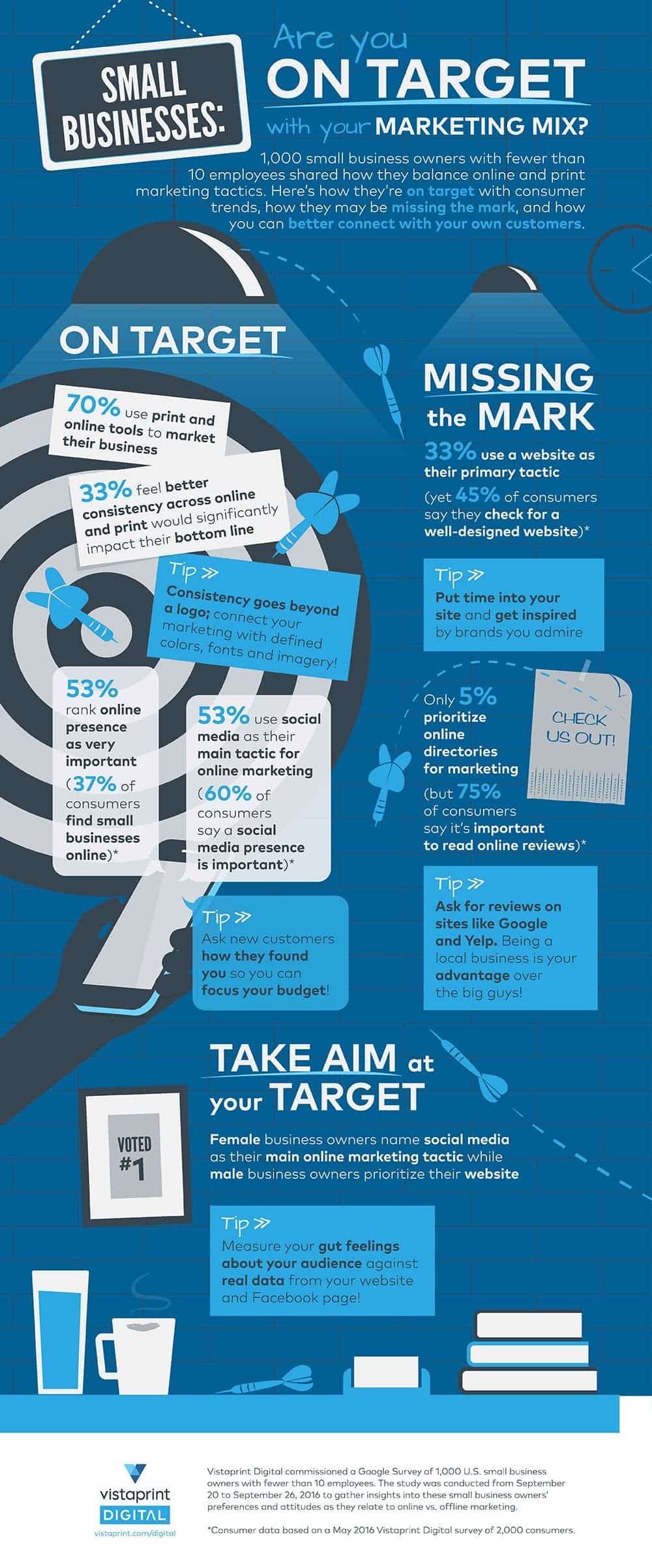
1. Small Business Survival Rate
According to data from the Bureau of Labor Statistics, about 20% of new businesses fail during the first two years of being open, 45% during the first five years, and 65% during the first 10 years. These statistics underscore the importance of a well-crafted marketing strategy from the outset. To beat these odds, your marketing plan should focus on building brand awareness and attracting customers to ensure long-term sustainability.
2. Online Presence is Crucial
In today’s digital age, having a strong online presence is vital. According to a survey by Clutch, 46% of small businesses in the United States still don’t have a website. This presents a significant opportunity for new businesses to stand out from the competition. Invest in a professionally designed website and a robust online marketing strategy to ensure that potential customers can find you easily.
3. The Power of Content Marketing
Content marketing continues to be a highly effective strategy for new businesses. According to the Content Marketing Institute, content marketing generates three times more leads than traditional outbound marketing, and it costs 62% less. Start a blog, create informative videos, and share valuable content to establish your authority and connect with your target audience.
4. The Rise of Social Media Marketing
Social media is no longer just a platform for sharing personal updates; it’s a powerful marketing tool. Statista reports that there were 3.96 billion social media users in 2021, and this number is expected to reach 4.41 billion by 2025. Leveraging the reach of social media platforms can help you connect with your audience, build brand loyalty, and drive sales.
5. The Impact of Video Marketing
Video marketing is on the rise, and businesses that embrace it are reaping the rewards. According to HubSpot, 85% of businesses use video as a marketing tool, and 88% of marketers report that video provides a positive return on investment. Consider creating engaging and informative videos to showcase your products or services and connect with your audience on a deeper level.
6. Email Marketing’s Continued Effectiveness
Email marketing remains a highly effective way to nurture leads and convert them into customers. A study by DMA found that email marketing has an average ROI of $42 for every $1 spent. Implementing a well-crafted email marketing strategy can help you build a loyal customer base and drive sales.
7. Mobile Optimization is a Must
The importance of mobile optimization cannot be overstated. According to Statista, mobile devices accounted for 56.7% of web traffic in 2021. Ensure that your website and marketing materials are optimized for mobile users to provide a seamless experience and capture a significant portion of your potential audience.
8. Customer Reviews and Trust
Online reviews are a critical factor in building trust with potential customers. According to BrightLocal, 87% of consumers read online reviews for local businesses, and 79% trust online reviews as much as personal recommendations. Encourage satisfied customers to leave reviews and address negative feedback promptly to build a positive online reputation.
9. The Importance of SEO
Search Engine Optimization (SEO) is key to ensuring your business is discoverable online. According to BrightEdge, 53.3% of all website traffic comes from organic search. Invest in optimizing your website for search engines to improve your chances of appearing in relevant search results and driving organic traffic to your site.
10. Marketing Analytics for Data-Driven Decisions
Lastly, marketing is not a one-size-fits-all endeavor. It’s essential to track your marketing efforts and gather data to make informed decisions. According to HubSpot, 58% of marketers use marketing analytics to make better decisions, and companies that use analytics are five times more likely to make faster decisions. Embrace analytics tools to measure the effectiveness of your marketing campaigns and adjust your strategy accordingly.
Conclusion
Starting a new business is a challenging endeavor, but with the right marketing strategy, you can increase your chances of success. These ten statistics offer valuable insights into the current marketing landscape and provide a solid foundation for crafting a marketing plan that will help your business thrive. Remember that marketing is an ongoing process, and staying informed about the latest trends and data is key to staying competitive in today’s dynamic business environment. By leveraging these statistics and continuously refining your marketing strategy, you can build brand awareness, attract customers, and ensure the long-term success of your new business.

Author:
Mark Ford

The Essential Marketing Toolkit: 19 Tools Every Modern Marketer Should Know About
Are you looking for the most effective tools to streamline your marketing, boost creativity, and save time? Want to discover the must-have platforms that every modern marketer should be using to stay ahead of the competition? […]