
Are you in the process of starting a new business? Want to know the common pitfalls you need to avoid?
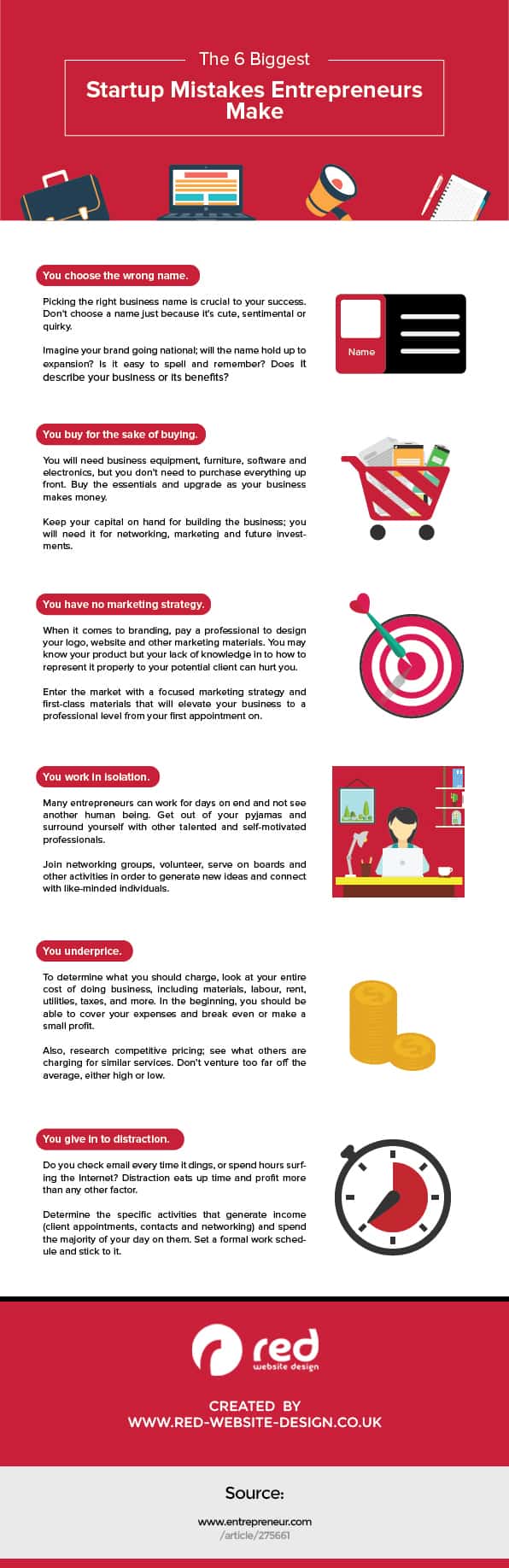
We share 6 common startup mistakes to watch out for in this infographic.
Here’s a quick summary:
- You choose the wrong name
- You buy for the sake of buying
- You have no marketing strategy
- You work in isolation
- You under price
- You give in to distraction
Check out the infographic for more detail.
Starting a business is a thrilling adventure, but it’s also fraught with challenges.
Many entrepreneurs, driven by passion and excitement, make avoidable mistakes that can hinder or even derail their startup journey. Understanding these pitfalls is crucial for anyone looking to build a successful business.
In this blog post, we’ll explore six common mistakes that entrepreneurs often make and how to avoid them.
You Choose the Wrong Name
Choosing the right name for your startup is a crucial step that can significantly influence your business’s success. A name is not just a label; it’s a key part of your brand identity. It’s the first thing people will hear about your business, and it’s what they’ll remember you by.
The right name can help you stand out in a crowded market, connect with your target audience, and convey the essence of what your business is all about. On the other hand, the wrong name can confuse potential customers, limit your growth, and even lead to costly rebranding efforts down the line.
Here’s a more in-depth look at how to avoid choosing the wrong name and what factors you should consider when naming your small business.
Understand Your Brand Identity
Before you even begin brainstorming names, it’s essential to have a clear understanding of your brand identity. Your business name should reflect your company’s mission, values, and what makes you unique. Start by asking yourself these questions:
- What is the core mission of my business?
- What values do I want my brand to embody?
- Who is my target audience?
- What emotions or ideas do I want my brand to evoke?
For instance, if your business is focused on sustainability and eco-friendliness, you might want a name that evokes nature or environmental consciousness. If your brand is centered around luxury and sophistication, a more elegant or upscale-sounding name could be appropriate.
Having a clear brand identity will guide you in choosing a name that aligns with your business’s vision and resonates with your target market.
Prioritize Simplicity and Memorability
A good business name should be simple, easy to pronounce, and easy to remember. Complicated names can be hard for customers to recall, spell, or search for online, which can hurt your brand’s visibility and reach.
Tips for Choosing a Simple and Memorable Name:
- Keep it Short: Aim for one to three syllables. Shorter names are easier to remember and quicker to say.
- Avoid Complex Words: Steer clear of words that are difficult to spell or pronounce.
- Test for Memorability: Share potential names with friends or focus groups and see if they can remember and pronounce them easily after a short time.
- Check the Acronym: Ensure that the acronym formed by your business name doesn’t spell out anything undesirable or irrelevant.
Consider Future Growth
When choosing a name, think beyond your current product or service offering. Your business may evolve, expand into new markets, or diversify its products over time. A name that’s too specific to your current offerings might limit your ability to grow or pivot in the future.
Example: If you start a business selling organic coffee, a name like “Green Beans Coffee” might work well initially. However, if you later decide to expand into other beverages or even open a café, this name might feel restrictive. Instead, a broader name like “Green Earth Beverages” could allow more flexibility as your business grows.
Tips for Future-Proofing Your Name:
- Think Broadly: Choose a name that can encompass potential future products or services.
- Avoid Geographic Limitations: A name tied to a specific location might limit your expansion opportunities if you plan to operate in multiple regions or countries.
- Consider Industry Trends: Ensure your name remains relevant as industry trends evolve.
Research and Avoid Legal Issues
One of the biggest mistakes entrepreneurs make is choosing a name without checking for potential legal conflicts. Using a name that’s already trademarked or too similar to an existing business can lead to legal disputes, costly rebranding, and loss of brand equity.
Steps to Avoid Legal Issues:
- Trademark Search: Conduct a trademark search to ensure your chosen name isn’t already registered. In the U.S., you can search the United States Patent and Trademark Office (USPTO) database. For other countries, check the relevant trademark authority.
- Domain Name Availability: Verify that the domain name for your chosen business name is available. It’s important to secure a domain that matches or closely aligns with your business name to maintain consistency across your online presence.
- Social Media Handles: Check the availability of your business name on major social media platforms. Consistent branding across all channels is crucial for building a strong online presence.
- Consult a Legal Expert: If you’re unsure about the legal aspects of your chosen name, consult with a trademark attorney to avoid any potential conflicts.
Test for Cross-Cultural Compatibility
If you plan to operate internationally or even in culturally diverse markets, it’s important to ensure that your business name works well across different languages and cultures. A name that sounds fine in one language might have an unintended or negative meaning in another.
Tips for Cross-Cultural Naming:
- Language Check: Research how your name translates into other languages and ensure it doesn’t have unintended meanings.
- Cultural Sensitivity: Avoid names that could be culturally insensitive or offensive.
- Global Pronunciation: Ensure that your name is easy to pronounce in different languages to avoid confusion or misinterpretation.
Get Feedback and Test Your Name
Before finalizing your business name, gather feedback from a diverse group of people, including potential customers, industry experts, and colleagues. Testing your name in the real world can provide valuable insights into how it will be perceived by your target audience.
Methods for Testing Your Name:
- Focus Groups: Conduct small focus group sessions where participants can react to different name options and provide feedback.
- Surveys: Use online surveys to collect opinions from a broader audience. Ask respondents about their perceptions of the name, how memorable it is, and any associations it brings to mind.
- A/B Testing: If you have a shortlist of names, consider running A/B tests on social media or through online ads to see which name generates the most engagement or interest.
Getting feedback early in the process can help you avoid costly mistakes and ensure your name resonates with your target audience.
Ensure It Fits with Your Brand Story
A compelling brand story can help differentiate your business from competitors and create a strong emotional connection with your customers. Your business name should fit seamlessly into this narrative and enhance your brand story, not detract from it.
Integrating Your Name into Your Brand Story:
- Origin Story: Consider if your name can reflect the origin or inspiration behind your business. For example, if your business is a tribute to a family tradition, a name that reflects this heritage can add depth to your brand.
- Symbolism: Think about the symbolic meanings that your name might carry. For instance, a name like “Phoenix Technologies” might symbolize rebirth or innovation.
- Emotional Connection: Choose a name that can evoke the emotions you want your customers to feel when they interact with your brand.
Avoid Trends and Clichés
While it might be tempting to choose a trendy name or one that follows current naming conventions, it’s important to consider the long-term viability of your name. What’s popular now might feel outdated in a few years, and a name that feels too cliché can make it hard to stand out.
Tips to Avoid Trendy Pitfalls:
- Timelessness: Aim for a name that will stand the test of time rather than something that might feel dated as trends change.
- Unique Twist: If you want to incorporate elements of current trends, find a unique twist that can set your name apart from others in your industry.
- Avoiding Common Clichés: Steer clear of overused buzzwords or phrases in your industry that can make your name blend in with competitors.
Think About SEO and Digital Presence
In the digital age, your business name plays a crucial role in your online visibility. Search engine optimization (SEO) should be a key consideration when choosing a name, as it can impact how easily potential customers find you online.
SEO-Friendly Naming Tips:
- Keyword Relevance: Consider including relevant keywords in your business name that people might search for. However, avoid stuffing your name with too many keywords, as this can make it feel generic or spammy.
- Avoiding Hyphens and Numbers: These can complicate your domain name and make it harder for people to find your website.
- Google It: Before settling on a name, Google it to see what comes up. You want to ensure that your name isn’t already associated with something negative or that the search results aren’t dominated by other businesses.
Be Prepared to Commit
Finally, remember that your business name is a long-term commitment. Changing your name later can be costly and disruptive, so take the time to choose a name that you’re confident in and that you can see yourself using for years to come.
Steps to Ensure Commitment:
- Emotional Connection: Choose a name that you feel personally connected to and proud of.
- Visual Identity: Start thinking about how your name will look in logos, marketing materials, and on your website. A name that lends itself well to a strong visual identity can be a huge asset.
- Legal and Financial Commitment: Once you’ve chosen your name, commit to securing trademarks, domain names, and social media handles to protect your brand.
In conclusion, naming your business is a critical decision that requires careful thought and consideration. By understanding your brand identity, prioritizing simplicity, future-proofing your name, and ensuring legal and cultural compatibility, you can choose a name that sets the foundation for your brand’s success.
Taking the time to get it right will pay off in the long run, helping you build a strong, memorable, and lasting brand.
You Buy for the Sake of Buying
Starting a business can be exhilarating, and the urge to buy everything you think you might need to set up your operations can be strong. New entrepreneurs often find themselves splurging on the latest gadgets, premium software, or state-of-the-art office furniture, believing these purchases will set their business on the right path.
However, buying for the sake of buying can quickly drain your financial resources and create unnecessary overhead, which can stifle your business’s growth before it even gets off the ground.
Here’s an in-depth guide on how to avoid this common pitfall and make smarter purchasing decisions for your small business.
Recognize the Importance of Cash Flow
Cash flow is the lifeblood of any small business. Without a healthy cash flow, you won’t be able to cover operational costs, invest in growth opportunities, or weather unexpected financial challenges. Every dollar spent should be considered an investment in your business’s future, and frivolous spending can quickly lead to cash flow problems.
Tips for Maintaining Healthy Cash Flow:
- Create a Detailed Budget: Start with a detailed budget that outlines your expected income and expenses. This will help you allocate funds where they are most needed and avoid unnecessary purchases.
- Monitor Spending: Regularly review your financial statements to track your spending and ensure it aligns with your budget. This can help you spot trends and make adjustments before cash flow issues arise.
- Prioritize Liquidity: Keep a close eye on your cash reserves. Having a cushion of liquid assets can help you manage slow periods or take advantage of unexpected opportunities without resorting to unnecessary debt.
Differentiate Between Needs and Wants
It’s easy to convince yourself that the latest software or a high-end piece of equipment is essential for your business. However, not all purchases are necessary for your business’s immediate success. The key is to differentiate between what you truly need to operate efficiently and what you simply want.
How to Differentiate Needs from Wants:
- Essential vs. Non-Essential: Categorize potential purchases as “essential” or “non-essential.” Essentials are items you need to deliver your product or service, such as raw materials, basic software, or office space. Non-essentials are items that might enhance your work environment but are not critical to your operations, such as premium office furniture or advanced features in a software package.
- ROI Analysis: For each potential purchase, consider the return on investment (ROI). Will the purchase directly contribute to generating revenue or improving efficiency? If the answer is no, it might be a want rather than a need.
- Wait Before Buying: Implement a waiting period for non-essential purchases. Give yourself a few days to think it over before making the purchase. This cooling-off period can help you avoid impulse buying and make more rational decisions.
Start Lean and Scale Up
Many successful businesses started with the bare minimum and scaled up as they grew. The lean startup methodology emphasizes starting with the most basic version of your product or service and gradually adding more features and capabilities as demand increases. This approach can also be applied to your purchases.
How to Start Lean:
- Minimum Viable Product (MVP): Focus on creating a minimum viable product (MVP) or service offering that meets your customers’ basic needs. Invest only in the tools and resources necessary to deliver this MVP effectively.
- Use Free or Low-Cost Tools: Before investing in expensive software or tools, explore free or low-cost alternatives. Many startups successfully use open-source software, free trials, or basic versions of tools until they have the revenue to justify an upgrade.
- Rent or Lease Instead of Buying: For large purchases like office space, equipment, or vehicles, consider renting or leasing instead of buying outright. This allows you to scale up gradually without committing significant capital upfront.
Avoid the Trap of Buying Brand New
New entrepreneurs often believe that they need the latest and greatest equipment or technology to compete. However, buying brand new can be expensive and isn’t always necessary. In many cases, gently used or refurbished items can meet your needs at a fraction of the cost.
Tips for Buying Smart:
- Consider Refurbished or Used: Many items, such as computers, office furniture, and machinery, can be purchased refurbished or used at significant discounts. Ensure they come with a warranty or return policy to protect your investment.
- Explore Local Resources: Check local classified ads, online marketplaces, or liquidation sales for deals on gently used equipment. Small businesses that are closing or upgrading often sell their equipment at reduced prices.
- Negotiate: Don’t be afraid to negotiate prices, especially when buying in bulk or from local sellers. You can often secure a better deal with some savvy negotiation.
Focus on Purchases that Drive Revenue
When deciding where to allocate your budget, prioritize purchases that will directly contribute to generating revenue. This could mean investing in marketing, product development, or customer acquisition rather than spending on items that don’t contribute to your bottom line.
How to Identify Revenue-Driving Purchases:
- Marketing and Advertising: Investments in marketing and advertising can have a direct impact on your sales. Allocate funds to strategies that target your ideal customers and track the ROI to ensure your efforts are effective.
- Product or Service Enhancements: Spending on product development or service improvements can lead to better customer satisfaction and higher sales. Focus on enhancements that address customer pain points or add significant value.
- Customer Experience: Investments in tools or services that improve the customer experience, such as CRM software, customer support training, or streamlined payment systems, can lead to repeat business and referrals.
Regularly Review and Audit Your Expenses
It’s not enough to make smart purchases initially; you need to regularly review your expenses to ensure they continue to align with your business goals. Small, recurring costs can add up over time, eating into your profits without you even realizing it.
Steps for Effective Expense Management:
- Conduct Regular Audits: Set a schedule to review your expenses every quarter or month. Look for recurring charges that no longer provide value and cancel or renegotiate them if possible.
- Analyze Cost vs. Benefit: For ongoing expenses, regularly assess whether they continue to deliver value. For example, if you’re paying for a subscription service, are you using it enough to justify the cost?
- Streamline Operations: Look for opportunities to streamline your operations and reduce costs. This might involve automating certain tasks, outsourcing non-core activities, or switching to more cost-effective suppliers.
Leverage Technology Wisely
Technology can be a double-edged sword for small businesses. On one hand, the right technology can streamline your operations, improve efficiency, and help you reach more customers. On the other hand, investing in the wrong technology or overbuying can lead to wasted resources.
How to Use Technology Effectively:
- Choose Scalable Solutions: Opt for technology solutions that can grow with your business. Cloud-based software, for example, allows you to scale up or down as needed without significant upfront investment.
- Avoid Over-Feature Syndrome: It’s tempting to choose software or tools with a lot of features, but more isn’t always better. Focus on solutions that meet your current needs without overloading you with unnecessary features that complicate usage and add costs.
- Consider Automation: Automation can save time and reduce costs, but it’s important to automate wisely. Start by automating repetitive tasks that don’t require human intervention, such as invoicing, email marketing, or social media posting.
Plan for Future Expenses
As your business grows, your expenses will naturally increase. It’s important to plan for these future costs and avoid the temptation to spend money as soon as it becomes available. By anticipating future needs, you can make more strategic purchasing decisions.
Planning for Future Expenses:
- Create a Financial Forecast: Develop a financial forecast that includes projected income and expenses over the next year or more. This can help you identify when you’ll need to make significant purchases and plan accordingly.
- Set Aside Funds: Establish a reserve fund for future expenses, such as equipment upgrades, marketing campaigns, or new hires. Having money set aside for these needs can prevent you from making hasty or ill-considered purchases when the time comes.
- Consider Financing Options: For large, planned expenses, explore financing options that allow you to spread the cost over time. This can help you manage cash flow while still making necessary investments in your business.
Involve Key Stakeholders in Purchasing Decisions
If you have a team, it’s important to involve key stakeholders in purchasing decisions, especially for larger or more strategic investments. This can help ensure that the purchases you make align with your business goals and that all perspectives are considered.
Collaborative Purchasing Process:
- Consult Your Team: Before making major purchases, consult with your team members who will be using the equipment or software. Their insights can help you choose products that meet their needs and improve efficiency.
- Get Input from Financial Advisors: If you have a financial advisor or accountant, involve them in the decision-making process. They can provide valuable insights into the financial implications of your purchases and help you make more informed decisions.
- Decision-Making Criteria: Establish clear criteria for making purchasing decisions, such as cost, ROI, alignment with business goals, and impact on operations. Use these criteria to guide your team in evaluating potential purchases.
Learn from Mistakes and Stay Disciplined
Even with the best intentions, it’s easy to make purchasing mistakes, especially when you’re new to running a business. The key is to learn from these mistakes and stay disciplined in your approach to spending.
Building a Disciplined Spending Culture:
- Reflect on Past Purchases: Regularly review past purchases to see what worked well and what didn’t. Use these insights to improve your purchasing decisions going forward.
- Create a Purchase Approval Process: For larger businesses, implement a purchase approval process that requires multiple sign-offs for significant expenditures. This can help prevent impulsive or unnecessary purchases.
- Stay Focused on Goals: Keep your business goals at the forefront of your purchasing decisions. Avoid getting distracted by shiny new tools or gadgets that don’t contribute directly to your success.
In conclusion, buying for the sake of buying is a common trap that many new entrepreneurs fall into. By recognizing the importance of cash flow, differentiating between needs and wants, starting lean, and focusing on revenue-driving purchases, you can make smarter, more strategic purchasing decisions.
Regularly reviewing your expenses, leveraging technology wisely, planning for future costs, involving key stakeholders, and maintaining discipline are all crucial steps in avoiding unnecessary spending and ensuring that your business remains financially healthy.
Remember, every pound saved can be reinvested into growing your business, so spend wisely and strategically to set your business up for long-term success.
You Have No Marketing Strategy
One of the most common mistakes small businesses make is launching without a clear and effective marketing strategy.
While you might have an excellent product or service, without a plan to reach potential customers, your business is unlikely to gain the traction it needs to grow. A well-defined marketing strategy is crucial to building brand awareness, attracting and retaining customers, and ultimately driving revenue.
Let’s dive deeper into what makes a successful marketing strategy and how small businesses can craft and implement one effectively.
Understand Your Target Audience
Before you can develop a marketing strategy, you need to have a deep understanding of your target audience. Knowing who your customers are, what they need, and how they behave will allow you to tailor your marketing efforts to reach and resonate with them effectively.
Steps to Identify and Understand Your Target Audience:
- Create Buyer Personas: Develop detailed buyer personas representing your ideal customers. Include information such as demographics (age, gender, income level), psychographics (interests, values, lifestyle), pain points, and buying behavior. This helps you personalize your marketing efforts.
- Conduct Market Research: Use surveys, interviews, and data analysis to gather insights into your target audience’s preferences, challenges, and buying habits. Tools like Google Analytics, social media insights, and customer feedback can provide valuable data.
- Segment Your Audience: Not all customers are the same. Segment your audience into different groups based on characteristics like demographics, purchasing behavior, or geographic location. This allows you to create more targeted and effective marketing campaigns for each segment.
Define Clear Marketing Goals
A marketing strategy without clear goals is like a ship without a compass. Setting specific, measurable, achievable, relevant, and time-bound (SMART) goals provides direction and helps you evaluate the success of your marketing efforts.
How to Set Effective Marketing Goals:
- Align with Business Objectives: Ensure that your marketing goals align with your broader business objectives. For example, if your goal is to increase sales by 20% in the next quarter, your marketing efforts should focus on lead generation and conversion.
- Prioritize Your Goals: Identify the most critical goals for your business and focus your efforts on achieving them. This might include increasing brand awareness, generating leads, driving website traffic, or boosting customer retention.
- Use KPIs to Measure Success: Establish key performance indicators (KPIs) to measure your progress toward each goal. Common KPIs include website traffic, conversion rates, customer acquisition cost (CAC), and return on investment (ROI).
Develop a Multi-Channel Marketing Plan
In today’s digital landscape, relying on a single marketing channel is rarely effective. A multi-channel marketing plan allows you to reach your audience through various touchpoints, increasing your chances of engagement and conversion.
Key Components of a Multi-Channel Marketing Plan:
- Content Marketing: Create valuable, relevant content that attracts and engages your target audience. This can include blog posts, videos, infographics, podcasts, and more. Content marketing not only helps with SEO but also establishes your brand as an authority in your industry.
- Social Media Marketing: Identify the social media platforms where your target audience is most active and develop a presence there. Create and share content that resonates with your audience, engages them in conversations, and encourages them to share your content with their networks.
- Email Marketing: Build and maintain an email list to nurture leads and retain customers. Segment your email list to send personalized messages and offers based on customer behavior and preferences. Regular newsletters, promotional emails, and drip campaigns are effective tools in email marketing.
- Search Engine Optimization (SEO): Optimize your website and content for search engines to increase organic traffic. This involves keyword research, on-page SEO, technical SEO, and link-building strategies. SEO is a long-term strategy that helps you attract high-quality traffic without relying solely on paid advertising.
- Pay-Per-Click (PPC) Advertising: Use PPC ads on platforms like Google Ads, Facebook, or Instagram to reach potential customers quickly. PPC allows you to target specific keywords, demographics, and behaviors, making it a powerful tool for driving targeted traffic to your website.
- Influencer Marketing: Partner with influencers or industry experts who have a strong following in your niche. Their endorsement can help you reach a wider audience and build credibility with potential customers.
Create a Compelling Brand Story
Your brand story is the narrative that connects your business with your customers on an emotional level. It’s not just about what you sell, but why you sell it and how it benefits your customers. A compelling brand story can differentiate your business from competitors and create a loyal customer base.
How to Craft a Strong Brand Story:
- Define Your Mission and Vision: Clearly articulate what your business stands for and what you aim to achieve. Your mission statement should convey your core values and the impact you want to have on your customers or community.
- Highlight Your Unique Selling Proposition (USP): What makes your business different from the competition? Your USP should be a key part of your brand story, demonstrating the unique value you offer to customers.
- Make It Relatable: Your brand story should resonate with your target audience. Use language and themes that align with their values, experiences, and aspirations.
- Be Authentic: Authenticity is key to building trust with your audience. Share real stories about your business’s journey, challenges, and successes. Avoid exaggeration or making promises you can’t keep.
Leverage Data and Analytics
Data-driven marketing is essential for making informed decisions and optimizing your strategy over time. By leveraging analytics, you can track the effectiveness of your campaigns, understand customer behavior, and adjust your tactics to achieve better results.
Tips for Using Data in Your Marketing Strategy:
- Set Up Analytics Tools: Use tools like Google Analytics, social media insights, and CRM software to track your marketing performance. These tools provide valuable data on website traffic, user behavior, conversion rates, and more.
- Analyze Customer Behavior: Look at how customers interact with your brand across different channels. Understanding their journey from awareness to purchase can help you identify bottlenecks and optimize your marketing funnel.
- A/B Testing: Regularly test different elements of your marketing campaigns, such as headlines, calls to action, images, or ad copy. A/B testing allows you to compare the performance of different versions and choose the most effective one.
- Monitor Competitors: Keep an eye on your competitors’ marketing efforts. Analyze what works for them and consider how you can apply similar tactics to your own strategy.
Budget Wisely and Allocate Resources Effectively
Marketing requires a financial investment, but small businesses often have limited budgets. Allocating your resources wisely is critical to maximizing your marketing ROI.
How to Allocate Your Marketing Budget:
- Prioritize High-Impact Channels: Focus your budget on the marketing channels that deliver the highest ROI for your business. This might require some experimentation and analysis to determine which channels are most effective.
- Invest in Quality Over Quantity: It’s better to create fewer, high-quality marketing campaigns that resonate with your audience than to spread your budget too thin across too many channels.
- Track Spending: Regularly review your marketing expenditures to ensure they are aligned with your goals. Adjust your budget allocations based on the performance of different campaigns.
- Consider Outsourcing: If you lack the expertise or time to manage certain aspects of your marketing, consider outsourcing to professionals. This could include hiring a digital marketing agency, a freelance content creator, or a social media manager.
Build and Nurture Customer Relationships
Marketing isn’t just about acquiring new customers; it’s also about building and maintaining strong relationships with existing ones. Loyal customers can become brand advocates, helping to spread the word about your business and drive repeat sales.
Strategies for Building Customer Relationships:
- Engage with Customers: Use social media, email, and customer service channels to engage with your customers regularly. Respond to their inquiries, listen to their feedback, and show appreciation for their support.
- Provide Exceptional Customer Service: Deliver a customer experience that exceeds expectations. Happy customers are more likely to return and recommend your business to others.
- Loyalty Programs: Implement a loyalty program that rewards repeat customers with discounts, special offers, or exclusive access to products. This can incentivize repeat business and increase customer lifetime value.
- Personalization: Use customer data to personalize your marketing efforts. Whether it’s personalized email campaigns, tailored product recommendations, or targeted ads, personalization can significantly improve customer engagement.
Stay Adaptable and Evolve Your Strategy
The marketing landscape is constantly changing, with new platforms, technologies, and consumer behaviors emerging all the time. To stay competitive, your marketing strategy needs to be adaptable and evolve with the times.
Tips for Staying Adaptable:
- Stay Informed: Keep up with industry trends, new marketing tools, and changes in consumer behavior. Subscribe to marketing blogs, attend webinars, and network with other professionals to stay in the loop.
- Be Open to Experimentation: Don’t be afraid to try new marketing tactics or platforms, even if they seem unfamiliar. Experimentation can lead to discovering new ways to reach your audience and achieve your goals.
- Regularly Review and Adjust: Periodically review your marketing strategy to assess what’s working and what’s not. Use data and feedback to make informed adjustments and improve your overall approach.
Focus on Long-Term Relationships, Not Just Quick Wins
While it’s tempting to focus on strategies that deliver quick wins, such as flash sales or viral marketing campaigns, sustainable growth requires building long-term relationships with your customers. A balanced marketing strategy should include both short-term tactics and long-term relationship-building efforts.
Balancing Short-Term and Long-Term Marketing:
- Brand Building: Invest in brand-building activities that enhance your reputation and build trust with your audience. This includes content marketing, PR efforts, and social responsibility initiatives.
- Customer Education: Provide value to your customers by educating them through your content. Whether it’s how-to guides, industry insights, or product tutorials, helping your customers make informed decisions builds loyalty over time.
- Consistency: Consistent messaging across all marketing channels helps reinforce your brand and keeps you top of mind with your audience. Ensure that your marketing efforts align with your brand’s voice and values.
Measure Success and Learn from Failures
No marketing strategy is perfect from the start. The key to long-term success is to continually measure the results of your efforts, learn from both successes and failures, and refine your approach over time.
How to Measure Success and Learn:
- Set Benchmarks: Establish benchmarks for each of your marketing goals so you can measure progress and success. Compare your results against these benchmarks regularly.
- Learn from Campaigns: Analyze successful campaigns to understand what worked well, and apply those insights to future efforts. Similarly, review unsuccessful campaigns to identify what went wrong and how to avoid similar mistakes in the future.
- Seek Feedback: Gather feedback from customers, team members, and industry peers on your marketing efforts. Use this feedback to make continuous improvements to your strategy.
In conclusion, having a clear and effective marketing strategy is essential for any small business aiming to succeed in a competitive market. By understanding your target audience, setting clear goals, developing a multi-channel plan, and leveraging data, you can create a marketing strategy that drives growth and builds lasting relationships with your customers.
Stay adaptable, focus on long-term success, and continuously measure and refine your efforts to ensure your marketing strategy remains effective and aligned with your business goals.
You Work in Isolation
Running a small business often requires wearing many hats, especially in the early stages. As a result, many entrepreneurs fall into the trap of working in isolation, believing they need to do everything themselves to succeed.
While this approach may seem necessary or even admirable, it can lead to burnout, stunted growth, and missed opportunities. Collaboration, networking, and seeking external support are crucial for overcoming the challenges of entrepreneurship and achieving long-term success.
Let’s explore why working in isolation is a common mistake and how small business owners can effectively avoid it.
Understand the Dangers of Isolation
Working in isolation might seem productive at first, but it can quickly become detrimental to both your business and your personal well-being. When you’re isolated, you lack the feedback, support, and diverse perspectives that can help you make informed decisions and innovate.
The Risks of Working in Isolation:
- Limited Perspective: Without external input, you may become too focused on your own ideas and miss out on new opportunities or better ways of doing things.
- Burnout: Managing everything on your own can lead to stress, exhaustion, and eventually burnout, which can impact your productivity and decision-making.
- Missed Opportunities: Isolation can prevent you from building valuable connections, partnerships, and collaborations that could help your business grow.
- Reduced Innovation: Collaboration often sparks creativity and innovation. By isolating yourself, you may stifle the flow of new ideas and solutions.
Build a Strong Support Network
One of the most effective ways to combat isolation is to build a strong support network. This network can include mentors, peers, industry experts, and even friends and family who can provide advice, encouragement, and constructive feedback.
Steps to Build a Support Network:
- Seek Mentorship: Find experienced mentors who have been through similar challenges and can offer guidance based on their experiences. A mentor can provide invaluable advice, help you avoid common pitfalls, and offer a different perspective on your business challenges.
- Join Entrepreneurial Groups: Participate in local or online entrepreneurial groups and communities. These groups offer a platform to connect with other business owners, share experiences, and learn from each other. Organizations like the Small Business Administration (SBA) or industry-specific groups often provide networking opportunities and resources.
- Attend Industry Events: Networking events, conferences, and trade shows are excellent opportunities to meet like-minded individuals, potential partners, and customers. These events can help you stay informed about industry trends and expand your professional network.
- Engage in Online Communities: Online forums, social media groups, and platforms like LinkedIn offer spaces where you can connect with other entrepreneurs, ask questions, and share knowledge. Engaging in these communities can help you stay connected and gain insights from a global network of professionals.
Embrace Collaboration and Partnerships
Collaboration can be a powerful tool for growth and innovation. By partnering with others, you can leverage complementary skills, share resources, and access new markets. Collaboration doesn’t just benefit your business; it also helps you break out of isolation and fosters a sense of community.
How to Effectively Collaborate:
- Identify Complementary Businesses: Look for businesses that offer complementary products or services. For example, a web design company could partner with a digital marketing agency to offer a complete solution to clients. These partnerships can lead to shared customers, co-marketing opportunities, and increased credibility.
- Explore Co-Working Spaces: Co-working spaces are excellent environments for collaboration. They bring together entrepreneurs, freelancers, and remote workers from various industries, creating opportunities for networking and partnerships. Many co-working spaces also offer events, workshops, and networking sessions that can help you connect with others.
- Create Joint Ventures: If you find a partner whose goals align with yours, consider creating a joint venture. Joint ventures allow you to pool resources, share risks, and tackle larger projects or markets that you might not be able to handle on your own.
- Engage in Cross-Promotion: Work with other businesses to promote each other’s products or services. Cross-promotion can help you reach a broader audience, and it’s a cost-effective way to boost visibility without doubling your marketing budget.
Delegate and Build a Team
One of the primary reasons entrepreneurs work in isolation is the belief that they must handle every aspect of the business themselves. However, trying to do everything alone can lead to inefficiencies and prevent you from focusing on strategic growth. Learning to delegate and building a reliable team are essential steps in breaking out of isolation.
Tips for Effective Delegation:
- Identify Your Core Strengths: Focus on tasks that align with your strengths and areas where you add the most value. Delegate tasks that others can handle more efficiently or that fall outside your expertise.
- Hire the Right People: Building a team doesn’t necessarily mean hiring full-time employees. You can start by outsourcing tasks to freelancers or contractors who specialize in areas like marketing, accounting, or customer service. As your business grows, consider hiring full-time staff who share your vision and complement your skills.
- Empower Your Team: Trust your team members to take ownership of their tasks. Provide clear instructions and expectations, but also give them the autonomy to make decisions and contribute their ideas. Empowered employees are more likely to be motivated and engaged in their work.
- Provide Ongoing Support: Regularly communicate with your team to provide guidance, feedback, and support. Encourage open communication and create an environment where team members feel comfortable sharing their ideas and concerns.
Leverage Technology for Collaboration
Technology has made it easier than ever to collaborate, even if your team is remote or spread across different locations. Leveraging the right tools can help you stay connected, share information, and work together efficiently, breaking down the barriers of isolation.
Essential Collaboration Tools:
- Project Management Software: Tools like Trello, Asana, or Monday.com allow you to organize tasks, set deadlines, and track progress. These platforms make it easy to collaborate on projects, assign responsibilities, and ensure everyone is on the same page.
- Communication Tools: Platforms like Slack, Microsoft Teams, or Zoom facilitate real-time communication and video conferencing. These tools are essential for maintaining regular contact with your team, partners, and clients, no matter where they are located.
- File Sharing and Collaboration: Google Workspace, Dropbox, and Microsoft OneDrive allow teams to share, edit, and collaborate on documents and files in real-time. This eliminates the need for back-and-forth emails and ensures that everyone has access to the most up-to-date information.
- CRM Systems: Customer relationship management (CRM) systems like HubSpot or Salesforce help you manage customer interactions, track sales leads, and collaborate on customer service tasks. CRMs centralize customer data, making it easier for your team to work together on sales and marketing efforts.
Seek Feedback and Stay Open to New Ideas
Working in isolation can lead to tunnel vision, where you become overly focused on your own ideas and lose sight of other perspectives. Actively seeking feedback from others can help you refine your strategies, identify blind spots, and stay innovative.
How to Incorporate Feedback Effectively:
- Regularly Consult Your Team: Your team members are on the front lines of your business and can provide valuable insights into what’s working and what isn’t. Encourage them to share their ideas and suggestions, and take their feedback seriously.
- Engage with Customers: Your customers are one of the best sources of feedback. Use surveys, interviews, or customer feedback forms to gather their opinions on your products, services, and overall customer experience. Listening to your customers can help you make informed decisions and improve your offerings.
- Participate in Peer Review: Connect with other entrepreneurs or business owners in your industry and engage in peer reviews. They can provide objective feedback on your strategies, marketing materials, or business plans, helping you spot areas for improvement.
- Stay Curious and Open-Minded: Cultivate a mindset of curiosity and openness to new ideas. Don’t dismiss feedback or suggestions outright, even if they challenge your current thinking. Instead, consider how different perspectives might benefit your business.
Balance Independence with Collaboration
While collaboration is essential, it’s also important to maintain a sense of independence in your business. Finding the right balance between working independently and collaborating with others can help you stay focused on your goals while still benefiting from external input.
Finding the Right Balance:
- Set Boundaries: Establish clear boundaries for when you need to focus on independent work and when you’ll engage in collaborative efforts. For example, you might set aside specific times of the day or week for focused, solitary work and dedicate other times to meetings or brainstorming sessions.
- Prioritize Your Goals: Keep your business goals at the forefront of your decision-making. Collaboration should enhance your ability to achieve these goals, not distract you from them. Be selective about the partnerships and collaborations you pursue, ensuring they align with your strategic objectives.
- Develop a Routine: Create a daily or weekly routine that includes time for both independent work and collaboration. This routine can help you stay organized, manage your time effectively, and avoid the pitfalls of isolation.
Invest in Personal and Professional Development
Continual learning and personal growth are essential for breaking out of isolation and staying connected with the broader business community. Investing in your own development can help you gain new skills, stay motivated, and build a network of like-minded individuals.
Opportunities for Growth:
- Attend Workshops and Seminars: Participate in workshops, seminars, and training sessions relevant to your industry. These events not only provide valuable knowledge but also offer opportunities to network with other professionals.
- Enroll in Courses: Online courses and certifications can help you develop new skills and stay up-to-date with industry trends. Platforms like Coursera, Udemy, and LinkedIn Learning offer a wide range of courses in various fields.
- Join Mastermind Groups: Mastermind groups bring together entrepreneurs and business owners to share experiences, challenges, and solutions. These groups provide a supportive environment for learning and growth, helping you stay connected and inspired.
- Read and Stay Informed: Regularly read books, articles, and industry publications to expand your knowledge and stay informed about the latest developments in your field. This continuous learning can help you generate new ideas and stay ahead of the competition.
Develop a Resilient Mindset
Entrepreneurship is a journey filled with ups and downs. Developing a resilient mindset is crucial for overcoming the challenges of isolation and staying motivated, even when things get tough.
Building Resilience:
- Practice Self-Care: Take care of your physical and mental health by maintaining a healthy work-life balance. Regular exercise, proper nutrition, and sufficient rest are essential for staying energized and focused.
- Stay Positive: Cultivate a positive outlook by focusing on your achievements and progress rather than dwelling on setbacks. Surround yourself with supportive people who encourage and uplift you.
- Learn from Challenges: View challenges and failures as opportunities for growth rather than setbacks. Each obstacle you overcome builds your resilience and strengthens your ability to handle future challenges.
- Set Realistic Expectations: Entrepreneurship is a marathon, not a sprint. Set realistic expectations for yourself and your business, and be patient with your progress. Celebrate small wins along the way and stay committed to your long-term vision.
Celebrate Successes with Others
Celebrating your successes with others, whether they’re small wins or major milestones, is a powerful way to break out of isolation and build a sense of community around your business.
How to Celebrate Success:
- Share Your Achievements: Share your successes with your team, mentors, and support network. Acknowledging their contributions and celebrating together fosters a sense of camaraderie and motivates everyone to continue striving for success.
- Host Events: Consider hosting events, such as launch parties, customer appreciation events, or milestone celebrations. These gatherings can strengthen relationships with your team, customers, and partners while providing a platform to showcase your achievements.
- Publicize Your Success: Use social media, newsletters, and press releases to share your business achievements with a wider audience. Publicizing your successes not only boosts your brand’s visibility but also reinforces your reputation as a successful and growing business.
In conclusion, working in isolation is a common but avoidable mistake for small business owners.
By building a strong support network, embracing collaboration, delegating tasks, leveraging technology, seeking feedback, balancing independence with collaboration, investing in personal growth, developing resilience, and celebrating successes with others, you can overcome the challenges of isolation and set your business on a path to sustained growth and success.
Remember, entrepreneurship is not a solo journey; it’s a collaborative effort that thrives on connections, support, and shared experiences.
You Underprice
Pricing is one of the most critical decisions you’ll make as a small business owner. It’s not just about covering your costs and making a profit; it’s about positioning your brand, communicating value, and attracting the right customers.
Yet, many entrepreneurs, especially those just starting out, fall into the trap of underpricing their products or services. While it might seem like a good strategy to attract customers and gain a foothold in the market, underpricing can have serious long-term consequences.
Let’s explore why underpricing is a common mistake and how small businesses can set pricing strategies that reflect the true value of their offerings.
Understand the True Cost of Underpricing
Underpricing might seem like a quick way to win customers, but it often backfires. When you price too low, you risk eroding your profit margins, devaluing your brand, and attracting price-sensitive customers who may not be loyal in the long run.
The Risks of Underpricing:
- Eroded Profit Margins: If your prices are too low, you may not generate enough revenue to cover your costs, let alone make a profit. This can lead to financial instability and hinder your ability to invest in growth, marketing, or quality improvements.
- Devalued Brand Perception: Low prices can give the impression that your products or services are of lower quality. Customers often equate price with value, and if your prices are too low, they may assume that your offerings are subpar.
- Attracting the Wrong Customers: Underpricing tends to attract customers who are primarily looking for the cheapest option. These customers are often less loyal and more likely to switch to a competitor as soon as they find a lower price.
- Difficulty Raising Prices Later: Once you’ve established a low-price point, it can be challenging to raise prices without alienating your existing customer base. Customers may push back or seek alternatives if they perceive the price increase as unjustified.
Calculate Your Costs Accurately
Before setting your prices, it’s crucial to have a clear understanding of all the costs involved in producing and delivering your product or service. These costs include both direct and indirect expenses and should form the foundation of your pricing strategy.
Steps to Accurately Calculate Costs:
- List Direct Costs: Direct costs are the expenses directly tied to the production of your product or service. These can include materials, labor, and manufacturing costs. For service-based businesses, direct costs might include employee wages, software subscriptions, and any materials used in delivering the service.
- Include Indirect Costs: Indirect costs, or overheads, are expenses that support your business operations but aren’t directly linked to production. These can include rent, utilities, administrative expenses, marketing, insurance, and depreciation. Ensure that these costs are factored into your pricing.
- Don’t Forget Hidden Costs: Hidden costs, such as transaction fees, shipping costs, packaging, and taxes, can add up quickly. Make sure these are included in your cost calculations to avoid underpricing.
- Factor in Profit Margin: Once you’ve calculated your total costs, add a profit margin that reflects your business goals. Your profit margin should not only cover your costs but also provide enough revenue to reinvest in your business, compensate for risks, and achieve sustainable growth.
Understand Market Dynamics and Customer Perception
Pricing isn’t just about costs; it’s also about understanding the market and how customers perceive value. The right price is one that reflects the value you provide and aligns with what your target customers are willing to pay.
How to Align Pricing with Market and Customer Perception:
- Conduct Market Research: Research your competitors and the prices they charge for similar products or services. This will give you a benchmark to understand where your pricing stands in the market. However, don’t simply match your competitors’ prices—consider how your value proposition differs and price accordingly.
- Understand Customer Willingness to Pay: Survey your target customers or use focus groups to gauge how much they are willing to pay for your product or service. Understanding their price sensitivity can help you set a price that maximizes sales without leaving money on the table.
- Consider Psychological Pricing: Psychological pricing strategies, such as setting prices at $9.99 instead of $10.00, can influence customer perceptions and buying behavior. Ending prices with .99 or .95 can make a product seem cheaper, even if the difference is minimal.
- Position Your Brand: Your pricing should reflect your brand’s position in the market. If you’re positioning yourself as a premium brand, your prices should reflect the higher quality and exclusivity of your offerings. Conversely, if you’re targeting a budget-conscious market, your pricing should align with their expectations.
Test and Refine Your Pricing Strategy
Setting the right price isn’t a one-time decision; it’s an ongoing process that requires testing, analysis, and refinement. Regularly reviewing your pricing strategy helps you stay competitive and ensures that your prices continue to align with your business goals.
Tips for Testing and Refining Your Pricing Strategy:
- A/B Testing: Experiment with different pricing structures and monitor the impact on sales and customer behavior. A/B testing allows you to compare the performance of different price points and identify the most effective pricing strategy.
- Monitor Competitor Pricing: Keep an eye on your competitors’ pricing strategies and how they change over time. This can help you identify trends and adjust your pricing to remain competitive without compromising your margins.
- Analyze Sales Data: Regularly review your sales data to understand how pricing changes affect your revenue, profit margins, and customer acquisition. Look for patterns that indicate whether customers are sensitive to price changes or willing to pay more for certain products or services.
- Be Willing to Adjust: Don’t be afraid to adjust your prices based on the data you collect. If you find that your current pricing isn’t delivering the desired results, make changes and continue testing until you find the optimal price point.
Offer Value-Driven Pricing
Value-driven pricing focuses on setting prices based on the perceived value of your product or service to the customer rather than just your costs. This approach can help you capture more of the value you create and justify higher prices.
How to Implement Value-Driven Pricing:
- Highlight Your Unique Selling Proposition (USP): Clearly communicate the unique benefits and features of your product or service that differentiate it from competitors. Customers are often willing to pay more if they perceive a higher value in your offering.
- Bundle Products or Services: Create bundles or packages that offer additional value to customers, such as a discount on multiple products or added services. Bundling can increase the perceived value and make customers more likely to choose a higher-priced option.
- Focus on Benefits, Not Features: When promoting your products or services, emphasize the benefits to the customer rather than just the features. For example, instead of listing the technical specifications of a product, focus on how it will improve the customer’s life or solve a specific problem.
- Personalize Offers: Tailor your pricing and offers to different customer segments based on their needs and preferences. Personalized pricing can increase customer satisfaction and willingness to pay by aligning with their perceived value.
Avoid the Race to the Bottom
One of the most dangerous strategies in pricing is engaging in a price war with competitors. Competing solely on price can lead to a race to the bottom, where margins are squeezed, quality may suffer, and the overall value of the market diminishes.
Strategies to Avoid a Race to the Bottom:
- Compete on Value, Not Price: Instead of trying to undercut competitors, focus on enhancing the value you offer. This could be through better customer service, higher quality products, or additional features that justify a higher price.
- Build Brand Loyalty: Invest in building strong relationships with your customers. Loyal customers are less likely to switch to a competitor based solely on price, especially if they perceive added value in your brand.
- Differentiate Your Offerings: Clearly differentiate your products or services from those of your competitors. Whether it’s through superior quality, unique features, or exceptional customer service, make sure your customers see a clear reason to choose you, even if your prices are higher.
- Educate Your Customers: Help your customers understand why your prices are set the way they are. Educate them on the costs involved in delivering quality, ethical sourcing, or the long-term benefits of your product or service. An informed customer is more likely to appreciate the value and accept higher prices.
Consider Pricing Models and Structures
Different pricing models and structures can significantly impact how customers perceive value and make purchasing decisions. Choosing the right pricing model can help you maximize revenue while meeting your customers’ needs.
Popular Pricing Models and When to Use Them:
- Cost-Plus Pricing: This is a straightforward pricing model where you add a markup to your costs to determine the final price. While it ensures that all costs are covered, it doesn’t always reflect the value to the customer or market conditions.
- Value-Based Pricing: As mentioned earlier, value-based pricing sets prices based on the perceived value to the customer rather than costs. This model is ideal for businesses offering unique or highly differentiated products or services.
- Penetration Pricing: This strategy involves setting a lower price to enter a competitive market and attract customers quickly. It can be effective for gaining market share, but it’s important to plan for how and when to raise prices later.
- Skimming Pricing: Skimming involves setting a high price initially and gradually lowering it over time. This approach works well for innovative products or services where there’s little competition at launch but may need to attract more price-sensitive customers later.
- Tiered Pricing: Offer different pricing tiers based on varying levels of service or product features. This allows customers to choose the option that best fits their needs and budget, while also capturing value from those willing to pay more for premium features.
- Subscription Pricing: For businesses offering ongoing services or products, subscription pricing can create a steady revenue stream and enhance customer retention. Subscription models are especially effective for digital products, memberships, or services with recurring value.
Communicate the Value of Your Pricing
Once you’ve set your prices, it’s essential to effectively communicate the value behind them to your customers. Customers need to understand why your product or service is priced the way it is and what they’re getting for their money.
Effective Ways to Communicate Pricing Value:
- Transparency: Be transparent about what goes into your pricing. Share information about the quality of materials, the craftsmanship involved, or the benefits of your service. Transparency builds trust and helps customers appreciate the value.
- Testimonials and Reviews: Use customer testimonials and reviews to reinforce the value of your offering. When potential customers see others expressing satisfaction with your product or service, they’re more likely to perceive it as worth the price.
- Highlight the ROI: For services or products that offer long-term benefits, emphasize the return on investment (ROI). Show how your product or service can save customers time, money, or resources in the long run, making the higher upfront cost worthwhile.
- Visualize the Benefits: Use visuals, such as infographics or comparison charts, to illustrate the benefits of your product or service compared to lower-priced alternatives. This can help customers see the value more clearly and justify the price in their minds.
Be Prepared for Price Objections
No matter how well you set and communicate your prices, you’ll likely encounter customers who object to the cost. Being prepared to handle these objections effectively can help you close sales without resorting to discounts or price reductions.
Strategies for Handling Price Objections:
- Reinforce the Value: When a customer questions the price, revisit the value proposition. Emphasize the benefits they’ll receive and why the product or service is worth the investment.
- Offer Payment Plans: If price is a major barrier, consider offering payment plans or financing options. This allows customers to spread the cost over time, making the purchase more accessible without lowering the price.
- Provide Comparisons: Show customers how your product or service compares to alternatives. Highlight the superior quality, better features, or additional services that justify the higher price.
- Listen and Address Concerns: Sometimes price objections are based on underlying concerns about the product or service. Listen carefully to the customer’s objections and address any doubts they may have about the fit, quality, or relevance to their needs.
Regularly Review and Adjust Your Pricing Strategy
The market, your costs, and customer preferences will change over time, so it’s important to regularly review and adjust your pricing strategy to stay competitive and profitable.
Steps for Regular Pricing Reviews:
- Conduct Regular Market Analysis: Periodically analyze market trends, competitor pricing, and changes in customer demand. This will help you stay informed and make proactive adjustments to your pricing.
- Review Costs: As your business grows, your costs may change due to factors like increased production volume, new suppliers, or inflation. Ensure your pricing continues to cover these costs while maintaining profitability.
- Gather Customer Feedback: Regularly seek feedback from your customers about your pricing and value proposition. This can provide insights into how your pricing is perceived and whether adjustments are needed.
- Experiment with Pricing: Don’t be afraid to experiment with your pricing. You can try seasonal discounts, limited-time offers, or loyalty programs to see how different pricing strategies impact sales and customer behavior.
In conclusion, underpricing is a common mistake that can have serious consequences for small businesses. By understanding the true costs, aligning with market dynamics, testing and refining your pricing strategy, and communicating the value effectively, you can set prices that reflect the worth of your offerings and support sustainable growth.
Remember, pricing is not just about being competitive; it’s about ensuring that your business remains profitable, valued, and positioned for long-term success. Don’t shy away from charging what you’re worth—your business and your customers will benefit from it.
You Give In to Distraction
In the fast-paced world of entrepreneurship, distractions are abundant and can come in many forms—social media notifications, new business ideas, operational fires, and even well-meaning advice from others.
For small business owners, the ability to stay focused is critical to turning a vision into reality. Unfortunately, many entrepreneurs find themselves giving in to distractions, which can derail their progress, lead to burnout, and ultimately hinder the success of their business.
In this section, we’ll explore why distraction is such a significant challenge and provide practical tips and guidance on how to stay focused and productive.
Recognize the Sources of Distraction
The first step in overcoming distractions is to recognize where they are coming from. Distractions can be internal (thoughts, emotions, new ideas) or external (emails, social media, interruptions from others). Understanding the root causes of your distractions can help you develop strategies to manage them effectively.
Common Sources of Distraction:
- Digital Distractions: The constant barrage of emails, social media notifications, and instant messages can pull your attention away from important tasks. The temptation to check your phone or browse the internet can significantly reduce your productivity.
- Shiny Object Syndrome: Entrepreneurs are naturally creative and often come up with new ideas. While innovation is important, jumping from one idea to another without fully executing any can prevent you from making meaningful progress on your core business.
- Operational Fires: As a small business owner, you may be constantly putting out fires—addressing customer complaints, managing staff issues, or dealing with unexpected challenges. These urgent matters can distract you from strategic planning and long-term goals.
- Procrastination: Sometimes, distraction is a form of procrastination. You might avoid difficult or tedious tasks by focusing on less important activities that feel productive but don’t move the needle.
- External Interruptions: Family, friends, or even well-meaning colleagues can unintentionally pull you away from your work. These interruptions can break your focus and make it difficult to regain momentum.
Set Clear Priorities and Goals
One of the most effective ways to combat distraction is to set clear priorities and goals. When you know what you’re working toward, it’s easier to stay focused and resist the temptation to veer off course.
How to Set Clear Priorities and Goals:
- Define Your Long-Term Vision: Start by clarifying your long-term vision for your business. What are your ultimate goals, and where do you want your business to be in the next 3, 5, or 10 years? This vision will serve as your North Star, guiding your decisions and helping you stay on track.
- Break Down Goals into Actionable Steps: Once you have your long-term vision, break it down into smaller, actionable goals. These should be specific, measurable, achievable, relevant, and time-bound (SMART goals). For example, if your long-term goal is to increase revenue by 50% in the next year, break it down into quarterly or monthly targets and outline the steps needed to achieve them.
- Prioritize Tasks Based on Impact: Not all tasks are created equal. Use the 80/20 rule (Pareto Principle) to focus on the 20% of tasks that will deliver 80% of the results. Prioritize high-impact tasks that move you closer to your goals, and delegate or eliminate low-impact activities that consume time without adding significant value.
- Create a Daily To-Do List: Start each day with a clear to-do list that outlines your top priorities. Focus on completing the most important tasks first, and avoid getting sidetracked by less critical activities. A well-organized to-do list can help you stay focused and maintain momentum throughout the day.
Implement Time Management Techniques
Effective time management is essential for minimizing distractions and maximizing productivity. By managing your time wisely, you can ensure that you’re dedicating sufficient attention to the tasks that matter most.
Popular Time Management Techniques:
- Time Blocking: Time blocking involves scheduling specific blocks of time for different tasks or activities. For example, you might allocate the first two hours of your day to strategic planning, followed by a block of time for client meetings, and another block for administrative tasks. During each block, focus solely on the designated task, and avoid multitasking.
- Pomodoro Technique: The Pomodoro Technique involves working in focused intervals (typically 25 minutes) followed by a short break (5 minutes). After four intervals, take a longer break (15-30 minutes). This method helps maintain focus and prevent burnout by breaking your work into manageable chunks.
- Eisenhower Matrix: The Eisenhower Matrix is a tool for prioritizing tasks based on their urgency and importance. Tasks are categorized into four quadrants: urgent and important, important but not urgent, urgent but not important, and neither urgent nor important. Focus on tasks in the “important but not urgent” quadrant to avoid constantly reacting to emergencies and instead, work on long-term goals.
- Set a Timer for Tasks: If you tend to get lost in tasks or spend too much time on less important activities, use a timer to limit how long you spend on each task. For example, set a timer for 30 minutes to respond to emails, and when the timer goes off, move on to your next priority.
Minimize Digital Distractions
Digital distractions are among the most pervasive in today’s connected world. From social media to email notifications, these distractions can easily pull you away from your work. Taking steps to minimize digital interruptions can help you stay focused.
Tips for Reducing Digital Distractions:
- Turn Off Notifications: Disable non-essential notifications on your phone and computer. This includes social media alerts, email notifications, and news updates. Consider using “Do Not Disturb” mode during your most productive hours.
- Limit Social Media Usage: Social media can be a major time sink. Set specific times during the day to check social media, and avoid browsing during work hours. You can also use apps like StayFocusd or Freedom to block distracting websites during designated work periods.
- Batch Process Emails: Instead of checking your email constantly throughout the day, set specific times to review and respond to emails. For example, you might check email first thing in the morning, at midday, and before the end of the workday. This prevents email from becoming a constant interruption.
- Use Focus Tools: Leverage productivity tools that help you stay focused, such as focus mode apps that block distractions, or apps like Forest, which rewards you for staying off your phone. Noise-canceling headphones or background music can also help you maintain concentration.
Stay Disciplined with New Ideas
Entrepreneurs are often brimming with new ideas, which can be both a blessing and a curse. While innovation is key to business success, constantly pursuing new ideas can lead to distraction and prevent you from fully executing your current plans.
How to Manage New Ideas Without Getting Distracted:
- Create an Idea Parking Lot: Set up a system, such as a notebook or digital document, where you can capture new ideas as they come to you. By parking ideas in a dedicated space, you can explore them later without derailing your current focus.
- Evaluate Ideas Against Your Goals: When you come up with a new idea, take a step back and evaluate it against your existing goals and priorities. Ask yourself if pursuing this idea aligns with your current objectives or if it will divert your attention from more important tasks.
- Schedule Time for Idea Exploration: Designate specific times, such as a monthly brainstorming session, to explore new ideas in depth. This allows you to innovate and experiment without disrupting your day-to-day operations.
- Learn to Say No: Not every idea is worth pursuing immediately, and sometimes, the best decision is to say no. Be disciplined in your decision-making and focus on executing your most important projects before taking on new initiatives.
Manage Operational Fires Strategically
As a small business owner, you’re bound to encounter operational challenges that demand your immediate attention. However, constantly reacting to these “fires” can distract you from more strategic work. Learning to manage these challenges effectively is crucial for maintaining focus.
Strategies for Managing Operational Fires:
- Identify Root Causes: When an issue arises, take the time to identify the root cause rather than just addressing the symptoms. By solving the underlying problem, you can prevent similar issues from recurring and reduce the frequency of operational fires.
- Delegate and Empower Your Team: Empower your team to handle day-to-day challenges without needing your constant intervention. Provide clear guidelines, training, and decision-making authority so that team members can resolve issues independently.
- Implement Preventative Measures: Establish systems and processes that help prevent common problems from occurring. This might include standard operating procedures, regular maintenance schedules, or quality control checks. Proactive management reduces the likelihood of unexpected challenges disrupting your work.
- Stay Calm and Prioritize: When faced with an urgent issue, stay calm and assess the situation objectively. Prioritize tasks based on their impact and urgency, and focus on resolving the most critical issues first. Avoid letting minor problems derail your entire day.
Create a Focus-Friendly Workspace
Your physical environment plays a significant role in your ability to concentrate and avoid distractions. Creating a workspace that is conducive to focus can help you stay productive and on task.
Tips for Creating a Focus-Friendly Workspace:
- Organize Your Space: A cluttered workspace can lead to a cluttered mind. Keep your desk and workspace tidy and organized, with only the essentials within reach. This helps minimize visual distractions and promotes a sense of order.
- Designate a Dedicated Work Area: If possible, create a dedicated workspace that is separate from other areas of your home or office. This helps reinforce the mental boundary between work and leisure, making it easier to focus when you’re in your work zone.
- Optimize Lighting and Ergonomics: Good lighting and ergonomic furniture are essential for maintaining focus and preventing fatigue. Ensure your workspace is well-lit, preferably with natural light, and that your chair and desk are comfortable and supportive.
- Personalize Your Space: Add personal touches to your workspace that inspire and motivate you. Whether it’s a vision board, motivational quotes, or photos of loved ones, personalizing your space can create a positive environment that enhances focus.
Practice Mindfulness and Stress Management
Distractions often arise from internal factors like stress, anxiety, or a restless mind. Practicing mindfulness and stress management techniques can help you stay centered and reduce the impact of these internal distractions.
Mindfulness and Stress Management Practices:
- Mindfulness Meditation: Regular mindfulness meditation can help you develop greater awareness of your thoughts and emotions, allowing you to manage distractions more effectively. Even a few minutes of daily meditation can improve your focus and reduce stress.
- Deep Breathing Exercises: When you feel overwhelmed or distracted, take a few moments to practice deep breathing exercises. This can help calm your mind, lower stress levels, and bring your attention back to the task at hand.
- Take Breaks: Regular breaks are essential for maintaining focus and preventing burnout. Step away from your work periodically to rest and recharge. Whether it’s a short walk, stretching, or simply closing your eyes for a few minutes, breaks can help you return to work with renewed energy and focus.
- Practice Gratitude: Cultivating a sense of gratitude can shift your focus from stressors to positive aspects of your life and work. This mindset shift can reduce anxiety and make it easier to stay focused on your goals.
Establish Boundaries and Limit External Interruptions
External interruptions, such as phone calls, unexpected visitors, or requests from others, can disrupt your focus and derail your productivity. Establishing boundaries and setting clear expectations can help you minimize these interruptions.
How to Limit External Interruptions:
- Communicate Your Availability: Let others know when you’re available for meetings or conversations and when you need uninterrupted time to focus. Set clear boundaries, such as “office hours,” and communicate them to your team, family, or colleagues.
- Use “Do Not Disturb” Signals: Use visual cues, such as a closed door or a “Do Not Disturb” sign, to signal when you’re in focus mode and prefer not to be interrupted. This can help minimize unplanned interruptions.
- Screen Phone Calls: Use a phone answering service or set your phone to silent during work hours to avoid distractions from unsolicited calls. Return calls during designated times rather than allowing them to interrupt your workflow.
- Limit Meetings: Meetings can be a significant source of distraction and time drain. Limit the number of meetings you schedule, and make sure each meeting has a clear agenda and purpose. Consider scheduling meetings back-to-back to minimize interruptions throughout the day.
Celebrate Milestones and Reflect on Progress
Finally, regularly celebrating your progress and reflecting on your achievements can help you stay motivated and focused. Recognizing the milestones you’ve reached reinforces the importance of staying on track and avoiding distractions.
How to Celebrate Milestones and Reflect:
- Set Milestones: Break your larger goals into smaller milestones and celebrate each one as you achieve it. Celebrating small wins helps maintain momentum and reinforces the value of staying focused.
- Reflect on Progress: At regular intervals, take time to reflect on your progress. Consider what’s working well, what challenges you’ve overcome, and what areas need improvement. Reflecting on your progress helps you stay aligned with your goals and adjust your strategy as needed.
- Reward Yourself: Treat yourself to a reward when you reach a significant milestone. Whether it’s a day off, a special purchase, or a simple celebration with your team, rewarding yourself reinforces positive behavior and keeps you motivated.
In conclusion, giving in to distraction is a common challenge for small business owners, but it’s one that can be managed with the right strategies and mindset.
By recognizing the sources of distraction, setting clear priorities, managing your time effectively, and creating a focus-friendly environment, you can maintain the discipline needed to stay on track and achieve your business goals.
Remember that focus is a skill that can be developed over time, and with consistent effort, you can minimize distractions and maximize your productivity, leading to greater success in your entrepreneurial journey.
Conclusion
Starting a business is an exciting and challenging journey, but it’s important to avoid common pitfalls that can hinder your progress. By choosing the right name, being mindful of your spending, developing a solid marketing strategy, seeking collaboration, pricing your products or services appropriately, and staying focused, you can set your startup up for success.
Remember, mistakes are a natural part of the entrepreneurial journey, and learning from them is crucial. However, by being aware of these common errors and taking proactive steps to avoid them, you can navigate the challenges of entrepreneurship more effectively and increase your chances of building a thriving business. Every startup faces obstacles, but with the right mindset and strategies, you can overcome them and turn your vision into reality.

Author:
Mark Ford

The Four Dimensions of Market Opportunity (And How to Use Them to Grow Your Business)
Are you trying to identify new ways to grow your business by spotting untapped market opportunities? Want to learn how to recognise and leverage the four key dimensions of opportunity that drive lasting success? […]