
Are you looking for ways to improve your small business website? Want to create a website that better serves your target audience?
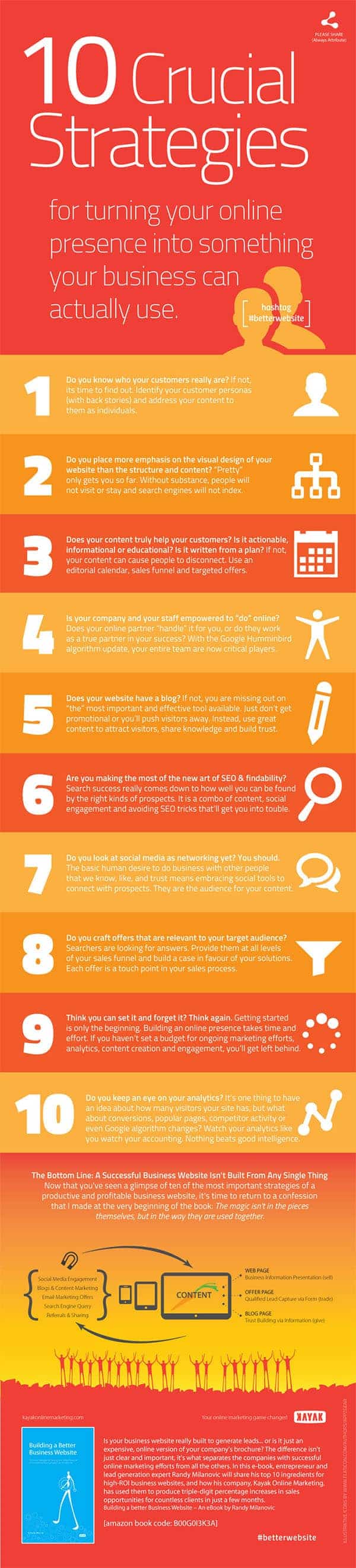
KAYAK Online Marketing share their guide to a more successful website in this infographic.
They include the following questions you should answer:
- Do you know who your customers are?
- Do you place too much emphasis on visual design?
- Does your content help your customers?
- Is your company and staff empowered to “do” online?
- Does your website have a blog?
- Are you making the most of SEO?
- Do you look at social media as networking?
- Do you craft offers that are relevant to your target audience?
- Think you can set it and forget it?
- Do you keep an eye on your analytics?
Check out the infographic for more detail.
In today’s digital age, having a successful website is crucial for any small business.
Your website serves as the first impression for potential customers, a platform for information, and a means for driving sales. However, many small business owners struggle to maximize the effectiveness of their websites.
This blog post outlines ten essential steps to help you create a more successful small business website.
Do You Know Who Your Customers Are?
Understanding your customers is crucial for any small business aiming to succeed online. Knowing who your customers are allows you to tailor your products, services, and marketing strategies to meet their specific needs and preferences.
This section will delve deeper into methods and strategies to identify and understand your customer base effectively.
Why Knowing Your Customers Matters
Knowing your customers isn’t just about demographics; it’s about grasping their motivations, challenges, and buying behaviors. This knowledge informs your business decisions, from product development to marketing strategies. It enables you to:
- Create Targeted Marketing Campaigns: Tailored messages resonate more with your audience, improving engagement and conversion rates.
- Enhance Customer Experience: Understanding customer pain points allows you to enhance user experience on your website and in your offerings.
- Increase Customer Loyalty: When customers feel understood and valued, they are more likely to become repeat buyers and brand advocates.
Conduct Market Research
Market research is the first step to understanding your customers. This process involves collecting data about your target audience, industry trends, and competitor strategies. Here are some methods to conduct effective market research:
- Surveys and Questionnaires: Create online surveys using tools like SurveyMonkey or Google Forms to gather information about customer preferences, behaviors, and demographics. Offer incentives to encourage participation.
- Interviews and Focus Groups: Conduct one-on-one interviews or focus group discussions with existing customers to gather qualitative insights. This allows for deeper understanding and can reveal insights that surveys might miss.
- Industry Reports and Studies: Utilize reports from industry associations, market research firms, and academic studies to gain insights into consumer behavior and market trends.
Develop Customer Personas
Creating customer personas is a powerful way to synthesize your research findings into actionable insights. A customer persona is a semi-fictional representation of your ideal customer based on market research and real data.
- Identify Key Attributes: Include details such as age, gender, location, income level, occupation, interests, pain points, and purchasing behavior.
- Create Multiple Personas: Depending on your customer segments, you might need to develop several personas to represent different audience types.
- Visual Representation: Use tools like Canva or HubSpot’s Make My Persona to create visually appealing persona profiles that your team can reference.
Analyze Your Existing Customers
Your existing customers hold a wealth of information that can help you understand who your ideal customers are.
- Customer Data Analysis: Use your CRM (Customer Relationship Management) system to analyze customer demographics, purchase history, and engagement levels. Look for trends that can inform your marketing strategies.
- Identify Top Customers: Recognize your most loyal and profitable customers. Analyze their characteristics and behaviors to identify common traits that may define your ideal customer.
- Feedback and Reviews: Pay attention to customer feedback, reviews, and testimonials. They can provide insights into what your customers value most about your products or services.
Monitor Competitors
Analyzing your competitors can provide valuable insights into your target market.
- Competitor Research: Examine your competitors’ websites, social media, and marketing materials to understand who they are targeting and how they engage their audience.
- Identify Gaps: Look for gaps in the market that your competitors may not be addressing. This can help you identify potential customer segments that you can target.
Utilize Analytics Tools
Utilizing analytics tools can provide real-time insights into your customers’ behavior on your website and social media platforms.
- Google Analytics: This tool helps you track visitor demographics, interests, and behavior patterns on your website. Use it to identify which pages are most visited and where users drop off.
- Social Media Insights: Platforms like Facebook, Instagram, and LinkedIn offer analytics that provides information on your followers’ demographics and engagement levels. Use this data to refine your audience targeting.
Engage with Your Audience
Building a connection with your audience can provide ongoing insights into their needs and preferences.
- Social Media Engagement: Actively engage with your audience on social media. Respond to comments, conduct polls, and ask questions to gain insights into their preferences.
- Community Building: Create a community around your brand through online forums, Facebook groups, or events. This allows customers to interact with each other and share their experiences, providing you with valuable feedback.
Continuously Update Your Customer Knowledge
Understanding your customers is an ongoing process. Market dynamics and customer preferences can change over time, so it’s essential to regularly update your customer knowledge.
- Regular Surveys: Conduct regular customer surveys to gauge satisfaction and preferences over time. This can help you stay ahead of shifts in your audience’s needs.
- Stay Informed: Keep up with industry trends and consumer behavior research to adapt your strategies accordingly.
Conclusion
Knowing who your customers are is fundamental to creating a successful small business website.
By conducting thorough market research, developing customer personas, analyzing existing customer data, monitoring competitors, utilizing analytics tools, engaging with your audience, and continuously updating your knowledge, you can create a more tailored online experience.
This targeted approach not only enhances customer satisfaction but also drives conversions, ultimately contributing to the long-term success of your business.
Do You Place Too Much Emphasis on Visual Design?
While it’s important to have a visually appealing website, overemphasizing design at the expense of functionality can lead to a poor user experience and deter potential customers.
This section will explore the balance between aesthetics and usability, providing in-depth tips and guidance for small businesses to ensure their website design effectively supports their business goals.
The Importance of Balanced Design
A well-designed website can capture attention, establish credibility, and facilitate user engagement. However, if design choices compromise usability, speed, or content accessibility, the negative impact can outweigh any aesthetic benefits. The key is to create a harmonious balance between visual appeal and practical functionality.
Prioritize User Experience (UX)
User experience should be at the forefront of your website design strategy. A good UX design means creating a site that is intuitive, easy to navigate, and meets users’ needs.
- Simplified Navigation: Ensure that your website has a clear, logical structure. Use straightforward menus and labels to help visitors find information quickly. Consider using a hierarchical structure where the most important pages are easily accessible.
- Mobile Optimization: With the growing number of mobile users, ensure your website is responsive and provides a seamless experience across all devices. Use flexible layouts, scalable images, and mobile-friendly menus.
- Loading Speed: Optimize images and minimize heavy elements that can slow down your website. Tools like Google PageSpeed Insights can help identify areas for improvement. A faster website improves user experience and SEO rankings.
Create a Visual Hierarchy
Effective visual design employs a hierarchy that guides visitors’ attention to key information.
- Use Contrast Wisely: Utilize color contrast to draw attention to important elements like call-to-action (CTA) buttons or essential messages. High contrast between text and background improves readability.
- Utilize Size and Spacing: Make important elements larger and ensure adequate spacing between items. This helps users differentiate between primary and secondary content, improving focus and comprehension.
- Consistent Styling: Maintain consistency in fonts, colors, and layout throughout your website. This builds a coherent brand image and aids user navigation.
Focus on Content Readability
While design is important, the content on your website should always take precedence. If users can’t read or understand your content, they are less likely to engage with your site.
- Choose Readable Fonts: Opt for clean, legible fonts that are easy to read across devices. Generally, sans-serif fonts are considered more readable for digital content.
- Limit Text Length: Break up large blocks of text with headings, bullet points, and visuals to make content more digestible. Aim for concise, clear language that communicates your message effectively.
- Utilize Visuals Strategically: While images and graphics enhance engagement, avoid cluttering pages with too many visuals. Use relevant images that support your content and provide context.
Employ Effective Calls to Action (CTAs)
CTAs are essential for guiding users toward desired actions, such as signing up for a newsletter or making a purchase. The design of your CTAs should align with usability principles.
- Stand Out but Fit In: Your CTAs should be visually distinct yet cohesive with your overall design. Use contrasting colors to make them stand out, but keep the style consistent with your brand.
- Clear Action Language: Use clear, action-oriented language in your CTA buttons (e.g., “Get Started,” “Sign Up Now”). Avoid vague terms that might confuse users.
- Strategic Placement: Position CTAs where users naturally look (e.g., at the end of articles or near relevant content). A/B testing can help you determine the most effective placements.
Use High-Quality Visuals
Visual elements can enhance user experience and strengthen your brand identity. However, using visuals carelessly can detract from your site’s functionality.
- Invest in Professional Imagery: Avoid low-quality stock photos that can make your brand appear unprofessional. Instead, use high-resolution images that reflect your brand’s values and personality.
- Relevance is Key: Ensure that every visual element serves a purpose. Images should complement your content and enhance the user experience without overwhelming it.
- Optimize for Performance: Compress images and use appropriate file formats (e.g., JPEG for photos, PNG for graphics) to maintain quality while ensuring fast loading times.
Conduct Usability Testing
Regular usability testing can help you identify pain points and areas for improvement within your design.
- User Feedback: Gather feedback from real users as they navigate your site. Observe their interactions, note where they encounter difficulties, and adjust accordingly.
- Heatmaps and Analytics: Use tools like Hotjar or Crazy Egg to visualize how users interact with your site. Heatmaps can show where users click, scroll, and spend time, helping you optimize layout and design.
Stay Updated on Design Trends
While it’s crucial to maintain a unique brand identity, staying informed about design trends can help you keep your website relevant and appealing.
- Follow Industry Leaders: Subscribe to design blogs, attend webinars, and engage with online communities to stay abreast of the latest trends and best practices.
- Evaluate Trends Critically: Not every trend will suit your brand or audience. Assess whether a trend aligns with your goals and values before incorporating it into your design.
Iterate Based on Feedback
Design is not a one-time task; it requires continuous improvement based on user feedback and changing market trends.
- Regular Reviews: Schedule periodic reviews of your website’s design and functionality. Gather insights from user feedback, analytics, and industry trends to identify areas for improvement.
- Embrace Flexibility: Be willing to adapt and refine your design based on what works best for your users. A/B testing different layouts, colors, and content strategies can lead to better engagement and conversions.
Conclusion
While visual design is an important aspect of your website, it should never overshadow usability and functionality.
By prioritizing user experience, creating a clear visual hierarchy, focusing on content readability, and ensuring effective calls to action, small businesses can create a website that not only looks great but also effectively meets their customers’ needs.
Regularly testing, gathering feedback, and staying informed about industry trends will help ensure that your website remains relevant and successful in the long run. Ultimately, the goal is to create a website that serves as an effective tool for achieving your business objectives while providing an enjoyable experience for your customers.
Does Your Content Help Your Customers?
Creating valuable content is essential for any small business looking to build relationships with customers and drive sales. Content that genuinely helps your customers addresses their needs, answers their questions, and provides solutions to their problems.
This section will explore how small businesses can develop customer-centric content, ensuring that their efforts resonate with their audience and support their overall business objectives.
The Role of Content in Customer Engagement
Effective content serves multiple purposes:
- Educates Your Audience: Informative content helps customers understand your products or services, industry trends, and solutions to common challenges.
- Builds Trust and Credibility: High-quality content establishes your brand as an authority in your field, fostering trust among your audience.
- Drives Traffic and Conversions: Engaging content can attract visitors to your website, keep them engaged, and guide them toward making a purchase.
To maximize the effectiveness of your content, follow these in-depth tips and strategies.
Understand Your Audience’s Needs
Before creating content, it’s vital to understand your audience’s specific needs and pain points.
- Conduct Customer Research: Use surveys, interviews, and social media insights to gather data on your customers’ preferences and challenges. This information will inform your content creation process.
- Create Customer Personas: Develop detailed customer personas that represent different segments of your audience. Include demographics, interests, and pain points to guide your content strategy.
- Analyze Competitor Content: Review your competitors’ content to identify gaps in their offerings. This can help you pinpoint opportunities to provide more valuable information to your audience.
Focus on Value-Driven Content
Content should be designed to provide real value to your customers. Consider these approaches:
- Educational Resources: Create how-to guides, tutorials, and explainer videos that help customers better understand your products or services. Aim to answer common questions or concerns.
- Problem-Solving Articles: Write blog posts that address specific challenges your audience faces, providing actionable solutions. This positions your brand as a helpful resource.
- Case Studies and Testimonials: Share success stories and customer testimonials that illustrate how your products or services have made a positive impact. This builds credibility and trust.
Optimize for Search Engines (SEO)
Effective content is not just valuable; it should also be discoverable. Optimizing your content for search engines can increase visibility and drive organic traffic.
- Keyword Research: Identify relevant keywords that your target audience is searching for. Use tools like Google Keyword Planner or SEMrush to find terms that align with your content topics.
- On-Page SEO: Optimize your content with appropriate keywords, meta tags, and headers. Ensure that your content is well-structured and easy to read, with a clear hierarchy of information.
- Internal and External Linking: Use internal links to guide visitors to related content on your site, and external links to reputable sources. This enhances your content’s credibility and helps improve SEO rankings.
Create Engaging Formats
Different content formats can cater to varied preferences among your audience. Consider diversifying your content types:
- Blogs: Written content allows for in-depth exploration of topics. Use a mix of informative articles, opinion pieces, and listicles to keep readers engaged.
- Videos: Video content is highly engaging and can convey information quickly. Create product demos, tutorials, or behind-the-scenes footage to connect with your audience visually.
- Infographics: Visual representations of information can simplify complex topics. Infographics are easily shareable and can enhance your content’s reach on social media.
- Podcasts: Audio content can reach audiences who prefer listening over reading. Consider starting a podcast to discuss industry trends, interview experts, or share customer stories.
Ensure Content is Up-to-Date
Providing outdated information can harm your credibility and frustrate your customers. Regularly review and update your content to keep it relevant.
- Content Audit: Conduct a content audit to evaluate the performance and accuracy of your existing content. Identify areas that need updates, improvements, or consolidation.
- Stay Informed: Keep up with industry trends and news to ensure your content reflects current knowledge and practices. Subscribe to relevant newsletters, blogs, and publications.
- Incorporate Feedback: Gather feedback from customers about your content. Use their insights to make improvements and address any gaps in information.
Use Clear and Concise Language
The language you use in your content should be accessible and easy to understand.
- Avoid Jargon: Use simple language that resonates with your audience. Avoid technical jargon or complex terms that may confuse readers.
- Be Direct: Get to the point quickly. Use clear headings and bullet points to break down information, making it easy for readers to skim.
- Include a Call to Action (CTA): Encourage your audience to take specific actions after engaging with your content. Whether it’s signing up for a newsletter, downloading a resource, or making a purchase, a clear CTA guides their next steps.
Foster Community and Interaction
Encouraging customer interaction with your content can enhance engagement and build a loyal community.
- Encourage Comments and Questions: Allow readers to comment on your blog posts or videos. Respond promptly to their questions and feedback to foster a sense of community.
- Utilize Social Media: Share your content on social media and encourage discussions. Create polls, ask questions, and engage with followers to build a stronger connection.
- Create User-Generated Content Opportunities: Encourage customers to share their experiences with your products or services. Showcase user-generated content on your website and social media to build trust and engagement.
- Measure and Analyze Content Performance
Regularly assess the performance of your content to determine its effectiveness and identify areas for improvement.
- Use Analytics Tools: Tools like Google Analytics can provide insights into website traffic, user behavior, and engagement metrics. Monitor key performance indicators (KPIs) such as page views, bounce rates, and conversion rates.
- Evaluate Engagement: Track social media shares, comments, and likes to gauge how well your content resonates with your audience. Identify the types of content that generate the most engagement and adapt your strategy accordingly.
- A/B Testing: Experiment with different content formats, headlines, and CTAs to see which versions perform better. A/B testing can help you optimize future content for maximum effectiveness.
Conclusion
Creating content that genuinely helps your customers is essential for building trust, driving engagement, and ultimately increasing sales.
By understanding your audience’s needs, focusing on value-driven content, optimizing for search engines, and utilizing various formats, small businesses can develop a content strategy that resonates with their target market.
Regularly measuring and analyzing content performance ensures continuous improvement and relevance in an ever-evolving digital landscape. When done right, customer-centric content not only supports business goals but also fosters a loyal community of satisfied customers.
Is Your Company and Staff Empowered to “Do” Online?
In the digital age, a company’s online presence hinges not just on its website but also on the collective actions and initiatives of its staff. Empowering employees to actively participate in online engagement can lead to increased brand awareness, enhanced customer relationships, and ultimately, business growth.
This section delves into strategies that small businesses can implement to empower their teams and optimize their online presence effectively.
The Importance of Empowerment in Online Engagement
Empowering your staff to “do” online involves giving them the tools, knowledge, and authority to represent the company in the digital space. This engagement can take many forms, including social media interactions, content creation, customer service, and community building. Here’s why it matters:
- Authenticity: Employees often represent the brand’s voice more authentically than scripted corporate messages. Empowered staff can share genuine experiences and insights, making the brand relatable and trustworthy.
- Innovation: When employees feel empowered, they’re more likely to contribute innovative ideas for online engagement and marketing strategies. This fosters a culture of creativity that can set your brand apart.
- Customer Relationships: Employees who engage with customers online can build stronger relationships, address concerns promptly, and enhance customer satisfaction.
To harness the power of your staff in the online arena, consider the following strategies:
Provide Training and Resources
Education is key to empowering your team. Investing in training ensures that your employees feel confident in their online interactions.
- Social Media Training: Offer workshops or online courses that cover the basics of social media marketing, brand voice, and engagement strategies. Ensure your team understands the different platforms and how to use them effectively.
- Content Creation Workshops: Train employees on creating valuable content, whether it’s writing blogs, producing videos, or designing infographics. Provide guidelines on your brand’s messaging and style to ensure consistency.
- Customer Service Training: Equip your staff with the skills to handle online customer inquiries, complaints, and feedback effectively. Role-playing exercises can help them practice responding to various scenarios.
Foster a Culture of Open Communication
A culture of open communication allows employees to share ideas, voice concerns, and collaborate on online initiatives.
- Regular Meetings: Hold regular team meetings to discuss online strategies, share successes, and address challenges. Encourage all team members to contribute their thoughts and suggestions.
- Feedback Mechanism: Implement a system for employees to provide feedback on online initiatives. This could include surveys, suggestion boxes, or open forums where they can share ideas for improvement.
- Cross-Department Collaboration: Encourage collaboration between departments. For example, the marketing team can work with customer service representatives to understand common customer questions, which can inform content creation.
Empower with Technology
Providing the right tools and technology can streamline online engagement and enable your team to execute their roles effectively.
- Social Media Management Tools: Invest in tools like Hootsuite or Buffer that allow employees to schedule posts, monitor engagement, and analyze performance. This can make social media management more efficient.
- Content Management Systems (CMS): Use user-friendly CMS platforms that allow employees to contribute content easily. Ensure that team members have access to create and edit content without requiring constant oversight.
- Collaboration Tools: Utilize collaboration tools like Slack, Trello, or Asana to facilitate communication and project management. These platforms can help teams coordinate their online initiatives seamlessly.
Define Roles and Responsibilities
Clear roles and responsibilities are crucial for ensuring that everyone knows their part in the online strategy.
- Assign Online Champions: Designate team members as “online champions” who take the lead on various online initiatives. This could include social media managers, content creators, or customer engagement specialists.
- Set Clear Objectives: Establish specific goals for each role in your online strategy. For instance, set targets for social media engagement, content publication frequency, or customer response times.
- Encourage Ownership: Empower employees to take ownership of their roles in the online space. Encourage them to develop their own strategies and report on their successes and challenges.
Celebrate Success and Encourage Experimentation
Recognizing achievements can motivate your team to continue engaging online. Creating an environment that encourages experimentation can also lead to innovative strategies.
- Recognize Contributions: Celebrate individual and team successes in online engagement. This could be through shout-outs in meetings, company newsletters, or social media posts.
- Encourage Experimentation: Allow employees to try new approaches to online engagement. Whether it’s experimenting with different types of content or trying out new social media platforms, encourage them to learn from their experiences.
- Learn from Failures: Emphasize that not every initiative will succeed. Create a safe environment for discussing failures and extracting lessons that can lead to future successes.
Leverage Employee Advocacy
Encouraging employees to advocate for your brand online can amplify your reach and enhance authenticity.
- Create an Employee Advocacy Program: Develop a structured program that encourages employees to share company content, events, and their experiences on social media. Provide guidelines on how to represent the brand positively.
- Offer Incentives: Consider implementing an incentive program for employees who actively engage in online advocacy. This could include rewards for reaching engagement milestones or bonuses for generating leads.
- Highlight Employee Contributions: Share and celebrate employee-generated content on your company’s official channels. This not only recognizes their efforts but also humanizes your brand.
Monitor and Evaluate Engagement
To ensure your empowerment efforts are effective, monitor engagement and evaluate the outcomes.
- Track Performance Metrics: Use analytics tools to measure the impact of employee-driven online initiatives. Monitor metrics such as engagement rates, reach, and conversions to assess effectiveness.
- Solicit Feedback: Regularly seek feedback from employees on the empowerment initiatives. Ask what’s working, what isn’t, and how the process can be improved.
- Adjust Strategies Accordingly: Use the insights gained from monitoring and feedback to refine your empowerment strategies. Adapt training, tools, and processes based on what proves to be most effective.
Conclusion
Empowering your company and staff to actively engage online is essential for creating a strong digital presence.
By providing training, fostering open communication, leveraging technology, and recognizing contributions, small businesses can cultivate a team that feels confident and motivated to represent the brand authentically.
When employees are empowered to “do” online, the result is not just increased engagement but also deeper customer relationships and a stronger overall brand identity. By investing in your team’s online capabilities, you position your small business for lasting success in the digital landscape.
Does Your Website Have a Blog?
In today’s digital landscape, a blog is more than just a space for sharing thoughts; it’s a powerful tool for small businesses to connect with their audience, enhance their online presence, and drive sales.
A well-maintained blog can position your business as an authority in your industry, improve search engine visibility, and foster relationships with potential customers.
Here’s a comprehensive look at why your website should have a blog and how to effectively manage one.
The Benefits of Having a Blog
- Enhanced SEO and Visibility
Blogging significantly contributes to search engine optimization (SEO). Regularly updated content signals to search engines that your website is active and relevant, helping to improve your rankings.- Keyword Optimization: Use relevant keywords in your blog posts to attract organic traffic. Research tools like Google Keyword Planner or SEMrush can help identify high-traffic keywords in your niche.
- Internal Linking: Blogs provide opportunities for internal linking, which helps search engines understand your website’s structure and improves navigation for users.
- Fresh Content: Regularly adding blog posts keeps your site dynamic, encouraging search engines to crawl your website more frequently.
- Establishing Authority and Credibility
A blog enables you to share your expertise, insights, and industry knowledge, helping to establish your authority in your field.- Educational Content: Create informative articles that address common questions or challenges faced by your audience. This positions your business as a trusted resource.
- Case Studies and Testimonials: Share success stories or case studies that demonstrate how your products or services have benefited customers. This builds credibility and trust.
- Engaging with Your Audience
Blogs provide an avenue for two-way communication with your audience, allowing you to engage and build relationships.- Comments Section: Encourage readers to leave comments and questions. Responding to these can foster a sense of community and keep your audience engaged.
- Social Sharing: Blogs are highly shareable content. Include social sharing buttons to encourage readers to share your posts on their networks, expanding your reach.
- Lead Generation and Conversion
A blog can drive traffic to your website and convert visitors into leads or customers.- Call to Action (CTA): Incorporate clear CTAs in your blog posts, guiding readers toward the next step, whether that’s signing up for a newsletter, downloading a resource, or making a purchase.
- Lead Magnets: Offer valuable resources such as eBooks, checklists, or templates in exchange for visitors’ contact information.
How to Start and Maintain a Blog
- Define Your Goals and Audience
Before launching your blog, it’s essential to clarify your goals and understand your target audience.- Identify Your Objectives: Are you looking to increase brand awareness, generate leads, or drive sales? Setting clear objectives will guide your content strategy.
- Understand Your Audience: Create buyer personas to identify who your ideal customers are, their pain points, and what type of content they value. This will inform your blog topics and tone.
- Choose the Right Platform
Selecting a user-friendly blogging platform is crucial for managing your content effectively.- WordPress: One of the most popular platforms for blogging, WordPress offers a variety of themes and plugins that can enhance your blog’s functionality.
- Other Options: Consider other platforms like Wix, Squarespace, or Medium, depending on your specific needs and technical expertise.
- Create a Content Strategy
A well-planned content strategy ensures consistency and relevance in your blogging efforts.- Content Calendar: Develop a content calendar to plan your blog topics, posting frequency, and deadlines. This helps keep your blogging organized and on track.
- Diverse Content Types: Mix different content formats to keep your blog engaging. Consider articles, videos, infographics, and podcasts to appeal to various audience preferences.
- SEO Planning: Incorporate SEO best practices in your content strategy, focusing on keyword research, meta descriptions, and on-page optimization.
- Write Quality Content
Quality content is key to attracting and retaining readers.- Be Authentic: Write in your voice and provide genuine insights. Authenticity resonates with readers and builds trust.
- Provide Value: Ensure your posts answer questions, solve problems, or provide useful information. Aim to create content that your audience finds valuable.
- Edit and Proofread: Take the time to review your posts for grammar, clarity, and coherence. Well-edited content enhances professionalism.
- Promote Your Blog
Creating great content is only half the battle; promoting it effectively is equally important.- Social Media: Share your blog posts across your social media platforms to reach a broader audience. Tailor your message to fit each platform’s audience.
- Email Marketing: Include links to your latest blog posts in your email newsletters. This helps drive traffic from your existing subscribers.
- Guest Blogging: Collaborate with other bloggers in your industry by writing guest posts for their websites. This can introduce your brand to new audiences.
- Engage and Interact
Engagement is vital for building a loyal readership.- Respond to Comments: Actively engage with readers who comment on your blog posts. Thank them for their contributions and address any questions or feedback.
- Encourage Discussion: Pose questions at the end of your posts to encourage readers to share their thoughts and experiences.
- Analyze and Optimize
Regularly analyze your blog’s performance to understand what works and what doesn’t.- Google Analytics: Use Google Analytics to track metrics such as traffic, bounce rates, and user behavior. This data provides insights into your audience’s preferences and helps inform future content.
- Adjust Strategies: Based on your analytics, refine your content strategy. Focus more on topics that resonate with your audience and adjust your promotion tactics as needed.
Conclusion
Incorporating a blog into your small business website is an invaluable strategy for enhancing online presence, establishing authority, and fostering customer relationships.
By defining your goals, creating valuable content, promoting your posts, and engaging with your audience, you can leverage the power of blogging to drive traffic and conversions. A well-maintained blog not only enhances your website’s SEO but also positions your business as a trusted resource in your industry, ultimately contributing to your long-term success.
Investing time and resources into your blog will pay off, helping you connect with customers and achieve your business objectives.
Are You Making the Most of SEO?
Search Engine Optimization (SEO) is a crucial aspect of digital marketing that can significantly impact the visibility and success of your small business website. By optimizing your site for search engines, you can increase organic traffic, enhance user experience, and ultimately drive more conversions.
Here’s an in-depth guide on how small businesses can effectively leverage SEO to improve their online presence.
Understanding SEO
SEO encompasses various strategies and techniques aimed at improving your website’s rankings in search engine results pages (SERPs). This process involves both on-page and off-page optimization, targeting both technical and content-related aspects to ensure search engines understand and value your site.
The Importance of SEO for Small Businesses
- Increased Visibility
With millions of websites competing for attention, SEO helps your business stand out. A higher ranking on SERPs increases the likelihood of users clicking on your site, leading to more traffic. - Cost-Effective Marketing
Compared to traditional advertising methods, SEO offers a more cost-effective solution for small businesses. Organic search traffic can yield a higher return on investment (ROI) since it targets users actively searching for your products or services. - Enhanced User Experience
SEO isn’t just about search engines; it’s also about creating a better experience for users. Well-optimized websites load faster, are easier to navigate, and provide relevant content, which can lead to higher engagement and conversions. - Credibility and Trust
Websites that rank higher in search results are often perceived as more credible and trustworthy. By improving your SEO, you enhance your brand’s reputation and authority in your industry.
Essential SEO Strategies for Small Businesses
- Conduct Keyword Research
Keywords are the foundation of SEO. Identifying the right keywords that your target audience uses when searching for products or services is critical.- Use Tools: Utilize keyword research tools like Google Keyword Planner, Ahrefs, or SEMrush to find relevant keywords and phrases with a good balance of search volume and competition.
- Long-Tail Keywords: Focus on long-tail keywords, which are typically more specific and have lower competition. These keywords can attract highly targeted traffic, leading to better conversion rates.
- Optimize On-Page Elements
On-page SEO refers to optimizing individual web pages to rank higher and earn more relevant traffic.- Title Tags: Create unique and descriptive title tags for each page, incorporating your primary keywords. Keep them under 60 characters to ensure they display correctly in SERPs.
- Meta Descriptions: Write compelling meta descriptions that summarize your page content and include keywords. Aim for around 150-160 characters to maximize visibility.
- Header Tags: Use header tags (H1, H2, H3) to structure your content effectively. Your H1 tag should include your main keyword, and subsequent headers can help organize your content for better readability.
- Content Optimization: Ensure your content is high-quality, informative, and relevant to your audience. Include keywords naturally, avoiding keyword stuffing. Aim for a mix of text, images, and videos to enhance user engagement.
- Image Optimization: Optimize images by using descriptive file names and alt tags. This improves accessibility and helps search engines understand the content of your images.
- Improve Technical SEO
Technical SEO involves optimizing the infrastructure of your website to help search engines crawl and index it more effectively.- Mobile-Friendliness: Ensure your website is responsive and performs well on mobile devices. Google prioritizes mobile-friendly sites in its rankings.
- Site Speed: Optimize your website’s loading speed. Tools like Google PageSpeed Insights can help identify areas for improvement. Compress images, leverage browser caching, and minimize code where possible.
- Secure Your Website: Use HTTPS to secure your site, as Google considers security a ranking factor. SSL certificates encrypt data, enhancing user trust.
- XML Sitemap: Create and submit an XML sitemap to search engines to help them understand your site structure and find all your pages.
- Robots.txt File: Use a robots.txt file to guide search engines on which pages to crawl and which to avoid, ensuring that important content is indexed.
- Build High-Quality Backlinks
Off-page SEO focuses on improving your site’s authority through backlinks—links from other websites to yours.- Guest Blogging: Write guest posts for reputable blogs in your industry. This not only builds backlinks but also exposes your brand to new audiences.
- Local Partnerships: Collaborate with other local businesses or organizations to create mutually beneficial content that includes links back to your website.
- Content Promotion: Create valuable, shareable content (such as infographics or in-depth guides) that others are likely to link to, increasing your backlink profile naturally.
- Monitor Backlinks: Use tools like Ahrefs or Moz to track your backlinks. Aim to disavow low-quality links that could harm your SEO efforts.
- Leverage Local SEO
For small businesses, local SEO is essential for attracting customers in your area.- Google My Business: Set up and optimize your Google My Business (GMB) profile. Ensure your business name, address, phone number (NAP), and website URL are accurate.
- Local Keywords: Incorporate local keywords into your content and metadata. For example, use phrases like “best coffee shop in [your city]” to attract local customers.
- Online Reviews: Encourage satisfied customers to leave positive reviews on your GMB listing and other review platforms. Responding to reviews, both positive and negative, demonstrates good customer service and can improve local rankings.
- Monitor and Analyze Your SEO Efforts
Regularly tracking and analyzing your SEO performance is crucial for understanding what works and what needs improvement.- Google Analytics: Use Google Analytics to monitor traffic, user behavior, and conversion rates. Pay attention to which pages attract the most visitors and how users interact with your content.
- Google Search Console: This tool helps you track your website’s search performance, identify indexing issues, and understand which keywords are driving traffic.
- Adjust Strategies: Based on your analytics, refine your SEO strategies. Experiment with different keywords, content types, and promotional tactics to optimize your results continually.
Conclusion
SEO is an ongoing process that requires dedication and regular updates to keep up with search engine algorithms and user behavior. For small businesses, mastering SEO can significantly enhance online visibility, attract targeted traffic, and increase conversions.
By conducting thorough keyword research, optimizing on-page and technical elements, building high-quality backlinks, leveraging local SEO, and continuously monitoring your performance, you can ensure that your website stands out in a crowded digital marketplace.
Investing time and resources into your SEO efforts will pay off in the long run, leading to greater success for your small business.
Do You Look at Social Media as Networking?
In today’s digital age, social media is not just a platform for posting updates; it’s a powerful networking tool that can significantly enhance your small business’s visibility, customer engagement, and relationship-building efforts.
By viewing social media through the lens of networking, small businesses can leverage these platforms to create meaningful connections that lead to growth and success.
Here’s a comprehensive guide on how small businesses can effectively use social media as a networking tool.
Understanding Social Media as Networking
Social media networking involves building relationships with potential customers, partners, and industry peers through various social platforms. It’s about engaging in conversations, sharing valuable content, and creating a community around your brand. Unlike traditional networking, which often takes place at events or meetings, social media allows for continuous interaction and relationship-building.
The Benefits of Treating Social Media as Networking
- Increased Brand Awareness
Social media platforms provide an opportunity to reach a broader audience. By actively engaging with your followers and participating in relevant conversations, you can increase your brand’s visibility and establish yourself as a trusted authority in your industry. - Enhanced Customer Engagement
Social media allows for real-time communication with your audience. This immediacy fosters a sense of community and loyalty, as customers feel more connected to your brand when they can interact directly with you. - Access to Industry Insights
Networking on social media gives you access to valuable insights from peers and competitors. By following industry leaders and engaging in discussions, you can stay informed about trends, challenges, and opportunities within your market. - Potential Collaborations
Building relationships on social media can lead to partnerships with other businesses or influencers. Collaborations can expand your reach and introduce your brand to new audiences. - Opportunities for Lead Generation
By establishing connections on social media, you can identify potential leads and nurture them through targeted content and interactions, ultimately converting them into customers.
Strategies for Effective Social Media Networking
- Choose the Right Platforms
Not all social media platforms are suitable for every business. Identify where your target audience spends their time and focus your efforts on those platforms. For example, LinkedIn is ideal for B2B networking, while Instagram and Facebook may be better suited for B2C engagement. - Optimize Your Profiles
Ensure that your social media profiles are complete and professional. Use consistent branding, including your logo and company colors, and write compelling bios that clearly communicate your value proposition. Include links to your website and relevant content to drive traffic. - Create Valuable Content
Share content that is informative, entertaining, and relevant to your audience. This could include blog posts, videos, infographics, and industry news. High-quality content positions you as an expert in your field and encourages engagement and sharing. - Engage Authentically
Networking is all about building relationships. Respond to comments, ask questions, and engage with your audience genuinely. Show appreciation for shares and comments, and participate in discussions to foster a sense of community. - Join Relevant Groups and Communities
Participate in industry-related groups on platforms like Facebook and LinkedIn. These communities provide opportunities to share insights, ask for advice, and connect with like-minded individuals. Be an active member by contributing value to discussions without overtly promoting your business. - Leverage Hashtags and Keywords
Use relevant hashtags to increase the visibility of your posts. This helps you reach a broader audience and connect with users interested in similar topics. Research trending hashtags in your industry and incorporate them strategically in your posts. - Collaborate with Influencers and Peers
Identify influencers or peers in your industry who share similar values and audiences. Reach out for potential collaborations, such as guest posts, webinars, or social media takeovers. These partnerships can introduce your brand to new audiences and enhance your credibility. - Utilize Direct Messaging
Don’t shy away from using direct messaging (DM) to connect with potential leads or collaborators. A personalized message can go a long way in building rapport. Be respectful of their time, and keep your messages concise and relevant. - Monitor and Measure Your Efforts
Use analytics tools provided by social media platforms to monitor your engagement rates, follower growth, and content performance. Analyzing this data will help you understand what resonates with your audience and allow you to adjust your strategies accordingly. - Be Consistent
Consistency is key to effective networking. Regularly post updates, engage with followers, and participate in discussions. This consistency helps keep your brand top-of-mind and fosters trust among your audience.
Common Mistakes to Avoid
- Being Too Sales-Oriented
While promoting your products or services is essential, overly sales-focused messaging can turn off potential connections. Focus on providing value and building relationships first. - Ignoring Engagement
Social media is a two-way street. Failing to respond to comments or messages can make your audience feel undervalued. Make it a priority to engage with your followers regularly. - Lack of Strategy
Approaching social media without a clear plan can lead to inconsistent messaging and missed opportunities. Develop a social media strategy that outlines your goals, target audience, and content plan. - Neglecting Reputation Management
Monitor your brand’s online reputation. Address negative comments or reviews promptly and professionally to maintain trust and credibility with your audience.
Conclusion
Viewing social media as a networking tool can transform the way small businesses connect with customers, peers, and industry influencers. By actively engaging in conversations, sharing valuable content, and building meaningful relationships, small businesses can enhance their visibility, foster loyalty, and create a thriving online community.
Implementing the strategies outlined above will help you leverage social media effectively, turning it into a powerful platform for networking and business growth.
Do You Craft Offers That Are Relevant to Your Target Audience?
Crafting relevant offers is a critical component of successful marketing for small businesses. A well-targeted offer can attract new customers, encourage repeat business, and strengthen customer loyalty. In a world inundated with choices, a personalized and relevant offer stands out and resonates with your audience.
Here’s a comprehensive guide on how to create compelling offers that are tailored to the needs and preferences of your target audience.
Understanding the Importance of Relevant Offers
- Increased Engagement
Relevant offers speak directly to your audience’s needs and desires, which increases the likelihood of engagement. When customers see that you understand their pain points, they are more likely to respond positively to your offer. - Improved Conversion Rates
Targeted offers tend to convert better than generic promotions. By aligning your offers with your audience’s interests, you can significantly enhance the chances of turning leads into customers. - Enhanced Customer Loyalty
When customers receive offers that cater to their preferences, they feel valued and understood. This positive experience can lead to increased loyalty and repeat business, as customers are more likely to return to a brand that recognizes their needs. - Better Return on Investment (ROI)
Investing in offers that resonate with your audience can yield a higher ROI. Targeted promotions reduce wasted resources on campaigns that don’t align with your audience, allowing for a more efficient marketing budget.
Steps to Craft Relevant Offers
- Understand Your Audience
To create relevant offers, you first need to understand who your audience is. Conduct market research to gather insights into their demographics, interests, behaviors, and pain points. Utilize surveys, interviews, and social media analytics to gain a comprehensive understanding of your target market. - Segment Your Audience
Not all customers are the same; therefore, segmenting your audience is essential. Divide your customer base into groups based on shared characteristics, such as age, location, buying behavior, and preferences. This segmentation allows you to tailor your offers more precisely. - Identify Customer Pain Points
Understanding your customers’ challenges is crucial for crafting relevant offers. Identify the problems they face and how your products or services can solve these issues. Highlighting solutions in your offers shows customers that you genuinely care about their needs. - Create Value-Driven Offers
Your offers should provide real value to your customers. Consider what benefits they will gain from your promotion. Whether it’s a discount, a free trial, a bundled package, or exclusive access to content, make sure the offer aligns with what your audience finds valuable. - Leverage Customer Feedback
Customer feedback is a goldmine for understanding what resonates with your audience. Use surveys, online reviews, and social media interactions to gather insights about their preferences. This feedback can inform your future offers and help you refine your approach. - Use Personalized Marketing Techniques
Personalization enhances relevance. Use data from customer interactions to tailor your offers. For example, if a customer frequently purchases a specific type of product, create a special offer related to that product category. Personalized emails, product recommendations, and targeted ads can greatly improve engagement. - Test and Optimize Your Offers
Regularly test different offers to determine what works best for your audience. Use A/B testing to compare different promotions and analyze customer responses. Continuously optimizing your offers based on data and feedback will lead to better results over time. - Leverage Seasonal and Trending Opportunities
Pay attention to seasonal trends and events that resonate with your audience. Craft offers that tie into holidays, special occasions, or trending topics relevant to your industry. Seasonal offers create a sense of urgency and can drive higher engagement. - Communicate Clearly and Effectively
How you communicate your offer is as important as the offer itself. Ensure that your messaging is clear, concise, and compelling. Highlight the benefits of the offer and include a strong call to action (CTA) that prompts customers to take action. - Follow Up After the Offer
After promoting your offer, follow up with your audience to gather insights and continue the conversation. Thank customers for their participation, ask for feedback, and encourage them to share their experiences. This follow-up strengthens the relationship and opens the door for future offers.
Examples of Relevant Offers
- Discounts and Promotions
Offering limited-time discounts on popular products can entice new customers and encourage existing ones to make additional purchases. Ensure the discount is meaningful and clearly communicated. - Loyalty Programs
Create a loyalty program that rewards repeat customers. Offering points for purchases, referrals, or social media engagement can foster long-term relationships and repeat business. - Free Trials or Samples
Allowing potential customers to try your product or service for free can be an effective way to introduce them to your offerings. This can lead to increased conversion rates as customers experience the value firsthand. - Educational Content
Craft offers that include access to exclusive educational content, such as webinars, e-books, or guides. This positions your brand as an authority while providing valuable information to your audience. - Bundles or Packages
Create bundles of complementary products or services at a discounted rate. This not only provides value but encourages customers to purchase more items than they might have initially considered.
Common Mistakes to Avoid
- Ignoring Customer Feedback
Failing to listen to customer feedback can result in missed opportunities for improvement. Regularly engage with your audience to understand their preferences and needs. - Overcomplicating Offers
Keep your offers simple and easy to understand. Complicated promotions can confuse customers and lead to lower engagement. - Neglecting Mobile Optimization
Ensure that your offers are accessible and optimized for mobile users. Many customers browse and shop on their smartphones, so a seamless mobile experience is crucial. - Forgetting to Follow Up
Don’t neglect the importance of follow-up communication. Engaging with customers post-offer can strengthen relationships and increase the likelihood of future interactions. - Setting and Forgetting
Just as with any marketing strategy, crafting offers shouldn’t be a one-time task. Regularly review and adjust your offers based on changing customer needs, market trends, and performance metrics.
Conclusion
Crafting relevant offers tailored to your target audience is a powerful way for small businesses to drive engagement, enhance conversion rates, and foster customer loyalty. By understanding your audience, segmenting your market, and utilizing feedback, you can create compelling offers that resonate with your customers.
Implement the strategies outlined above, and watch as your offers become a significant driver of your business’s success.
Think You Can Set It and Forget It?
In the fast-paced world of online business, the idea of “set it and forget it” can be tempting.
After investing time and resources into building a website, creating content, and launching marketing campaigns, it might seem appealing to kick back and let everything run on autopilot. However, this approach can be detrimental to your business. To ensure sustained success, continual monitoring and adjustments are essential.
Here’s an in-depth look at why ongoing management is crucial and how to effectively maintain your small business website.
Why Continuous Monitoring Matters
- Market Dynamics Change Rapidly
The business landscape is always evolving, influenced by factors like consumer behavior, industry trends, and technological advancements. What worked last year may not be effective today. Regularly assessing your website and strategies allows you to adapt to these changes. - User Experience is Key
User expectations evolve over time. Continuous monitoring helps you identify and address user experience issues, such as slow loading times, broken links, or outdated content. Ensuring a seamless experience keeps visitors engaged and encourages repeat visits. - Search Engine Algorithms Update
Search engines like Google frequently update their algorithms, which can affect your website’s ranking. Keeping your SEO practices up to date is essential to maintain visibility and attract organic traffic. Without regular optimization, you risk dropping in search rankings. - Content Needs Freshness
Stale content can harm your website’s reputation and engagement levels. Regularly updating your blog posts, product descriptions, and other content ensures that your website remains relevant and informative. Fresh content also encourages return visits. - Performance Analytics Provide Insights
Regularly reviewing analytics data can uncover valuable insights about user behavior, traffic sources, and conversion rates. This information allows you to make data-driven decisions, improving your website’s effectiveness and ROI.
Tips for Effective Ongoing Management
- Set Regular Review Intervals
Create a schedule for reviewing your website and marketing strategies. Monthly, quarterly, and annual check-ins can help you stay on track and ensure that your content and strategies remain relevant. - Monitor Website Performance
Utilize tools like Google Analytics, SEMrush, or Ahrefs to track your website’s performance. Pay attention to metrics such as traffic, bounce rate, session duration, and conversion rates. Analyzing these metrics helps you identify areas for improvement. - Conduct A/B Testing
Regularly test different elements of your website, such as headlines, calls to action (CTAs), and layout designs. A/B testing can reveal what resonates best with your audience, allowing you to optimize your website for better performance. - Update Content Regularly
Schedule regular content updates, whether it’s refreshing blog posts, adding new product information, or incorporating customer testimonials. Aim to provide new insights, data, or perspectives that keep your audience engaged and informed. - Engage with Your Audience
Regularly interact with your audience through comments, social media, and emails. Engaging with your customers provides insights into their needs and preferences, allowing you to tailor your offers and content accordingly. - Optimize for SEO Continually
Stay informed about SEO best practices and algorithm changes. Regularly review and update your keyword strategy, meta tags, and on-page SEO elements. Consistently producing high-quality, optimized content is key to maintaining search visibility. - Evaluate and Adjust Your Marketing Strategies
Regularly assess the effectiveness of your marketing campaigns. Analyze which channels are driving traffic and conversions, and adjust your strategies accordingly. Don’t hesitate to pivot if something isn’t working. - Utilize Social Listening Tools
Use social media monitoring tools to track mentions of your brand, industry trends, and customer sentiments. This data can help you stay relevant and responsive to your audience’s interests and concerns. - Invest in Training and Development
Ensure that your team is trained on the latest digital marketing trends, tools, and best practices. Encourage continuous learning to keep your staff informed and equipped to handle evolving customer needs. - Implement a Feedback Loop
Create a system for gathering feedback from customers and team members. Surveys, polls, and direct conversations can provide insights into what’s working and what needs improvement.
Tools and Resources for Ongoing Management
- Analytics Tools
- Google Analytics: Provides insights into website traffic and user behavior.
- Hotjar: Offers heatmaps and visitor recordings to visualize user interactions.
- SEO Tools
- Moz: Helps with keyword research, tracking rankings, and analyzing backlinks.
- Yoast SEO: A plugin for WordPress that assists in optimizing content for search engines.
- Content Management Tools
- Trello or Asana: Useful for planning and scheduling content updates.
- Buffer or Hootsuite: Tools for managing and scheduling social media posts.
- Customer Engagement Tools
- Mailchimp: For email marketing and customer segmentation.
- Zendesk: For managing customer inquiries and feedback effectively.
Common Pitfalls to Avoid
- Assuming It’s “Good Enough”
Just because a website is functional doesn’t mean it’s performing at its best. Always strive for continuous improvement, no matter how satisfied you are with the current state. - Ignoring Mobile Users
Mobile usage continues to rise. Ensure your website is mobile-friendly and optimized for smaller screens. Regularly test its performance across various devices. - Neglecting Security Updates
Regularly update your website’s security features, including software, plugins, and backups. Cybersecurity threats are real, and neglecting security can lead to data breaches and loss of customer trust. - Forgetting About Backups
Regularly back up your website to protect against data loss. Set up automatic backups, so you can quickly restore your site in case of an issue. - Underestimating the Importance of Branding
Your brand’s identity should evolve with your audience’s expectations. Regularly assess your branding and messaging to ensure they remain aligned with your audience’s needs and preferences.
Conclusion
The idea that you can set your website and marketing strategies on autopilot is a misconception that can hinder your business’s growth. Continuous monitoring, optimization, and engagement are vital for maintaining a successful online presence.
By implementing the strategies outlined above, you can ensure that your small business website remains relevant, effective, and capable of adapting to changing market dynamics. Remember, in the digital landscape, complacency is your worst enemy—stay proactive, and your business will thrive.
Do You Keep an Eye on Your Analytics?
In today’s data-driven world, analytics play a crucial role in understanding your business’s performance and guiding strategic decisions.
For small businesses, keeping an eye on analytics can help identify trends, measure the success of marketing efforts, and optimize operations. However, many small business owners overlook this vital aspect, focusing instead on day-to-day operations. To leverage the full potential of your website and marketing strategies, it’s essential to regularly monitor and analyze your data.
Here’s an in-depth exploration of why analytics matter, what metrics to track, and how to use that data effectively.
Why Analytics Matter
- Informed Decision-Making
Analytics provide concrete data on how your business is performing. Instead of relying on gut feelings or assumptions, you can base your decisions on actual performance metrics. This leads to more effective strategies and better resource allocation. - Understanding Customer Behavior
Analyzing user behavior on your website allows you to see how visitors interact with your content. By understanding what attracts or repels your audience, you can tailor your offerings to better meet their needs. - Identifying Trends and Patterns
Regularly reviewing analytics helps identify trends over time. You can spot seasonal fluctuations, popular products, and effective marketing campaigns, allowing you to capitalize on these insights. - Measuring Marketing Effectiveness
Analytics help you determine which marketing channels and campaigns drive the most traffic and conversions. This knowledge enables you to allocate your budget effectively and invest in strategies that yield the highest ROI. - Enhancing User Experience
By monitoring metrics such as bounce rates and time on site, you can identify areas where your website may be falling short. Improving these elements enhances user experience, leading to higher engagement and conversions.
Key Metrics to Monitor
- Website Traffic
- Sessions: The number of visits to your website.
- Unique Visitors: The number of distinct individuals visiting your site.
- Traffic Sources: Where your traffic comes from (e.g., organic search, social media, direct visits).
- User Engagement
- Bounce Rate: The percentage of visitors who leave your site after viewing only one page. A high bounce rate may indicate that your content isn’t engaging enough or that users aren’t finding what they expect.
- Average Session Duration: The average time users spend on your site. Longer durations generally suggest higher engagement.
- Conversion Metrics
- Conversion Rate: The percentage of visitors who complete a desired action (e.g., making a purchase, signing up for a newsletter). A high conversion rate indicates that your website is effectively guiding users toward their goals.
- Goal Completions: Tracking specific actions (like form submissions or downloads) can provide insights into how well your website is driving desired outcomes.
- SEO Performance
- Organic Traffic: The amount of traffic coming from search engines. Analyzing this can help you understand the effectiveness of your SEO strategies.
- Keyword Rankings: Monitor how your target keywords rank in search engines. Improvements in rankings can lead to increased organic traffic.
- Social Media Metrics
- Engagement Rates: Likes, shares, and comments on your social media posts. High engagement can indicate that your content resonates with your audience.
- Referral Traffic: Traffic coming from social media platforms. Analyzing this helps determine which platforms are most effective for your business.
- Customer Retention Metrics
- Churn Rate: The percentage of customers who stop using your product or service during a given period. Understanding churn can help you identify retention issues.
- Customer Lifetime Value (CLV): The total revenue you can expect from a customer over the entire time they do business with you. This metric can inform your marketing and customer service strategies.
Tools for Tracking Analytics
- Google Analytics
A powerful and free tool that provides comprehensive data about your website’s traffic, user behavior, and conversion metrics. Set up goals to track specific actions on your site and get insights into user demographics. - Google Search Console
Essential for monitoring your site’s performance in search engine results. It provides data on keyword rankings, clicks, and impressions, as well as alerts for potential issues affecting your site’s visibility. - Social Media Analytics
Each social media platform offers its analytics tools (e.g., Facebook Insights, Twitter Analytics, Instagram Insights) to track engagement, reach, and audience demographics. - Heatmap Tools
Tools like Hotjar and Crazy Egg provide heatmaps that visually represent user interactions on your website. This information helps identify which areas attract the most attention and which may be overlooked. - Email Marketing Analytics
If you use email marketing, platforms like Mailchimp or Constant Contact offer analytics on open rates, click-through rates, and subscriber engagement. This data helps optimize your email campaigns for better results.
Best Practices for Using Analytics Effectively
- Set Clear Goals
Define what you want to achieve with your website and marketing efforts. Having clear goals allows you to measure success accurately and focus on the metrics that matter most to your business. - Regularly Review Your Data
Create a schedule for reviewing your analytics, whether weekly, monthly, or quarterly. Regularly checking your data helps you stay informed and react promptly to changes or trends. - Focus on Actionable Insights
Rather than getting lost in the numbers, identify specific actions you can take based on your data. For example, if you notice a high bounce rate on a landing page, consider A/B testing different headlines or CTAs. - Segment Your Data
Analyze your data in segments (e.g., by traffic source, demographic information, or device type) to gain deeper insights into your audience’s behavior. This segmentation can inform targeted marketing strategies. - Collaborate with Your Team
Share analytics data with your team to foster collaboration. Encourage discussions on how to improve website performance and marketing strategies based on insights gleaned from the data. - Stay Updated on Analytics Trends
The digital landscape is constantly evolving. Stay informed about new tools, techniques, and best practices in analytics to ensure you’re making the most of the data available. - Test and Iterate
Use analytics to guide testing and experimentation. Implement changes based on insights, monitor the results, and refine your approach based on what works best for your audience.
Common Mistakes to Avoid
- Ignoring Data
The biggest mistake is failing to utilize analytics at all. Even if you have the data, not acting on it can lead to missed opportunities for growth. - Overlooking Mobile Analytics
Mobile users are increasingly significant. Ensure you’re tracking mobile-specific metrics to understand how this audience interacts with your site differently. - Relying on Vanity Metrics
While metrics like total page views or social media likes can feel good, they don’t always indicate true engagement or success. Focus on metrics that align with your business goals. - Neglecting Long-Term Trends
Don’t get too caught up in short-term fluctuations. Look at longer-term trends to get a clearer picture of your business’s performance over time. - Failing to Keep Track of Changes
Document any changes you make based on your analytics, such as website updates or marketing strategies. Keeping a record helps you understand what works and allows you to refine your strategies over time.
Conclusion
Keeping an eye on your analytics is essential for the long-term success of your small business website. By understanding your audience, measuring your performance, and making data-driven decisions, you can optimize your marketing efforts and improve user experience.
Remember, analytics is not just about collecting data; it’s about interpreting that data and using it to inform your strategies. With the right tools, practices, and mindset, you can unlock the full potential of your business and achieve your goals.
Conclusion
Creating a successful small business website requires a strategic approach that encompasses understanding your audience, crafting valuable content, optimizing for SEO, and continuously engaging with your customers.
By following these ten steps, you can enhance your online presence, build customer loyalty, and ultimately drive sales.
Remember, your website is a dynamic tool that requires regular attention and adaptation to stay relevant in an ever-changing digital landscape.

Author:
Mark Ford