In the vast landscape of the internet, where countless websites compete for attention, appearing on the first page of Google search results is akin to winning a digital lottery.
Search Engine Optimization (SEO) is the magic wand that can help your website achieve this coveted status. SEO is a multifaceted practice that involves optimizing your website to improve its visibility in search engine results, primarily in Google, which holds the lion’s share of the search engine market.
In this comprehensive guide, we will delve into the basics of SEO and explore the key factors that Google takes into account when ranking your website.
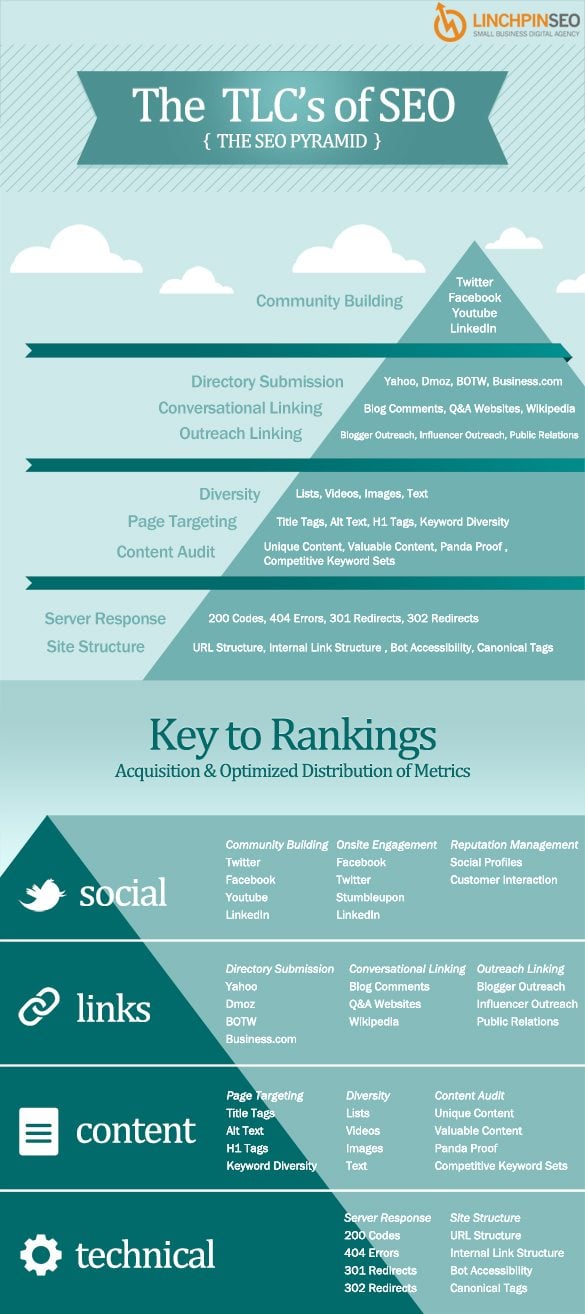
Infographic from Linchpin SEO.
The Significance of Google Rankings
Before we dive into the specifics of SEO, it’s crucial to understand why Google rankings matter so much. Google dominates the search engine market, with over 90% of global search engine traffic. When users seek information, products, or services online, Google is often their first port of call. Therefore, appearing on the first page of Google’s search results can significantly boost your website’s visibility and traffic.
Moreover, research shows that most users seldom venture beyond the first page of search results. In fact, the first five results on Google’s search page receive the lion’s share of clicks. This means that if your website doesn’t appear near the top of the results for relevant search queries, you are likely missing out on valuable traffic and potential customers.
Understanding Google’s Ranking Algorithm
To excel in SEO and improve your website’s Google rankings, it’s crucial to understand the search engine’s ranking algorithm. Google’s algorithm is a complex, ever-evolving set of rules and criteria that determines the order in which websites appear in search results. While Google keeps the exact details of its algorithm a closely guarded secret, SEO experts have gleaned valuable insights over the years.
The Google ranking algorithm considers hundreds of factors when determining the relevance and authority of a website for a particular search query. These factors can be broadly categorized into two main areas: on-page SEO and off-page SEO.
On-Page SEO Factors
On-page SEO refers to the elements that you can control directly on your website to improve its visibility in search engine results. Let’s take a closer look at some of the critical on-page SEO factors:
1. Content Quality and Relevance
At the heart of Google’s ranking algorithm lies the importance of high-quality and relevant content. Google strives to deliver the best possible results to its users, so it rewards websites that provide valuable, informative, and engaging content.
To excel in this aspect of on-page SEO, you should:
- Create well-researched and comprehensive content that addresses the needs and questions of your target audience.
- Use relevant keywords naturally within your content, but avoid keyword stuffing, which can lead to penalization by Google.
- Ensure your content is up-to-date and accurate, as outdated information can harm your rankings.
- Organize your content with clear headings and subheadings to enhance readability.
2. Keyword Optimization
Keywords are the words and phrases that users type into search engines to find information. Properly optimizing your content with relevant keywords is essential for SEO success. Here’s how to do it effectively:
- Conduct keyword research to identify the keywords and phrases your target audience is searching for.
- Place keywords strategically in your content’s title, headings, subheadings, and throughout the body.
- Use variations of your main keywords to cover related topics and expand your content’s reach.
- Optimize your meta tags, including the title and meta description, with relevant keywords.
3. Page Speed and Mobile Friendliness
Google values user experience, and two critical aspects of this are page speed and mobile-friendliness. Slow-loading pages can lead to high bounce rates and lower rankings. To optimize these aspects:
- Compress images and use browser caching to improve page load times.
- Ensure your website is responsive and displays correctly on various devices, especially mobile phones and tablets.
4. URL Structure
A clean and descriptive URL structure helps both users and search engines understand the content of a page. Use short, meaningful URLs that reflect the topic of your page and include relevant keywords.
5. Internal Linking
Internal linking involves linking to other pages within your website. It helps search engines navigate and understand the hierarchy and relationships between your content. When creating internal links, use descriptive anchor text and ensure the linked pages are relevant to each other.
6. User Experience (UX) and Readability
A positive user experience is vital for SEO. Ensure that your website is easy to navigate, with a clear menu and intuitive layout. Additionally, prioritize readability by using legible fonts, appropriate font sizes, and sufficient spacing.
Off-Page SEO Factors
While on-page SEO focuses on optimizing your website directly, off-page SEO involves external factors that influence your site’s authority and reputation in the eyes of search engines. Here are some crucial off-page SEO factors:
1. Backlinks
Backlinks, also known as inbound links, are links from other websites to yours. They play a significant role in off-page SEO, as Google considers them a vote of confidence in your website’s credibility and authority.
To build quality backlinks:
- Create valuable, shareable content that others naturally want to link to.
- Reach out to relevant websites and request guest post opportunities or backlinks.
- Monitor and disavow toxic backlinks that could harm your site’s reputation.
2. Social Signals
Social signals, such as likes, shares, and comments on social media platforms, can indirectly impact your SEO. While Google doesn’t use social signals directly in its ranking algorithm, content that receives significant social engagement often gains visibility and attracts more backlinks.
3. Online Reputation Management
Your online reputation, including reviews and ratings, can influence your website’s credibility and trustworthiness. Encourage positive reviews and address negative feedback promptly to maintain a positive online reputation.
4. Brand Mentions
Even when not accompanied by a backlink, brand mentions on other websites can contribute to your site’s authority. Monitor brand mentions and engage with them when appropriate to build brand recognition.
Technical SEO Factors
Technical SEO involves optimizing the technical aspects of your website to improve its visibility in search results. While users may not directly notice these optimizations, they play a crucial role in search engine rankings. Here are some key technical SEO factors:
1. Site Architecture
A well-organized site structure with a clear hierarchy makes it easier for search engines to crawl and index your content. Use a logical menu and internal linking to guide users and search engines through your website.
2. XML Sitemap
Create and submit an XML sitemap to Google to ensure all your web pages are indexed properly. Sitemaps provide search engines with a roadmap to your website’s content.
3. Robots.txt
A robots.txt file allows you to instruct search engine crawlers on which pages of your site should be indexed and which should be excluded. Use it to prevent indexing of duplicate content or sensitive information.
4. HTTPS and Security
Google places a high emphasis on website security. Ensure your website uses HTTPS to encrypt data transmission, and regularly update your website’s security protocols to protect against cyber threats.
5. Page Loading Speed
Page speed is not only an on-page factor but also a technical one. Compress images, leverage browser caching, and minimize server response times to improve your website’s loading speed.
6. Mobile-Friendly Design
As more users access the web via mobile devices, a mobile-friendly website design is crucial. Use responsive design principles to ensure your site functions well on all screen sizes.
Monitoring and Adaptation
SEO is not a one-time effort but an ongoing process. To maintain and improve your website’s rankings, it’s essential to continually monitor your site’s performance and adapt your strategies accordingly. Utilize tools like Google Analytics and Google Search Console to gain insights into your site’s traffic and rankings.
In conclusion, SEO is a multifaceted endeavor that involves optimizing various aspects of your website to align with Google’s ranking algorithm. By focusing on on-page, off-page, and technical SEO factors, you can enhance your website’s visibility in search engine results and attract more organic traffic. Remember that SEO is an ongoing process, and staying up-to-date with industry trends and algorithm updates is crucial to maintaining your website’s success in the ever-evolving world of search engine rankings.

Author:
Mark Ford