
Are you stepping into a marketing leadership role and want to avoid the most common pitfalls? Do you want to learn how to lead your team with clarity, confidence, and lasting impact?
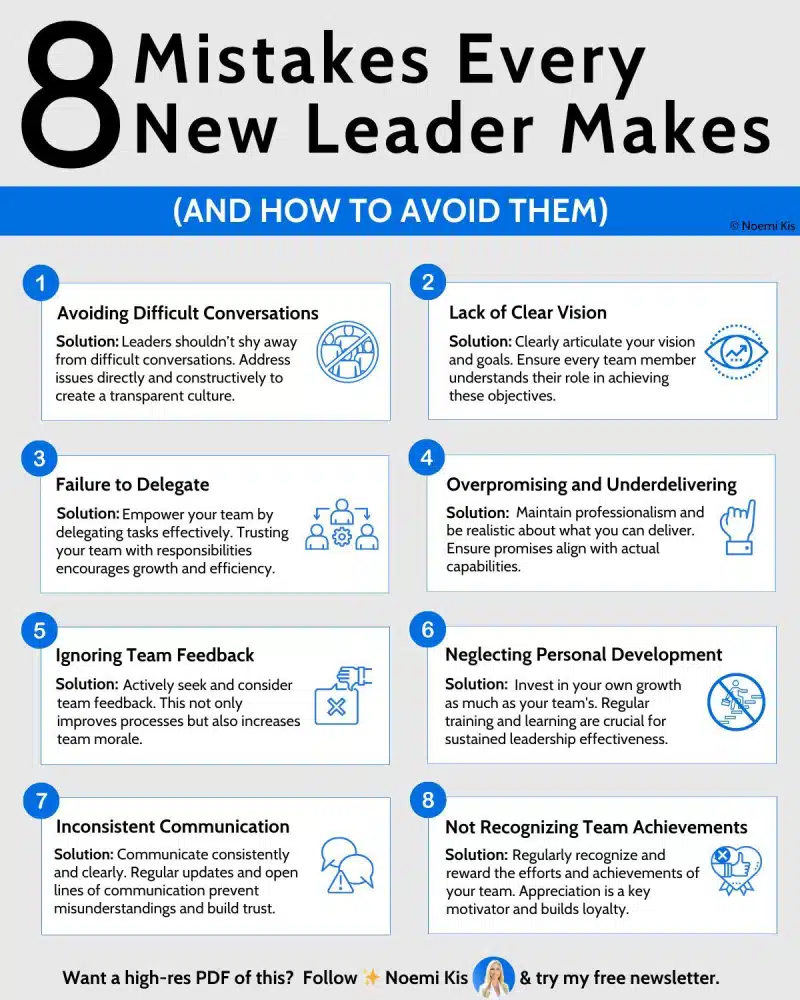
You’ll find some leadership basics in this infographic.
Here’s a summary of what’s covered:
- Avoiding Difficult Conversations
- Lack of Clear Vision
- Failure to Delegate
- Overpromising and Underdelivering
- Ignoring Team Feedback
- Neglecting Personal Development
- Inconsistent Communication
- Not Recognising Team Achievements
Check out the post below for more.
Stepping into a marketing leadership role is both exciting and daunting. The responsibility to drive strategy, inspire a team, and deliver measurable results can be overwhelming, especially for those new to leadership.
While fresh energy and enthusiasm are assets, inexperience can lead to common mistakes that hinder both personal growth and team performance. By recognising these pitfalls early, new marketing leaders can avoid unnecessary setbacks and set themselves and their teams up for long-term success.
In this article, we’ll explore the most common mistakes new marketing leaders make, why they matter, and how to overcome them. Each section highlights a challenge you may face and offers practical solutions to help you become the kind of leader your team will respect and follow.
Avoiding Difficult Conversations
One of the first challenges marketing leaders encounter is the need to have difficult conversations. Whether it’s addressing underperformance, resolving conflicts, or managing unrealistic client expectations, many new leaders hesitate. Avoiding these conversations can create a culture of frustration and confusion. Clear, constructive dialogue is crucial for maintaining trust and accountability.
- Address problems directly but with empathy, focusing on behaviours rather than personalities.
- Prepare in advance to stay calm and professional during tough discussions.
- Frame conversations around growth and solutions, not blame.
- Follow up afterwards to reinforce expectations and provide support.
Lack of Clear Vision
A marketing leader without a clear vision risks leaving their team directionless. Without knowing the long-term goals or the bigger picture, employees may feel disengaged or confused about priorities. Leaders must articulate their vision clearly so that the team understands how their day-to-day work connects to organisational success.
- Define the marketing team’s overarching mission and core goals.
- Translate company objectives into actionable marketing strategies.
- Regularly communicate progress and adjustments to the vision.
- Involve team members in shaping the vision to foster ownership.
Failure to Delegate
New marketing leaders often feel they need to control everything to prove their competence. This reluctance to delegate not only overwhelms the leader but also stifles the team’s potential. Delegation isn’t a sign of weakness; it’s a vital tool for empowering others and creating efficiency.
- Identify tasks that align with each team member’s strengths and expertise.
- Provide clear instructions and context before delegating responsibilities.
- Trust your team to deliver and avoid micromanaging.
- Review outcomes together, offering feedback and celebrating success.
Overpromising and Underdelivering
The pressure to impress stakeholders and clients can tempt new leaders to overcommit. Unfortunately, when expectations are set too high, failing to meet them damages credibility. It’s far better to make realistic promises and consistently deliver, building a reputation for reliability.
- Assess team capacity and resources honestly before making commitments.
- Communicate achievable timelines and manage stakeholder expectations.
- Build in contingency time for unexpected challenges.
- Focus on delivering consistent value rather than flashy but unsustainable wins.
Ignoring Team Feedback
Teams often have valuable insights that leaders overlook. Dismissing or failing to seek feedback can alienate staff and reduce morale. A leader who actively listens builds trust, improves processes, and creates a culture where everyone feels valued.
- Schedule regular feedback sessions and encourage open discussion.
- Actively listen without interrupting or becoming defensive.
- Implement changes where appropriate and explain decisions transparently.
- Recognise and thank team members for their input, even if not all suggestions are adopted.
Neglecting Personal Development
Some leaders focus entirely on the development of their teams while neglecting their own growth. In marketing, where trends and technologies evolve rapidly, leaders who stop learning risk becoming outdated. A commitment to personal growth is essential for staying relevant and inspiring others.
- Invest time in leadership training and professional development courses.
- Stay updated on the latest marketing tools, trends, and strategies.
- Seek mentorship from experienced leaders in the industry.
- Set personal goals that challenge you and track your progress.
Inconsistent Communication
A lack of clear and consistent communication is one of the fastest ways to create confusion and frustration. Marketing teams rely on alignment to deliver campaigns that work across multiple channels. Leaders must provide direction, updates, and feedback regularly to avoid misunderstandings.
- Hold regular team meetings to align priorities and share updates.
- Use collaborative tools to keep everyone informed and on track.
- Establish open communication channels for quick clarifications.
- Ensure consistency in messaging across all levels of the organisation.
Not Recognising Team Achievements
Marketing often involves long hours, tight deadlines, and high pressure. If achievements go unnoticed, motivation drops and burnout increases. Recognition is a powerful way to show appreciation, boost morale, and encourage loyalty within the team.
- Publicly celebrate both small wins and major milestones.
- Offer personalised recognition to make each team member feel valued.
- Link recognition to company goals to reinforce the bigger picture.
- Provide rewards or incentives that align with your team’s preferences.
Conclusion
Becoming a new marketing leader is an exciting opportunity, but it comes with challenges that can test your confidence and ability. From avoiding tough conversations to neglecting your own development, these mistakes are common yet preventable.
By acknowledging them early and applying practical strategies, you can build a leadership style that fosters trust, drives results, and inspires your team.
Leadership isn’t about perfection; it’s about growth. With self-awareness, clear communication, and a commitment to continuous improvement, you’ll not only avoid these pitfalls but also become the kind of marketing leader who empowers others and creates lasting impact.

Author:
Mark Ford