
Are you ready to discover what marketing leadership is really like behind the job title and success stories? Want to learn the tough but valuable truths that separate great marketing leaders from everyone else?
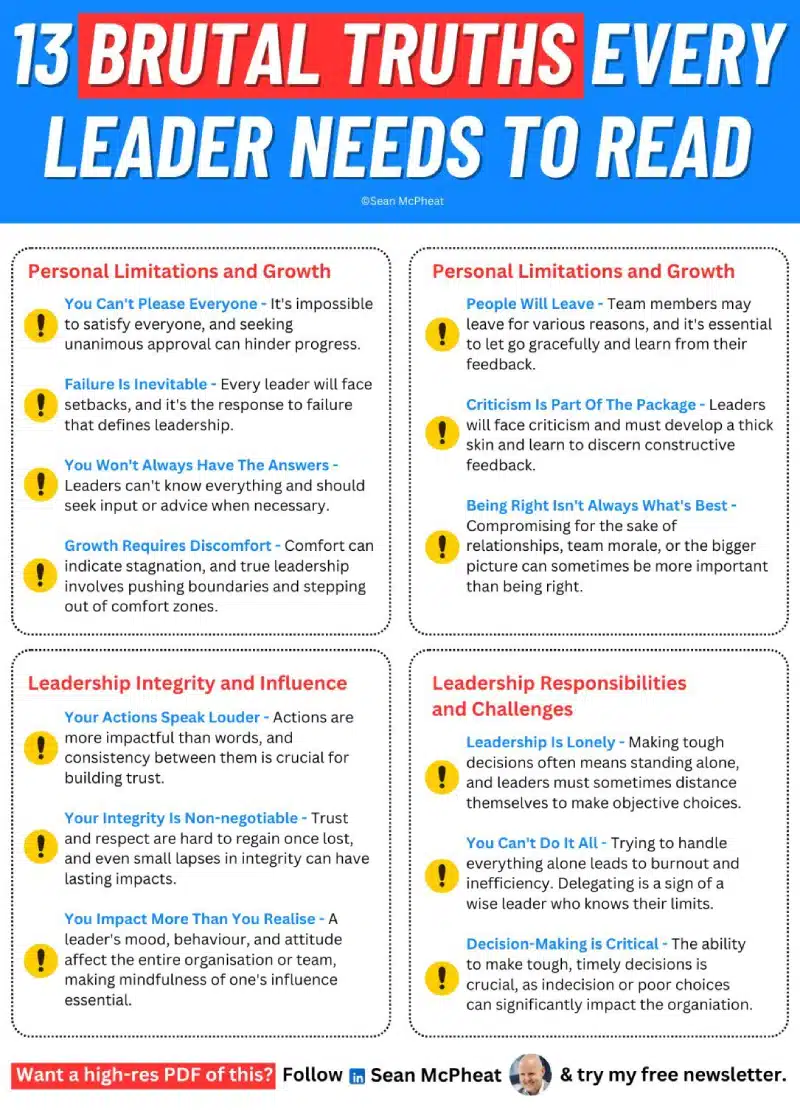
You’ll find some leadership basics in this infographic.
Here’s a summary of what’s covered:
- Personal Limitations and Growth
- Team Dynamics and Feedback
- Integrity and Influence
- Leadership Is Lonely
- You Can’t Do It All
- Decision-Making Is Critical
- Failure Is Inevitable
- Criticism Is Part of the Package
- Being Right Isn’t Always What’s Best
- Growth Requires Discomfort
- Integrity Is Non-Negotiable
- Decision-Making Under Pressure
Check out the post below for more.
Stepping into a marketing leadership role is often seen as a dream job. You’re at the helm of creativity, data, strategy, and growth. But behind the glossy job title and exciting campaigns lies a world of constant pressure, hard truths, and lessons you can only learn through experience.
Marketing leadership isn’t just about leading teams or launching products—it’s about managing expectations, navigating setbacks, and staying grounded when everything is moving at lightning speed.
Below, we’ll explore the brutal realities of marketing leadership that few people talk about, and how embracing them can make you a stronger, wiser, and more effective leader.
Personal Limitations and Growth
Even the best marketing leaders have limits. It’s easy to fall into the trap of believing you should have every answer, every strategy, and every insight ready on demand. In reality, leadership means balancing confidence with humility—knowing when to act decisively and when to seek guidance. Accepting your limitations allows you to focus your energy where it truly counts and empowers your team to shine in areas where they’re strong.
- You Can’t Please Everyone: Every stakeholder has different expectations—clients, directors, and team members. Trying to make everyone happy will dilute your vision and slow down decision-making.
- Failure Is Inevitable: Campaigns flop, trends change, and competitors surprise you. What matters most is how you adapt and recover when plans don’t go as expected.
- You Won’t Always Have the Answers: No leader can know everything about every platform, channel, or audience. Lean on your team’s expertise and stay open to continuous learning.
- Growth Requires Discomfort: The best marketing leaders push boundaries. True innovation happens when you’re willing to feel uncomfortable and take calculated risks.
Team Dynamics and Feedback
Marketing leadership means managing creative people with big ideas—and big opinions. You’ll deal with turnover, personality clashes, and feedback that can sting. But the ability to handle these moments with grace defines your credibility and long-term success. Understanding how to respond to people’s needs, without losing sight of business goals, is one of the hardest balancing acts in leadership.
- People Will Leave: Whether due to burnout, ambition, or cultural fit, team members will move on. Focus on creating a strong onboarding and development system that keeps the team resilient.
- Criticism Is Part of the Package: You’ll be questioned—by clients, directors, and your own team. Develop a thick skin and use feedback as a tool for refinement, not resentment.
- Being Right Isn’t Always What’s Best: Sometimes compromise leads to better collaboration and results than rigid insistence on being right. Choose harmony when it serves the bigger goal.
- Keep Listening, Even When It Hurts: The most valuable insights often come from uncomfortable conversations. Honest feedback helps you grow both personally and professionally.
Integrity and Influence
In marketing, your integrity is constantly tested. There’s pressure to meet targets, stretch metrics, or please clients. But lasting influence isn’t built on shortcuts—it’s built on authenticity and trust. Your actions set the tone for your entire department, shaping how others approach deadlines, strategy, and ethics. The consistency between what you say and what you do is your most powerful leadership tool.
- Actions Speak Louder Than Words: Your team watches how you react under pressure. Consistent follow-through builds credibility faster than any motivational speech.
- Integrity Is Non-Negotiable: Once your honesty or transparency is questioned, it’s difficult to recover. Always prioritise truth, even when it’s uncomfortable.
- You Impact More Than You Realise: Every decision—from hiring to campaign direction—shapes culture and morale. Be conscious of the ripple effects of your behaviour.
- Lead by Example, Not Authority: Influence in marketing doesn’t come from hierarchy; it comes from trust. Model the standards you expect from others.
Leadership Is Lonely
Marketing leaders often find themselves in an isolating position. You’re the bridge between creative teams and senior management, carrying expectations from both sides. When things go wrong, you’re accountable. When they go right, credit is often shared. Accepting this reality early allows you to build emotional resilience and focus on long-term success rather than short-term validation.
- Expect Solitude in Decision-Making: Leadership means taking responsibility for difficult choices—even when no one agrees with you.
- Find Peer Support Outside Your Team: Build a network of other marketing leaders who understand your challenges and can provide perspective.
- Keep Emotions in Check: While empathy is essential, you must remain calm and objective, especially during crises or high-stakes presentations.
- Celebrate Quiet Wins: Not every victory is public. Learn to find satisfaction in progress, growth, and small moments of clarity.
You Can’t Do It All
It’s tempting to believe you must oversee every ad, approve every headline, and review every report. But micromanaging kills creativity and slows progress. The best leaders know how to delegate effectively and empower their teams to deliver. When you let go of control, you free yourself to focus on strategy, vision, and growth—the true priorities of leadership.
- Delegate with Trust, Not Fear: Assign ownership, not just tasks. Give your team autonomy to make decisions and learn from mistakes.
- Avoid Burnout by Setting Boundaries: You can’t lead effectively if you’re exhausted. Protect your focus and energy by saying no when needed.
- Identify Strengths Within Your Team: Know who excels where, and align responsibilities accordingly. This builds confidence and improves efficiency.
- Invest in Training and Mentorship: Empower your team to grow so you can step back and focus on scaling the bigger picture.
Decision-Making Is Critical
Marketing leadership is full of decisions—some data-driven, others intuitive. Whether it’s budget allocation, brand positioning, or media strategy, your ability to decide quickly and confidently can make or break campaigns. Indecision leads to delays, confusion, and lost opportunities. Strong decision-making comes from preparation, pattern recognition, and the courage to commit even when outcomes aren’t guaranteed.
- Prioritise Clarity Over Perfection: Waiting for the perfect answer often costs momentum. Make the best decision with the information you have now.
- Balance Data with Intuition: Use analytics as a guide, but don’t ignore gut instincts developed from experience.
- Own Your Decisions: Even when outcomes fall short, accountability builds credibility. Learn, adjust, and move forward.
- Create a Framework for Choices: Establish clear criteria for decision-making to ensure consistency and reduce stress under pressure.
Failure Is Inevitable
In marketing, not every campaign hits its targets. Algorithms change, audiences shift, and unexpected crises can derail even the best plans. Accepting failure as part of leadership allows you to respond constructively rather than defensively. Every setback contains lessons that refine your future strategies and sharpen your judgment.
- Normalise Post-Mortems: Review what went wrong without blame. Honest reflection leads to better systems and smarter campaigns.
- Celebrate the Lessons: Share insights from failures so your team can grow together rather than repeat mistakes in silence.
- Stay Resilient Under Pressure: Show composure when things collapse. Your reaction to failure sets the emotional tone for your team.
- Reframe Failure as Feedback: Every misstep provides valuable data—use it to refine tactics, strengthen leadership, and fuel future wins.
Criticism Is Part of the Package
Every marketing leader faces criticism—from clients questioning creative direction to executives challenging ROI. It’s easy to take feedback personally, but learning to separate emotion from evaluation is crucial. Criticism, when used well, becomes one of your greatest growth tools. It sharpens your communication, strategy, and leadership instincts.
- Distinguish Constructive from Destructive Feedback: Not all criticism is valid. Learn to extract what’s useful and disregard the rest.
- Respond, Don’t React: Take time to process before replying. A measured response shows maturity and professionalism.
- Encourage Open Dialogue: Create a culture where feedback flows both ways without fear or resentment.
- Use Criticism as Calibration: Every opinion helps you understand how your work is perceived—information that strengthens future decisions.
Being Right Isn’t Always What’s Best
Marketing often involves multiple valid perspectives—creative intuition, data science, and commercial logic. Sometimes, insisting on being right can damage relationships or team morale. True leadership means knowing when to compromise for the sake of collaboration, trust, and long-term results.
- See the Bigger Picture: Winning an argument may cost more than it’s worth. Focus on the shared goal, not personal validation.
- Encourage Input Before Decisions: People commit more fully to solutions they help create. Collaboration fosters ownership.
- Be Willing to Change Your Mind: Flexibility is a sign of strength, not weakness. Great leaders evolve their thinking as new insights emerge.
- Protect Team Morale: Prioritise harmony over ego when it benefits progress and productivity.
Growth Requires Discomfort
Marketing is one of the fastest-evolving industries in the world. What works today may fail tomorrow. Staying effective means constantly stepping outside your comfort zone—experimenting with new tools, platforms, and ideas. Discomfort is the price of staying relevant and competitive.
- Embrace Uncertainty: The unknown is where innovation lives. Treat it as an opportunity rather than a threat.
- Invest in Continuous Learning: Stay ahead by studying new trends, attending workshops, and encouraging your team to do the same.
- Challenge Routine Thinking: If something feels too safe, it’s probably outdated. Push boundaries to find fresh approaches.
- Lead Change by Example: Show your team that growth comes from courage, not comfort.
Integrity Is Non-Negotiable
In a world obsessed with numbers and visibility, the temptation to cut corners can be strong. But integrity is what keeps leadership sustainable. Your reputation, both internally and externally, becomes your most valuable marketing asset. Without integrity, even the most impressive campaign loses meaning.
- Be Transparent About Results: Don’t inflate metrics or hide performance gaps. Honesty builds long-term credibility.
- Hold Yourself Accountable: Admit mistakes quickly and take corrective action publicly when appropriate.
- Uphold Ethical Standards: Ensure your marketing practices align with your brand’s values. Ethics drive trust.
- Foster Integrity Within the Team: Encourage honesty and authenticity across every project and client relationship.
Decision-Making Under Pressure
Marketing leaders often have to make fast decisions in high-stress situations—during crises, pitch meetings, or tight deadlines. These moments reveal your leadership quality more than any campaign result. Staying composed and strategic under pressure earns respect and sets the tone for your team’s resilience.
- Prepare Scenarios in Advance: Anticipate challenges and have contingency plans ready for different outcomes.
- Stay Calm and Objective: Emotional decisions often lead to poor results. Breathe, analyse, then act.
- Trust Your Framework: Consistent processes reduce panic and create confidence during high-stakes choices.
- Debrief Afterwards: Review your actions after the fact to learn and refine your response for next time.
Conclusion
Marketing leadership is not a role for the faint-hearted. It demands resilience, integrity, emotional intelligence, and the ability to thrive amid uncertainty. The brutal realities—failure, criticism, loneliness, and discomfort—aren’t signs that you’re failing. They’re proof that you’re growing into the kind of leader who can weather any challenge and lead with authenticity.
True leadership isn’t about perfection; it’s about perseverance. When you embrace these realities with humility and courage, you not only elevate your marketing strategy—you transform the people and culture around you.

Author:
Mark Ford

Taking Control of Your Career: The Power and Potential of Freelancing
Are you ready to take control of your career and create a work life that fits around you, not the other way around? Want to discover how freelancing can give you the freedom, flexibility, and financial control to design your own success? […]