
Are you wondering why having a website is so important for modern businesses? Want to discover how a strong online presence can boost credibility, sales, and customer engagement?
You’ll find some website basics in this infographic.
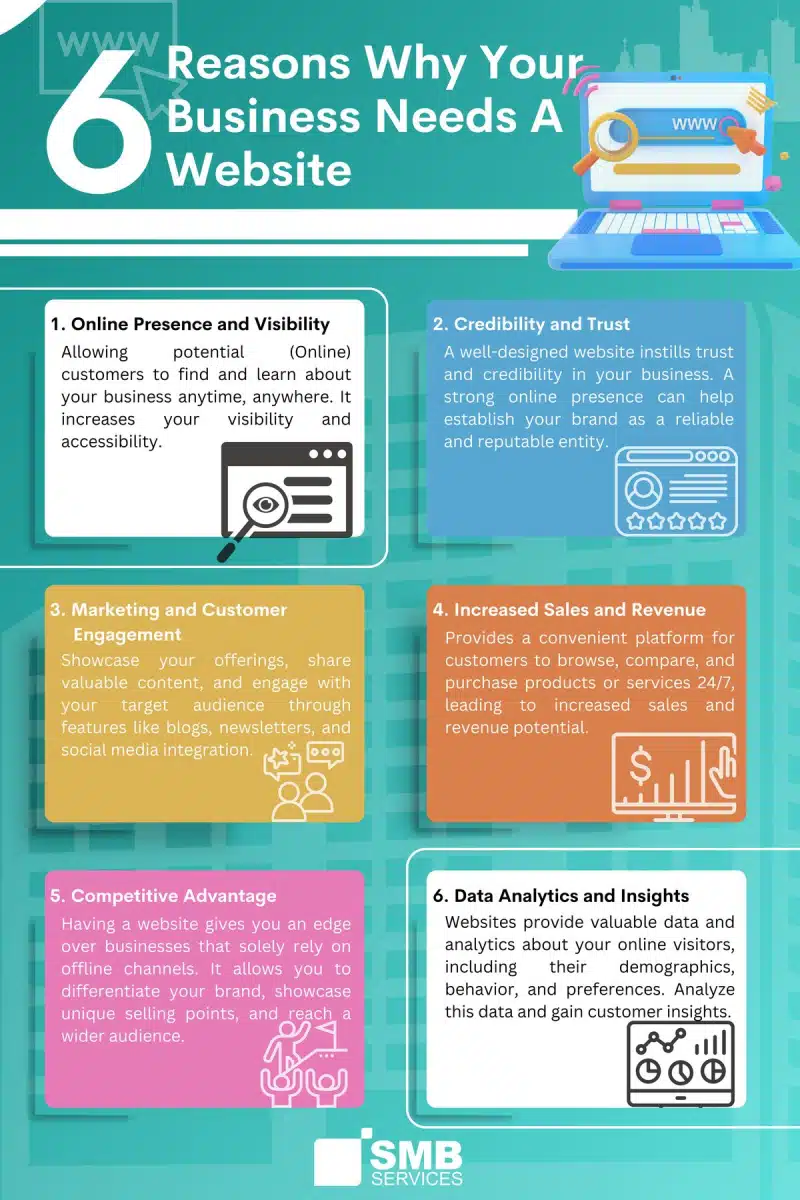
Here’s a summary of what’s covered:
- Online Presence and Visibility
- Credibility and Trust
- Marketing and Customer Engagement
- Increased Sales and Revenue
- Competitive Advantage
- Data Analytics and Insights
Check out the post below for more.
In today’s fast-moving digital landscape, a website is no longer a luxury for businesses—it’s a necessity. Whether you’re a small local shop or a large corporation, having an online presence directly influences how customers perceive you, interact with you, and ultimately, whether they choose to do business with you. A professional website is the gateway to visibility, trust, and growth.
This article explores the essential role of websites in the modern business world, breaking down why they matter and how they can directly benefit your organisation. From credibility to customer engagement, increased revenue to valuable insights, your website plays a critical role in shaping your business success.
Online Presence and Visibility
A business website ensures that potential customers can find you anytime and anywhere. Unlike physical premises with limited opening hours, your website is accessible around the clock, giving your brand a global reach. It allows people to discover who you are, what you offer, and how they can connect with you—all at their convenience.
- Create a professional website that highlights your products, services, and key information to boost visibility.
- Optimise your site for search engines so customers searching online can find you easily.
- Use location-based keywords and listings to help local customers connect with your business.
- Ensure mobile-friendliness to capture the growing number of people browsing on smartphones.
Credibility and Trust
Trust is one of the most important factors when customers decide who to buy from, and a well-designed website helps establish it. In a digital-first world, customers often check a company’s online presence before engaging with them. A professional website signals that your business is reliable, legitimate, and serious about its offering.
- Design your site with a modern, clean, and user-friendly layout that reflects professionalism.
- Include clear contact details, business credentials, and an “About Us” page to reassure visitors.
- Display customer case studies, portfolios, or real project examples to demonstrate credibility.
- Keep your website updated with accurate information to maintain trustworthiness.
Marketing and Customer Engagement
Websites act as a hub for your marketing activities, allowing you to showcase your products and services while engaging directly with your audience. From sharing blog posts and newsletters to integrating social media feeds, your website is the foundation of customer interaction. It gives you a space to build meaningful relationships with your target audience.
- Publish regular blog posts or articles to share valuable insights and keep your audience engaged.
- Offer newsletters or email sign-ups to maintain communication and encourage loyalty.
- Integrate social media links to expand reach and promote two-way interaction.
- Highlight promotions, special offers, and new launches to keep customers coming back.
Increased Sales and Revenue
One of the most direct benefits of having a website is its ability to generate revenue. Unlike physical shops that operate within fixed hours, websites are open 24/7, enabling customers to browse, compare, and purchase whenever it suits them. This convenience increases your sales potential and opens the door to new opportunities.
- Set up an e-commerce platform that makes it easy for customers to purchase online.
- Use product pages with clear descriptions, images, and pricing to encourage conversions.
- Offer secure payment options to build confidence in your online sales process.
- Track online sales data to identify popular products and improve your offerings.
Competitive Advantage
In a world where many businesses still rely solely on offline channels, having a website gives you a clear edge. It helps you stand out from competitors by showcasing your unique strengths and value proposition. By positioning your brand online, you can reach a wider audience and prove your business is forward-thinking and accessible.
- Highlight your unique selling points clearly on your homepage and service pages.
- Create comparison content that shows how your offerings stand out from competitors.
- Provide valuable resources such as guides, FAQs, and tutorials to add extra value.
- Ensure your branding is consistent across your website to strengthen recognition.
Data Analytics and Insights
Websites don’t just attract customers—they also provide valuable data about them. With analytics tools, you can understand who your visitors are, what they’re interested in, and how they behave on your site. This information allows you to make smarter business decisions, refine your strategies, and tailor your offerings to customer needs.
- Install tools like Google Analytics to monitor visitor demographics and behaviours.
- Track which pages or products attract the most attention and adjust accordingly.
- Use data insights to refine your marketing campaigns and target the right audience.
- Monitor customer journeys to identify and remove barriers that hinder conversions.
Conclusion
Websites are no longer optional extras—they are essential assets for any business that wants to remain competitive and grow. From increasing visibility and building trust to generating revenue and providing valuable insights, a website underpins almost every aspect of business success in today’s world.
Whether you’re looking to expand your customer base, improve engagement, or simply establish credibility, investing in a professional website is one of the smartest decisions you can make. The digital age demands visibility, accessibility, and reliability—and your website is the foundation that brings it all together.

Author:
Mark Ford