
In the ever-evolving landscape of social media, staying ahead of the curve is crucial for individuals and businesses alike.
With the explosive growth of social networks in recent years, it’s important to keep a keen eye on emerging platforms that have the potential to become the next big thing.
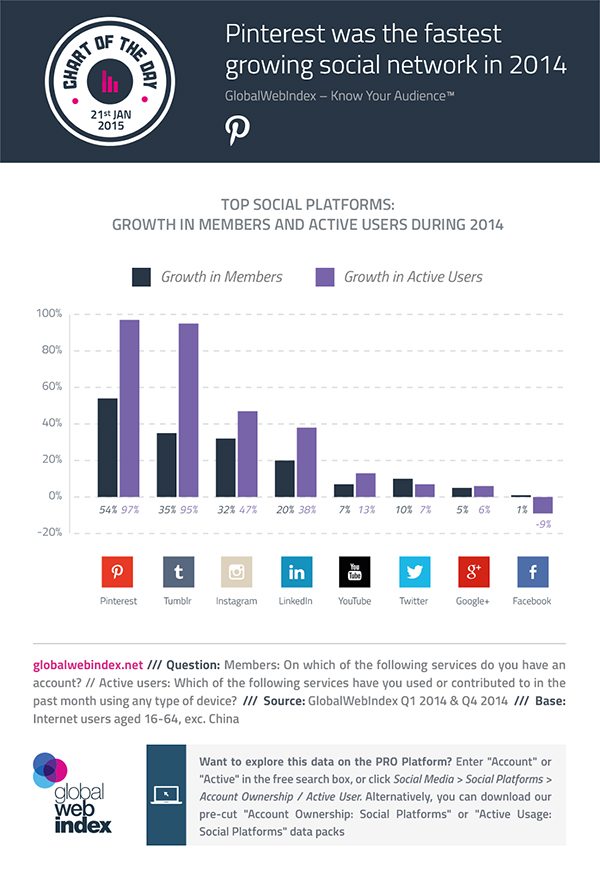
In this blog post, we’ll take a trip down memory lane to 2014 and explore the fastest-growing social networks of that year, while also discussing why they were poised to make a significant impact in 2015.
Infographic by Global Web Index.
The Social Media Boom
The mid-2010s were a transformative period for social media. Platforms like Facebook and Twitter had firmly established themselves as household names, and new contenders were emerging regularly. This era marked a time when the way we communicate, share information, and connect with others was undergoing a profound shift.
Let’s dive into the social networks that captured the zeitgeist in 2014 and continued to gain momentum in 2015:
1. Instagram
Instagram, launched in 2010, had already been making waves by 2014. However, it was in 2014 that Instagram’s user base experienced explosive growth, surpassing 300 million users by the end of the year. What set Instagram apart was its focus on visual storytelling through photos and short videos.
Why Instagram?
- Visual Appeal: Instagram capitalized on the growing trend of visual content. It allowed users to share photos and short videos, making it a perfect platform for brands and individuals to showcase their creativity.
- Mobile-First: Instagram’s mobile-centric approach aligned perfectly with the increasing use of smartphones for social media consumption.
- Engagement: The platform’s simple interface and the ability to engage with users through likes, comments, and hashtags made it incredibly user-friendly and interactive.
- Algorithmic Feed: In 2016, Instagram introduced an algorithmic feed, which would later become the norm for most social platforms, ensuring users saw content relevant to their interests.
2. Snapchat
Snapchat, launched in 2011, had already garnered attention for its unique approach to ephemeral content. In 2014, it was clear that Snapchat was onto something significant. Its user base surged to over 100 million daily active users by the end of the year.
Why Snapchat?
- Ephemeral Messaging: Snapchat’s defining feature was its self-destructing messages and stories, tapping into the desire for privacy and authenticity among users.
- Youth Appeal: It resonated particularly well with younger audiences, who appreciated the temporary nature of content, fostering a more genuine and spontaneous form of expression.
- Creative Tools: Snapchat’s innovative lenses and filters allowed users to add fun and interactive elements to their content, setting it apart from more static platforms.
- Discover: Snapchat Discover, launched in early 2015, brought a curated selection of news and entertainment content, making it a hub for both social interaction and media consumption.
3. Pinterest
While Pinterest had been around since 2010, its growth in 2014 was noteworthy. The platform reached 70 million users by the end of the year, with its unique focus on visual discovery and curation.
Why Pinterest?
- Visual Discovery: Pinterest offered a new way for users to discover and save ideas for various aspects of their lives, from home decor to recipes.
- Shopping Integration: The platform introduced Buyable Pins in 2015, allowing users to purchase products directly through Pinterest, transforming it into an e-commerce powerhouse.
- Content Curation: Pinterest users actively curated content, making it an ideal platform for businesses to showcase their products and ideas.
- Search Engine: Pinterest was essentially a visual search engine, making it invaluable for users looking for inspiration and ideas.
4. LinkedIn
LinkedIn, often considered the professional social network, was steadily growing its user base. By 2014, it had over 300 million members and continued to evolve as a platform for networking, job hunting, and content sharing.
Why LinkedIn?
- Professional Networking: LinkedIn remained the go-to platform for professional networking, making it indispensable for job seekers and businesses looking to connect with potential clients and partners.
- Content Publishing: LinkedIn Pulse allowed users to publish and share articles, positioning the platform as a hub for thought leadership and industry-specific content.
- Job Search: The platform’s job search and recruitment features were becoming increasingly sophisticated, making it a vital resource for both job seekers and employers.
- Company Pages: LinkedIn company pages allowed businesses to establish a professional presence, showcase their expertise, and attract talent.
5. Vine
Vine, a short-form video platform, was all the rage in 2014. Launched in 2013, it had already amassed over 40 million users by the end of the year. Its unique six-second video format inspired creativity and humor.
Why Vine?
- Bite-Sized Entertainment: Vine’s six-second videos were perfect for quick, entertaining content, capturing the attention of users with short attention spans.
- Creativity: The constraints of Vine’s format challenged users to be creative and innovative, resulting in a vibrant and engaging community.
- Looping Videos: The looping feature made it easy for users to watch content repeatedly, amplifying the reach and impact of viral videos.
- Influence on Video Marketing: Vine influenced the way marketers approached video content, emphasizing brevity and creativity.
6. Tumblr
Tumblr, a microblogging platform launched in 2007, experienced steady growth in 2014, with over 200 million blogs on the platform.
Why Tumblr?
- Microblogging: Tumblr’s format allowed for quick and easy sharing of text, images, and multimedia content, catering to users who preferred bite-sized updates.
- Diverse Community: Tumblr had a diverse and passionate user base, with communities centered around various interests, from fandoms to social justice causes.
- Customization: Users could customize their Tumblr blogs extensively, making it an ideal platform for self-expression and creativity.
- Reblogging: The reblogging feature made it easy for content to go viral, amplifying the reach of posts.
7. Google+
Google+, Google’s attempt to enter the social media arena, had over 300 million active users in 2014. While it faced challenges in competing with established platforms, it still held promise.
Why Google+?
- Integration: Google+ was tightly integrated with other Google services, such as Gmail and Google Drive, providing a seamless user experience.
- Communities: Google+ Communities allowed users to connect around shared interests, fostering engagement and discussions.
- SEO Benefits: Content shared on Google+ often had search engine optimization (SEO) benefits, making it attractive to businesses looking to improve their online visibility.
- Hangouts: Google+ Hangouts provided a unique platform for video conferencing and virtual meetings.
8. Ello
Ello, the “anti-Facebook” platform, gained attention in 2014 for its ad-free and privacy-focused approach. It attracted a niche audience seeking an alternative to traditional social networks.
Why Ello?
- Ad-Free: Ello’s commitment to remaining ad-free appealed to users who were tired of the increasing intrusion of ads on other platforms.
- Privacy Focus: Ello prioritized user privacy and data protection, addressing growing concerns about online privacy.
- Artistic Community: The platform attracted artists and creatives, creating a unique space for sharing and discovering creative work.
- Beta Phase: Ello was still in beta in 2014, and its potential for growth and evolution garnered significant attention.
Conclusion
As we look back at the social media landscape of 2014, it’s clear that this period marked a significant turning point in the world of social networking. Platforms like Instagram, Snapchat, Pinterest, and Vine were leading the charge with innovative features and user-centric approaches.
While some of these platforms, like Vine and Google+, have since faded into obscurity, others, like Instagram and Snapchat, have continued to thrive and evolve. This serves as a reminder that the social media landscape is in a constant state of flux, with new contenders constantly emerging.
For individuals and businesses, it’s essential to stay attuned to these shifts and adapt your social media strategy accordingly. While the platforms mentioned here were the fastest-growing in 2014, the landscape in 2015 and beyond would bring its own set of challenges and opportunities. To succeed in the dynamic world of social media, one must remain agile, creative, and open to change.

Author:
Mark Ford