Do you want to convert more website visitors into customers? Want to know how applying some simple psychology to your site can help?
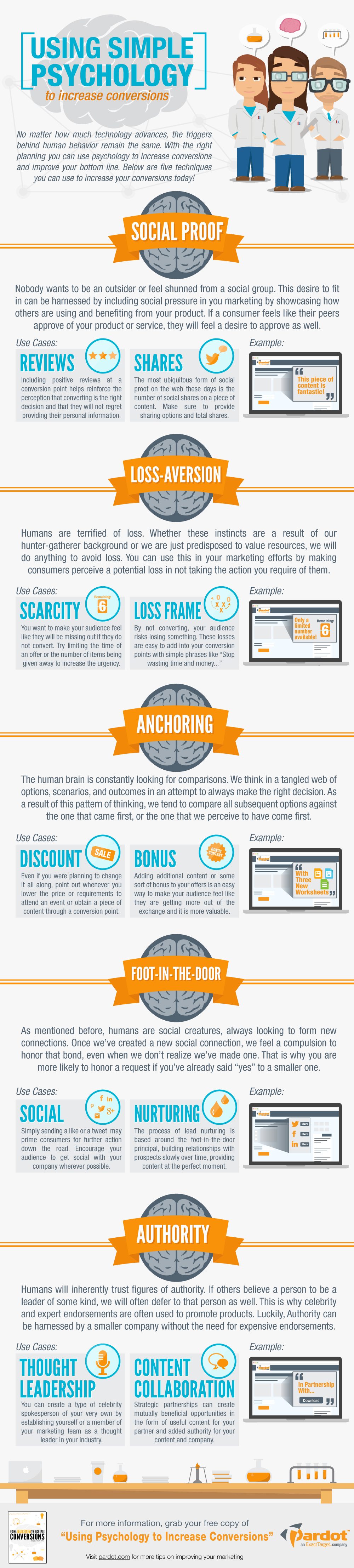
The infographic below shows how five types of psychological triggers can be used in order to convince customers to do business with you. Social proof is first on the list, so displaying reviews from previous customers should be your first port of call.
To find out what other psychological triggers you can use take a look at the infographic below from Pardot.
In the digital age, where attention spans are shorter than ever, the design of your website plays a pivotal role in determining its success. A visually appealing website can draw visitors in, but it’s the psychology behind the design that can convert these visitors into loyal customers. In this blog post, we’ll delve into the intricate world of website design psychology and explore strategies to increase visitor conversions.
Understanding the Basics of Website Design Psychology
Before we dive into specific design elements, it’s crucial to understand the underlying psychological principles that drive user behavior on websites. Here are a few fundamental concepts to keep in mind:
1. First Impressions Matter
The human brain is wired to make quick judgments. Studies have shown that it takes just a fraction of a second for visitors to form an opinion about your website. This snap judgment can determine whether they stay or leave. Therefore, your website’s initial visual impact is critical.
2. User-Friendly Navigation
Easy navigation is at the core of a positive user experience. Visitors should be able to find what they’re looking for quickly and effortlessly. If your website is confusing or cluttered, users are more likely to bounce off.
3. Emotional Connection
Emotion plays a significant role in decision-making. A well-designed website can evoke positive emotions, such as trust, joy, or excitement, which can influence visitors to take the desired actions.
4. Cognitive Load
Cognitive load refers to the mental effort required to process information. Websites that overload users with too much information or complex layouts can lead to cognitive fatigue and decreased engagement.
Now that we have a basic understanding of the psychological aspects of website design, let’s explore how you can use them to increase visitor conversions.
1. Craft a Compelling Visual Identity
Your website’s visual identity is the first thing visitors encounter, and it sets the tone for their entire experience. Here’s how you can leverage psychology to create an appealing visual identity:
a. Color Psychology
Colors evoke emotions and can influence decision-making. For example, blue is often associated with trust and reliability, while red can signify urgency or excitement. Choose colors that align with your brand and the emotions you want to evoke.
b. Consistency
Consistency in design elements, such as fonts, colors, and imagery, fosters a sense of professionalism and reliability. When visitors see a cohesive visual identity, they’re more likely to trust your brand.
c. Visual Hierarchy
Use visual hierarchy to guide visitors’ attention to the most important elements on your website. Larger fonts, contrasting colors, and strategic placement can direct users toward key calls to action.
2. Optimize Website Navigation
Navigation is a critical aspect of user experience. If visitors can’t find what they’re looking for, they’re likely to leave. Here’s how you can improve website navigation:
a. Simplify Menu Structure
Keep your menu structure simple and intuitive. Use clear labels that describe the content or destination accurately. Avoid jargon or overly creative labels that might confuse users.
b. Implement Clear Calls to Action (CTAs)
CTAs are essential for guiding visitors toward desired actions, whether it’s making a purchase, signing up for a newsletter, or downloading a resource. Make sure your CTAs are visually distinct and strategically placed.
c. Breadcrumbs
Breadcrumbs help users understand their current location within your website’s hierarchy. This not only aids navigation but also enhances the overall user experience.
3. Leverage Social Proof
People tend to follow the crowd and trust recommendations from others. Social proof can significantly influence user behavior on your website:
a. Customer Reviews and Testimonials
Displaying genuine customer reviews and testimonials can build trust and credibility. Ensure that these reviews are prominently featured, easy to access, and come from authentic sources.
b. User Ratings and Trust Badges
If your website sells products or services, consider incorporating user ratings and trust badges, such as SSL certificates or industry awards. These elements can instill confidence in your offerings.
4. Create a Sense of Urgency
The fear of missing out (FOMO) and a sense of urgency can be powerful motivators. Here’s how you can create urgency on your website:
a. Limited-Time Offers
Promotions and discounts with expiration dates encourage visitors to take immediate action. Countdown timers can visually reinforce the limited-time nature of these offers.
b. Low Stock Alerts
If you sell products, indicating low stock levels can nudge visitors toward making a purchase to avoid missing out.
c. Highlight Scarcity
Emphasize the scarcity of certain products or services to make them more desirable. Phrases like “Only a few left in stock” can be persuasive.
5. Foster an Emotional Connection
Emotions play a significant role in decision-making. To foster an emotional connection with your website visitors:
a. Use Authentic Imagery
High-quality, authentic images that resonate with your target audience can evoke emotions and create a sense of connection.
b. Tell Compelling Stories
Share stories that relate to your brand or products. Stories have a way of engaging emotions and making your brand more relatable.
c. Incorporate Human Faces
People are naturally drawn to faces. Including images of people, especially faces with positive expressions, can humanize your brand and build trust.
6. Reduce Cognitive Load
A cluttered or confusing website can overwhelm visitors and lead to high bounce rates. Here’s how you can reduce cognitive load:
a. Simplify Content
Break down complex information into digestible chunks. Use headings, bullet points, and concise paragraphs to make content more scannable.
b. Remove Distractions
Eliminate unnecessary elements, such as excessive pop-ups, unrelated advertisements, or excessive animations, that can distract visitors from their primary goals.
c. Load Time Optimization
Fast-loading pages reduce cognitive load by providing a smoother user experience. Optimize images and code to ensure quick page load times.
7. A/B Testing and Continuous Improvement
Designing a website based on psychological principles is a great start, but it’s essential to gather data and continuously refine your design. A/B testing allows you to experiment with different design elements and see which ones resonate most with your audience.
Conclusion
Website design is not merely about aesthetics; it’s a powerful tool for influencing visitor behavior and increasing conversions. By understanding the psychology behind design choices and implementing strategies that align with human cognition and emotions, you can create a website that not only looks great but also drives results. Remember that the key to success lies in ongoing testing and optimization to ensure your website remains effective in converting visitors into loyal customers.

Author:
Mark Ford

Mastering the Art of the Landing Page: Design, Copy, and Conversion in Harmony
Are you trying to design a landing page that not only looks great but actually converts visitors into customers? Want to learn how to balance design, copy, and strategy to create landing pages that work in perfect harmony? […]