Starting a new business is an exhilarating journey filled with potential and promise. However, the harsh reality is that a significant number of startups fail within the first few years of operation.
While the statistics can be daunting, understanding the common pitfalls that lead to failure is crucial for aspiring entrepreneurs.
In this blog post, we will delve into the top 10 reasons why startup businesses like yours often meet their demise. By recognizing these challenges, you can better prepare yourself and your venture for success.
Infographic from Wrike.
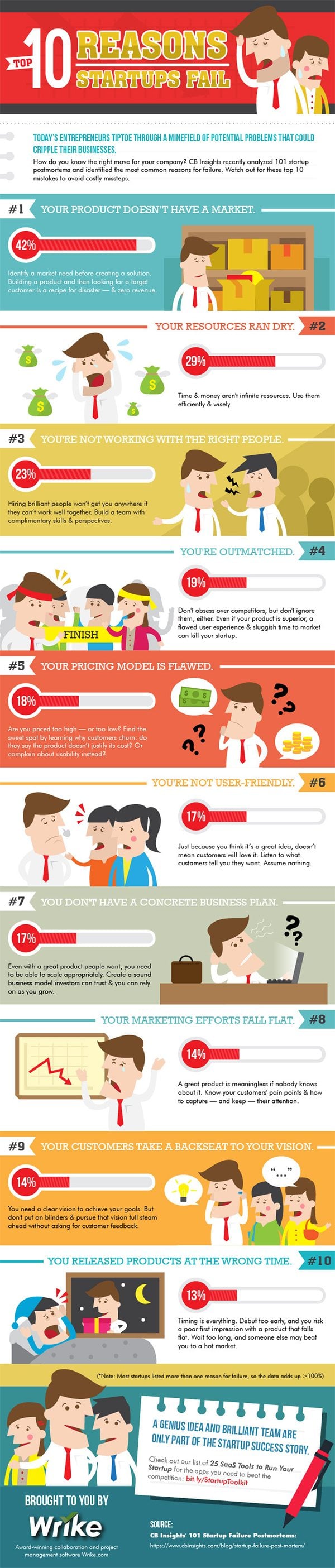
- Lack of Market Research and Validation
One of the most common reasons startups fail is a lack of market research and validation. Many entrepreneurs have a great idea, but they fail to thoroughly understand their target market. Without a deep understanding of your potential customers’ needs, preferences, and pain points, it’s challenging to create a product or service that resonates with them.
Solution: Conduct thorough market research to identify your target audience, understand their problems, and validate your business idea before investing significant resources. This process will help you refine your product or service and ensure there is a demand for it.
- Insufficient Capital
Insufficient capital is a major stumbling block for startups. Many businesses underestimate the amount of money required to get off the ground and sustain operations until they become profitable. Running out of cash is a common reason for startup failure.
Solution: Create a comprehensive financial plan that includes startup costs, operating expenses, and a buffer for unexpected challenges. Seek funding from various sources, such as investors, loans, or crowdfunding, to ensure you have the necessary capital to weather the early stages of your business.
- Poor Management and Leadership
Effective leadership is crucial for the success of any startup. Inadequate management and leadership skills can lead to poor decision-making, lack of direction, and team disarray. When founders are unable to lead and inspire their team, it can have detrimental effects on the business.
Solution: Invest in leadership development and surround yourself with a team that complements your skills and experience. Continuously work on improving your management abilities and seek mentorship from experienced entrepreneurs.
- Strong Competition
Competition is fierce in most industries, and startups often face well-established competitors with more resources and market share. Failure to differentiate your business from the competition can make it challenging to attract customers and gain a foothold in the market.
Solution: Develop a unique value proposition that sets your business apart from competitors. Focus on innovation, quality, or exceptional customer service to give customers a compelling reason to choose your product or service over others.
- Ineffective Marketing and Sales Strategies
Even the most innovative products or services will struggle to gain traction if they are not effectively marketed and sold. Many startups fail to create a comprehensive marketing and sales strategy or simply do not allocate enough resources to these crucial functions.
Solution: Invest in marketing and sales expertise or training to develop a solid strategy for reaching your target audience. Utilize digital marketing, social media, content marketing, and other channels to connect with potential customers and drive sales.
- Ignoring Customer Feedback
Ignoring or dismissing customer feedback is a grave mistake that can lead to startup failure. Your customers are your best source of insights into what’s working and what needs improvement. Failure to listen to their concerns and suggestions can result in a disconnect between your product or service and their needs.
Solution: Establish clear channels for collecting and analyzing customer feedback. Actively engage with customers through surveys, feedback forms, and social media to gather valuable insights. Use this information to iterate and improve your offerings continuously.
- Scaling Too Quickly
While growth is the ultimate goal for most startups, scaling too quickly can be a recipe for disaster. Rapid expansion without a solid foundation can lead to operational inefficiencies, increased costs, and a loss of control over the business.
Solution: Focus on achieving sustainable growth by carefully managing your resources and scaling in response to customer demand. Monitor key performance indicators and be prepared to adjust your growth strategy as needed to maintain profitability.
- Failure to Pivot
Startups often start with a specific vision, but sometimes, that vision may not align with market realities. Some founders are resistant to change and may cling to their original idea even when it’s clear that adjustments are needed.
Solution: Be open to pivoting your business model or product based on market feedback and changing circumstances. Flexibility and adaptability are essential qualities for successful entrepreneurs.
- Legal and Regulatory Issues
Neglecting legal and regulatory compliance can lead to severe consequences for your startup. Failure to address issues such as licensing, intellectual property protection, and industry-specific regulations can result in costly legal battles and damage to your reputation.
Solution: Consult legal experts or advisors who specialize in your industry to ensure that your business is compliant with all relevant laws and regulations. Invest in proper documentation and intellectual property protection to safeguard your assets.
- Lack of Resilience and Perseverance
Building a successful startup is a challenging and often unpredictable journey. Many entrepreneurs underestimate the emotional toll it can take. When faced with setbacks or obstacles, some founders may lose their motivation and give up too soon.
Solution: Cultivate resilience and perseverance as essential traits for entrepreneurship. Expect and embrace failures as opportunities to learn and grow. Surround yourself with a support network of mentors, advisors, and fellow entrepreneurs who can provide guidance and encouragement during tough times.
Conclusion
Startup failure is a reality that many entrepreneurs face, but it doesn’t have to be the end of your entrepreneurial journey. By recognizing and addressing the top 10 reasons startups fail, you can increase your chances of success. Remember that failure is often a stepping stone to success, and each setback can provide valuable lessons to help you build a stronger and more resilient business. Stay focused, adaptable, and committed to your vision, and you’ll be better equipped to navigate the challenges of entrepreneurship and achieve your startup’s goals.

Author:
Mark Ford

From Confusion to Clarity: How to Steer Your Marketing Away from These Frequent Errors
Are you struggling to make sense of your marketing strategy and wondering why your results aren’t matching your effort? Want to learn how to avoid the most common marketing mistakes and create a clear, focused plan that actually delivers results? […]