
When used correctly social media can be a great tool for building your business.
When we first started out Twitter was our sole source of customers and to this day it still generates approx 20% of our business.
There’s more to life than just Twitter though as shown in the infographic below from the Gold Coast Design Studio which gives you the top 5 social media platforms you should be using to market your business.
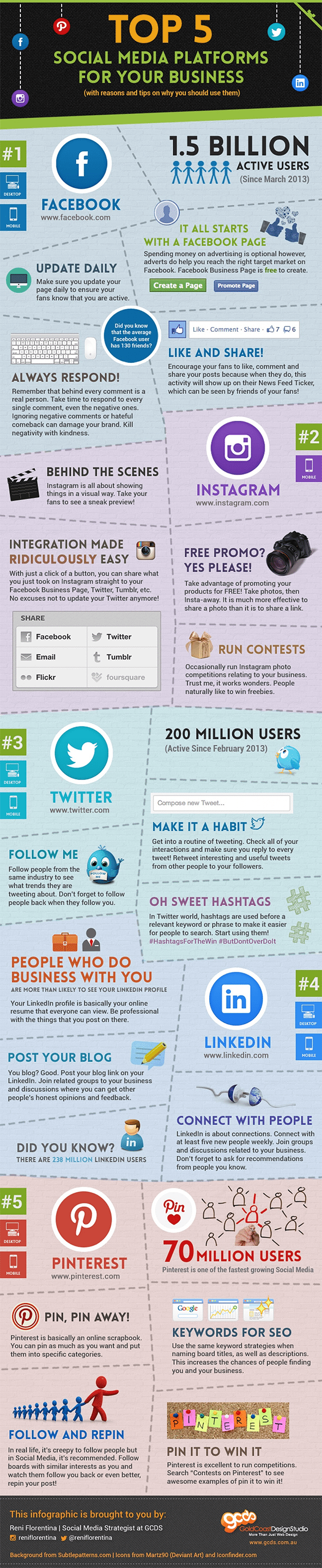
In today’s digital age, social media has become an integral part of any successful marketing strategy. With billions of users worldwide, these platforms offer an unparalleled opportunity to connect with your target audience, build brand awareness, and drive sales. However, with so many social media platforms available, it can be challenging to decide which ones are the most effective for your business. In this blog post, we’ll explore the top five social media platforms you should be using to market your business.
- Facebook: The Social Media Giant
With over 2.8 billion monthly active users, Facebook remains the undisputed leader in the world of social media. Whether you’re a small local business or a global corporation, having a presence on Facebook is essential for reaching a broad and diverse audience. Here’s why Facebook should be a cornerstone of your social media marketing strategy:
Audience Reach: Facebook’s massive user base means you can connect with people from all walks of life, regardless of their age, gender, or location. This wide reach makes it an ideal platform for businesses aiming to target a broad audience.
Advertising Opportunities: Facebook’s advertising platform is incredibly robust, allowing you to target specific demographics, interests, and behaviors. Whether you want to run a simple boosted post or a comprehensive ad campaign, Facebook provides the tools to reach your ideal customers effectively.
Engagement: The platform offers various engagement features such as likes, comments, and shares, helping you interact with your audience and build a loyal following.
Analytics: Facebook Insights provides valuable data on your page’s performance, helping you fine-tune your content strategy and measure the impact of your marketing efforts.
Community Building: Facebook Groups are an excellent way to create a community around your brand, product, or service. You can foster discussions, answer questions, and cultivate a sense of belonging among your customers.
Live Streaming: Facebook Live allows you to connect with your audience in real-time, providing an authentic and interactive way to showcase products, host Q&A sessions, and share behind-the-scenes content.
- Instagram: Visual Storytelling at Its Best
Owned by Facebook, Instagram has rapidly risen to become one of the most popular visual content platforms on the internet. With its emphasis on visual storytelling, Instagram is a must-have for businesses with visually appealing products or services. Here’s why Instagram is a top choice for marketing:
Visual Appeal: Instagram is all about captivating imagery and short videos. This makes it perfect for businesses in industries like fashion, food, travel, and design, where visuals play a crucial role in attracting customers.
Engagement: The platform’s engagement rates are among the highest in the industry, making it an excellent place to connect with your audience. Features like Stories, Reels, and IGTV offer various ways to engage with your followers.
Influencer Marketing: Instagram is synonymous with influencer marketing. Partnering with influencers in your niche can help you reach a broader audience and build trust among potential customers.
Shopping Features: Instagram’s shopping features allow businesses to tag products in posts and stories, making it easier for users to purchase directly from the platform.
Hashtags: Effective hashtag use can significantly boost your discoverability on Instagram. Research and strategically use relevant hashtags to expand your reach and attract new followers.
Insights: Instagram Insights provides valuable data about your followers’ demographics, behaviors, and engagement, helping you tailor your content and marketing strategies.
- Twitter: Real-Time Engagement and News
Twitter is a microblogging platform known for its real-time updates, quick interactions, and the ability to engage in conversations with a global audience. It’s particularly well-suited for businesses aiming to stay at the forefront of trends and breaking news. Here’s why Twitter is a valuable marketing tool:
Real-Time Updates: Twitter excels in delivering real-time updates and news. For businesses in industries that thrive on immediacy, such as journalism, entertainment, and technology, Twitter is a vital platform.
Customer Service: Many users turn to Twitter to seek assistance or voice their concerns about products and services. Responsiveness and excellent customer service on Twitter can enhance your brand’s reputation.
Networking: Twitter is an excellent platform for networking with industry peers, influencers, and potential partners. Engaging in conversations and participating in relevant Twitter chats can help you build valuable connections.
Trending Topics: Twitter’s trending topics can help you stay informed about what’s currently popular and relevant in your industry. You can also leverage trending hashtags to increase your visibility.
Short and Snappy: With a character limit of 280 characters, Twitter forces you to be concise and to the point. Craft compelling and concise messages to capture your audience’s attention.
Advertising: Twitter offers advertising options, including promoted tweets and trends, to increase your visibility and reach a broader audience.
- LinkedIn: The Professional Network
LinkedIn is the go-to social media platform for professionals and B2B (business-to-business) marketing. If your business caters to other businesses or you’re looking to connect with industry professionals, LinkedIn is the place to be. Here’s why LinkedIn is essential for your B2B marketing strategy:
B2B Opportunities: LinkedIn is tailor-made for B2B marketing. You can connect with decision-makers, industry experts, and potential partners in a professional context.
Content Sharing: LinkedIn allows you to share thought leadership content, such as articles and presentations, to showcase your expertise and build credibility within your industry.
Lead Generation: The platform offers lead generation forms and tools, making it easier to capture contact information from potential clients and customers.
Company Pages: LinkedIn company pages provide a space to showcase your business’s products, services, and achievements. Regular updates and engaging content can help you attract followers and build brand awareness.
Networking: LinkedIn’s networking capabilities allow you to connect with professionals in your industry, join relevant groups, and participate in discussions.
Job Postings: If your business is hiring, LinkedIn is an excellent platform to post job listings and attract top talent.
- YouTube: The Video Powerhouse
Video marketing has seen tremendous growth in recent years, and YouTube is the undisputed leader in this space. With over 2 billion logged-in monthly users, YouTube offers an incredible opportunity to reach a global audience through video content. Here’s why YouTube should be part of your social media marketing strategy:
Video Content: YouTube is all about video content. It’s the second-largest search engine after Google, making it a prime platform for sharing informative, entertaining, and engaging videos.
SEO Benefits: YouTube videos often appear in Google search results, giving you additional visibility and SEO benefits. Optimize your video titles, descriptions, and tags to improve your chances of ranking.
Diverse Content: You can create a wide range of content on YouTube, from tutorials and product demos to vlogs and behind-the-scenes videos. Tailor your content to your audience’s preferences.
Monetization: Once your channel gains traction, you can monetize your content through ads, sponsorships, and merchandise sales.
Audience Engagement: YouTube’s comment section allows for direct interaction with your audience. Engage with viewers, answer questions, and build a community around your channel.
Analytics: YouTube Analytics provides in-depth insights into your video performance, audience demographics, and engagement metrics, helping you refine your content strategy.
Choosing the Right Platforms for Your Business
While these five social media platforms are among the most popular and effective for marketing, it’s essential to choose the ones that align with your business goals, target audience, and content strategy. Here are some key considerations when selecting the right platforms for your business:
- Know Your Audience: Understand your target audience’s demographics, interests, and online behavior. Choose platforms where your audience is most active.
- Content Type: Consider the type of content you plan to create. Visual businesses may thrive on Instagram, while those offering in-depth industry insights may find LinkedIn more valuable.
- Competitor Analysis: Analyze your competitors’ social media presence. Identify which platforms they use successfully and where there might be gaps in your industry.
- Resources: Assess your resources, including time, budget, and team. Some platforms require more frequent updates and content creation than others.
- Testing and Iteration: Don’t be afraid to experiment with different platforms and content types. Monitor your performance, gather feedback, and adjust your strategy accordingly.
In Conclusion
In today’s digital landscape, social media marketing is an essential component of any successful business strategy. Facebook, Instagram, Twitter, LinkedIn, and YouTube are among the top social media platforms to consider for your marketing efforts. However, the key to success lies in understanding your audience, creating engaging content, and adapting your strategy as the social media landscape evolves. By leveraging the power of these platforms effectively, you can connect with your target audience, build brand loyalty, and drive business growth in the digital age.

Author:
Mark Ford

How to Create Engaging Instagram Reels Without Ever Showing Your Face
Are you looking for creative ways to make engaging Instagram Reels without stepping in front of the camera? Want to discover proven content ideas that help your brand stand out on social media while keeping your privacy intact? […]