
Twitter, with its 330 million monthly active users, is a powerful platform for sharing thoughts, engaging with your audience, and building your personal or brand’s online presence.
However, mastering the art of tweeting effectively can be challenging, especially if you’re new to the platform.
In this blog post, we’ll take you through the basics of Twitter and provide you with four essential steps to crafting a successful tweet that captures attention and drives engagement.
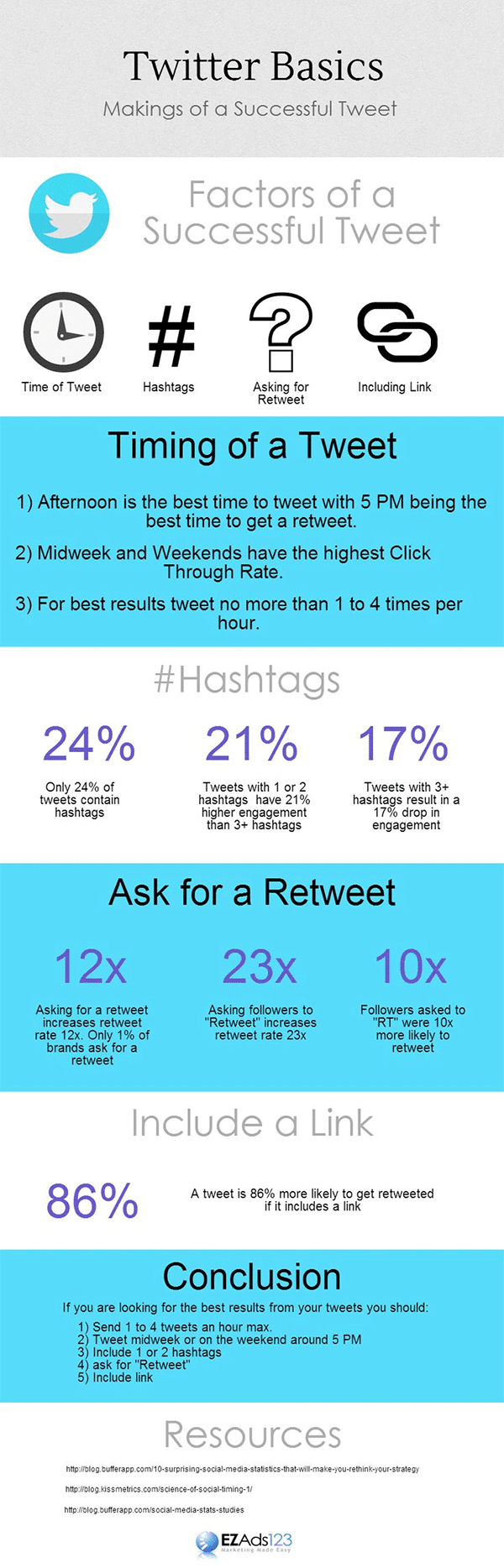
The infographic below from EZAds123 gives you 4 steps to crafting a successful tweet.
Step 1: Know Your Audience
Before you start composing your tweet, it’s crucial to have a deep understanding of your target audience. Who are your followers? What are their interests, preferences, and pain points? What kind of content resonates with them? Conducting audience research is the first and most critical step in creating tweets that will connect with your followers.
How to Research Your Audience
- Analyze Your Followers: Take a close look at your current followers. What are their demographics? What topics do they engage with the most? You can use Twitter Analytics to gather valuable insights about your audience.
- Competitor Analysis: Explore the Twitter profiles of your competitors or similar accounts. Who is following them? What kind of content do they share that receives high engagement? This can provide you with ideas for your own tweets.
- Surveys and Polls: Conduct surveys or polls to directly ask your followers about their interests and preferences. Twitter has built-in polling features that make it easy to gather feedback.
Once you’ve gathered this information, you can tailor your tweets to resonate with your audience’s interests and needs.
Step 2: Craft an Engaging Tweet
Now that you know your audience, it’s time to craft a tweet that will grab their attention and encourage interaction. Here are some tips to help you create an engaging tweet:
Keep it Concise
Twitter’s character limit (280 characters as of my last knowledge update) forces you to be concise. Use clear and concise language to convey your message. Avoid jargon or unnecessary words that can clutter your tweet.
Use Visuals
Including images, GIFs, or videos in your tweets can significantly increase engagement. Visual content is eye-catching and can help you tell your story more effectively. Make sure your visuals are relevant to your message.
Incorporate Hashtags
Hashtags are a powerful way to increase the discoverability of your tweets. Research popular and relevant hashtags in your niche and include them in your tweet. However, don’t overdo it; one to three hashtags per tweet is usually sufficient.
Ask Questions
Pose questions that encourage your followers to respond. Questions spark curiosity and invite conversation. For example, if you’re a travel blogger, you could ask, “What’s your dream travel destination?”
Use Emojis
Emojis can add personality and emotion to your tweets. Use them sparingly and appropriately to complement your message. For example, a simple smiley face can make your tweet appear friendlier.
Craft a Compelling Call to Action (CTA)
Tell your followers what you want them to do next. Whether it’s liking, retweeting, clicking a link, or sharing their thoughts in a reply, a clear CTA can drive engagement.
Here’s an example of an engaging tweet:
“🚀 Just launched my new eBook on digital marketing! Are you ready to level up your online presence? Download it now and let’s conquer the digital world together. 💪 [Link to eBook] #DigitalMarketing #eBook #MarketingStrategy”
This tweet is concise, includes visuals (an emoji and a link), uses relevant hashtags, asks a question, and has a clear CTA.
Step 3: Optimize Posting Time
Timing is crucial on Twitter. To maximize the visibility and engagement of your tweets, you need to post them when your target audience is most active. Here are some tips for optimizing your posting time:
Use Twitter Analytics
Twitter provides insights into when your followers are most active. You can access this data through Twitter Analytics. It will show you the days and times when your tweets receive the highest engagement.
Consider Time Zones
If your audience spans different time zones, consider scheduling tweets at different times to reach a broader audience. There are various scheduling tools available that can help you with this.
Experiment and Analyze
Don’t be afraid to experiment with different posting times and days of the week. Monitor the performance of your tweets and adjust your posting schedule accordingly. What works for one account may not work for another.
Step 4: Engage and Interact
Twitter is a social platform, and engagement is a two-way street. To build a strong presence and foster a loyal following, you need to engage with your audience actively. Here’s how:
Respond to Comments
When people comment on your tweets, whether it’s with questions, compliments, or feedback, take the time to respond. Engaging in conversations with your followers humanizes your brand and strengthens relationships.
Retweet and Quote Tweet
Don’t just focus on your own content. Share and amplify the content of others in your niche. Retweet interesting tweets and add your thoughts with a quote tweet. This not only provides value to your followers but also helps you connect with others in your community.
Participate in Twitter Chats
Twitter chats are scheduled discussions around specific topics. Participating in relevant chats allows you to connect with like-minded individuals and showcase your expertise.
Follow and Network
Follow accounts that are relevant to your interests and industry. Networking on Twitter can open doors to collaborations and opportunities. Engage with the content of those you follow by liking, retweeting, and commenting on their tweets.
Monitor Mentions
Keep an eye on mentions of your Twitter handle, even if they don’t directly tag you. Respond to mentions promptly, whether they are positive or negative. Addressing concerns or acknowledging praise shows that you’re attentive to your audience.
In Conclusion
Mastering the art of a successful tweet on Twitter involves a combination of understanding your audience, crafting engaging content, optimizing your posting time, and actively engaging with your followers. By following these four essential steps, you can create tweets that capture attention, foster meaningful interactions, and help you achieve your personal or brand goals on the platform. Remember, Twitter is a dynamic platform, so continuously analyze your results and adjust your strategy as needed to stay relevant and effective. Happy tweeting!

Author:
Mark Ford

How to Create Engaging Instagram Reels Without Ever Showing Your Face
Are you looking for creative ways to make engaging Instagram Reels without stepping in front of the camera? Want to discover proven content ideas that help your brand stand out on social media while keeping your privacy intact? […]