
When used correctly Twitter can be a great social network to market your business. It’s important that you build a strong base of connections who will engage with and support you as you grow.
But with its rapid-fire bursts of information and endless stream of opinions, it can be both a fascinating and frustrating place. While it offers a platform for meaningful discussions, networking, and information sharing, it also plays host to a wide array of personalities that can make your Twitter experience less enjoyable.
In this blog post, we’ll explore seven types of Twitter users you might want to steer clear of to maintain your sanity and make the most of your time on the platform.
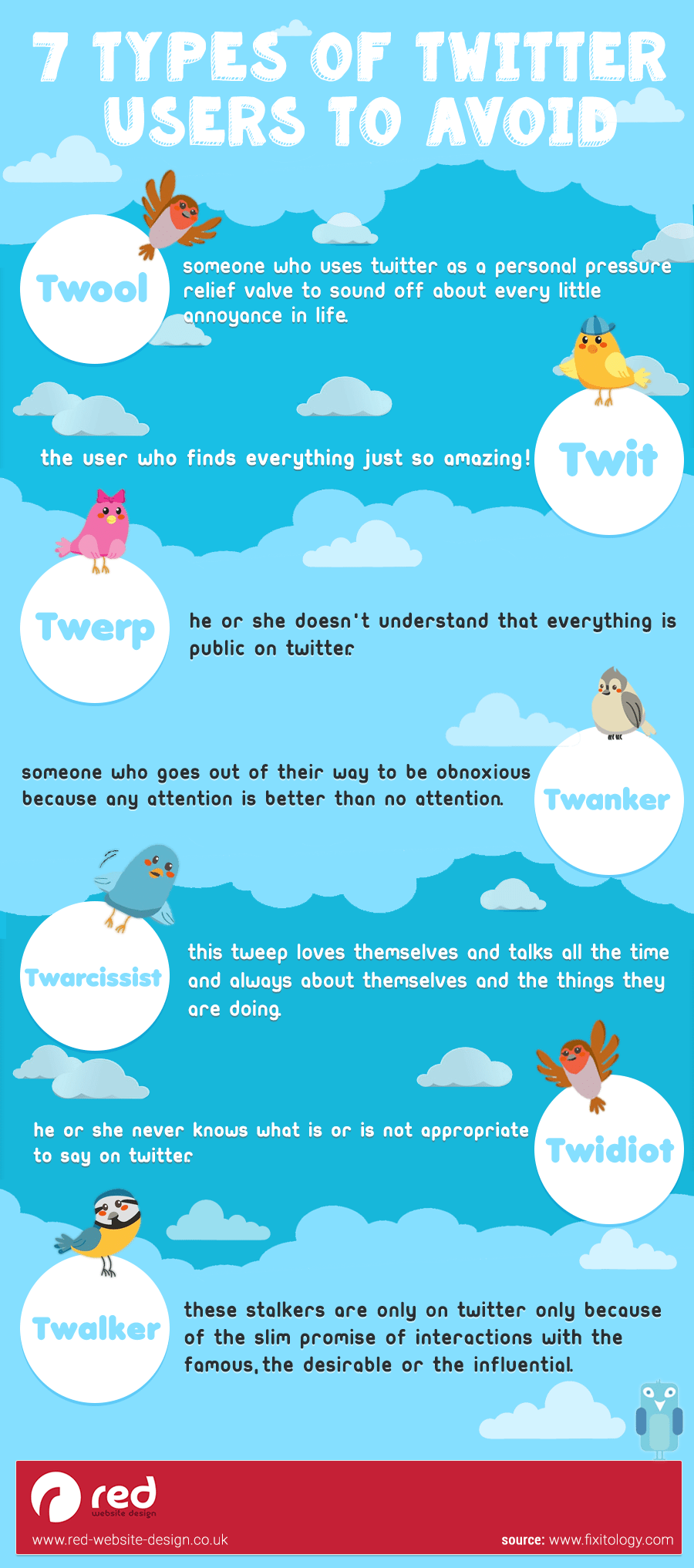
There are many types of Twitter users you want to avoid too, those that will be nothing but a hindrance to you achieving your social media goals. We’ve put together 7 of the most common types you should avoid below.
The Troll
The Troll is perhaps the most infamous and ubiquitous type of undesirable Twitter user. Trolls thrive on provoking others, spreading hate, and generally causing chaos. They often hide behind anonymity and engage in cyberbullying, harassment, and the spread of false information.
How to spot a Troll:
- Frequent use of inflammatory language.
- Consistently engages in personal attacks.
- Frequently targets specific individuals or groups.
- Often has an egg or anonymous profile picture.
How to deal with Trolls:
- Ignore or mute them to avoid giving them attention.
- Report abusive behavior to Twitter.
- Block them if necessary to prevent further interaction.
The Oversharer
The Oversharer treats Twitter like their personal diary, documenting every moment of their life, no matter how mundane or inappropriate. From oversharing their relationship drama to sharing their daily meal choices, these users can clutter your feed with irrelevant information.
How to spot an Oversharer:
- Frequent, detailed updates about personal life.
- Shares information that should be kept private.
- Tends to post multiple times per hour.
How to deal with Oversharers:
- Mute or unfollow them if their posts become overwhelming.
- Gently suggest they reconsider their sharing habits if you have a close relationship with them.
The Hashtag Hijacker
The Hashtag Hijacker is someone who uses trending hashtags to promote unrelated content or spam their own agenda. While using trending hashtags can help your tweets gain visibility, Hijackers misuse this strategy by injecting unrelated or self-promotional content into popular conversations.
How to spot a Hashtag Hijacker:
- Irrelevant or self-promotional content paired with trending hashtags.
- Frequent use of trending hashtags without genuine engagement with the topic.
- Repeating the same hashtag in multiple unrelated posts.
How to deal with Hashtag Hijackers:
- Avoid engaging with their content.
- Report misuse of hashtags to Twitter.
- Encourage them to participate in trending topics authentically.
The Conspiracy Theorist
Conspiracy Theorists are Twitter users who believe and promote elaborate, often baseless, theories about various subjects. They can be disruptive because they frequently engage in heated debates and spread misinformation, which can mislead others.
How to spot a Conspiracy Theorist:
- Consistently shares fringe or unsupported theories.
- Dismisses credible sources of information.
- Engages in lengthy debates with little regard for evidence.
How to deal with Conspiracy Theorists:
- Use facts and reliable sources to counter false claims.
- Avoid getting into prolonged debates, as they may not be receptive to rational arguments.
- Consider muting or unfollowing if their content becomes overwhelming.
The Echo Chamber Dweller
Echo Chamber Dwellers are users who surround themselves with like-minded individuals and refuse to engage with differing opinions. While it’s natural to have preferences and beliefs, shutting out opposing viewpoints can lead to intellectual stagnation and polarization.
How to spot an Echo Chamber Dweller:
- Consistently retweets or engages with content that aligns with their own views.
- Rarely engages in civil discussions with those who have differing opinions.
- Blocks or mutes users who challenge their beliefs.
How to deal with Echo Chamber Dwellers:
- Politely introduce different perspectives when appropriate.
- Encourage open-mindedness and respectful dialogue.
- If they remain closed off, consider whether their content aligns with your interests and values.
The Attention Seeker
The Attention Seeker craves validation and attention on Twitter and will go to great lengths to get it. They often use sensationalized headlines, dramatic language, or staged controversies to garner likes, retweets, and followers.
How to spot an Attention Seeker:
- Consistently posts provocative or exaggerated content.
- Uses clickbait tactics in their tweets.
- Engages in frequent online drama for attention.
How to deal with Attention Seekers:
- Refrain from engaging with or amplifying their attention-seeking behavior.
- Focus on meaningful conversations and connections.
- Encourage them to share genuine thoughts and opinions instead of resorting to sensationalism.
The Follow-Unfollow Gamer
The Follow-Unfollow Gamer is a user who repeatedly follows and unfollows others in an attempt to grow their follower count while keeping their own following list low. This tactic can be annoying and manipulative, as it artificially inflates their follower-to-following ratio.
How to spot a Follow-Unfollow Gamer:
- Frequent changes in their follower count.
- A high follower count with a low following count.
- A pattern of following and then unfollowing you.
How to deal with Follow-Unfollow Gamers:
- Don’t feel pressured to follow them back.
- If they repeatedly follow and unfollow you, consider blocking them.
- Report them to Twitter if their behavior is abusive or excessive.
Conclusion
While Twitter can be a fantastic platform for connecting with others, sharing ideas, and staying informed, it’s essential to navigate it carefully to avoid the negative experiences caused by Twidiots and Twankers. By recognizing and taking action against these undesirable user types, you can enjoy a more pleasant and productive Twitter experience. Remember that Twitter is what you make of it, so curate your feed to align with your interests and values, and don’t hesitate to mute, block, or unfollow users who detract from your online experience.

Author:
Mark Ford