Are you looking for ways to promote your small business? Want to know how to utilise user-generated content (UGC) within your marketing strategy?
Muffin Marketing share 6 ways to promote your business with UGC in this infographic.
Here’s a quick summary:
- Run competitions
- Case studies
- Spotlight reviews
- Share on social
- Guest bloggers
- Create a gallery
Check out the infographic for more detail.
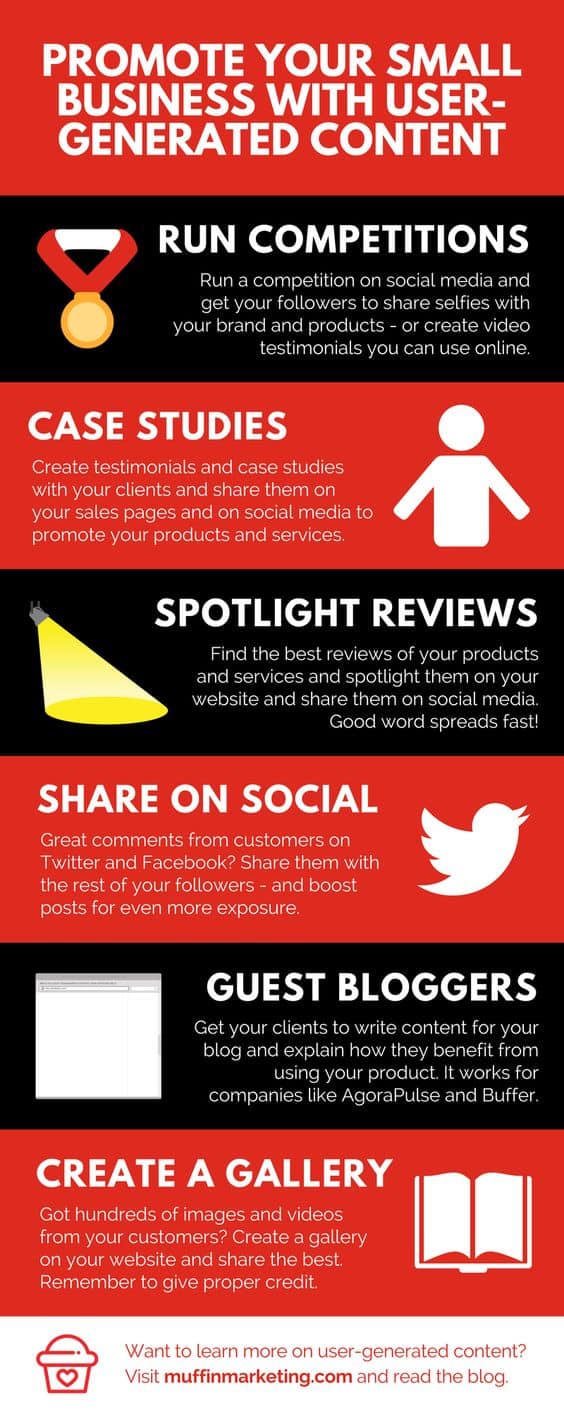
User-generated content (UGC) has become a powerful tool for businesses looking to boost their marketing efforts. By leveraging content created by your customers, you not only enhance engagement but also build trust and authenticity around your brand. In this blog post, we’ll explore six effective ways to promote your business using UGC: running competitions, developing case studies, spotlighting reviews, sharing on social media, inviting guest bloggers, and creating a gallery.
Run Competitions
Running competitions is a dynamic and engaging way to harness user-generated content (UGC) to promote your business. Competitions not only generate excitement and buzz but also encourage customers to create content that can be leveraged for marketing purposes. Here’s a comprehensive guide to running successful competitions for small businesses:
- Define Clear Objectives
Before launching a competition, establish what you want to achieve. Your goals might include increasing brand awareness, driving traffic to your website, growing your social media following, or collecting user-generated content. Clear objectives will help you design the competition and measure its success.
Tips:
- Set Specific Goals: Determine the metrics you want to track, such as the number of entries, engagement rates, or new followers.
- Align with Your Brand: Ensure that the competition aligns with your brand values and marketing objectives.
- Choose an Engaging Theme
The theme of your competition should resonate with your target audience and reflect your brand’s personality. An engaging theme can capture attention and inspire participants to contribute high-quality content.
Tips:
- Know Your Audience: Tailor the theme to the interests and preferences of your target audience.
- Be Creative: Choose a theme that is unique, relevant, and exciting. For example, a pet store might run a “Cutest Pet Photo” competition.
- Offer Attractive Prizes
Prizes are a key motivator for participants. Offering attractive prizes can increase the number of entries and ensure high-quality submissions.
Tips:
- Relevance: Choose prizes that are relevant to your business and appealing to your audience. For example, a cosmetics brand might offer a set of their products.
- Value: Ensure the prize is valuable enough to motivate participation but not so extravagant that it strains your budget.
- Develop Clear and Simple Rules
To ensure a smooth competition, provide clear and concise rules. Participants should understand how to enter, the criteria for judging, and any legal requirements.
Tips:
- Entry Process: Outline how participants should submit their entries, whether it’s through a specific hashtag, email, or a submission form.
- Eligibility: Specify who is eligible to participate, including any age or geographic restrictions.
- Judging Criteria: Clearly define how winners will be selected, whether by a panel of judges, public voting, or random draw.
- Promote Your Competition
Effective promotion is crucial to attracting participants and maximizing the reach of your competition. Utilize various channels to spread the word and encourage participation.
Tips:
- Social Media: Use your social media platforms to announce and update participants about the competition. Create eye-catching graphics and use relevant hashtags.
- Email Marketing: Send out email blasts to your subscriber list with details about the competition and how to enter.
- Website: Feature the competition prominently on your website, including a dedicated landing page with all the details and a submission form if applicable.
- Engage with Participants
Engaging with participants throughout the competition can boost excitement and encourage more entries. Respond to comments, share updates, and show appreciation for participation.
Tips:
- Acknowledge Entries: Like, comment on, and share participant entries to show appreciation and encourage others to join.
- Provide Updates: Keep participants informed about the competition’s progress and any important deadlines or changes.
- Leverage User-Generated Content
Once the competition ends, make the most of the content generated by participants. Feature winning entries and other notable submissions in your marketing materials.
Tips:
- Showcase Winners: Highlight the winners on your website, social media, and in email newsletters. Share their stories and how they engaged with your brand.
- Create Content: Use the best submissions to create content for your marketing channels. This could include blog posts, social media posts, or promotional materials.
- Measure and Analyze Results
After the competition concludes, evaluate its success based on the objectives you set. Analyze the data to understand what worked well and what could be improved for future competitions.
Tips:
- Track Metrics: Monitor metrics such as the number of entries, engagement levels, website traffic, and new followers.
- Gather Feedback: Collect feedback from participants to learn about their experience and gather insights for future competitions.
- Ensure Compliance and Fairness
Adhere to legal and ethical standards to avoid any potential issues. Ensure that your competition complies with relevant laws and regulations and is fair to all participants.
Tips:
- Legal Requirements: Check local regulations regarding competitions and sweepstakes to ensure compliance.
- Transparency: Be transparent about how entries are judged and winners are selected to maintain fairness and credibility.
By following these tips and guidelines, small businesses can run successful competitions that not only engage their audience but also generate valuable user-generated content to promote their brand. Running a well-organized and exciting competition can significantly enhance your marketing efforts and strengthen your connection with your customers.
Develop Case Studies
Case studies are an invaluable tool for demonstrating the real-world impact of your products or services. They provide potential customers with tangible examples of how your business can solve problems and deliver results. For small businesses, creating effective case studies can build credibility, attract new clients, and showcase your value proposition. Here’s a comprehensive guide to developing compelling case studies:
- Identify the Right Customers
Choosing the right customers to feature in your case studies is crucial. Look for clients who have achieved significant results with your products or services and are willing to share their experiences.
Tips:
- Results-Oriented: Select customers who have seen clear, quantifiable improvements as a result of using your product or service.
- Diverse Profiles: Include a range of customers from different industries or sectors to demonstrate the versatility of your offerings.
- Willing Participants: Ensure that the customers you choose are enthusiastic about participating and comfortable sharing their experiences.
- Gather Relevant Information
To create a compelling case study, gather comprehensive information about the customer’s experience. This should include details about their initial challenges, how they used your product or service, and the results they achieved.
Tips:
- Initial Challenge: Understand and document the specific problem or need the customer had before using your product or service.
- Solution Implementation: Capture how the customer implemented your solution and any unique aspects of their usage.
- Results: Gather quantitative data (e.g., increased sales, cost savings) and qualitative feedback (e.g., improved customer satisfaction) to illustrate the impact.
- Structure Your Case Study Effectively
A well-structured case study is easy to read and highlights the most important aspects of the customer’s experience. Follow a clear structure to ensure your case study is compelling and informative.
Tips:
- Introduction: Start with an overview of the customer, their industry, and the problem they faced.
- Challenge: Describe the specific challenges or pain points the customer experienced before using your product or service.
- Solution: Detail how your product or service addressed these challenges and the process of implementation.
- Results: Present the outcomes and benefits the customer experienced. Use metrics, testimonials, and visuals to support your claims.
- Conclusion: Summarize the key takeaways and how other potential customers can benefit from your solution.
- Use Engaging Content Formats
Incorporate various content formats to make your case studies more engaging and accessible. This can help capture the attention of different types of readers and enhance the impact of your case study.
Tips:
- Written Content: Create detailed written case studies with clear headings and subheadings for easy navigation.
- Infographics: Use infographics to visually represent key data and results, making the information more digestible.
- Videos: Produce video case studies that feature interviews with customers and showcase their experiences in a dynamic format.
- Slideshows: Develop slide presentations that highlight the key points of the case study in a concise, visual manner.
- Incorporate Testimonials and Quotes
Including direct quotes and testimonials from your customers adds authenticity and credibility to your case study. Personal feedback can illustrate the customer’s satisfaction and provide a human touch.
Tips:
- Relevant Quotes: Select quotes that highlight specific benefits or positive experiences with your product or service.
- Attribution: Ensure quotes are accurately attributed to the customer and reflect their genuine sentiments.
- Diverse Perspectives: Include testimonials from different stakeholders (e.g., users, decision-makers) to provide a comprehensive view.
- Design for Readability and Visual Appeal
The design of your case study should enhance readability and visually appeal to your audience. A well-designed case study can capture attention and make the information more engaging.
Tips:
- Clear Layout: Use a clean and organized layout with plenty of white space to make the content easy to read.
- Visuals: Include relevant images, charts, and graphs to complement the text and illustrate key points.
- Branding: Ensure the case study aligns with your brand’s visual identity, including colors, fonts, and logos.
- Promote Your Case Studies
Once your case studies are complete, effectively promote them to reach your target audience. Share them through various channels to maximize their visibility and impact.
Tips:
- Website: Feature case studies on your website, ideally in a dedicated section or landing page for easy access.
- Social Media: Share snippets or highlights from the case studies on your social media platforms, linking back to the full content.
- Email Marketing: Include case studies in your email newsletters or marketing campaigns to engage your subscriber base.
- Sales Materials: Use case studies as part of your sales presentations and proposals to provide evidence of your product’s effectiveness.
- Gather and Utilize Feedback
Collect feedback on your case studies from both internal stakeholders and external readers to identify areas for improvement and ensure they meet your audience’s needs.
Tips:
- Internal Review: Have team members review the case studies for accuracy, clarity, and relevance.
- Customer Feedback: Ask featured customers for their input on the final case study to ensure it accurately reflects their experience.
- Continuous Improvement: Use feedback to refine your approach and enhance future case studies.
- Measure the Impact
Evaluate the effectiveness of your case studies in achieving your marketing objectives. Track key metrics to understand how they contribute to your overall strategy.
Tips:
- Engagement Metrics: Monitor metrics such as page views, social media shares, and click-through rates to assess engagement.
- Lead Generation: Track how case studies contribute to lead generation and conversion rates.
- Customer Feedback: Gather feedback from potential customers to understand the impact of the case studies on their decision-making process.
By following these tips and guidelines, small businesses can create impactful case studies that demonstrate their value, build trust with potential customers, and support their marketing efforts. Case studies provide real-world evidence of your product’s effectiveness and can be a powerful tool in attracting new clients and showcasing your success.
Spotlight Reviews
Spotlighting reviews is an effective strategy to leverage user-generated content for promoting your business. Positive reviews build credibility, influence potential customers, and enhance your brand’s reputation. Here’s a detailed guide on how to spotlight reviews effectively:
- Identify High-Quality Reviews
Not all reviews are created equal. Focus on spotlighting reviews that are detailed, positive, and relevant to your business. High-quality reviews provide specific feedback, mention key benefits, and reflect genuine customer satisfaction.
Tips:
- Detailed Feedback: Look for reviews that offer in-depth insights into the customer’s experience and highlight specific aspects of your product or service.
- Relevance: Choose reviews that align with the aspects of your business you want to emphasize, such as exceptional customer service or product effectiveness.
- Authenticity: Ensure the review is genuine and not overly promotional or written by someone with a conflict of interest.
- Obtain Permission
Before using a customer review in your marketing materials, always seek permission from the reviewer. This respects their privacy and ensures you have the right to use their content.
Tips:
- Reach Out: Contact the reviewer via email or social media to ask for permission to feature their review. Explain how you plan to use it.
- Provide Context: Let them know where their review will be used (e.g., website, social media, advertising) and how it will be displayed.
- Thank Them: Express appreciation for their feedback and willingness to contribute.
- Choose the Right Format
Spotlighted reviews can be presented in various formats to engage different types of audiences. Select the format that best suits your brand’s style and the platform where you’ll feature the review.
Tips:
- Written Highlights: Use text excerpts from reviews in your website’s testimonial section, promotional materials, or email campaigns.
- Graphics and Images: Create visually appealing graphics featuring review quotes. Use branded colors and fonts to maintain consistency.
- Video Testimonials: Record video testimonials from customers if they are willing. Video reviews add a personal touch and can be shared on social media or your website.
- Incorporate Reviews into Your Website
Feature positive reviews prominently on your website to build trust and credibility with visitors. A dedicated testimonials or reviews page can serve as a powerful marketing tool.
Tips:
- Dedicated Section: Create a dedicated page or section for customer testimonials and reviews. Organize them by category or theme to make it easy for visitors to find relevant feedback.
- Rotating Widget: Use a rotating widget or carousel on your homepage to highlight a selection of positive reviews.
- Call-to-Action: Include calls-to-action (CTAs) alongside reviews to encourage visitors to learn more about your products or services or to make a purchase.
- Share Reviews on Social Media
Social media platforms are ideal for showcasing positive reviews and engaging with your audience. Sharing reviews can amplify your reach and foster community engagement.
Tips:
- Regular Updates: Post reviews regularly on your social media channels. Use eye-catching visuals and relevant hashtags to increase visibility.
- Tag Reviewers: Tag the reviewers in your posts (with their permission) to acknowledge their contribution and engage with them directly.
- Engage with Comments: Respond to comments and reactions to your review posts to encourage further interaction and show appreciation.
- Incorporate Reviews into Marketing Campaigns
Integrate positive reviews into your marketing campaigns to enhance their effectiveness and provide social proof of your brand’s value.
Tips:
- Advertising: Include review quotes in your online and offline advertisements. This adds credibility and reinforces your brand’s reputation.
- Email Campaigns: Feature customer reviews in your email newsletters or promotional emails to build trust with your audience and encourage conversions.
- Content Marketing: Use reviews as part of your content marketing strategy. For example, include them in blog posts, case studies, or whitepapers to support your claims.
- Highlight Reviews in Customer Communications
Incorporate positive reviews into your customer communications to build rapport and reinforce the value of your products or services.
Tips:
- Follow-Up Emails: Include positive reviews in follow-up emails or thank-you notes to new customers. This reinforces their decision to choose your brand.
- Sales Presentations: Feature customer testimonials in sales presentations to provide evidence of your product’s effectiveness and address potential objections.
- Monitor and Manage Reviews
Keep track of the reviews you receive and actively manage your online reputation. Responding to reviews, both positive and negative, demonstrates your commitment to customer satisfaction.
Tips:
- Regular Monitoring: Use review monitoring tools to track new reviews and mentions of your business across different platforms.
- Respond Promptly: Respond to reviews in a timely and professional manner. Thank reviewers for their positive feedback and address any concerns raised in negative reviews.
- Leverage Feedback: Use insights from reviews to improve your products or services and address any recurring issues or themes.
- Create a Review-Boosting Strategy
Develop a strategy to encourage more customers to leave reviews. A steady stream of positive reviews will provide more opportunities for spotlighting and enhance your brand’s reputation.
Tips:
- Ask for Reviews: Promptly request reviews from satisfied customers through follow-up emails, surveys, or during interactions.
- Simplify the Process: Make it easy for customers to leave reviews by providing direct links or clear instructions.
- Incentivize Feedback: Offer incentives, such as discounts or entry into a giveaway, to encourage more customers to share their experiences.
By effectively spotlighting reviews, small businesses can leverage customer feedback to build trust, attract new customers, and enhance their marketing efforts. Showcasing positive reviews not only validates the quality of your products or services but also strengthens your brand’s reputation and credibility. Embrace these strategies to make the most of user-generated content and drive success for your business.
Share on Social
Sharing user-generated content (UGC) on social media is a powerful way to engage your audience, build community, and boost brand visibility. By leveraging the content your customers create, you not only showcase their positive experiences but also enhance your social media strategy. Here’s a detailed guide on how to effectively share UGC on social media:
- Understand Your Audience
Before sharing UGC, it’s crucial to understand your audience’s preferences and behaviors on social media. Tailor your approach to align with their interests and engagement patterns.
Tips:
- Analyze Engagement: Use social media analytics tools to assess what types of content resonate most with your audience.
- Segment Your Audience: Identify different segments within your audience and customize your UGC sharing strategy to cater to their specific interests.
- Choose the Right Platforms
Different social media platforms have unique characteristics and user bases. Select the platforms where your target audience is most active and where UGC will have the most impact.
Tips:
- Platform Strengths: Utilize Instagram for visually appealing UGC, Twitter for quick shares and interactions, Facebook for community building, and LinkedIn for professional content.
- Consistency: Maintain a consistent presence across chosen platforms to keep your brand top-of-mind and maximize reach.
- Create a Sharing Schedule
Develop a schedule for sharing UGC to keep your social media feeds fresh and engaging. Consistent posting helps maintain momentum and keeps your audience engaged.
Tips:
- Frequency: Determine how often you will share UGC based on your content calendar and audience engagement patterns.
- Timing: Post UGC during peak engagement times for each platform to maximize visibility and interaction.
- Craft Compelling Posts
When sharing UGC, ensure that your posts are compelling and highlight the value of the content. Provide context, express appreciation, and include calls-to-action (CTAs) to encourage further engagement.
Tips:
- Context: Explain the story behind the UGC and why it’s valuable. This helps your audience connect with the content on a deeper level.
- Appreciation: Acknowledge and thank the original creator. This not only builds goodwill but also encourages more users to share their content.
- CTAs: Include clear CTAs, such as “Check out more,” “Share your own,” or “Visit our website,” to drive further interaction and engagement.
- Incorporate Branding
Ensure that shared UGC aligns with your brand’s visual identity and messaging. Consistent branding reinforces your identity and creates a cohesive social media presence.
Tips:
- Visual Consistency: Use branded templates, colors, and fonts to maintain a consistent look across your UGC posts.
- Brand Mentions: Include your brand’s handle and relevant hashtags to enhance visibility and track engagement.
- Engage with Your Audience
Active engagement with your audience is key to building a strong community. Respond to comments, messages, and interactions related to UGC to foster a sense of connection.
Tips:
- Timely Responses: Reply to comments and messages promptly to show that you value your audience’s input and feedback.
- Encourage Dialogue: Ask questions or start conversations related to the UGC to encourage further engagement and interaction.
- Leverage UGC for Campaigns
Incorporate UGC into your broader social media campaigns to amplify its impact and align it with your marketing objectives. UGC can be used to support various types of campaigns, from product launches to seasonal promotions.
Tips:
- Campaign Integration: Feature UGC in campaign-specific posts, ads, and promotions to enhance the campaign’s authenticity and appeal.
- Thematic Sharing: Align UGC with the theme of your campaign. For example, if running a holiday campaign, share festive UGC that resonates with the season.
- Monitor and Analyze Performance
Track the performance of UGC posts to understand their impact and optimize your strategy. Use analytics tools to measure engagement metrics and gather insights for future content.
Tips:
- Engagement Metrics: Monitor likes, shares, comments, and click-through rates to gauge the effectiveness of UGC posts.
- Audience Feedback: Analyze feedback from your audience to understand what types of UGC resonate most and adjust your sharing strategy accordingly.
- Ensure Compliance and Ethics
When sharing UGC, ensure that you comply with legal and ethical standards. Respect copyright and intellectual property rights, and obtain necessary permissions before sharing content.
Tips:
- Permission: Always obtain explicit permission from content creators before using their UGC in your posts.
- Attribution: Properly credit the original creators by tagging them and acknowledging their contributions in your posts.
- Encourage More UGC
Foster a culture of user participation by encouraging more customers to create and share content. Promote campaigns and initiatives that inspire users to contribute their own content.
Tips:
- Contests and Challenges: Run social media contests or challenges that encourage users to create and share content related to your brand.
- Incentives: Offer incentives, such as discounts or giveaways, to motivate users to participate and share their experiences.
By effectively sharing UGC on social media, small businesses can enhance their brand’s presence, engage with their audience, and build a loyal community. Leveraging user-generated content not only showcases the positive experiences of your customers but also strengthens your social media strategy and drives meaningful interactions. Embrace these strategies to make the most of UGC and boost your business’s success.
Invite Guest Bloggers
Inviting guest bloggers to contribute to your business’s blog can be a strategic way to diversify your content, reach new audiences, and enhance your brand’s authority. By collaborating with industry experts, influencers, or customers, you can provide fresh perspectives and valuable insights. Here’s a detailed guide on how to effectively incorporate guest bloggers into your content strategy:
- Identify the Right Guest Bloggers
Selecting the right guest bloggers is crucial to ensuring that their contributions align with your brand’s values and resonate with your audience. Look for individuals who bring expertise, credibility, and a relevant audience.
Tips:
- Expertise: Seek out professionals or thought leaders in your industry who can provide valuable insights and authoritative content.
- Influencers: Consider collaborating with influencers who have a strong following and can amplify your content’s reach.
- Customer Advocates: Engage satisfied customers or clients who have compelling stories or experiences to share.
- Define Clear Guidelines and Expectations
Provide clear guidelines and expectations to guest bloggers to ensure that their content meets your standards and aligns with your brand’s voice. Establishing these parameters helps maintain consistency and quality.
Tips:
- Content Brief: Share a detailed content brief outlining the topic, key points, and any specific requirements for the blog post.
- Brand Voice: Provide guidelines on your brand’s voice, style, and tone to ensure that the guest blogger’s content aligns with your existing content.
- Submission Deadline: Set a deadline for content submission to keep your content calendar on track.
- Develop a Collaborative Process
Create a smooth and collaborative process for working with guest bloggers. This helps ensure that the content is polished and meets your standards while fostering a positive working relationship.
Tips:
- Communication: Maintain open lines of communication with guest bloggers. Provide feedback and answer any questions they may have.
- Editing: Review and edit the guest content to ensure it fits your brand’s standards and style. Offer constructive feedback if necessary.
- Approval: Get final approval from the guest blogger before publishing the content to ensure they are satisfied with the final version.
- Promote the Guest Content
Maximize the impact of guest blog posts by promoting them across your various channels. Effective promotion can increase visibility, drive traffic, and enhance engagement.
Tips:
- Social Media: Share the guest blog post on your social media platforms, tagging the guest blogger and using relevant hashtags to increase reach.
- Email Newsletters: Include the guest post in your email newsletters to inform your subscribers about the new content and drive traffic to your blog.
- Cross-Promotion: Encourage the guest blogger to promote the post on their own platforms, leveraging their audience to boost visibility.
- Leverage SEO Benefits
Guest blog posts can contribute to your SEO strategy by increasing your website’s authority and generating backlinks. Optimize guest content to enhance its search engine performance.
Tips:
- Keywords: Ensure that the guest blogger incorporates relevant keywords into their content to improve SEO.
- Backlinks: Request that the guest blogger includes backlinks to your website or related content, which can enhance your site’s authority and drive traffic.
- Meta Descriptions: Write compelling meta descriptions and titles for the guest blog posts to improve click-through rates from search engine results.
- Build Relationships with Guest Bloggers
Establishing strong relationships with guest bloggers can lead to long-term collaborations and mutual benefits. Nurturing these relationships can also encourage future guest contributions.
Tips:
- Recognition: Acknowledge and thank guest bloggers for their contributions. Highlight their work and show appreciation for their efforts.
- Networking: Maintain ongoing communication with guest bloggers and explore opportunities for future collaborations or joint ventures.
- Feedback: Provide feedback on their content and ask for their input on your blog strategy. This fosters a collaborative and supportive relationship.
- Monitor and Measure Impact
Evaluate the performance of guest blog posts to understand their impact on your content strategy and business goals. Use analytics to assess engagement, traffic, and other key metrics.
Tips:
- Engagement Metrics: Track metrics such as page views, social shares, comments, and time on page to gauge the effectiveness of guest content.
- Traffic Sources: Analyze referral traffic from guest blog posts to understand how well they are driving visitors to your site.
- Conversion Rates: Monitor conversion rates to see if guest posts are contributing to your business objectives, such as lead generation or sales.
- Ensure Legal and Ethical Considerations
When working with guest bloggers, address any legal and ethical considerations to protect both parties and ensure compliance.
Tips:
- Content Ownership: Clarify content ownership and usage rights in your agreement with the guest blogger to avoid any disputes.
- Disclosure: Ensure that any sponsored or promotional content complies with relevant regulations and includes proper disclosures.
- Copyright: Respect copyright laws and give proper credit to guest bloggers for their work.
- Create a Guest Blogging Policy
Develop a guest blogging policy to formalize the process and set clear expectations for potential contributors. A well-defined policy helps manage submissions and maintain quality.
Tips:
- Submission Guidelines: Outline how potential guest bloggers can submit their pitches or content ideas, including any specific criteria or topics of interest.
- Editorial Standards: Define your editorial standards and review process to ensure consistency and quality across guest posts.
- Compensation: Specify any compensation or incentives for guest bloggers, such as payment, exposure, or other benefits.
By effectively incorporating guest bloggers into your content strategy, small businesses can enhance their blog’s diversity, reach new audiences, and build valuable industry connections. Guest blogging not only provides fresh perspectives but also strengthens your brand’s authority and fosters a collaborative content ecosystem. Embrace these strategies to maximize the benefits of guest contributions and drive success for your business.
Create a Gallery
Creating a gallery to showcase user-generated content (UGC) is a powerful way to engage your audience, build community, and enhance your brand’s visual appeal. By curating and displaying content created by your customers, you can highlight their experiences, celebrate their creativity, and foster a sense of connection. Here’s a detailed guide on how to effectively create and manage a gallery for your business:
- Define the Purpose and Goals
Before creating a gallery, clarify its purpose and what you aim to achieve. Understanding your goals will help you design a gallery that aligns with your brand’s objectives and resonates with your audience.
Tips:
- Purpose: Determine if the gallery will focus on showcasing products, celebrating customer experiences, or featuring creative content.
- Goals: Set specific goals such as increasing engagement, driving traffic, or enhancing brand loyalty. Use these goals to guide your gallery’s design and content strategy.
- Choose the Right Platform
Select a platform or medium for your gallery that suits your brand and audience. Options include your website, social media channels, or a dedicated app.
Tips:
- Website Integration: Incorporate the gallery into your website for easy access and seamless integration with your existing content.
- Social Media: Use social media platforms like Instagram, Pinterest, or Facebook to create a gallery that leverages their visual and interactive features.
- Dedicated App: Consider developing a mobile app if your gallery requires advanced features or if you want to offer a more immersive experience.
- Curate High-Quality Content
Select and curate user-generated content that reflects your brand’s values and meets your quality standards. High-quality content will enhance the gallery’s visual appeal and effectiveness.
Tips:
- Content Guidelines: Establish guidelines for the type of content you want to feature, including image quality, relevance, and alignment with your brand.
- Approval Process: Implement a review and approval process to ensure that all content meets your standards and is suitable for public display.
- Diversity: Include a diverse range of content to showcase different perspectives and experiences.
- Design an Engaging Layout
Design the gallery with a layout that is visually appealing and user-friendly. The design should highlight the content and make it easy for visitors to navigate and interact.
Tips:
- Visual Appeal: Use high-quality images, clean lines, and a consistent color scheme to create an attractive and cohesive gallery.
- Navigation: Ensure that the gallery is easy to navigate with clear categories, filters, or search options to help visitors find content quickly.
- Responsive Design: Optimize the gallery for different devices and screen sizes to ensure a seamless experience for all users.
- Incorporate Interactive Features
Add interactive features to engage visitors and encourage them to explore the gallery. Interactive elements can enhance the user experience and make the gallery more dynamic.
Tips:
- Hover Effects: Use hover effects to provide additional information or highlight specific details when users interact with gallery items.
- Slideshows or Carousels: Implement slideshows or carousels to display multiple images or pieces of content in a single view.
- User Interaction: Allow users to like, comment, or share gallery content to foster engagement and social interaction.
- Promote the Gallery
Drive traffic to your gallery by promoting it across various channels. Effective promotion will increase visibility and encourage more users to visit and contribute.
Tips:
- Social Media: Share links to the gallery on your social media platforms and encourage your audience to check it out and participate.
- Email Campaigns: Include information about the gallery in your email newsletters and encourage subscribers to visit and contribute.
- Collaborations: Partner with influencers or other brands to promote the gallery and reach a wider audience.
- Encourage User Contributions
Invite your audience to contribute their own content to the gallery. Encouraging user participation can increase engagement and provide fresh, authentic content.
Tips:
- Call-to-Action: Include clear calls-to-action (CTAs) inviting users to submit their content. Provide instructions and any necessary guidelines for submissions.
- Incentives: Offer incentives such as discounts, features, or recognition to motivate users to share their content.
- User-Generated Campaigns: Run campaigns or contests that encourage users to create and submit content related to specific themes or events.
- Monitor and Moderate Content
Regularly monitor and moderate the content in your gallery to ensure it remains relevant, high-quality, and aligned with your brand’s values.
Tips:
- Moderation: Implement moderation tools or processes to review and approve user submissions and ensure they meet your content standards.
- Feedback: Provide feedback to contributors and engage with them to maintain a positive and collaborative environment.
- Update Content: Periodically refresh the gallery with new content to keep it current and engaging for visitors.
- Measure and Analyze Performance
Track the performance of your gallery to understand its impact and effectiveness. Use analytics to gather insights and make data-driven decisions.
Tips:
- Engagement Metrics: Monitor metrics such as page views, time spent on the gallery, and interaction rates to assess its performance.
- User Feedback: Collect feedback from users to understand their experience and identify areas for improvement.
- Conversion Rates: Analyze how the gallery influences conversions, such as sign-ups, purchases, or other desired actions.
- Adapt and Evolve
Continuously adapt and evolve your gallery based on performance data and user feedback. Stay responsive to changes in audience preferences and industry trends.
Tips:
- Regular Updates: Update the gallery with new content and features to keep it fresh and relevant.
- A/B Testing: Experiment with different layouts, features, and promotional strategies to find what works best for your audience.
- Trend Monitoring: Stay informed about industry trends and incorporate relevant elements into your gallery to keep it current and engaging.
By creating a well-designed and engaging gallery, small businesses can showcase user-generated content in a way that enhances their brand’s visibility, fosters community, and drives meaningful interactions. Embrace these strategies to make the most of your gallery and leverage user-generated content to support your business goals.
Conclusion
User-generated content offers a wealth of opportunities for businesses to connect with their audience, build credibility, and enhance their marketing efforts. By running competitions, developing case studies, spotlighting reviews, sharing on social media, inviting guest bloggers, and creating galleries, you can effectively leverage UGC to promote your business. Embrace these strategies to tap into the authentic voices of your customers and elevate your brand’s presence.
Feel free to adapt and implement these methods to suit your unique business needs and audience. With the right approach, user-generated content can become a valuable asset in your marketing toolkit.

Author:
Mark Ford

From Confusion to Clarity: How to Steer Your Marketing Away from These Frequent Errors
Are you struggling to make sense of your marketing strategy and wondering why your results aren’t matching your effort? Want to learn how to avoid the most common marketing mistakes and create a clear, focused plan that actually delivers results? […]

85 Game-Changing Tools for Creators, Marketers, and Entrepreneurs
Are you searching for powerful yet free tools to help you grow your brand, streamline your workflow, and boost your online presence? Want to discover game-changing platforms that every creator, marketer, and entrepreneur should be using right now? […]