
Are you just getting started with an SEO campaign for your website? Want to learn about the importance of backlinks and how to get them?
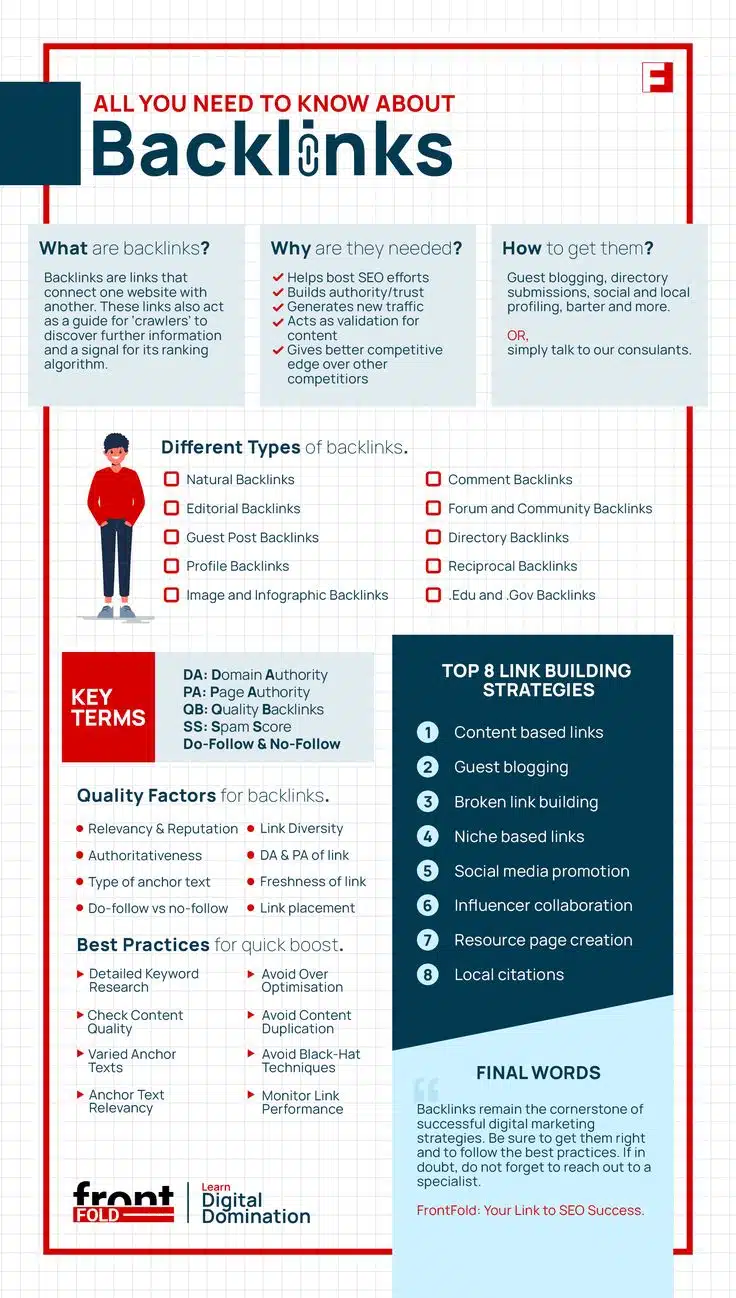
Front Fold shares its guide to backlinks in this infographic.
They cover the following:
- What are backlinks?
- Why are backlinks needed?
- How to get backlinks
Check out the infographic for more information.
Backlinks are one of the most important aspects of search engine optimisation (SEO). They play a crucial role in determining a website’s authority, relevance, and ranking on search engine results pages (SERPs).
Whether you’re a business owner, digital marketer, or blogger, understanding backlinks and how to use them effectively can make a significant difference in your website’s visibility and traffic.
In this comprehensive guide, we’ll explore what backlinks are, why they are essential for SEO, and how you can acquire them to improve your website’s search engine rankings.
What Are Backlinks?
Backlinks, also known as inbound or incoming links, are links from one website to another. They serve as a signal to search engines that the linked website contains valuable, credible content. In other words, when a website links to another, it’s essentially vouching for the quality of that content.
Search engines like Google use backlinks as a ranking factor because they indicate trust and authority. A website with many high-quality backlinks is more likely to rank higher than one with fewer or lower-quality backlinks.
How Backlinks Work
Imagine the internet as a giant web, where each website is a node, and backlinks act as bridges connecting these nodes. When a website receives a backlink from another reputable site, search engines interpret this as a sign of credibility and relevance. The more authoritative and relevant the linking site is, the more beneficial the backlink will be.
Additionally, backlinks help search engine crawlers discover new pages. If a high-ranking website links to a new page on a smaller website, search engines are more likely to index that page quickly.
Why Are Backlinks Needed?
Backlinks are essential for several reasons, particularly in the context of SEO and digital marketing. Here are the key benefits of having quality backlinks:
- Boost SEO Efforts: Search engines use backlinks as a ranking factor. The more high-quality backlinks a website has, the better its chances of ranking higher in search results. Websites with strong backlink profiles tend to outperform competitors in organic search.
- Build Authority and Trust: Backlinks act as endorsements from other websites. When authoritative websites link to your content, it signals to search engines that your website is a trustworthy source of information. This enhances your domain authority, making it easier to rank for competitive keywords.
- Generate New Traffic: A well-placed backlink on a popular website can drive significant referral traffic to your site. Unlike organic search traffic, referral traffic comes from users who click on links from other websites. This can lead to increased engagement, conversions, and brand awareness.
- Validate Content Quality: If multiple reputable websites link to your content, it indicates that your content is valuable and relevant. This validation not only improves your SEO but also enhances your brand’s credibility in your industry.
- Gain a Competitive Edge: In highly competitive industries, backlinks can give you an advantage over competitors. Websites with strong backlink profiles tend to rank higher, attract more visitors, and generate more leads and sales.
How to Get Backlinks
Building a strong backlink profile requires strategic planning and consistent effort. Here are the best methods to acquire high-quality backlinks:
Guest Blogging
Guest blogging involves writing articles for other websites in exchange for a backlink to your site. This is one of the most effective ways to earn high-quality backlinks while establishing yourself as an authority in your niche.
How to Do It:
- Identify authoritative blogs in your industry.
- Pitch unique and valuable content ideas to them.
- Write high-quality, informative articles.
- Include a relevant backlink to your website within the content or author bio.
Directory Submissions
Submitting your website to online directories can help you acquire backlinks from reputable sources. However, it’s essential to choose directories that are relevant to your industry and have high domain authority.
Best Practices:
- Use niche-specific directories related to your business.
- Avoid spammy directories that offer low-quality links.
- Ensure your business information is accurate and consistent across directories.
Social and Local Profiling
Creating profiles on social media and local business platforms can help you gain valuable backlinks. Many social media platforms and local directories allow you to include a link to your website in your profile.
Steps to Follow:
- Set up profiles on platforms like LinkedIn, Facebook, Twitter, and Instagram.
- List your business on Google My Business, Yelp, and other local directories.
- Share content that encourages engagement and backlinking.
Content-Based Links
Creating high-quality, shareable content is one of the most effective ways to earn backlinks naturally. When your content is valuable, other websites are more likely to link to it as a reference.
Examples of Link-Worthy Content:
- In-depth blog posts and guides
- Infographics and visual content
- Case studies and research reports
- How-to tutorials and step-by-step guides
Broken Link Building
Broken link building involves finding broken links on other websites and suggesting your content as a replacement. This method benefits both parties—webmasters fix broken links, and you earn a backlink.
How to Do It:
- Use tools like Ahrefs or Check My Links to find broken links.
- Reach out to the website owner and offer a replacement link from your site.
- Provide high-quality, relevant content to improve your chances of success.
Niche-Based Links
Targeting industry-specific websites and communities can help you earn niche-relevant backlinks. These links are valuable because they come from websites related to your business.
Where to Get Niche-Based Links:
- Industry blogs and news websites
- Niche forums and discussion boards
- Partner websites and collaborations
Social Media Promotion
Sharing your content on social media can increase its visibility and lead to more backlinks. When influencers and industry leaders share your content, it gains credibility and attracts more links.
Best Practices:
- Post regularly on LinkedIn, Twitter, and Facebook.
- Engage with influencers and thought leaders.
- Use hashtags and trends to increase reach.
Influencer Collaboration
Working with influencers can help you gain backlinks from high-authority websites. Many influencers have blogs, and collaborating with them can lead to valuable backlinks.
How to Collaborate:
- Offer to write a guest post for an influencer’s blog.
- Ask influencers to review your product or service.
- Partner on joint content projects, such as webinars or interviews.
Resource Page Creation
Many websites have resource pages that link to valuable industry content. You can reach out to website owners and suggest adding your content to their resource pages.
Steps to Follow:
- Find relevant resource pages using Google search (e.g., “best SEO resources”).
- Contact the site owner and explain why your content is valuable.
- Ensure your content is well-researched and informative.
Local Citations
For local businesses, earning backlinks from local sources can improve search rankings. This includes mentions on local news sites, blogs, and business associations.
Where to Get Local Citations:
- Local business directories
- Chamber of commerce websites
- Local blogs and news sites
Final Words
Backlinks remain a cornerstone of successful digital marketing strategies. They help improve search engine rankings, build trust, and generate organic traffic. However, not all backlinks are created equal—quality matters more than quantity.
By following the best practices outlined in this guide, you can develop a strong backlink profile that enhances your website’s credibility and SEO performance. Whether through guest blogging, content creation, or influencer collaboration, focusing on acquiring high-quality backlinks will pay off in the long run.
If you need help with link building, consider reaching out to SEO specialists who can provide expert guidance and strategy.

Author:
Mark Ford