
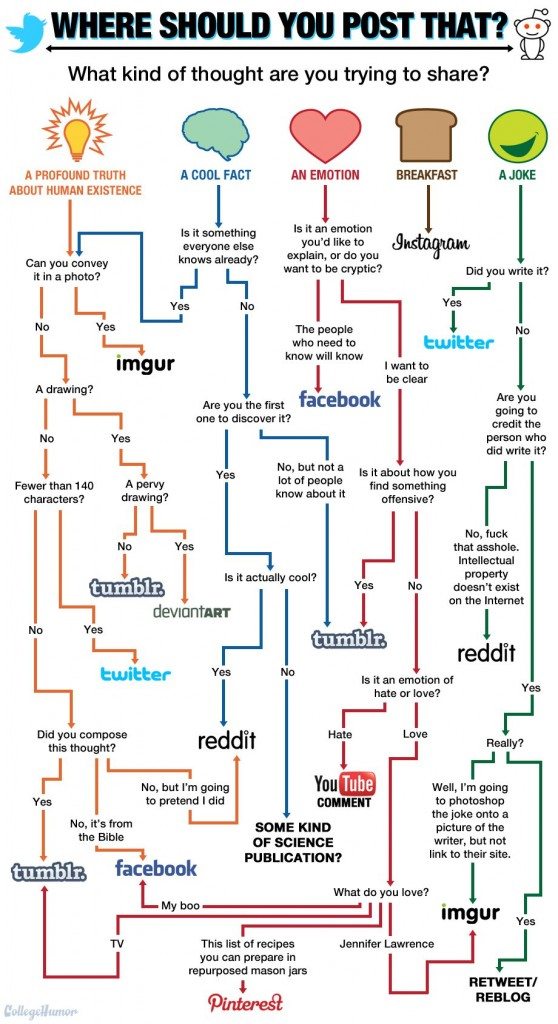
So you’ve got something you think is awesome to share but you’re not sure which of your many social media accounts to post it to?
Some types of posts are welcomed on some networks but are frowned upon on others so it’s essential you tailor your content to the right place. You don’t want people to end up hating you and unfollowing.
For a humorous guide on where to post your social media updates take a look at this infographic from College Humor.
In today’s digital age, social media has become an integral part of our lives. From sharing personal moments to promoting businesses, social media platforms offer a diverse range of opportunities to connect with others and engage with content. However, with so many platforms available, it can be challenging to determine where to post specific types of content for maximum impact. To help you navigate the complex world of social media, we’ve compiled a comprehensive guide on the social media posting rules you must follow.
Understanding the Landscape
Before delving into the specific rules for each platform, it’s essential to understand the social media landscape. Each platform caters to a unique audience and content style. To decide where to post your content, consider the following factors:
1. Target Audience
Different social media platforms attract various demographics. Understanding your target audience is crucial in determining where to post your content effectively. For example, Instagram may be ideal for reaching a younger audience, while LinkedIn is better suited for professionals.
2. Content Type
The type of content you want to share plays a significant role in platform selection. Visual content like photos and videos may perform well on Instagram and YouTube, while text-based content might find a home on Twitter or LinkedIn.
3. Goals and Objectives
Consider your goals when using social media. Are you looking to build brand awareness, drive website traffic, or engage with your audience? Different platforms can help you achieve different objectives.
4. Competitor Analysis
Analyze your competitors’ social media presence. Identify which platforms they are most active on and where they have the most engagement. This can provide valuable insights into where your target audience may be spending their time.
5. Resources and Time
Managing multiple social media accounts can be time-consuming. Assess your available resources and time commitment to ensure you can maintain a consistent presence on the selected platforms.
Now that you have a better understanding of the factors to consider let’s dive into the social media posting rules for some of the most popular platforms.
With over 2.8 billion monthly active users, Facebook remains one of the largest and most influential social media platforms. Here are some rules to follow when posting on Facebook:
Rule 1: Use Engaging Visuals
Facebook users respond well to visual content. Use high-quality images and videos to capture your audience’s attention. Facebook also supports 360-degree photos and live videos, which can provide unique engagement opportunities.
Rule 2: Keep It Conversational
Write captions and posts in a conversational tone. Encourage engagement by asking questions or prompting discussions in the comments. Respond promptly to comments to foster a sense of community.
Rule 3: Use Hashtags Sparingly
While hashtags are more commonly associated with platforms like Instagram and Twitter, using a few relevant hashtags on Facebook can increase discoverability. However, don’t overdo it; one to three hashtags per post is usually sufficient.
Rule 4: Consistency Is Key
Maintain a consistent posting schedule. Use Facebook Insights to determine when your audience is most active and schedule posts accordingly. Consistency helps keep your audience engaged and aware of your brand.
Instagram is a visual-centric platform that’s ideal for businesses and individuals looking to showcase their creativity. Here are some essential rules for posting on Instagram:
Rule 1: High-Quality Visuals Are Non-Negotiable
Instagram is all about aesthetics. Invest in high-quality photos and videos. Use the platform’s built-in editing tools or third-party apps to enhance your content.
Rule 2: Craft Captivating Captions
While visuals are essential, captions play a significant role in engaging your audience. Use captions to tell a story, share insights, or ask questions. Keep them concise and relevant to your content.
Rule 3: Use Relevant Hashtags
Hashtags on Instagram are crucial for discoverability. Research and use popular and niche-specific hashtags to expand your reach. Instagram allows up to 30 hashtags per post, but a more strategic approach is to use a mix of popular and niche tags.
Rule 4: Leverage Instagram Stories and Reels
Take advantage of Instagram Stories and Reels to diversify your content. These features allow you to share temporary, engaging content that can boost your visibility and interact with your audience in real-time.
Twitter is a fast-paced platform where brevity and timely content are essential. Here are some rules for successful tweeting:
Rule 1: Keep It Short and Sweet
Tweets are limited to 280 characters, so conciseness is key. Craft tweets that are easy to digest and encourage retweets. Don’t forget to leave room for hashtags and mentions.
Rule 2: Use Hashtags Wisely
Hashtags are vital on Twitter for categorizing content and increasing discoverability. Research trending hashtags and use relevant ones in your tweets. However, avoid overloading your tweets with hashtags; one to three is typically sufficient.
Rule 3: Engage and Interact
Twitter is a platform where conversations thrive. Engage with your followers by responding to comments, retweeting interesting content, and participating in trending discussions. Building relationships is crucial on this platform.
Rule 4: Post Frequently
Twitter moves quickly, and the lifespan of a tweet is short. To maintain visibility, post frequently throughout the day. Use scheduling tools to ensure a consistent presence, even when you can’t be online.
LinkedIn is the go-to platform for professionals and businesses seeking to establish authority and build a professional network. Here are some LinkedIn posting rules to follow:
Rule 1: Share Valuable Insights
LinkedIn users appreciate informative and insightful content. Share industry-specific knowledge, tips, and trends that can benefit your network. Long-form articles and well-researched posts tend to perform well.
Rule 2: Professional Branding
Maintain a professional profile and brand image. Use a high-quality headshot as your profile picture and craft a compelling headline. Regularly update your profile to reflect your current accomplishments and skills.
Rule 3: Connect and Network
LinkedIn is a platform for networking and making professional connections. Connect with colleagues, industry peers, and potential clients. Personalize your connection requests with a brief message explaining your intent.
Rule 4: Engage Thoughtfully
Engage in meaningful discussions by commenting on posts and sharing your insights. Avoid spammy or promotional behavior. Respect the platform’s professional tone.
YouTube
As the largest video-sharing platform globally, YouTube offers vast opportunities for content creators and businesses. Here are some rules for successful YouTube posting:
Rule 1: Invest in Quality Video Production
High-quality video production is essential for YouTube success. Invest in good cameras, lighting, and audio equipment. Edit your videos for a polished finish.
Rule 2: Create Engaging Thumbnails
Thumbnails are the first thing viewers see. Create eye-catching thumbnails that accurately represent your video’s content. Use custom thumbnails for a professional touch.
Rule 3: Optimize for Search
YouTube is also a search engine, so optimize your videos for discoverability. Use relevant keywords in your video titles, descriptions, and tags. Create compelling video descriptions that include timestamps and links to related content.
Rule 4: Encourage Subscriptions and Engagement
Encourage viewers to subscribe to your channel and engage with your content. Ask for likes, comments, and shares within your videos. Interact with your audience by responding to comments and fostering a sense of community.
Pinterest is a visual discovery and bookmarking platform. It’s a unique space for creative content and e-commerce. Here are some Pinterest posting rules to follow:
Rule 1: Create Visually Appealing Pins
Pinterest is all about visuals. Create stunning and informative pins that catch the eye. Use high-quality images and compelling graphics.
Rule 2: Use Keywords Strategically
Pinterest is also a search engine, so use keywords strategically in your pin descriptions and board titles. This will help your content appear in relevant searches.
Rule 3: Organize Boards Effectively
Organize your boards logically and with relevant content. Create a cohesive theme for each board and maintain consistency.
Rule 4: Pin Regularly
Pinterest rewards consistency. Pin regularly to keep your content visible and engage with the platform’s algorithm. Use scheduling tools to maintain a consistent posting schedule.
TikTok
TikTok has taken the social media world by storm with its short-form video format. Here are some TikTok posting rules to follow:
Rule 1: Keep It Short and Entertaining
TikTok videos are short, typically under 60 seconds. Create entertaining and engaging content that grabs viewers’ attention quickly. Use music, effects, and transitions to enhance your videos.
Rule 2: Use Trending Sounds and Challenges
Stay up-to-date with TikTok trends, sounds, and challenges. Participating in these can increase your visibility and engagement on the platform.
Rule 3: Consistent Posting
Consistency is key on TikTok as well. Post regularly to keep your audience engaged and the algorithm in your favor.
Rule 4: Engage with Comments
Interact with your TikTok audience by responding to comments and engaging in conversations. Building a sense of community can lead to increased followers and engagement.
Conclusion
Navigating the world of social media can be challenging, but by understanding the unique rules and best practices for each platform, you can make informed decisions about where to post your content. Remember to consider your target audience, content type, goals, competitor analysis, and available resources when making your choices.
Ultimately, the key to successful social media posting lies in creating content that resonates with your audience and aligns with the platform’s culture. Stay up-to-date with platform changes and trends, and be prepared to adapt your posting strategy accordingly. By following these social media posting rules, you’ll be well-equipped to make the most of your social media presence and connect with your audience effectively.

Author:
Mark Ford

How to Create Engaging Instagram Reels Without Ever Showing Your Face
Are you looking for creative ways to make engaging Instagram Reels without stepping in front of the camera? Want to discover proven content ideas that help your brand stand out on social media while keeping your privacy intact? […]