
In today’s digital age, having a strong presence on social media is crucial for any business looking to reach a wider audience and connect with potential customers. However, with so many social media platforms available, it can be challenging to determine which ones are the most effective for your business.
In this blog post, we will explore a comprehensive guide on how to establish which social media networks you should be using to market your business effectively.
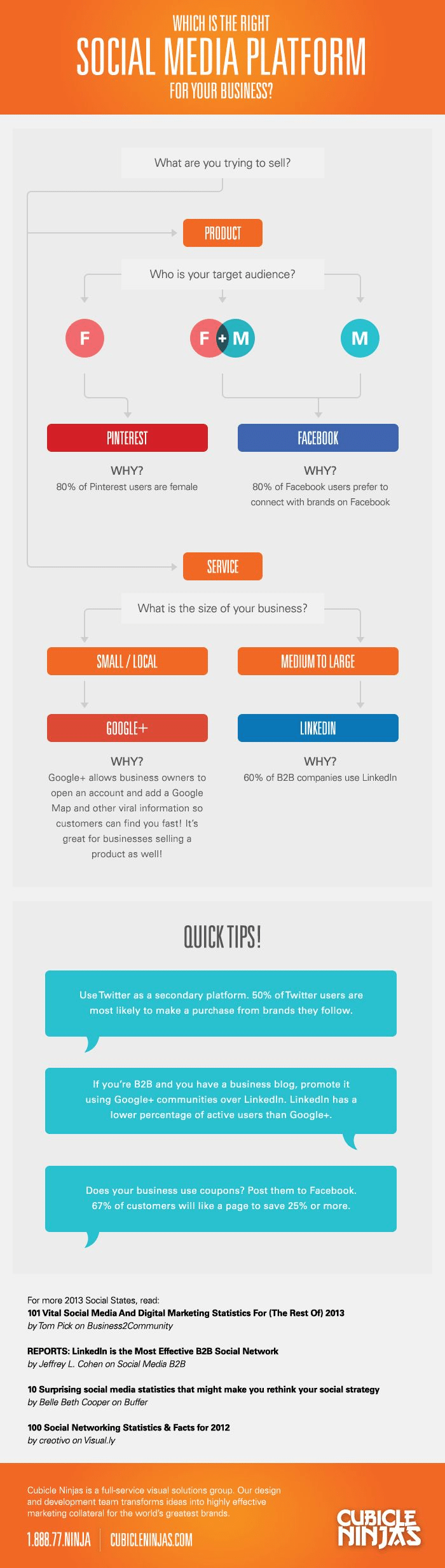
Use the infographic below from Cubicle Ninjas to establish which are the best social networks for you.
Understanding Your Business Goals
Before diving into the world of social media marketing, it’s essential to begin by defining your business goals. What are you hoping to achieve with your social media efforts? These goals will serve as a foundation for determining which social media platforms align best with your objectives. Common business goals for social media marketing include:
- Increasing brand awareness: If your primary goal is to introduce your brand to a broader audience, you’ll want to focus on platforms that offer broad reach and allow you to establish your brand identity effectively.
- Driving website traffic: For businesses looking to generate more traffic to their website, platforms that allow you to share links and drive clicks are essential.
- Generating leads: If you aim to capture leads and grow your customer base, select platforms with strong lead-generation features or the ability to reach a specific target audience.
- Boosting sales: Some businesses may want to leverage social media to increase product sales. In this case, platforms with shopping features or strong e-commerce integrations are crucial.
- Building community and engagement: For those interested in fostering a loyal customer base and creating an engaged community, platforms with active user engagement are essential.
By having clear and specific goals, you can better evaluate which social media networks align with your objectives and allocate your resources accordingly.
Identifying Your Target Audience
Understanding your target audience is a fundamental step in choosing the right social media platforms. To determine which networks your potential customers frequent, consider the following factors:
- Demographics: Analyze the age, gender, location, and other demographic data of your ideal customers. Different social media platforms attract different demographics.
- Interests and behavior: What are the interests, hobbies, and behaviors of your target audience? Some platforms cater to specific niches or interests.
- Online habits: When and how often does your audience use social media? Some platforms are more popular during specific times of the day or days of the week.
- Platform preferences: Ask your existing customers about their favorite social media platforms. This can provide valuable insights into where your target audience spends their time online.
- Competitor analysis: Research your competitors to see which social media networks they are active on. This can give you an idea of where your audience might be.
Once you have a clear picture of your target audience, you can start aligning your social media marketing efforts with the platforms that best match their preferences and behaviors.
Assessing the Top Social Media Platforms
With your goals and target audience in mind, it’s time to assess the most popular social media platforms and determine which ones are the most suitable for your business:
1. Facebook
Pros:
- Broad reach, making it suitable for businesses with a wide target audience.
- Robust advertising platform with advanced targeting options.
- Excellent for building brand awareness and engagement.
Cons:
- Organic reach has declined in recent years, necessitating more paid advertising.
- May not be the best fit for niche or B2B markets.
2. Instagram
Pros:
- Highly visual platform, ideal for businesses with visually appealing products or services.
- Great for brand promotion, storytelling, and influencer collaborations.
- Strong engagement rates, especially among younger audiences.
Cons:
- Requires a strong focus on high-quality visuals and storytelling.
- Limited link-sharing options in posts.
3. Twitter
Pros:
- Real-time updates and conversations with a global audience.
- Ideal for news updates, customer support, and engagement.
- Effective for building thought leadership.
Cons:
- Posts have a short lifespan due to the fast-paced nature of the platform.
- May not be suitable for businesses without the capacity for frequent updates.
4. LinkedIn
Pros:
- Ideal for B2B marketing and networking.
- Excellent for sharing industry insights, thought leadership, and job postings.
- Robust advertising platform for targeting professionals.
Cons:
- Limited appeal for B2C businesses.
- Engagement levels may be lower compared to other platforms.
5. Pinterest
Pros:
- Visual platform, perfect for businesses in the fashion, home decor, and food industries.
- Strong e-commerce integration and shopping features.
- Long-lasting pins continue to drive traffic over time.
Cons:
- May not be suitable for businesses in niche markets.
- Requires a focus on creating visually appealing content.
6. TikTok
Pros:
- Rapidly growing platform with a young and engaged user base.
- Ideal for creative and entertaining content.
- Excellent for brand challenges and viral marketing.
Cons:
- Not suitable for all industries, particularly those with a more mature audience.
- Requires a good understanding of trending content and creativity.
7. YouTube
Pros:
- Ideal for businesses that can create video content.
- Second-largest search engine after Google, making it excellent for tutorials and how-to content.
- Great for building a loyal subscriber base.
Cons:
- Requires a commitment to video production and editing.
- Competition can be fierce in some niches.
Evaluating Platform Features and Resources
Consider the features and resources required for each platform when making your decision:
- Content type: Different platforms favor different types of content, such as images, videos, articles, or short updates. Choose the platform that aligns with your content creation capabilities.
- Posting frequency: Some platforms require frequent updates, while others can thrive with less frequent posting. Consider your capacity for content creation and posting schedules.
- Advertising options: Explore the advertising options available on each platform. Paid advertising can significantly enhance your reach and targeting capabilities.
- Analytics and tracking: Look into the analytics tools offered by each platform to measure your performance and adjust your strategy accordingly.
- Community management: Consider the time and effort required to engage with your audience, respond to comments, and manage your online community.
- Budget: Evaluate the cost of advertising and content creation on each platform and ensure it aligns with your budget.
Testing and Iterating
Once you’ve selected the social media platforms that best match your goals, target audience, and resources, it’s time to put your plan into action. However, keep in mind that the world of social media is dynamic, and trends can change rapidly. To stay ahead of the curve and ensure your strategy remains effective, follow these practices:
- A/B testing: Experiment with different types of content, posting schedules, and ad campaigns to identify what works best for your audience.
- Monitor performance: Regularly review your analytics to track the performance of your social media efforts. Identify areas where you can improve and make data-driven decisions.
- Stay updated: Keep up with the latest trends and updates on your chosen platforms. New features and changes can impact your strategy.
- Engage with your audience: Foster a sense of community by responding to comments, messages, and mentions. Building strong relationships with your audience can lead to long-term success.
- Adapt and evolve: Be prepared to adjust your strategy as needed. If you notice that a particular platform is not delivering the desired results, don’t be afraid to reallocate resources to more promising avenues.
Conclusion
Establishing which social media networks to use for marketing your business is a critical decision that requires careful consideration of your goals, target audience, and available resources. By aligning your strategy with these factors and regularly evaluating your performance, you can create a successful social media marketing plan that drives brand awareness, engagement, and ultimately, business growth. Remember that the social media landscape is constantly evolving, so staying flexible and adaptive is key to long-term success in this dynamic digital realm.

Author:
Mark Ford