
Are you wondering why your website’s traffic or rankings have started to slip? Want to learn how a regular SEO audit can keep your site healthy and performing at its best?
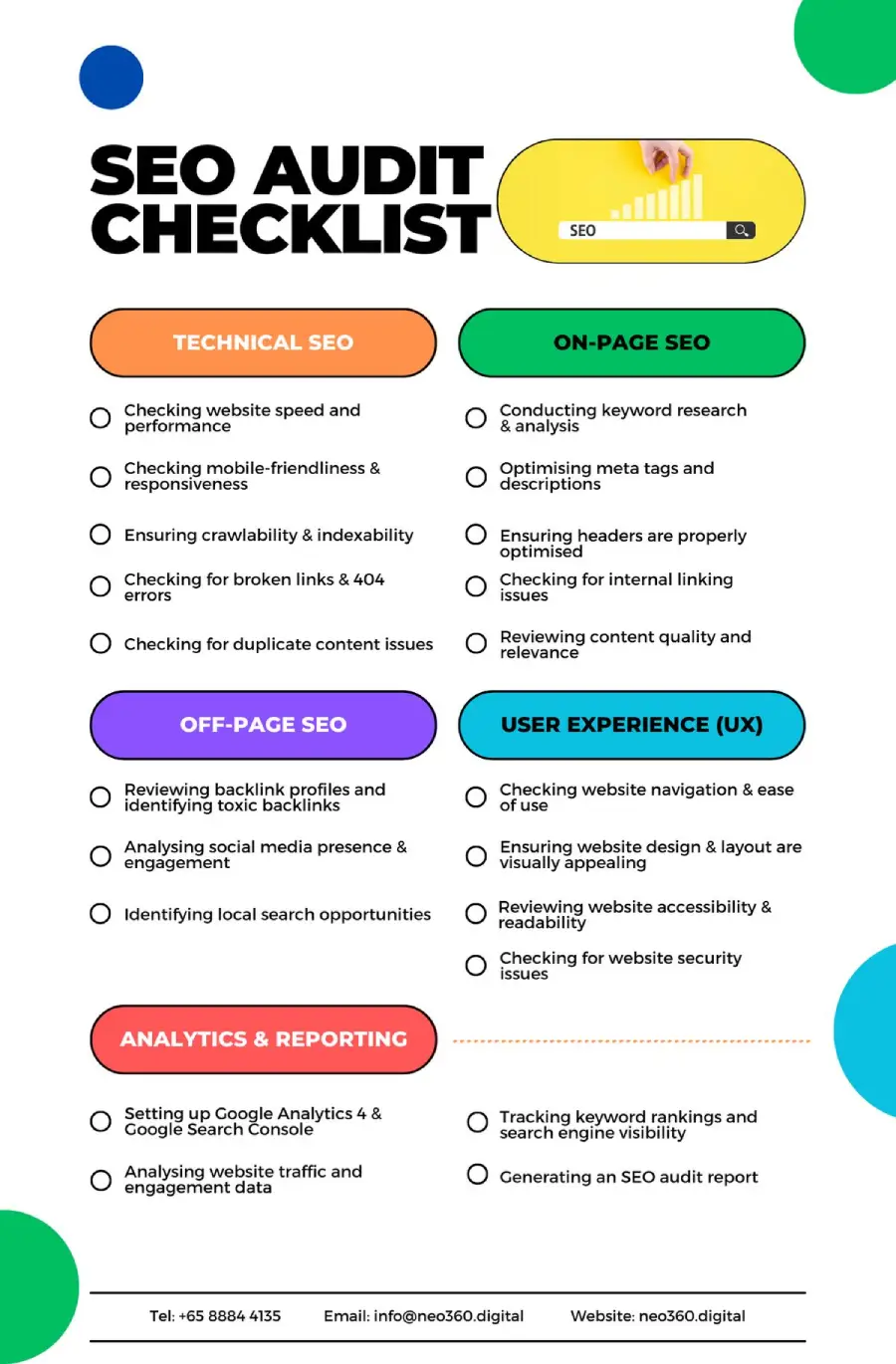
You’ll find some SEO basics in this infographic.
Here’s a summary of what’s covered:
- Why Regular SEO Audits Matter
- Technical SEO
- On-Page SEO
- Off-Page SEO
- User Experience (UX)
- Analytics & Reporting
Check out the post below for more.
Keeping your website performing at its best isn’t a one-time job. Search engines change their algorithms constantly, competitors publish new content, and technical issues can creep in without warning.
This is why regular SEO audits are essential for businesses that want to stay visible online. In this guide, we’ll first explore why audits matter so much, and then walk you through exactly how to run one.
Why Regular SEO Audits Matter
Before diving into the process, it’s important to understand the value of an SEO audit. Without regular reviews, even well-built websites can slip down the rankings over time. Broken links, outdated content, or missed optimisation opportunities can quietly undermine your performance. A regular audit keeps your site healthy, competitive, and primed to attract traffic.
- Prevent ranking drops by catching issues before they escalate
- Stay compliant with evolving search engine algorithm updates
- Ensure your site meets user expectations for speed and usability
- Keep your SEO strategy aligned with business and market changes
Technical SEO
Once you know why audits are important, the first step is reviewing your technical SEO. This is the foundation that allows search engines to find and index your site. A well-run technical audit ensures your website is fast, mobile-friendly, and free from errors that block visibility. Without this, your content may never get the exposure it deserves.
- Test site speed with Google PageSpeed Insights or GTmetrix
- Review mobile responsiveness to guarantee a seamless user experience
- Fix crawlability and indexability issues in robots.txt and XML sitemaps
- Locate and repair broken links, 404 pages, and duplicate content issues
On-Page SEO
After technical issues are addressed, focus on on-page elements. On-page SEO fine-tunes your site’s content so that it ranks for the right search terms. Regular audits help you find pages with missing tags, poor keyword alignment, or outdated information. This keeps your site relevant and optimised for both search engines and users.
- Perform fresh keyword research to target the right audience
- Optimise meta tags and descriptions for click-through rates
- Ensure headers are structured logically and support SEO goals
- Strengthen internal linking to guide visitors and share page authority
Off-Page SEO
Your website’s reputation is shaped by what happens off-site too. Off-page SEO audits make sure your backlink profile and brand signals are helping rather than harming your rankings. A clean, high-quality backlink profile boosts authority and trust. Regularly reviewing off-page factors keeps your reputation strong and competitive.
- Audit backlinks and remove harmful or spammy links
- Build high-quality backlinks from reputable websites
- Monitor brand mentions and social media engagement
- Explore local SEO opportunities such as citations and partnerships
User Experience (UX)
Even a technically perfect site can lose visitors if the experience is frustrating. UX audits help uncover usability problems and ensure your design encourages visitors to stay and engage. Search engines increasingly reward websites that deliver a great experience, so improving UX is a direct ranking factor.
- Review navigation and menus for simplicity and clarity
- Assess design and layout for visual appeal and consistency
- Check accessibility to ensure your site works for all users
- Audit site security, including HTTPS and malware protection
Analytics & Reporting
No SEO audit is complete without measuring results. Analytics and reporting tell you what’s working and where to focus next. By looking at real data, you can make decisions that drive measurable improvements. This step closes the loop and turns your audit into an action plan.
- Set up Google Analytics 4 and Search Console for accurate insights
- Analyse traffic and engagement to identify trends
- Track keyword rankings to measure progress
- Compile your findings into a clear, actionable SEO audit report
Conclusion
Regular SEO audits are the best way to keep your website in peak condition. They help you catch problems early, adapt to algorithm changes, and improve user experience. Once you understand why audits are essential, following a step-by-step process ensures nothing is missed.
By committing to regular reviews, you’ll protect your rankings, grow your traffic, and stay ahead of competitors.

Author:
Mark Ford