
The Pareto Principle, also known as the 80 – 20 rule, isn’t a new idea.
People have been applying it to business for donkeys years.
But how do we apply that to your social media marketing strategy?
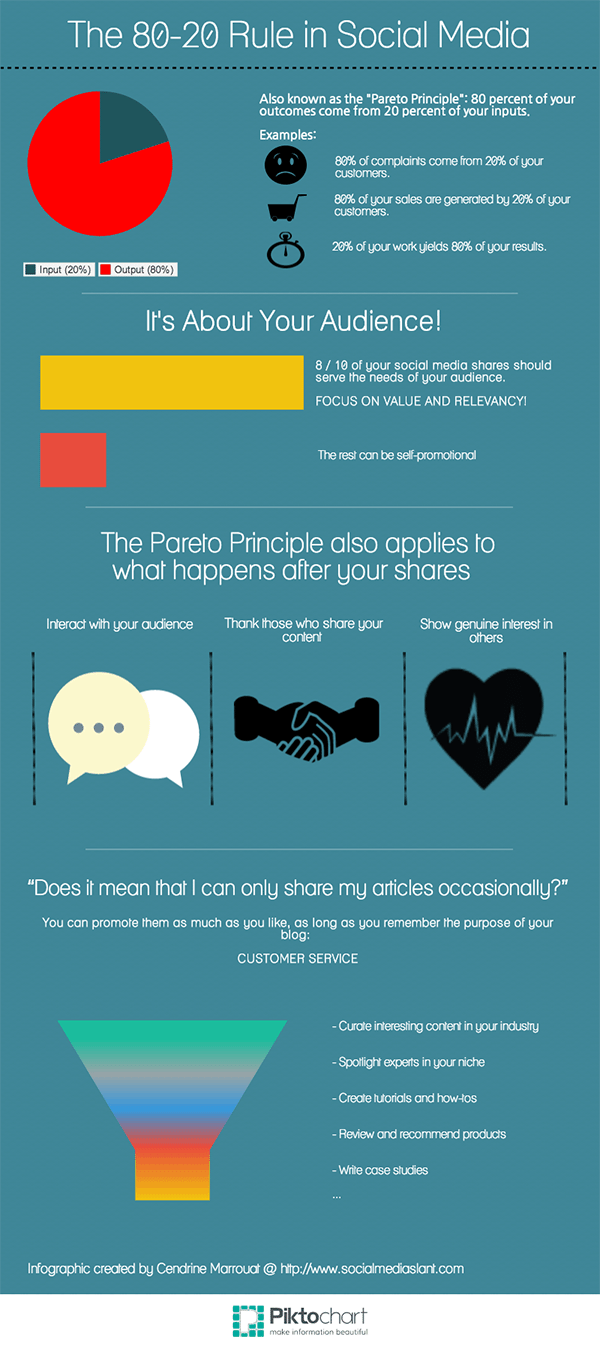
As the infographic below from Piktochart shows, 80% of your posts should serve your followers (helpful internet marketing tips for example) and only 20% should be self promotional.
In today’s digital age, social media marketing has become an essential component of any successful business strategy. With billions of active users across various platforms, social media provides an unparalleled opportunity to connect with your target audience, build brand awareness, and drive sales. However, the vast potential of social media can quickly turn into a pitfall if you don’t adhere to a fundamental rule: authenticity.
Authenticity is the linchpin that holds together successful social media marketing efforts. Without it, your campaigns will likely fall flat, leaving you with wasted time, resources, and a disengaged audience. In this blog post, we’ll explore why authenticity is the one rule you can’t afford to ignore in social media marketing. We’ll delve into its definition, its importance, and practical strategies to infuse authenticity into your social media efforts.
Understanding Authenticity in Social Media Marketing
Before we dive into the specifics, let’s first define what we mean by authenticity in the context of social media marketing. Authenticity is all about being real, genuine, and true to your brand’s values, mission, and personality. It’s about showing your human side, admitting mistakes when necessary, and consistently delivering on the promises you make to your audience.
In the world of social media, authenticity can manifest in various ways:
- Transparent Communication: Authentic brands communicate openly with their audience. They are honest about their products, services, and any challenges they might face. Transparency builds trust, and trust is a crucial currency in social media marketing.
- Humanizing the Brand: People want to connect with other people, not faceless corporations. Authenticity involves putting a human face on your brand. Share behind-the-scenes glimpses, introduce your team, and tell your brand’s story in a relatable way.
- Consistency: Authenticity also means being consistent in your messaging, tone, and values. Inconsistency can confuse your audience and erode trust. Maintain a clear and coherent brand identity across all social media platforms.
- Engagement: Authenticity shines through when brands engage with their audience genuinely. Respond to comments, answer questions, and acknowledge both positive and negative feedback. Authentic brands listen and respond thoughtfully.
Now that we have a clear understanding of authenticity let’s explore why it’s the one rule you can’t afford to overlook in your social media marketing efforts.
The Importance of Authenticity in Social Media Marketing
1. Builds Trust
Trust is the cornerstone of any successful brand-customer relationship. Without trust, your audience will be hesitant to engage with your content, make purchases, or recommend your brand to others. Authenticity is the key to building and maintaining trust in the world of social media.
When you’re authentic, you show your audience that you have nothing to hide. You’re not trying to deceive or manipulate them into making a purchase. Instead, you’re providing valuable content and genuinely engaging with your audience. This transparency fosters trust, which, in turn, leads to loyalty.
2. Differentiates Your Brand
In a saturated market, it can be challenging to stand out from the competition. Authenticity is one of the most effective ways to differentiate your brand. When you’re authentic, you showcase what makes your brand unique and why it’s worth your audience’s attention.
Consider brands like Patagonia and Dove, which have built their entire marketing strategies around authenticity. Patagonia’s commitment to environmental responsibility and Dove’s focus on promoting body positivity have set them apart from their competitors and resonated with their target audiences.
3. Enhances Engagement
Social media platforms are designed for engagement, and authentic content is more likely to spark meaningful interactions. When you share genuine stories, respond to comments authentically, and show appreciation for your audience, you create a sense of community around your brand.
Engagement is a two-way street. Authenticity encourages your audience to participate actively, whether by liking, sharing, commenting, or tagging others. The more engaged your audience is, the wider your reach becomes.
4. Drives Sales
Ultimately, social media marketing aims to drive sales and revenue. Authenticity plays a significant role in this process. When consumers trust your brand and feel a genuine connection, they are more likely to convert into paying customers.
Authentic marketing also helps you attract the right audience—the people who are genuinely interested in your products or services. These are the individuals who are more likely to make a purchase and become loyal customers.
5. Mitigates Negative Feedback
No brand is immune to negative feedback or criticism on social media. However, authentic brands are better equipped to handle such situations. When you’ve established trust and a reputation for transparency, your audience is more likely to give you the benefit of the doubt during a crisis.
Authenticity also means owning up to mistakes and taking corrective actions. This not only mitigates the damage but can also turn negative feedback into an opportunity to showcase your brand’s commitment to improvement.
Practical Strategies for Infusing Authenticity into Your Social Media Marketing
Now that we’ve established why authenticity is crucial in social media marketing let’s explore practical strategies to help you implement this rule effectively:
1. Know Your Audience
Authenticity begins with understanding your audience’s needs, preferences, and pain points. Conduct thorough research to create detailed customer personas. What are their interests? What challenges do they face? Tailor your content and messaging to resonate with your target audience genuinely.
2. Define Your Brand Voice and Values
Consistency is key to authenticity. Define your brand’s voice, tone, and values. Ensure that they align with your audience’s expectations and your brand’s mission. Use these guidelines to shape your content and communication style across all social media platforms.
3. Share Real Stories
People connect with stories, especially those they can relate to. Share real stories about your brand’s journey, challenges, and successes. Highlight your team members and their contributions. Humanize your brand by showcasing the people behind it.
4. Be Transparent
Transparency is a fundamental aspect of authenticity. Be open about your products or services, pricing, and business practices. If you make a mistake, admit it and take steps to rectify it. Transparency builds trust and credibility.
5. Engage Authentically
Engagement is a two-way street. Respond to comments and messages promptly and authentically. Show appreciation for positive feedback and address negative comments with empathy and a desire to resolve issues.
6. Stay Consistent
Consistency is crucial in maintaining authenticity. Ensure that your messaging, branding, and values remain consistent across all social media platforms. This consistency reinforces your brand’s identity and builds trust over time.
7. Showcase User-Generated Content
Encourage your audience to create and share content related to your brand. User-generated content not only authenticates your brand but also serves as social proof. Share user stories, reviews, and testimonials to build trust with potential customers.
8. Monitor and Adjust
Regularly monitor your social media performance and gather feedback from your audience. Use analytics tools to track engagement, reach, and conversion rates. Adjust your strategy based on what works and what doesn’t, keeping authenticity at the forefront.
9. Stay True to Your Values
In the fast-paced world of social media, it’s easy to get caught up in trends and viral challenges. While it’s essential to stay current, don’t compromise your brand’s values for short-term gains. Authenticity means staying true to your core principles, even in the face of fleeting trends.
Conclusion
In the ever-evolving landscape of social media marketing, authenticity remains a timeless rule that you simply cannot afford to ignore. It’s the thread that weaves together trust, differentiation, engagement, and ultimately, business success.
By understanding the importance of authenticity, defining your brand’s voice and values, and implementing practical strategies to infuse authenticity into your social media marketing efforts, you can build meaningful connections with your audience, stand out from the competition, and drive both trust and revenue. So, remember this one rule: be authentic, and watch your social media marketing efforts flourish.

Author:
Mark Ford

How to Create Platform-Specific Social Media Content Without Doubling Your Workload
Are you struggling to keep your social media content consistent across platforms without it eating up your time? Want to learn how to adapt one idea for Facebook, Instagram, LinkedIn, TikTok, and X without creating everything from scratch? […]