
Are you struggling to come up with fresh, high-performing content ideas for your SEO strategy? Want to discover proven tools and techniques that make brainstorming SEO content fast and effective?
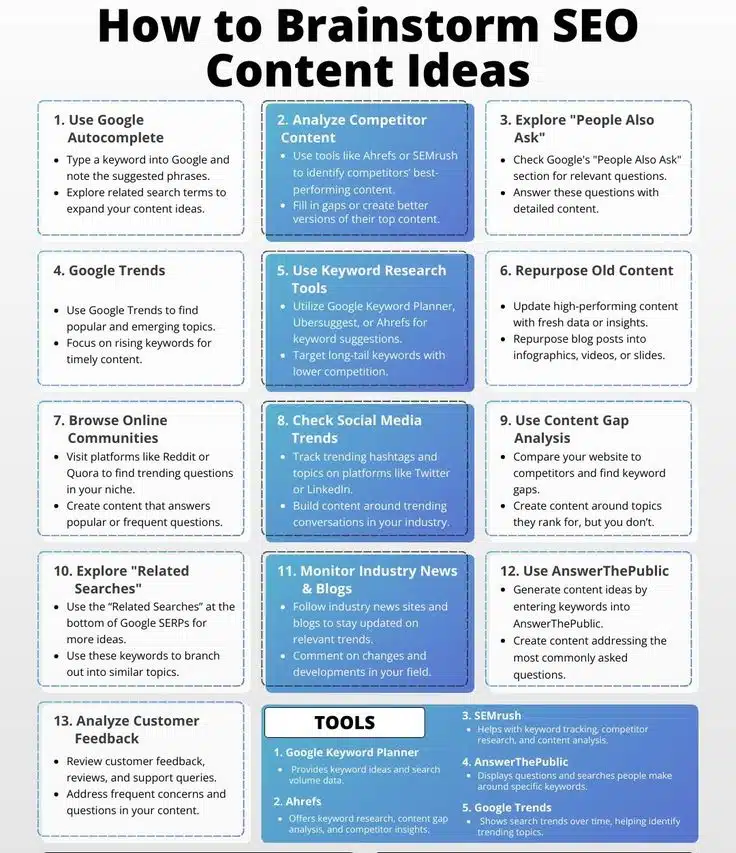
You’ll find some SEO basics in this infographic.
Here’s a summary of what’s covered:
- Use Google Autocomplete
- Analyse Competitor Content
- Explore “People Also Ask”
- Google Trends
- Use Keyword Research Tools
- Repurpose Old Content
- Browse Online Communities
- Check Social Media Trends
- Use Content Gap Analysis
- Explore “Related Searches”
Check out the post below for more.
Creating fresh, valuable, and search-optimised content consistently is one of the toughest challenges marketers and content creators face. But with the right tools and techniques, you can build a repeatable system for brainstorming ideas that not only rank well but also engage and convert.
This blog post breaks down the most effective methods to fill your content calendar with powerful SEO-driven topics.
Use Google Autocomplete
Google Autocomplete is one of the quickest ways to find out what people are actively searching for. By simply typing in a keyword, you’ll be presented with a list of suggested phrases based on real-time user data. These suggestions often reveal trending questions, long-tail keywords, and specific topics within your niche. It’s a fast and intuitive way to spark content ideas.
- Start with a broad keyword and see what suggestions appear.
- Use different keyword stems to see variations in results.
- Note long-tail phrases that reflect searcher intent.
- Expand topics by exploring similar phrases and combinations.
Analyse Competitor Content
Your competitors can be a goldmine for SEO content ideas. By reviewing their best-performing blog posts or landing pages, you can identify which topics are resonating with audiences. Look for content gaps or outdated material you can improve upon. The goal isn’t to copy, but to outperform.
- Use Ahrefs or SEMrush to analyse top pages by traffic.
- Identify which keywords your competitors rank for that you don’t.
- Look for weak spots in their content you can strengthen.
- Create deeper, fresher, or more visually engaging alternatives.
Explore “People Also Ask”
Google’s “People Also Ask” feature is packed with questions users commonly search. These questions often reflect deeper informational needs and are perfect for blog posts, FAQs, or support content. By answering them clearly and thoroughly, you improve your chances of winning featured snippets.
- Type your main keyword and review the “People Also Ask” section.
- Note related questions and sub-topics that appear.
- Create individual posts answering each question in detail.
- Structure answers with clear headings and concise explanations.
Google Trends
Google Trends shows what people are searching for right now. It helps you stay ahead by highlighting spikes in interest, seasonality, and emerging topics. Ideal for timely or topical content, it also offers comparisons between similar keywords.
- Search your keyword to gauge interest over time.
- Filter by region, category, or timeframe for precise insight.
- Spot seasonal trends for timely content planning.
- Compare similar terms to choose the stronger option.
Use Keyword Research Tools
Dedicated keyword tools like Google Keyword Planner, Ubersuggest, and Ahrefs go far beyond basic suggestions. They reveal search volumes, difficulty scores, and keyword variations that help you plan content with a solid SEO foundation. These tools are essential for identifying both high-traffic and low-competition opportunities.
- Look for long-tail keywords with manageable competition.
- Use filters to find question-based search terms.
- Cluster related keywords to create themed content hubs.
- Save your best findings for content calendar planning.
Repurpose Old Content
If you have existing content that once performed well, don’t let it go to waste. Repurposing lets you update, expand, or repackage your content into new formats, keeping it relevant and extending its value. It’s a smart, efficient way to keep your SEO momentum going.
- Update posts with new data, examples, or trends.
- Convert blogs into infographics, videos, or slides.
- Merge several smaller posts into a comprehensive guide.
- Refresh titles and meta descriptions to improve CTR.
Browse Online Communities
Communities like Reddit and Quora are filled with real questions from real people. Monitoring these platforms gives you insight into common pain points, curiosities, and gaps in knowledge. Crafting content that answers these questions builds trust and relevance.
- Search subreddit or topic threads in your niche.
- Look for questions with lots of upvotes or engagement.
- Note recurring concerns or themes you can address.
- Use natural language from users in your content writing.
Check Social Media Trends
Social platforms can reveal trending conversations and content themes in real time. By tracking hashtags, discussions, and shared articles, you can tap into what your audience cares about most. This allows you to create content that feels fresh and relevant.
- Follow industry hashtags on Twitter or LinkedIn.
- Watch for viral posts or hot takes within your field.
- Join Facebook or LinkedIn groups for insider chatter.
- Use trending topics to craft timely response content.
Use Content Gap Analysis
Content gap analysis shows you what topics your competitors rank for that you haven’t covered. By closing these gaps, you can capture missed opportunities and strengthen your topical authority. It’s an advanced but highly effective way to optimise your strategy.
- Use tools like Ahrefs to run a content gap report.
- Focus on high-potential keywords you currently miss.
- Create content to cover uncovered themes or formats.
- Prioritise gaps that align with your audience’s intent.
Explore “Related Searches”
At the bottom of Google’s search results, you’ll find a section called “Related Searches.” These are other common search phrases connected to your original query. They’re a great source of inspiration for additional or follow-up content.
- Scroll to the bottom of SERPs for your keyword.
- Review related phrases and alternative angles.
- Add these terms to your keyword and content lists.
- Use them for follow-up blog posts or internal linking.
Monitor Industry News & Blogs
Staying plugged into your industry’s latest developments ensures your content remains relevant. Commenting on trends, reacting to news, or offering thought leadership positions you as a current and credible source. It also generates ideas in response to real-time changes.
- Subscribe to top blogs, newsletters, and media outlets.
- Track product launches, policy updates, and reports.
- Write round-ups or commentary posts on hot topics.
- Repurpose news items into evergreen educational content.
Use AnswerThePublic
AnswerThePublic is a powerful tool for visualising the questions people ask around a keyword. It breaks down queries into categories like “what,” “why,” and “how,” helping you uncover content angles you may not have thought of. It’s ideal for Q&A-style posts.
- Enter a seed keyword and explore question clusters.
- Look for patterns in what people want to know.
- Prioritise questions with high relevance to your niche.
- Use the questions as blog titles or section headers.
Analyze Customer Feedback
Your own customers are one of the best sources of content inspiration. Their reviews, support queries, and feedback often highlight recurring issues or interests. Creating content that addresses these directly builds trust and supports your sales funnel.
- Review customer emails, chat logs, and reviews.
- Identify common questions, complaints, or praise.
- Create content that solves those specific issues.
- Turn support queries into educational blog posts.
Conclusion
Generating high-quality SEO content ideas doesn’t have to be a guessing game. By combining practical research methods with the right tools, you can uncover a steady stream of topics that align with search demand and user intent.
From competitor analysis to community insights, these techniques form a powerful system to keep your content calendar full and your rankings strong. Start integrating a few of these into your workflow today and watch your content strategy transform from reactive to proactive.

Author:
Mark Ford