Are you spending too much time managing repetitive tasks in your ecommerce business? Want to discover how automation can improve customer experiences, increase conversions, and generate more repeat sales?
You’ll find 10 essential ecommerce automations to streamline your customer journey in this blog post.
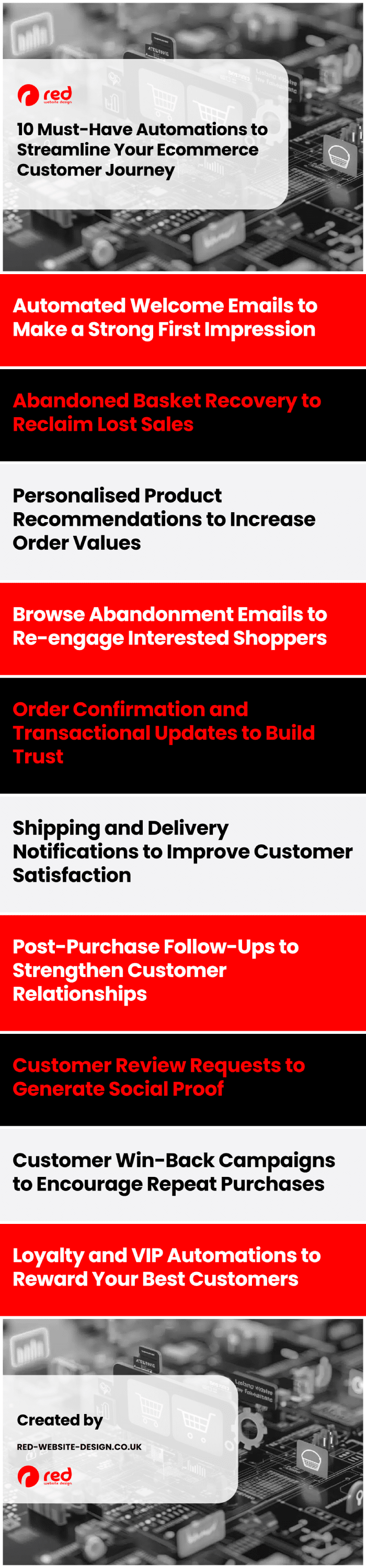
Here’s a summary of what’s covered:
- Automated Welcome Emails to Make a Strong First Impression
- Abandoned Basket Recovery to Reclaim Lost Sales
- Personalised Product Recommendations to Increase Order Values
- Browse Abandonment Emails to Re-engage Interested Shoppers
- Order Confirmation and Transactional Updates to Build Trust
- Shipping and Delivery Notifications to Improve Customer Satisfaction
- Post-Purchase Follow-Ups to Strengthen Customer Relationships
- Customer Review Requests to Generate Social Proof
- Customer Win-Back Campaigns to Encourage Repeat Purchases
- Loyalty and VIP Automations to Reward Your Best Customers
Check out the post below for more.
Introduction
Running a successful ecommerce business involves much more than attracting visitors and encouraging them to make a purchase. Every interaction, from someone’s first visit to their fifth order, contributes to their overall experience with your brand. When these interactions are inconsistent, delayed, or poorly managed, customers can lose interest and take their business elsewhere. Creating a smooth customer journey is essential for improving conversion rates, building trust, and generating sustainable revenue.
The challenge is that delivering personalised experiences manually becomes increasingly difficult as your business grows. Responding to enquiries, recovering abandoned baskets, sending order updates, and encouraging repeat purchases all require time and attention. Ecommerce automation solves this problem by allowing you to deliver relevant communications and experiences automatically, based on customer behaviour and specific triggers. This guide explores 10 must-have automations that can help you create a more efficient, profitable, and customer-focused online shopping experience.
Automated Welcome Emails to Make a Strong First Impression
The first interaction someone has with your ecommerce business can influence whether they eventually become a paying customer. When a visitor subscribes to your email list or creates an account, they are showing an initial interest in your brand. Failing to acknowledge that interest means missing an opportunity to establish a relationship. An automated welcome email ensures every new subscriber receives a timely introduction without requiring manual intervention.
A successful welcome sequence should do more than simply thank someone for signing up. It should introduce your business, explain what makes your products valuable, and guide subscribers towards their first purchase. Depending on your marketing strategy, you might include product recommendations, useful resources, or an introductory discount. By delivering the right information at the beginning of the relationship, you can increase engagement and create a positive first impression.
- Send an immediate welcome email when someone subscribes or registers an account.
- Introduce your brand, highlight your unique selling points, and explain what customers can expect.
- Offer a first-purchase incentive or showcase popular products to encourage initial conversions.
- Create a short welcome sequence that gradually introduces products, benefits, and customer testimonials.
Abandoned Basket Recovery to Reclaim Lost Sales
Basket abandonment is one of the biggest challenges facing ecommerce businesses. Customers regularly add products to their baskets without completing the checkout process, often because of unexpected costs, distractions, or uncertainty about their purchase. Without a recovery strategy, many of these potential sales are lost permanently. Automated abandoned basket emails provide an opportunity to reconnect with shoppers and encourage them to complete their orders.
The effectiveness of abandoned basket recovery depends heavily on timing and relevance. A reminder sent shortly after someone leaves your website can bring their attention back to products they were already considering. Additional messages can address common objections, reinforce trust, or provide an incentive where appropriate. Rather than treating every abandoned basket as a lost opportunity, automation allows you to create a structured recovery process that operates continuously.
- Trigger an automated reminder when an identifiable shopper leaves products in their basket without purchasing.
- Include product images, descriptions, and a direct link back to the customer’s saved basket.
- Create a sequence of reminders that addresses hesitation without overwhelming potential buyers.
- Test incentives, subject lines, and delivery times to identify the most effective recovery strategy.
Personalised Product Recommendations to Increase Order Values
Customers are more likely to engage with products that reflect their interests, preferences, and previous shopping behaviour. However, manually recommending relevant products to every visitor becomes impossible as your customer base expands. Automated recommendation systems solve this problem by analysing browsing activity, purchase history, and product relationships. This allows ecommerce businesses to deliver personalised shopping experiences at scale.
Product recommendation automation can be used throughout the customer journey, including product pages, checkout screens, and email campaigns. For example, someone purchasing a camera might receive suggestions for compatible accessories, while a returning customer could be shown products related to previous orders. These recommendations make product discovery easier and can increase average order values. The most effective systems prioritise relevance rather than simply promoting the most expensive products.
- Recommend complementary products based on items customers have viewed or purchased.
- Display relevant upselling and cross-selling suggestions on product pages and during checkout.
- Send personalised product recommendation emails based on previous shopping behaviour.
- Monitor recommendation performance to improve relevance, click-through rates, and average order values.
Browse Abandonment Emails to Re-engage Interested Shoppers
Not every potential customer adds products to their basket before leaving an ecommerce website. Many visitors browse product pages, compare options, and leave without taking further action. Although these visitors have not demonstrated the same level of purchase intent as basket abandoners, their browsing activity can still provide valuable information. Browse abandonment automation allows you to reconnect with identifiable visitors who have shown interest in specific products.
These campaigns work by tracking product views and triggering relevant communications when visitors leave without purchasing. A customer who repeatedly views a particular product might receive an email highlighting its features, customer reviews, or related alternatives. The goal is to make their next decision easier rather than immediately pushing for a sale. When implemented with appropriate consent and privacy controls, browse abandonment automation can help turn casual interest into meaningful engagement.
- Identify opted-in subscribers who view specific products but leave without making a purchase.
- Send personalised reminders featuring recently viewed products and their key benefits.
- Include customer reviews, product comparisons, or helpful information to address purchase hesitation.
- Set frequency limits and exclude customers who have already purchased the products being promoted.
Order Confirmation and Transactional Updates to Build Trust
The customer journey does not end when someone completes a purchase. In many ways, this is when expectations become even more important. Customers want immediate reassurance that their payment has been processed and their order has been received successfully. Delayed or missing confirmation messages can create uncertainty, increase support enquiries, and damage confidence in your business.
Automated transactional communications ensure customers receive essential information at the appropriate stage of their order. A confirmation email should clearly summarise purchased products, payment details, delivery information, and the next steps. Additional updates can communicate changes to processing or fulfilment status. These messages help customers feel informed and reduce the need for them to contact your business unnecessarily. Reliable transactional automation is particularly important for ecommerce stores handling large volumes of orders.
- Send an immediate order confirmation containing purchased items, totals, and delivery details.
- Automatically notify customers when their order moves through different processing stages.
- Include clear customer support information and links to relevant order management pages.
- Keep transactional communications accurate, consistent, and separate from optional promotional messaging.
Shipping and Delivery Notifications to Improve Customer Satisfaction
Waiting for an online order can create uncertainty, particularly when customers have limited information about its progress. Once an order has been dispatched, customers want to know when it is likely to arrive and how they can track it. Businesses that fail to provide this information often experience unnecessary enquiries and frustration. Automated shipping notifications help maintain transparency throughout the delivery process.
By connecting your ecommerce platform with fulfilment systems and delivery providers, you can trigger updates when important shipping events occur. These might include dispatch confirmation, tracking availability, delivery delays, and successful delivery. Keeping customers informed reduces uncertainty and demonstrates that your business takes fulfilment seriously. It also creates opportunities to improve the post-purchase experience without requiring additional administrative work.
- Automatically send dispatch confirmations when orders leave your warehouse or fulfilment provider.
- Provide tracking links so customers can monitor their deliveries without contacting support.
- Notify customers about significant delivery changes or delays when reliable tracking information is available.
- Send delivery confirmation messages with relevant support information if customers experience problems.
Post-Purchase Follow-Ups to Strengthen Customer Relationships
Many ecommerce businesses invest heavily in acquiring new customers but devote far less attention to maintaining relationships after the first purchase. This approach can limit long-term profitability because existing customers already have experience with your products and services. Post-purchase automation allows you to continue communicating with buyers in ways that improve satisfaction and encourage future engagement.
A successful post-purchase sequence should focus on helping customers get the most value from their purchase before attempting to sell them something else. Depending on the product, this might involve usage instructions, care advice, troubleshooting resources, or helpful recommendations. Once customers have had sufficient time to experience their purchase, you can introduce complementary products or relevant offers. This approach creates a more natural transition from customer support to repeat sales.
- Send personalised thank-you messages that acknowledge the customer’s purchase.
- Provide useful product guides, care instructions, or setup advice after delivery.
- Recommend complementary products once customers have had time to use their original purchase.
- Segment follow-up communications according to product categories, purchase history, and customer behaviour.
Customer Review Requests to Generate Social Proof
Customer reviews play an important role in helping potential buyers decide whether to trust an ecommerce business. Positive feedback can provide reassurance about product quality, delivery reliability, and the overall shopping experience. However, many satisfied customers never leave reviews unless they are encouraged to do so. Automated review requests make it easier to collect feedback consistently without relying on manual reminders.
Timing is particularly important when requesting reviews. Asking for feedback immediately after checkout provides little opportunity for customers to evaluate their purchase. Instead, requests should be triggered after delivery, allowing sufficient time for the product to be used. Businesses can also use automated follow-ups to gather private feedback and identify service issues. A consistent review collection process can strengthen credibility while providing valuable insights into customer satisfaction.
- Trigger review requests after delivery, allowing enough time for customers to experience their products.
- Include direct links to product review forms to make submitting feedback straightforward.
- Request honest feedback from customers rather than selectively approaching only satisfied buyers.
- Use review responses to identify recurring issues and improve products, fulfilment, and customer service.
Customer Win-Back Campaigns to Encourage Repeat Purchases
Even customers who have previously enjoyed a positive shopping experience can gradually stop engaging with your business. They may forget about your products, discover competitors, or simply have no immediate reason to return. Without a structured re-engagement strategy, these customers can become permanently inactive. Automated win-back campaigns help you reconnect with previous buyers before the relationship disappears completely.
Win-back automation works by identifying customers who have not purchased within a defined period and sending communications designed to renew their interest. The appropriate timing will depend on your products and typical purchasing cycles. A beauty retailer might target customers after several months, while a furniture business may need a much longer timeframe. Personalised recommendations, relevant product launches, and carefully selected incentives can all help encourage customers to return.
- Segment inactive customers according to their last purchase date and typical buying frequency.
- Send personalised re-engagement emails featuring relevant products or new arrivals.
- Test exclusive offers or limited-time incentives when additional encouragement is appropriate.
- Remove consistently unresponsive contacts from promotional sequences to protect engagement and deliverability.
Loyalty and VIP Automations to Reward Your Best Customers
Not all customers contribute equally to the long-term success of an ecommerce business. Some make occasional purchases, while others return regularly, recommend your products, and generate significant lifetime value. Recognising and rewarding these loyal customers can strengthen relationships and encourage continued spending. Loyalty automation makes it possible to deliver rewards and personalised experiences without manually managing individual accounts.
Automated loyalty programmes can be triggered by purchase frequency, total spending, accumulated points, or membership milestones. Customers might receive birthday rewards, exclusive product access, or notifications when they qualify for a higher loyalty tier. These experiences make regular buyers feel recognised and provide additional reasons to choose your business over competitors. The most successful programmes offer meaningful benefits while remaining simple for customers to understand and use.
- Automatically award loyalty points or rewards when customers complete qualifying purchases.
- Create VIP customer segments based on purchase frequency, spending, or lifetime value.
- Send personalised rewards, birthday offers, and exclusive promotions to eligible customers.
- Notify members when they reach loyalty milestones or unlock additional benefits.
Conclusion
Ecommerce automation is about much more than reducing repetitive administrative work. It provides an opportunity to create a more consistent, personalised, and efficient customer journey from the first interaction through to long-term loyalty. By automating welcome emails, abandoned basket recovery, product recommendations, order updates, and post-purchase communications, businesses can improve customer satisfaction while creating more opportunities to generate revenue.
The key to successful automation is ensuring that every communication serves a genuine purpose and arrives at the right moment. Sending more messages does not automatically produce better results. Relevance, timing, and customer experience should guide every automated workflow you introduce. Start by identifying the biggest gaps in your existing customer journey, implement the automations that address those problems, and continually monitor their performance. With the right systems in place, your ecommerce business can deliver better experiences, recover missed opportunities, and build stronger customer relationships without increasing your daily workload.

Author:
Mark Ford