Search Engine Optimization (SEO) is a dynamic field that evolves constantly as search engines like Google update their algorithms. What worked wonders in the past may now be obsolete or even detrimental to your website’s ranking.
In this blog post, we will explore 10 obsolete SEO tactics that you should stop wasting your time with. By avoiding these outdated strategies and focusing on modern SEO practices, you can improve your website’s visibility and stay ahead in the ever-changing world of online search.
Infographic by Cartoozo.
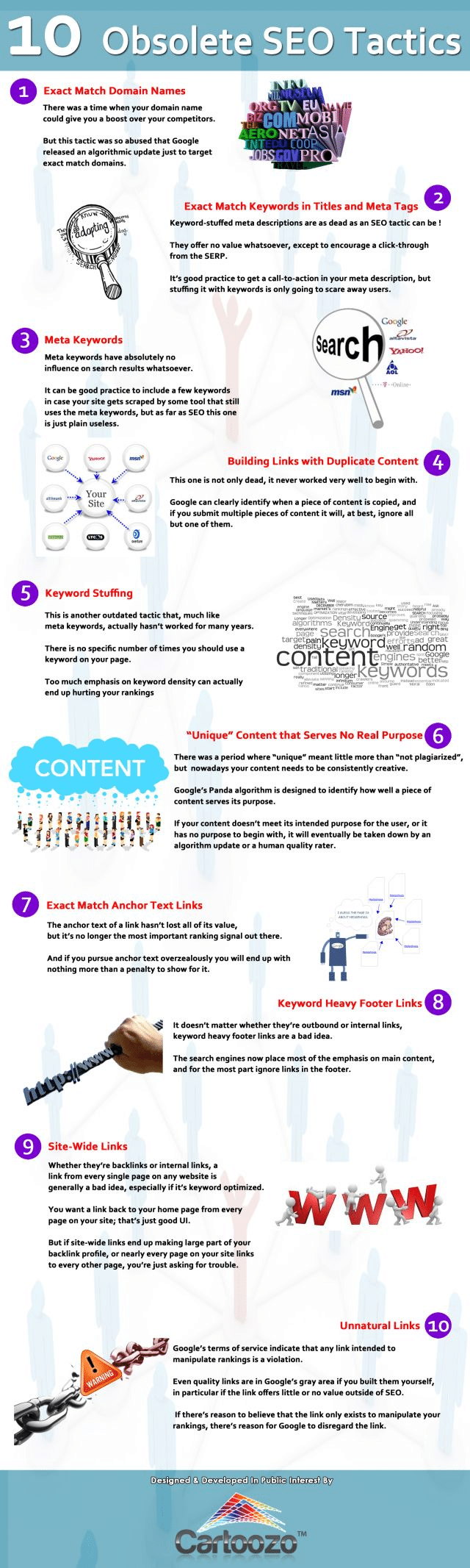
- Keyword Stuffing
Once upon a time, the more keywords you could cram into your content, the better your chances of ranking high on search engine results pages (SERPs). However, this tactic is now obsolete and can lead to poor user experiences and penalties from search engines.
Instead: Focus on creating high-quality, informative content that naturally includes relevant keywords. Use keyword research tools to identify the most valuable keywords for your content and integrate them naturally into your text.
- Exact Match Domains (EMDs)
In the past, having an exact match domain, where the domain name precisely matched the target keyword, was believed to give you a significant SEO advantage. But search engines have evolved to prioritize content quality over domain names.
Instead: Choose a domain name that is relevant to your brand and easy to remember. Focus on creating valuable content and building a strong online presence.
- Meta Keyword Tags
Meta keyword tags used to be an essential part of on-page SEO optimization. Website owners would stuff these tags with keywords they wanted to rank for. However, most major search engines no longer consider meta keyword tags when determining rankings.
Instead: Concentrate on optimizing your meta title and description tags, which still play a vital role in improving click-through rates from search results.
- Mass Link Building
In the past, acquiring as many backlinks as possible, regardless of their quality, was a common SEO strategy. This led to the creation of link farms and spammy link-building practices.
Instead: Prioritize quality over quantity when it comes to backlinks. Focus on earning natural, high-quality backlinks through valuable content and outreach to authoritative websites in your niche.
- Submitting to Low-Quality Directories
Submitting your website to low-quality web directories was once considered a quick way to build backlinks. However, most of these directories have little to no authority, and Google now devalues links from such sources.
Instead: Focus on getting your website listed in reputable directories that are relevant to your industry or niche. Quality matters more than quantity in the world of directories.
- Duplicate Content
Copying and pasting content from other websites or even your own pages with slight variations was a common practice. Search engines now penalize duplicate content, as it provides little value to users.
Instead: Create unique, original content that offers valuable information to your audience. Use plagiarism detection tools to ensure your content is entirely original.
- Ignoring Mobile Optimization
In the early days of SEO, mobile optimization was not a significant concern because most internet traffic came from desktop devices. However, the rise of smartphones and mobile browsing has made mobile optimization crucial.
Instead: Ensure your website is mobile-responsive and provides an excellent user experience on all devices. Google’s mobile-first indexing means your website’s mobile version is what matters most.
- Focusing Solely on Google
While Google is undeniably the dominant search engine, ignoring other search engines like Bing and Yahoo was a common mistake. Diversifying your SEO efforts can help you reach a broader audience.
Instead: Optimize your website for multiple search engines to expand your reach. What works for Google may not work the same way on other search platforms.
- Neglecting User Experience
In the past, SEO was often seen as a technical practice centered on keywords and backlinks. User experience (UX) was frequently overlooked. However, Google now considers factors like page load speed and mobile-friendliness when ranking websites.
Instead: Prioritize user experience by ensuring fast loading times, intuitive navigation, and a clean, user-friendly design. A positive user experience can lead to lower bounce rates and higher rankings.
- Relying on Black Hat SEO Techniques
Black hat SEO techniques, such as cloaking, hidden text, and doorway pages, were once used to manipulate search engine rankings. However, search engines have become much better at detecting and penalizing these tactics.
Instead: Stick to white hat SEO practices that align with search engine guidelines. Building a sustainable, long-term SEO strategy is more valuable than trying to game the system.
Conclusion
In the ever-evolving world of SEO, it’s crucial to stay up-to-date with current best practices and avoid outdated tactics that can harm your website’s ranking and reputation. By abandoning these 10 obsolete SEO tactics and focusing on modern, user-centric strategies, you can improve your website’s visibility, drive organic traffic, and achieve sustainable, long-term success in the world of online search. Remember that SEO is an ongoing process, and staying informed about the latest developments is key to staying competitive in the digital landscape.

Author:
Mark Ford