Is your website content easy for visitors to read? Or do you have large, uninviting paragraphs of text to sift through?
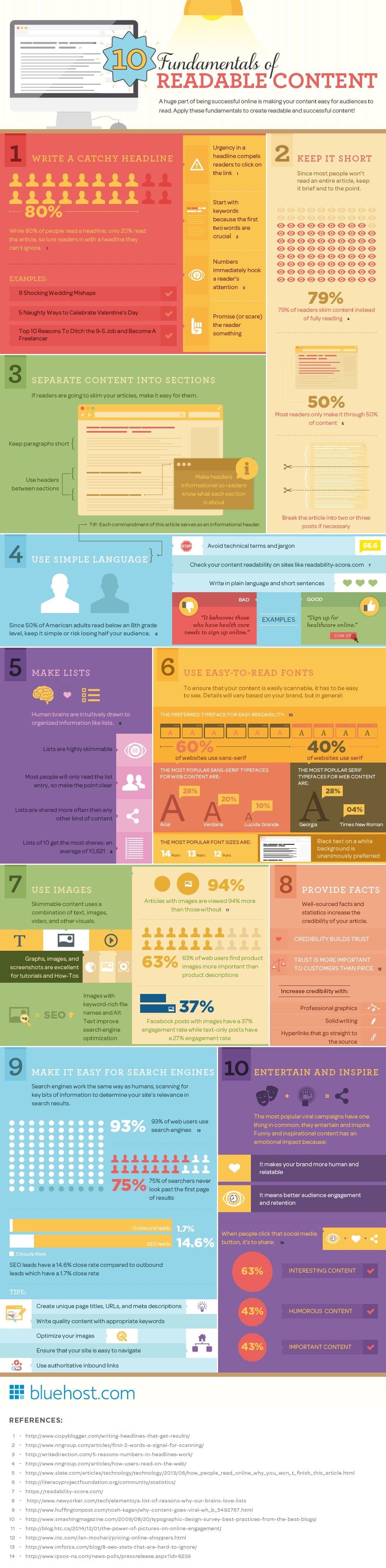
According to stats 79% of website visitors will skim through your content instead of reading it fully. Consumers lead busy lives so you need to make it as easy as possible for them to find out what they need to know.
To help, the guys at Bluehost have compiled their 10 fundamentals of readable content in the infographic below.

Author:
Mark Ford

Why Small Business Websites Built Desktop-First Underperform on Mobile
Are you confident your small business website is actually working for mobile visitors, not just resizing to fit their screens? Have you ever wondered how many calls, enquiries, or sales you’re losing because your site was designed desktop-first? […]
From Header to Footer: The Key Components of a Successful Business Website
Is your business website attracting visitors but failing to turn them into customers? Want to discover the essential website components that make the difference between a professional online presence and a website that actually generates enquiries and sales? […]