
Are you just getting started with your business blog? Need help creating engaging content visitors will want to read and share?
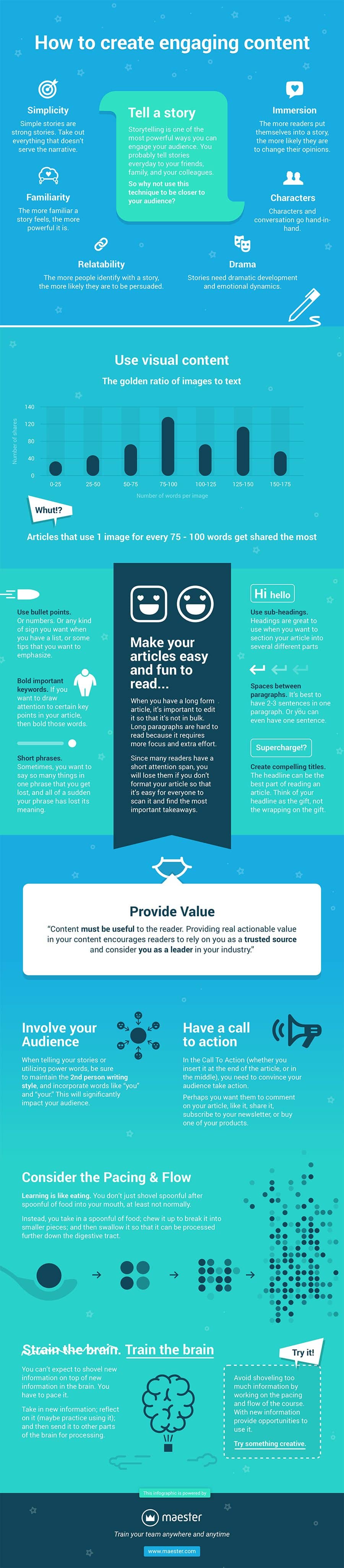
Maester share their blogging tips for beginners in this infographic.
Here are some of their key tips:
- Use one image for every 75-100 words
- Use bullet points
- Bold important words
- Use short phrases
- Use sub-headings
- Use spaces between paragraphs
- Create compelling titles
Check out the infographic for more.
Starting a blog can be an exciting and rewarding experience, but many beginners struggle with one crucial aspect: creating engaging content.
With millions of blog posts published daily, how do you make yours stand out? The key lies in understanding what makes content compelling and how to craft articles that captivate and provide value to your audience.
By mastering a few essential techniques, you can ensure your blog attracts and retains readers.
Understanding Your Audience
Before you start writing, it’s important to understand who your readers are. Knowing their interests, challenges, and preferences will help you create content that resonates with them. A well-targeted blog post is more likely to be read, shared, and valued. Spend time researching your audience to ensure your blog posts align with their needs.
- Define who your readers are: Consider factors like age, interests, and common challenges.
- Research what topics resonate with them: Use platforms like Google Trends, Reddit, and Quora.
- Identify gaps in existing content: Find opportunities to provide unique insights.
- Pay attention to reader feedback: Comments and social media interactions can guide your content strategy.
Choosing the Right Topics
A great blog starts with the right topic. Selecting relevant and engaging subjects will make your posts more interesting and valuable to your audience. It’s essential to focus on content that solves problems, answers common questions, and aligns with trending discussions. With the right approach, you’ll always have fresh ideas to write about.
- Solve a problem: Address common questions or issues your audience faces.
- Use keyword research: Tools like Google Keyword Planner and Ahrefs help identify popular topics.
- Learn from competitors: Analyze successful blogs in your niche and add your unique take.
- Stay up to date: Follow industry news and trends to keep your content relevant.
Structuring Your Blog Post
A well-structured blog post enhances readability and keeps readers engaged. When content is formatted properly, it’s easier to digest, skim, and revisit. Organizing your blog into clear sections ensures that your audience stays interested from start to finish. By following a solid structure, your content will have a natural flow.
- Write a compelling headline: Spark curiosity and promise a clear benefit.
- Craft an engaging introduction: Hook readers with a strong opening sentence.
- Use subheadings: Break content into sections for easy scanning.
- Keep paragraphs short: Stick to two or three sentences per paragraph.
Writing Engaging Content
Your writing style plays a crucial role in keeping readers interested. Engaging content is conversational, relatable, and informative. Instead of simply presenting information, you should aim to create a connection with your audience. This will encourage them to keep reading and return for more.
- Use a conversational tone: Write as if you’re speaking directly to a friend.
- Show, don’t just tell: Use examples, stories, and personal experiences.
- Make content actionable: Provide step-by-step guides, checklists, and key takeaways.
- Keep it clear and concise: Avoid unnecessary fluff and get straight to the point.
Optimizing for SEO
Search Engine Optimization (SEO) helps your content rank higher on search engines, increasing visibility. Optimizing your blog for SEO ensures that your target audience can easily find your posts. With a few strategic tweaks, your content will have a better chance of appearing in search results and driving organic traffic.
- Use relevant keywords naturally: Place them in the title, headings, and throughout the content.
- Write compelling meta descriptions: Summarize your post in an engaging way to improve click-through rates.
- Add internal & external links: Link to related content and credible sources to boost authority.
- Improve readability: Use tools like Hemingway Editor or Grammarly to refine your writing.
Keeping Readers Engaged
Attracting readers to your blog is only half the battle—keeping them engaged is just as important. If your audience enjoys your content, they are more likely to stay, share, and return for more. Implementing engagement strategies will help you build a loyal readership and encourage interaction.
- Encourage interaction: Ask questions and invite readers to comment.
- Format for skimming: Use bold key points, bullet lists, and short paragraphs.
- Use storytelling: Personal anecdotes and relatable examples make content more engaging.
- Keep content visually appealing: Add images, infographics, and videos to break up text.
Promoting Your Blog
Even the best content needs promotion to reach a wider audience. Sharing your posts strategically ensures that your hard work doesn’t go unnoticed. By leveraging different platforms and marketing techniques, you can drive more traffic to your blog and grow your readership.
- Share on social media: Use engaging captions and relevant hashtags to attract clicks.
- Leverage email marketing: Send newsletters featuring your latest posts.
- Engage in online communities: Provide value in forums and link back to your content.
- Collaborate with other bloggers: Guest posts and partnerships help expand your reach.
Tracking Performance and Improving
Monitoring your blog’s performance is essential for growth. Understanding what works and what doesn’t will help you refine your content strategy. By analyzing your data, you can make informed decisions to improve engagement, increase traffic, and create even better blog posts.
- Use Google Analytics: Track visitor behavior, bounce rates, and engagement.
- Analyze social media shares: Identify which posts resonate most with your audience.
- Listen to feedback: Adjust your content based on reader comments and suggestions.
- Experiment with different formats: Test long-form content, listicles, and guides to see what performs best.
Conclusion
Blogging successfully takes time, practice, and consistency. By focusing on value, readability, and audience engagement, you can create content that people genuinely enjoy and share. With the right approach, your blog will become a valuable resource in your niche and attract a growing audience.
Start implementing these strategies, refine your approach, and build a blog that captivates and retains readers. Happy blogging!

Author:
Mark Ford