Are you looking for a reliable way to produce content without the constant last-minute panic? Want a clear method that helps you plan, create, and publish content with far less stress and far more consistency?
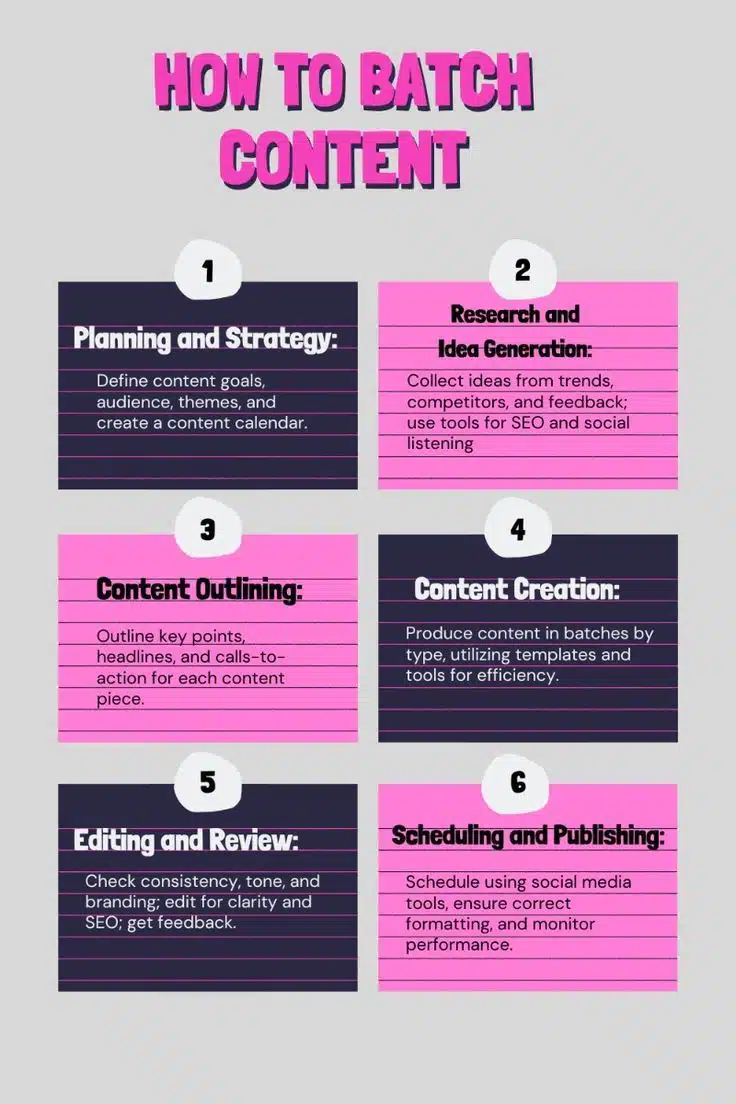
You’ll find a complete step-by-step process in this infographic.
Here’s a summary of what’s covered:
- Planning and Strategy
- Research and Idea Generation
- Content Outlining
- Content Creation
- Editing and Review
- Scheduling and Publishing
Check out the post below for more.
Efficient content production is no longer a luxury for modern businesses; it is a necessity for staying visible, consistent, and relevant online. With so many platforms to manage and so much content required, relying on a spontaneous approach often leads to inconsistency and burnout. A structured content batching method offers a sustainable alternative that keeps output high without overwhelming your schedule. By following a clear, repeatable process, you can streamline your workflow, reduce daily decision-making, and maintain a strong online presence with far less effort.
Content batching is not just about creating multiple pieces at once; it is about building a system that aligns planning, research, creation, and publishing into one smooth, cohesive routine. When each stage is handled in order, you eliminate the scattered nature of ad-hoc content creation. Instead of constantly scrambling for ideas or rushing to publish something last minute, you work in focused blocks that maximise your time and creativity. This method also improves quality, as your content becomes more aligned, strategic, and polished.
In this guide, you will learn the structured six-step content batching process based directly on the infographic: planning and strategy, research and idea generation, content outlining, content creation, editing and review, and scheduling and publishing. Each stage builds on the previous one, giving you a clear path from blank page to finished content. With this framework in place, content creation becomes easier, more enjoyable, and far more effective.
Planning and Strategy
Before any content is created, you need a clear strategic foundation. Planning ensures that your output aligns with your goals, your audience’s interests, and your marketing priorities. Without this stage, content batching becomes guesswork, which often leads to inconsistency and wasted effort. By defining your direction early, every piece you create becomes purposeful and contributes to a larger content ecosystem.
This stage is also where you establish themes, formats, publishing frequency, and your content calendar. A structured plan helps you avoid overthinking, reduces context switching, and ensures that the content you produce supports your long-term marketing objectives. With this in place, batching becomes a smooth, intentional process rather than a frantic rush.
- Define clear goals for your content output and long-term marketing aims
- Identify your target audience and the topics they value most
- Establish content themes that support brand consistency
- Create a realistic content calendar that guides future work
Research and Idea Generation
Once your strategic direction is in place, the next step is gathering inspiration and identifying relevant topics. Research gives your content depth, accuracy, and relevance. It allows you to spot industry trends, competitor patterns, and emerging conversations that matter to your audience. This stage also prevents creative blocks by building an ongoing bank of strong ideas.
Effective idea generation relies on a mix of tools, observation, and analysis. SEO data, social listening, and customer feedback all play a role in highlighting what people want to read, watch, or engage with. By collecting and organising these ideas in batches, you save time later and ensure that content creation stays efficient and consistent.
- Analyse industry trends to see what your audience is currently interested in
- Study competitor content to identify gaps and opportunities
- Use SEO and keyword tools to uncover high-value topics
- Gather feedback from your audience to guide future content themes
Content Outlining
With strong ideas prepared, outlining creates structure and clarity for each piece of content. This step is crucial for improving speed and reducing the likelihood of writer’s block during content creation. Outlines act as a roadmap, helping you develop messaging, shape your narrative, and define your key points before you begin writing or designing.
Outlining also helps you maintain consistency, especially when producing multiple pieces in a batch. Instead of approaching each piece from scratch, you follow an established pattern that keeps your workflow smooth. This makes your content more cohesive, strategic, and easy to produce on a regular basis.
- Outline key points for each content piece to maintain clarity
- Write headlines or title concepts to guide the direction
- Define calls to action that support your goals
- Use templates to ensure a standard structure across all pieces
Content Creation
This is the stage where your outlines become complete content pieces. Because the strategic, research, and outlining stages are already complete, creation becomes far faster and more focused. Working in batches helps you stay in the same creative mindset for multiple pieces at once, reducing context switching and boosting productivity.
Creating in batches also improves efficiency by enabling the use of reusable frameworks, templates, and brand-aligned formats. This means you produce high-quality content without starting from scratch each time. Whether you are writing blog posts, recording videos, or designing social graphics, batching keeps the process streamlined and consistent.
- Produce content by type to stay in a focused creative flow
- Use templates and pre-defined structures to speed up production
- Repurpose strong ideas across multiple formats for efficiency
- Create more content than you immediately need to stay ahead
Editing and Review
Editing ensures your content is polished, accurate, and on brand. This stage fine-tunes your messaging and eliminates errors before anything goes live. Working in batches allows you to edit with a fresh perspective and compare multiple pieces at once, improving consistency across your content library.
Reviewing content is also an opportunity to optimise for clarity, tone, and search visibility. Getting feedback from a colleague or team member can help identify inconsistencies or missing details. A strong review stage elevates your content from functional to high quality, strengthening your brand’s reputation.
- Check tone, clarity, and structure for professionalism
- Ensure consistency in branding, formatting, and voice
- Edit content with SEO best practices in mind
- Gather external feedback to refine messaging further
Scheduling and Publishing
The final stage ensures your content reaches your audience at the right time and in the right format. Scheduling removes the daily pressure of posting and allows you to maintain a steady presence across all platforms. With your content already prepared and polished, publishing becomes a simple, streamlined task.
Using scheduling tools also allows you to analyse performance data more effectively. When your workflow is organised, you can measure engagement, refine your strategy, and build future batches based on real insights. A consistent publishing schedule ensures your audience stays engaged and your marketing remains predictable and effective.
- Use scheduling tools to automate posting across platforms
- Ensure formatting is correct for each channel before publishing
- Maintain a consistent publishing rhythm to support audience engagement
- Monitor analytics to identify performance trends for future planning
Conclusion
A structured content batching method brings clarity, control, and consistency to your marketing. By following a clear six-stage process, you eliminate guesswork, reduce last-minute stress, and create space for higher-quality work. Planning, research, outlining, creation, editing, and scheduling all work together to transform content production from a daily burden into a reliable, repeatable system.
This method frees up time, supports long-term strategy, and keeps your business visible without constant effort. When you batch content with intention and structure, you maintain momentum even during your busiest weeks. The result is a sustainable approach that saves time, reduces stress, and ensures your content continuously supports your goals.

Author:
Mark Ford