
Are you looking to improve your writing so your content truly connects with your audience? Want a clear set of rules to help you create engaging, readable, high-performing content every time you sit down to write?
You’ll find practical content writing fundamentals in this guide.
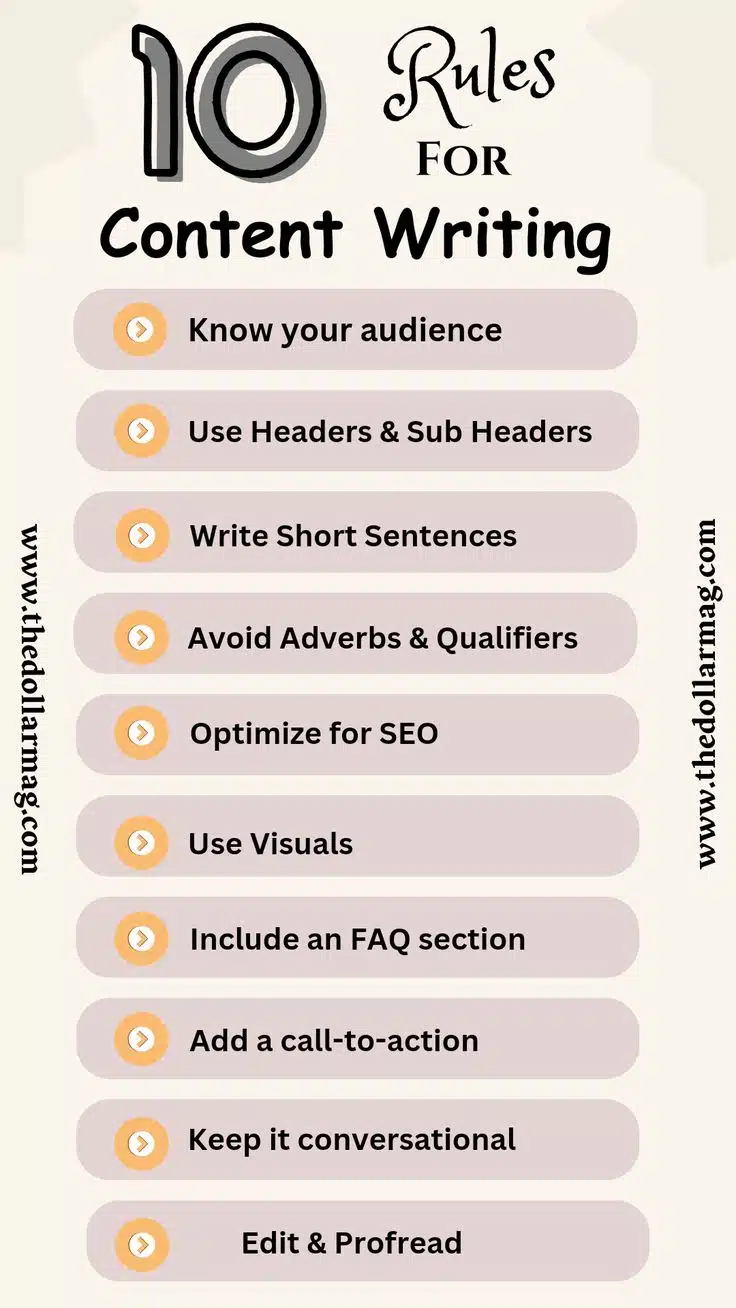
Here’s a summary of what’s covered:
- Know Your Audience
- Use Headers and Sub-Headers
- Write Short Sentences
- Avoid Adverbs and Qualifiers
- Optimise for SEO
- Use Visuals
- Include an FAQ Section
- Add a Call to Action
- Keep It Conversational
- Edit and Proofread
Check out the post below for more.
Writing great content is not about throwing words onto a page and hoping something sticks. It is a deliberate craft that blends strategy, clarity, and empathy for your audience. Whether you are writing website copy, blog articles, or social media posts, certain principles remain constant. Follow them consistently and your writing will not only sound better, it will perform better too.
This guide breaks down the core rules of content writing every marketer should follow. Each rule exists for a reason: to help you create content that informs, engages, persuades, and ultimately encourages action. Think of this as your go-to checklist for clear, compelling communication. Master these fundamentals and you will be miles ahead of most businesses publishing content today.
Know Your Audience
Understanding who you are speaking to shapes every decision you make when writing content. If you do not know your reader, you cannot tailor your tone, message, or approach effectively. Audience awareness helps you address real problems, use language that resonates, and offer value people genuinely care about. The more clearly you define your audience, the stronger and more impactful your content becomes.
- Research demographics, behaviours, and motivations before writing
- Identify the problems and questions your audience cares most about
- Use language, tone, and examples that reflect your audience’s world
- Answer the reader’s unspoken question: “Why should I care?”
Use Headers and Sub-Headers
People rarely read online content word-for-word. They scan, skim, and jump to the parts that matter most. Headers and sub-headers break up information, making it easier to follow and digest. Clear section titles guide the reader through your argument smoothly and allow them to find key details quickly. Structured content earns more attention, reduces bounce-rate, and builds trust.
- Plan your content layout before drafting to ensure structure
- Use descriptive headings that clearly explain each section
- Break long blocks of text into smaller, labelled parts
- Ensure every header adds clarity rather than padding the page
Write Short Sentences
Short sentences improve clarity, readability, and flow. Long, winding sentences make your writing feel heavy and can lose readers quickly. Brevity forces you to get to the point, helping your audience absorb information effortlessly. When your content reads smoothly, people stay longer and engage more deeply with your message.
- Aim for one clear idea per sentence where possible
- Cut unnecessary words to tighten your writing
- Use punctuation carefully to avoid run-on or confusing lines
- Read your content aloud to spot complex or wordy phrasing
Avoid Adverbs and Qualifiers
Strong writing does not rely on filler words or weak descriptors. Adverbs and qualifiers often dilute your message rather than strengthening it. When your wording is sharp and confident, your ideas sound more credible and compelling. Focus on precise language and strong verbs so your sentences land with impact.
- Replace “very”, “really”, and similar words with stronger vocabulary
- Choose verbs that carry weight without support words
- Remove unclear or hesitant phrasing like “sort of” or “maybe”
- Review content specifically for filler words before finalising
Optimise for SEO
Good writing deserves to be discovered, and SEO helps your content reach the right people. Optimising your text ensures search engines can understand and rank it. But modern SEO is not about stuffing keywords; it is about relevance, clarity, and user experience. When you write for humans first and search engines second, you get the best of both worlds.
- Use relevant keywords naturally within headings and body text
- Include internal and external links where useful
- Format content with meta tags, alt text, and structured layout
- Prioritise readability and value ahead of keyword frequency
Use Visuals
Visual content strengthens your message, improves retention, and keeps audiences engaged. Whether it is images, charts, icons, or diagrams, visuals make information easier to process. People absorb visual details far faster than text alone, helping key points stand out. Well-chosen graphics also break up long content and support your narrative.
- Use visuals to illustrate key ideas or data
- Choose images that add context, not just decoration
- Ensure graphics are high quality and properly credited
- Keep formatting consistent for a professional look
Include an FAQ Section
Questions naturally arise when readers explore a subject, and an FAQ section answers them before uncertainty interrupts engagement. This feature improves clarity, builds trust, and supports SEO by targeting question-based search queries. Including FAQs shows you understand your audience’s concerns and are proactive in addressing them. It transforms curiosity into confidence.
- Identify questions from customers, comments, or search data
- Keep answers concise, clear, and practically useful
- Place FAQs strategically near points of decision
- Review and update questions based on real user feedback
Add a Call to Action
Content without direction rarely leads to meaningful results. A call to action guides your reader to the next step, whether it is subscribing, downloading, enquiring, or buying. People appreciate clarity, and a strong CTA gives confidence about what to do next. It turns passive reading into purposeful engagement and increases the value of every piece of content you produce.
- Make your call to action specific and easy to follow
- Tailor CTAs to the intent and stage of your audience
- Use compelling language that aligns with the value offered
- Place CTAs where they naturally fit the reader journey
Keep It Conversational
People connect more deeply with writing that feels human and relatable. A conversational tone removes barriers and builds rapport with your audience. Writing as if you are speaking to someone makes your message feel natural, not forced or corporate. When content sounds friendly and direct, readers are more inclined to trust and engage with it.
- Use everyday language instead of jargon or technical fluff
- Write in the second person (“you”) to build connection
- Incorporate rhythm, flow, and natural phrasing
- Prioritise clarity and authenticity over formal tone
Edit and Proofread
Even strong first drafts need refinement. Editing sharpens your message, eliminates errors, and polishes your tone. Proofreading prevents credibility-damaging mistakes and ensures your writing feels professional. Quality control is the difference between rushed text and content that stands out. The best content creators always review their work thoroughly before publishing.
- Check for spelling, grammar, and punctuation accuracy
- Remove redundant or repetitive information
- Ensure consistency in tone, formatting, and branding
- Consider reading aloud or using tools for final checks
Conclusion
Content writing is not about fancy language or clever tricks. It is about clarity, connection, and delivering genuine value to your audience. When you follow these golden rules, your content becomes easier to read, more engaging, and far more effective. You build trust, demonstrate expertise, and guide readers towards meaningful action. In a world overflowing with digital noise, disciplined writing principles are what set successful marketers apart.
By understanding your audience, structuring your work clearly, writing with confidence, and refining your message, you give your content the best chance to shine. Treat these rules not as restrictions, but as tools that elevate your work. When you master the fundamentals, every piece of content you create becomes a powerful asset for your brand.

Author:
Mark Ford