In today’s digital age, content is king, and visual content reigns supreme. Infographics are one of the most powerful tools in a content marketer’s arsenal.
They combine information and visuals to convey complex ideas in a visually appealing and easily digestible format. However, creating an infographic is just the first step. To truly harness their potential, you need to get your infographic shared on thousands of websites.
In this blog post, we’ll explore 10 tips to help you achieve that goal.
Infographic from High Impact.
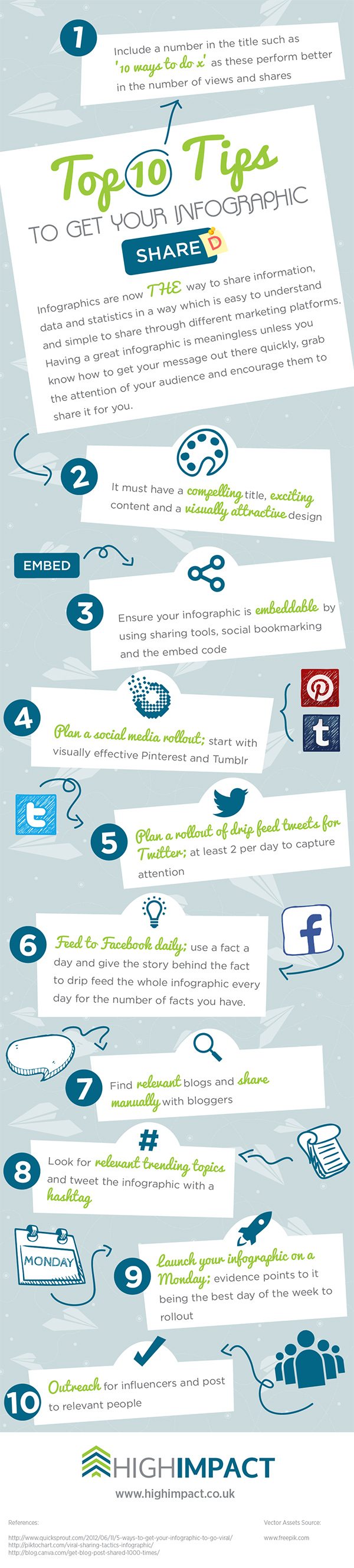
1. Start with Compelling Data
The foundation of any great infographic is compelling data. Before you even think about design, make sure you have a well-researched and interesting topic. Your data should tell a story or reveal insights that are not readily apparent. When you start with valuable information, you increase the chances of people wanting to share your infographic to spread the knowledge.
2. Create a Visually Stunning Design
Once you have your data, it’s time to bring it to life with a visually stunning design. Your infographic should be aesthetically pleasing, easy to read, and follow a clear hierarchy. Use complementary colors, engaging typography, and visually appealing icons or illustrations. A well-designed infographic is more likely to catch the eye and encourage sharing.
3. Keep It Concise and Focused
While it’s tempting to include as much information as possible in your infographic, less is often more. Keep your content concise and focused on the main points. Avoid clutter and excessive text. Infographics are meant to simplify complex information, so aim for clarity and brevity.
4. Craft an Attention-Grabbing Headline
Your infographic’s headline is the first thing people see, so make it attention-grabbing. It should give a clear idea of what the infographic is about and pique the reader’s interest. A compelling headline can entice people to click and share your infographic.
5. Optimize for SEO
To maximize the reach of your infographic, optimize it for search engines. Use relevant keywords in the title, description, and alt text of any images within the infographic. Also, include a transcript or summary of the infographic on the page where it’s hosted to improve its search engine visibility.
6. Provide Easy Sharing Options
Make it as easy as possible for people to share your infographic. Include social sharing buttons on the page where it’s hosted, allowing visitors to quickly share it on their preferred social media platforms. You can also provide an embed code for others to easily share your infographic on their websites or blogs.
7. Outreach to Influencers and Bloggers
Identify influencers and bloggers in your niche who might be interested in your infographic. Reach out to them with a personalized email introducing your infographic and explaining why it would be valuable to their audience. If they find it relevant and engaging, they may share it with their followers, increasing its exposure.
8. Submit to Infographic Directories
There are several infographic directories and sharing platforms where you can submit your work. Websites like Visual.ly and Infographic Plaza are great places to start. Submitting your infographic to these directories can help it reach a broader audience and get shared on various websites.
9. Leverage Email Marketing
If you have an email list, leverage it to promote your infographic. Send a dedicated email to your subscribers, highlighting the infographic’s value and providing a link for easy sharing. Encourage your subscribers to forward the email to others who might be interested.
10. Monitor and Engage
Once your infographic is out in the wild, it’s essential to monitor its performance. Use tools like Google Analytics to track the traffic and engagement it generates. Pay attention to social media shares, comments, and mentions. Engage with people who share or comment on your infographic to foster a sense of community and encourage further sharing.
Conclusion
Creating an infographic is a creative and informative way to present data and engage your audience. However, the true power of infographics lies in their ability to be shared across the internet, reaching a vast audience. By following these 10 tips, you can increase the likelihood of your infographic being shared on thousands of websites.
Start with compelling data, craft an eye-catching design, and optimize for SEO. Make it easy for people to share, leverage influencers and directories, and actively promote it through email marketing. Finally, monitor its performance and engage with your audience to keep the sharing momentum going.
With these strategies, your infographic has the potential to go viral and reach audiences you never thought possible, making a significant impact on your content marketing efforts.

Author:
Mark Ford