
Are you struggling to make your brand stand out in a crowded market? Want to avoid the common branding mistakes that drive potential customers away?
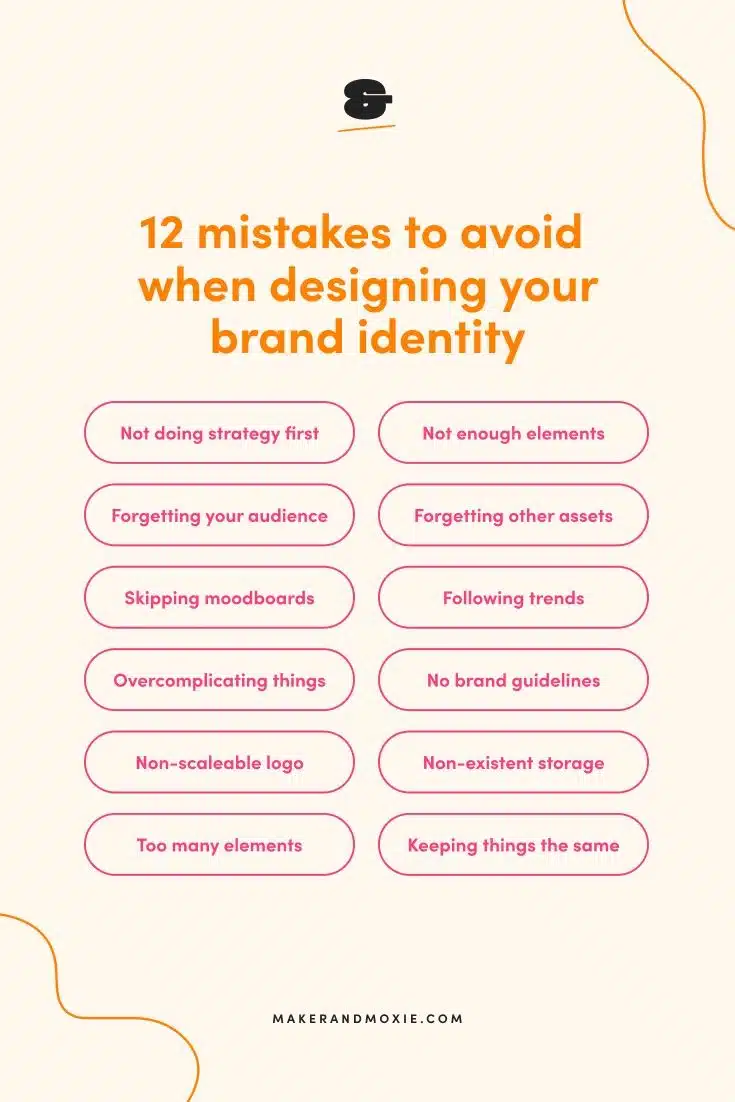
You’ll find some branding basics in this infographic.
Here’s a summary of what’s covered:
- Not Doing Strategy First
- Not Enough Elements
- Forgetting Your Audience
- Forgetting Other Assets
- Skipping Moodboards
- Following Trends
- Overcomplicating Things
- No Brand Guidelines
- Non-Scaleable Logo
- Non-Existent Storage
- Too Many Elements
- Keeping Things the Same
Check out the post below for more.
Creating a strong brand identity is more than just designing a good-looking logo—it’s about building trust, evoking emotion, and delivering a clear message. Yet too many businesses fall into traps that weaken their brand presence and confuse potential customers.
Whether you’re building a brand from scratch or refreshing an existing one, avoiding common mistakes can make all the difference. In this post, we’ll break down 12 branding missteps that could be turning people away from your business—and how to fix them.
Not Doing Strategy First
Before jumping into colours, logos, and typography, your brand needs a foundation rooted in strategy. Without clarity on your mission, audience, and market position, your visual identity risks feeling disjointed or aimless. Strategy ensures every design choice is intentional and aligned with your brand goals. A brand without strategy is just decoration.
- Define your brand’s mission, vision, and values clearly before designing.
- Research your target market and create detailed customer personas.
- Identify competitors and find opportunities for brand differentiation.
- Build your visual identity around a strategic message, not just preferences.
Not Enough Elements
A logo on its own isn’t enough to carry your brand. Strong brand identities are made up of a suite of visual and verbal elements that work together cohesively. These elements reinforce recognition and build consistency across platforms. If your brand lacks enough assets, it risks becoming forgettable.
- Develop a full visual system including colour palette, typography, and imagery.
- Include icons, patterns, or textures that support your identity.
- Ensure your tone of voice is defined and consistent in written content.
- Create templates for social media, emails, and print to boost recognisability.
Forgetting Your Audience
Branding that doesn’t resonate with your ideal customer will fall flat, no matter how visually appealing it is. Your audience should be front and centre in every design decision you make. What works for you personally may not speak to them at all. The goal is to build a brand that attracts and connects.
- Always design with your customer’s preferences, values, and lifestyle in mind.
- Conduct surveys or interviews to gather audience insights.
- Use messaging that speaks to their needs, not just your business goals.
- Test visuals and copy with a small group before launching.
Forgetting Other Assets
Your brand isn’t just a logo—it’s a collection of assets that appear across touchpoints. From stationery to packaging to digital banners, each asset contributes to your customer’s perception. Failing to think beyond the basics creates inconsistency and missed branding opportunities.
- Audit all brand touchpoints to see where consistency is lacking.
- Design assets for both digital and print environments.
- Ensure assets are adapted to various platforms and sizes.
- Keep a central hub of brand assets that team members can access.
Skipping Moodboards
Moodboards are a critical step in visualising your brand identity before committing to design choices. They help clarify style direction, align your team, and uncover what feels cohesive. Skipping this step often leads to indecision or disjointed visuals that don’t serve your brand well.
- Gather inspiration from design, photography, typography, and colour palettes.
- Create separate moodboards for visual style, tone of voice, and brand feel.
- Share moodboards with key stakeholders to align expectations early.
- Revisit moodboards regularly to ensure consistency over time.
Following Trends
Trendy branding might feel fresh now, but it can quickly become outdated and leave you scrambling for a rebrand. While it’s important to stay relevant, prioritising short-term style over long-term strategy weakens your brand’s longevity. Timeless design is always more sustainable.
- Use trends as inspiration, not a blueprint.
- Focus on your brand’s unique personality rather than mimicking others.
- Choose classic design elements that age well across time and media.
- Regularly assess if trends are helping or hurting your distinctiveness.
Overcomplicating Things
When brands try to say or show too much, they often end up confusing their audience. Simple, clear visuals and messages are more memorable and effective. Complexity leads to inconsistency, which makes it harder for customers to connect with your brand. Less really is more in branding.
- Limit your colour palette to a few well-chosen shades.
- Use one or two typefaces consistently instead of many styles.
- Avoid cluttered designs—embrace white space.
- Keep messaging concise, direct, and jargon-free.
No Brand Guidelines
Without documented brand guidelines, your visual identity can easily become fragmented across different platforms and teams. Guidelines provide rules and best practices for using your brand assets correctly and consistently. They’re essential for scaling and maintaining a professional image.
- Include logo usage rules, colour codes, typography, and tone of voice.
- Provide examples of correct and incorrect branding applications.
- Make guidelines easily accessible to anyone creating content.
- Update the guidelines as the brand evolves to stay relevant.
Non-Scaleable Logo
Your logo needs to work across a wide range of sizes—from website favicons to billboard ads. If it loses detail or legibility when scaled down, it fails as a functional brand asset. A good logo is versatile, simple, and impactful at any scale.
- Design a primary logo with scalability in mind from the beginning.
- Create secondary logo versions for smaller applications (e.g. icon or monogram).
- Test your logo in both colour and black & white formats.
- Check visibility on mobile, print, social media, and packaging.
Non-Existent Storage
If your brand assets are scattered across folders, emails, or personal desktops, consistency becomes impossible to maintain. Centralised storage helps everyone on your team access the latest, approved versions of your branding materials. It also streamlines workflows and prevents brand misuse.
- Use a cloud-based storage system like Google Drive, Dropbox, or Notion.
- Organise assets into clearly labelled folders by type and usage.
- Keep editable files and exports in one location for easy access.
- Assign ownership of the storage system to someone on your team.
Too Many Elements
While having enough brand elements is important, overloading your visuals can cause confusion and dilute your message. A strong brand knows when to stop. Each element should serve a clear purpose and work in harmony with the rest.
- Prioritise clarity and simplicity over visual noise.
- Establish clear hierarchy in layouts using size and spacing.
- Avoid mixing too many design styles in one brand identity.
- Stick to a consistent system of icons, patterns, and graphic motifs.
Keeping Things the Same
Brands evolve, and so should your identity. Holding onto outdated visuals or messaging can make your business seem stale or out of touch. Regular updates keep your brand feeling current while still honouring its core identity. Adaptation is a sign of strength, not inconsistency.
- Review your branding annually to assess relevance and effectiveness.
- Update visual assets gradually rather than all at once.
- Use audience feedback to guide changes.
- Keep your brand aligned with shifting market expectations and technology.
Conclusion
Your brand identity is a powerful tool for connecting with customers, communicating your values, and standing out in a crowded marketplace. But if it’s riddled with inconsistencies, lacking strategic thought, or trying too hard to follow trends, it can end up doing more harm than good.
By avoiding these 12 common branding mistakes, you can build an identity that’s not only visually cohesive but also emotionally resonant and strategically sound. Take the time to get it right—your future customers will thank you for it.

Author:
Mark Ford