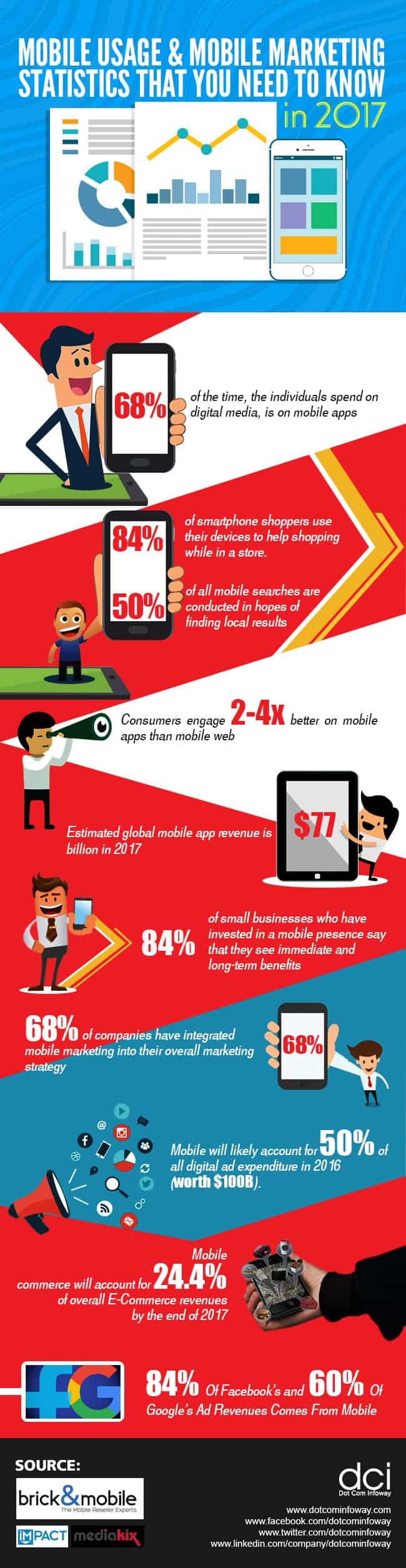
Did you know 84% of businesses who have invested in a mobile presence have seen both immediate and long term benefits?
In today’s digital landscape, mobile devices have become an integral part of our lives. From smartphones to tablets, people are using mobile devices for various purposes, including browsing the internet, shopping, socializing, and more. As a result, businesses need to adapt their website marketing strategies to cater to this mobile-centric audience.
To help you make informed decisions and optimize your website marketing strategy for mobile users, we’ve compiled 12 key mobile usage statistics that provide valuable insights into user behavior, preferences, and trends. These statistics will help you understand the significance of mobile marketing and how to leverage it effectively.
If you haven’t invested in yours, you are missing out!
DCI share more key stats you need to know in this infographic.
1. Mobile Traffic Dominates
The first and most important statistic to consider is the dominance of mobile traffic. According to StatCounter’s global stats, as of September 2021, mobile devices accounted for approximately 52% of all internet traffic worldwide. This trend has been steadily increasing over the years and emphasizes the need to prioritize mobile optimization for your website.
2. Mobile-First Indexing by Google
Google, the leading search engine, has shifted to mobile-first indexing. This means that Google primarily uses the mobile version of the content for ranking and indexing. If your website isn’t mobile-friendly, it may not rank as well in search engine results pages (SERPs). Prioritizing mobile optimization is essential for maintaining your website’s visibility in search results.
3. Page Load Speed Is Crucial
Mobile users are impatient when it comes to waiting for websites to load. According to Google, 53% of mobile site visits are abandoned if pages take longer than 3 seconds to load. To keep users engaged and reduce bounce rates, ensure that your website loads quickly on mobile devices.
4. Mobile Shopping Is on the Rise
E-commerce has witnessed a significant shift towards mobile shopping. In 2021, mobile e-commerce sales accounted for 72.9% of total e-commerce sales in the United States, according to Statista. Optimizing your website for mobile shopping experiences is vital for capturing this growing market.
5. Mobile Influences Purchasing Decisions
Mobile devices play a crucial role in influencing consumers’ purchasing decisions. Google reports that 82% of smartphone users consult their phones while making in-store purchases. Therefore, integrating mobile-friendly content, such as product reviews and comparisons, can enhance the shopping experience and drive conversions.
6. Voice Search Is Gaining Traction
Voice search is becoming increasingly popular, thanks to voice-activated assistants like Siri and Alexa. According to Gartner, by 2023, voice search will account for 30% of web browsing sessions. To cater to this trend, optimize your website’s content for voice search by using natural language and providing concise, informative answers to common questions.
7. Mobile Video Consumption Is Soaring
Mobile video consumption is on the rise, with platforms like YouTube and TikTok experiencing exponential growth. In 2020, mobile devices accounted for 53% of all online video consumption, according to Statista. Incorporating video content into your website marketing strategy can help you engage with mobile users effectively.
8. App Usage Is Increasing
Many businesses have developed mobile apps to enhance user experiences. In 2021, the number of mobile app downloads reached 218 billion worldwide, as reported by Statista. If you have a mobile app, make sure it complements your website and offers seamless navigation between the two platforms.
9. Mobile-Optimized Emails Are Essential
Email marketing remains a powerful tool, but it must be optimized for mobile users. According to Litmus, 43% of email opens occur on mobile devices. Ensure that your email campaigns are responsive and that your email content is easy to read and interact with on smaller screens.
10. Social Media Engagement Is Mobile-Driven
Social media is a primary driver of mobile engagement. Statista reports that 98.81% of Facebook users access the platform via mobile devices. To reach your target audience effectively, tailor your social media content and ads for mobile platforms.
11. Mobile SEO Matters
Mobile search engine optimization (SEO) is distinct from desktop SEO. Mobile users have unique search behaviors and preferences. Google’s mobile-friendly test and Page Experience update emphasize the importance of mobile optimization for ranking well on mobile SERPs. Ensure that your website meets Google’s mobile SEO criteria to maintain visibility.
12. Mobile Security Concerns Are Real
With the increasing use of mobile devices for online activities, mobile security has become a significant concern. According to Verizon’s Mobile Security Index 2021, 52% of organizations experienced mobile phishing attacks. It’s crucial to prioritize mobile security to protect both your business and your users.
Conclusion
As mobile usage continues to grow, businesses must adapt their website marketing strategies to cater to the mobile-centric audience effectively. Understanding the key mobile usage statistics discussed in this blog post is essential for making informed decisions and staying competitive in the digital landscape.
To summarize, prioritize mobile optimization, ensure fast page load times, and create mobile-friendly content to engage and convert mobile users. Embrace emerging trends like voice search, mobile video, and mobile app usage to stay ahead of the curve. Additionally, focus on mobile SEO, email marketing, and social media strategies tailored for mobile devices to maximize your reach.
Lastly, don’t forget the importance of mobile security in safeguarding your business and user data. By incorporating these mobile-focused insights into your website marketing strategy, you can better connect with your audience and drive success in the mobile-driven digital world.

Author:
Mark Ford